ZANUS BACK OFFICE — ASK YOUR COMPANY ANYTHING
Stop asking around the office.
Ask the company.
Every company runs on questions: what did we agree with this client, which version of the procedure applies, where is the drawing, how do we handle this case. Here your people ask the AI — and it answers from your documents and records, with the passage shown. Not a public chatbot with your data pasted in: a private chat that knows the company.
Hosted, private or on a unit you own · your rules, your approved sources · live in days, not months
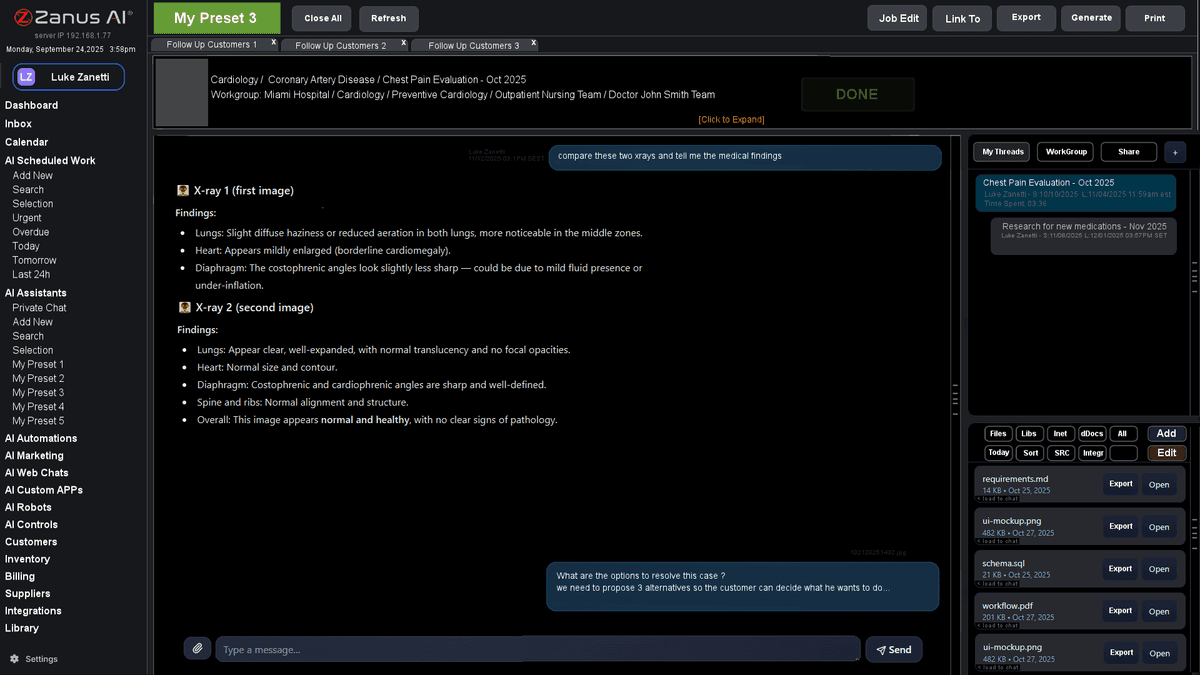
A private chat: the question, the grounded answer, the sources, and the assistant mode chosen for this kind of work.
What it does
Contracts, procedures, records, past emails: the chat searches what you approved and quotes it. It also reads the file you drop in and reasons on it.
A purchasing assistant, a compliance assistant, a project assistant: each with its own skills, presets and libraries — and its own memory of how you like things done.
Several language models built in, chosen per assistant or per conversation. On a unit you own, models run locally; the rule is the same either way.
Inside Ask your company anything — the real screens
Click a tab. Every picture is the working Back Office — the left menu is the whole product.
One chat, three kinds of business
A consultant asks for every commitment made to a client across three years of correspondence and gets a dated list with the emails cited. A production manager drops a supplier’s spec sheet and asks whether it meets the drawing’s tolerances. A warehouse lead asks which orders are waiting on the same missing item. Same chat, same verifier, different libraries.
- Reads and reasons on any file you drop in: PDF, spreadsheet, image, audio, video
- Searches by meaning across libraries, records and mail
- Long answers arrive as a document you can keep or send
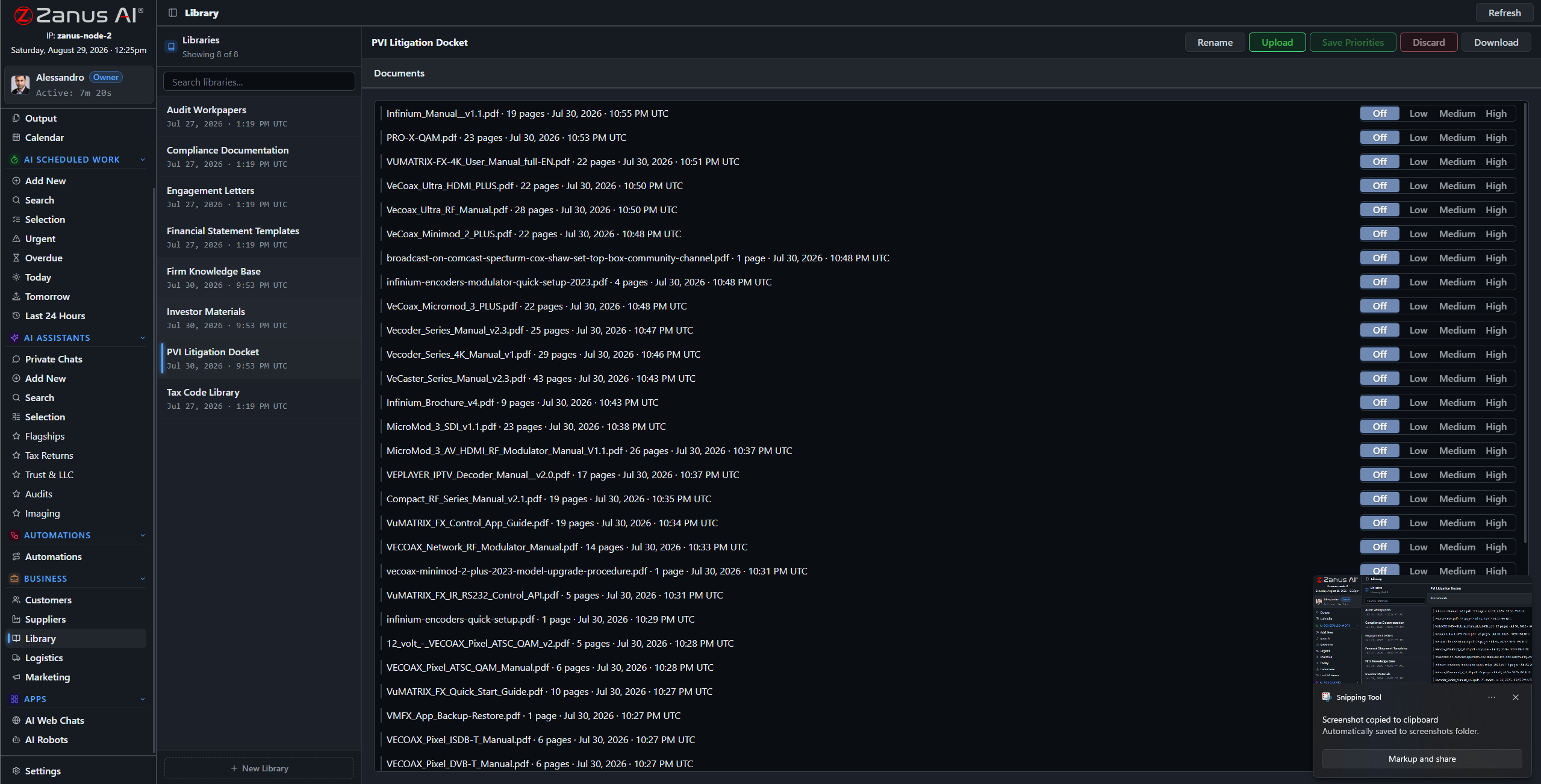
What the chat knows is what you put in the libraries — and what each user is allowed to see.
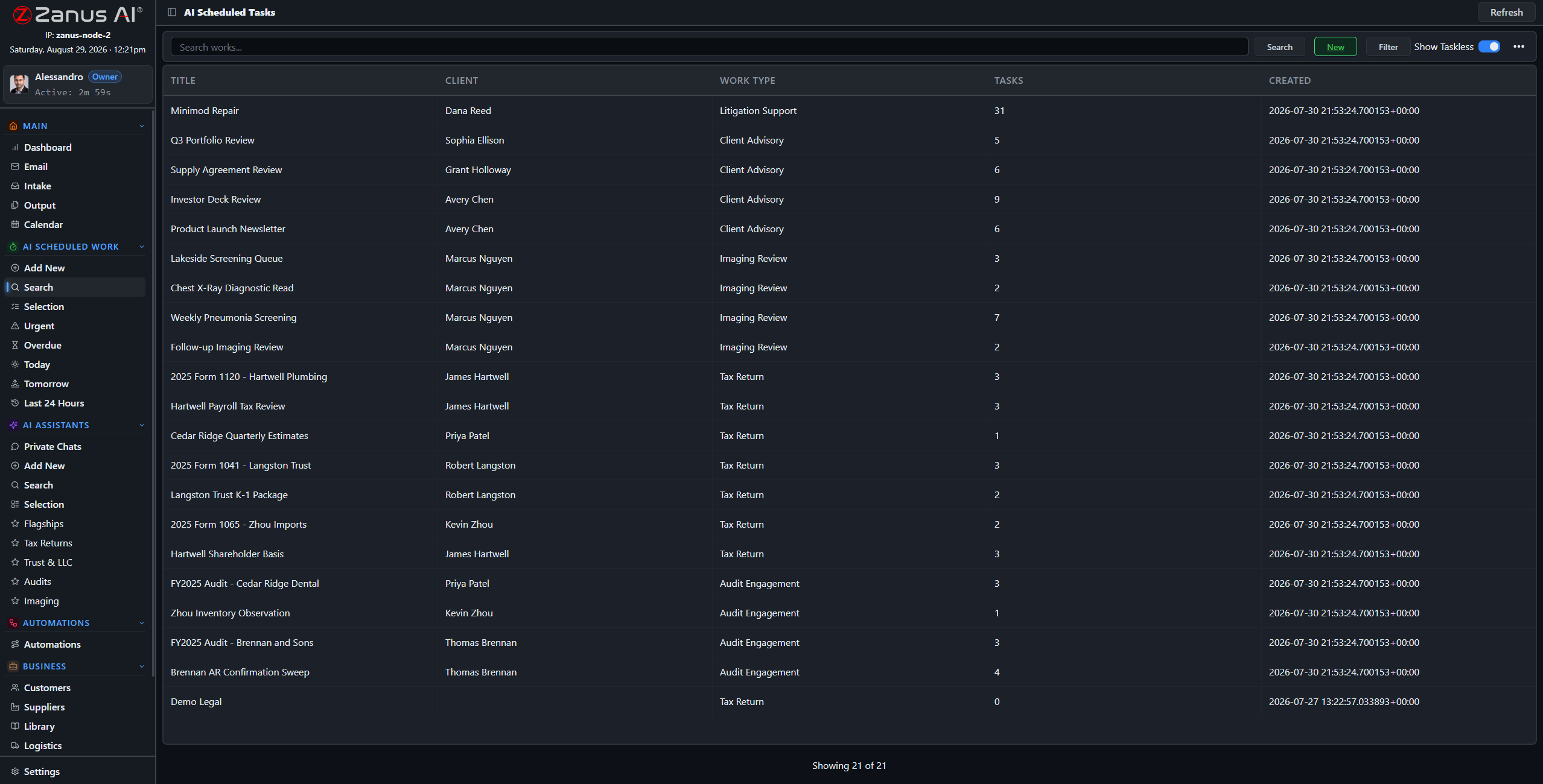
Every conversation and every piece of AI work is searchable later — the company stops losing what it already figured out.
Assistants that remember how you work
An assistant is a chat with a job description: which libraries it reads, which skills it uses, how it writes, what it checks each time. It keeps a memory of your corrections, so the third report sounds like your company and not like a first draft. Presets make the common requests one click: “summarise this file for the board”, “compare these two offers”, “draft the reply in our tone”.
- Skills and presets per assistant
- Persistent organisational memory of your preferences and rules
- Assistants shared with a team or kept private
How it runs
Chat lives at the third stop of the loop: the AI reasons on your sources and the file in front of it, then answers with the passages shown.
In one working day new colleagues ask the questions they would have asked a senior; seniors ask the ones that used to take an afternoon of searching. Every answer names its source, so a wrong assumption is caught on the spot — and the conversation is there tomorrow.
What’s inside
The functions, named. Every one of them is on the demo.
- Private chats per user, team conversations with the AI in the thread
- Assistants with skills, presets, libraries and memory
- Several language models; local models on an owned unit
- File drop: PDF, Office, images, audio and video transcribed
- Search by meaning across libraries, records and past work
- Answers as documents: save to a library, send, or attach to a record
- Permission-aware: a user sees only what their role sees
- Chat history kept, searchable and auditable
Included from AI WORKEach assistant sees only the libraries its users are allowed to see.Plans →
Questions, answered
Does our data train the model?
No. Your libraries and conversations are yours; they feed the answers of your tenant and nothing else. On a unit you own, the models run inside your building.
Can employees ask about things they should not see?
An assistant answers from the libraries its users may read. Permissions per domain and per library decide that, and the audit log records every question.
Which models are available?
Several, and the list evolves; you choose per assistant. The verifier and the citation rule apply regardless of the model.
See it working on YOUR business — the demo IS the product.
← Previous: Answers with the source · Sharing with a colleague? 📄 Get the PDF · ✉️ Email this page ·