AI CRM for Construction. Construction CRM software that fills itself from every call
AI CRM is construction CRM software that writes every call, chat, e-mail and estimate request onto one record per owner, GC, architect or homeowner, with nobody typing from the truck. A deal opens when a client asks for a quote or a demo, moves as the client acts, and only a person marks a bid lost.
TRY AI CRM FREENo credit card · Ready in 2 minutesReady to buy? See plans & pricing ›
7 days free · per company, never per seat · nothing to install
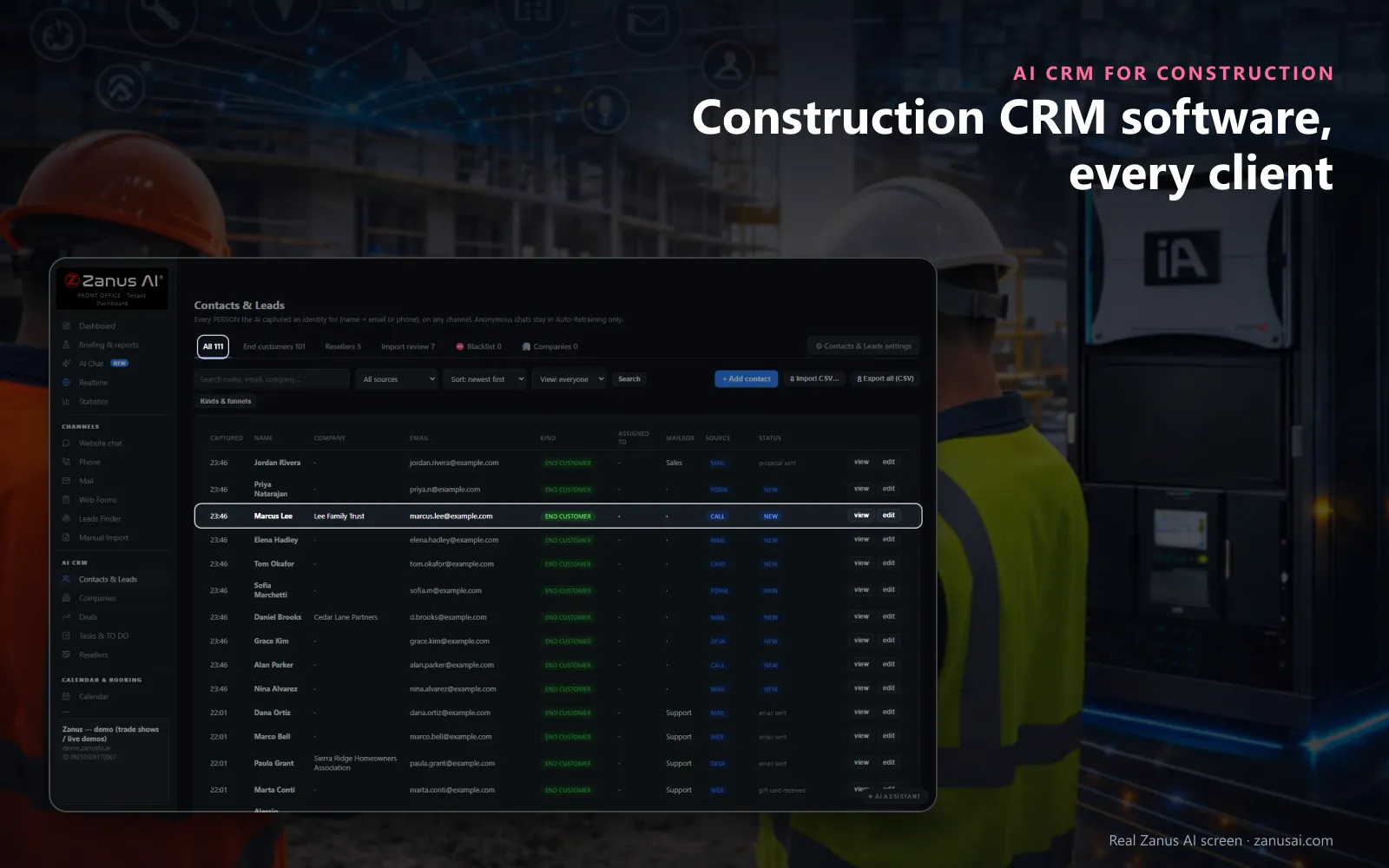
Contacts & Leads
Everyone who left a name with an e-mail or a phone, on any channel, with where they came from and their status; imports wait in their own tab.
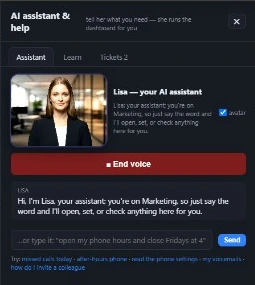 Easy setupSet up everything just by talking to Lisa AISee how ›
You“Add a project type field and a bid due date to every deal.”
Lisa“Project type and Bid due date are added to every deal, shown on the board and in the list. Apply?”
You talk. Lisa sets it up. Applied only on your yes.
How Construction use it
The chief estimator asks Lisa which quoted jobs have been silent for a week and reads each client's health and the plan running.
Before calling a developer back, the PM opens Brief me and reads one page: what was asked, what was sent, what to say next.
Three people from one architecture firm become one company record, and its health line warns that nobody has reached the decision maker.
REAL AI - the whole Front Office is AI, not old software with an AI button.
What’s included
- Every person and company qualified from the conversations, health score with its WHY, gauges, photo, LinkedIn; nothing typed by your staff
- Deals with stages, probability and expected close, created and moved by the events themselves: lead qualified → demo → quote → won
- Tasks and to-dos assigned to your people, from the AI or by hand, with reminders; calls, meetings and notes logged on the record
- Your own fields on contacts, companies and deals; saved views; tags and segments; record ownership
- Pipeline forecast weighted by probability; win / loss review; "ask your pipeline" in plain language
- Basic contacts and companies stay in every Front Office, this item adds the qualification, the pipeline and the forecast
Add it to any contact channel — AI Phone, AI Webchat, AI E-mail or AI Web Forms — or get it inside a solution · See pricing › · Per company, never per seat.
Everything AI CRM does, for every business ›
Works withAI PhoneAI WebchatAI Web FormsAI DemoAI QuotingAI BookingAI Follow-upAI TicketsAI Returns & WarrantyAI Calls TranscriptsAI Marketing
What it keeps
Construction CRM software fed by the phone, the inbox and the forms
Contacts from every channel
A homeowner's call, an owner's e-mail, a developer's form or an architect's chat becomes a contact by itself, with where it came from on the row.
The whole story on one record
Calls, mails, chats, quotes, files, deals and tasks of each client on one timeline, newest first, so the PM reads before he dials.
Scored before you call
The AI verifies the e-mail without sending, visits the company's website and scores competitor risk, budget and buyer type; you can overrule each verdict.
A health score with its reason
Each contact carries a health score and the reason it moved, and Ready to buy sorts the clients who opened a quote or replied in the last two weeks.
The pipeline
A CRM for construction bids that moves by itself
Opened by the request
A deal opens on the first sales signal, a quote or a demo asked for, named for what started it, with the company and the person.
Moved by the client
When the owner opens the estimate, watches the demo or pays the deposit, the deal moves on; the machine never moves a deal back.
Weighted, not guessed
Open deals, the pipeline and the weighted forecast sit above the board, each amount counted by a chance that blends the stage with the client's health.
Lost, with a reason
Only a person marks a bid lost, and the reason is asked. The win and loss report then shows the stage where bids stall and the days spent in each.
Companies
Owners, GCs and architects mapped as companies
Built from e-mail domains
The PM, the owner's rep and the accounts payable clerk at one developer join one company record from their verified addresses.
Roles read from questions
The person who asked about schedule and scope is read as the technical evaluator; the one who asked about terms, as the economic buyer.
The empty chair
When nobody has spoken with the person who signs, the company's health line says so before your estimator sends the number.
A day
An estimator's day with the record already written
Before the first walk
Sort by Ready to buy: the clients who opened an estimate or replied in the last two weeks come first, with the reason under each name.
In the truck before a call
Ask Lisa to brief you on the Oakridge clinic and read one page: who asked, what was sent, the open deal and the next thing to say.
When a bid goes quiet
Ask which quoted deals have been silent for a week; the list returns with each client's health and the follow-up plan running for him.
When a client says stop
Tell Lisa to pause marketing to a homeowner; every scheduled step holds until you resume, while a reply you write by hand still goes out.
Choosing
Key features of construction CRMs, and the ones AI CRM fills in
What contractors weigh when they pick customer relationship management software, and how AI CRM answers each point.
A record nobody has to type
Customer relationship management in the construction industry fails when nobody types after a day on the job site. Here every call, chat, mail and form writes the record, so each client's history is already there.
Lead management to the signed job
Lead management starts at the first estimate request, and the software helps estimators track leads from the form or the call to the site visit, the quote and the won deal, on one record.
One pipeline for every builder
As a CRM for construction industry firms of every size, it gives general contractors, home builders and remodelers the same sales pipeline: deals open on a quote request and move as the client opens the estimate, watches the demo or pays the deposit.
Client communication in one place
Calls, mails, chats and quotes sit on one timeline per client, so sales teams and project managers read the same customer relationships before anyone picks up the phone.
Compared
CRM software for construction companies, compared
| What the office needs | A spreadsheet | A CRM you type into | AI CRM |
|---|---|---|---|
| Getting new clients in | Typed when someone remembers | Typed after each call | By itself:: from calls, chats, mails and forms |
| The history of a client | A notes column | What people typed | Every event on one timeline:: with transcripts and quotes |
| The bid pipeline | A tab per year | Stages moved by hand | Deals that move themselves:: as the client opens, watches or pays |
| Who to call today | A guess | A filtered view | Ready to buy:: with the reason under each name |
Set-up
Start the construction CRM in 2 minutes
Nothing to type first
From the first day, every call, chat, form or mail that gives a name and an e-mail lands in Contacts & Leads. A CSV waits in Import review.
Name your kinds of contact
Tell Lisa you work with owners, GCs, architects, subs and homeowners, and the trades you sell to; she fills the settings and shows the change.
Shape stages and fields
Keep the deal stages or rename them, and add your own fields to contacts, companies and deals, such as project type or bid due date.
Read a week of records
Run it free for 7 days with no credit card and read every contact it captured and every deal it opened when the week ends.
Questions & answers
Questions about construction CRM software
What is a CRM in construction?
A construction CRM keeps the people and companies you build for, owners, GCs, architects and homeowners, with every conversation, bid and estimate on their record. AI CRM fills that record itself from your phone, chat, inbox and forms, so the pipeline reflects what clients really asked.
What CRM do construction companies use?
Many still run on a spreadsheet, a general CRM the office types into, or the client list inside their project software. AI CRM is different because the front office feeds it: calls, chats, e-mails and forms write the record, and deals move as clients act.
Which is the best CRM for small construction business owners?
For a small firm, the best construction CRM software is the one nobody has to feed after a day on site. Look for features like contacts captured from every channel, deals that open and move by themselves, follow-up written from the client's history and a price per company. AI CRM does all four, and the 7-day trial runs on your own clients.
Does a construction CRM replace project management software?
No. AI CRM is the front-office record of conversations, bids, site visits and requests. Drawings, submittals, change orders, schedules and takeoffs stay in your project management and estimating tools.
Can the CRM group the people of one GC or owner?
Yes. People with a verified business address at the same domain become one company by themselves, and each person's role, economic buyer, technical evaluator or champion, is inferred from what he asked. You can edit and merge company records.
Can we see our bid pipeline and forecast?
Yes. Deals move through New, Qualified, Demo, Quoted, Negotiation, Won and Lost as a board or a list, with the open total and a weighted forecast on top. The win and loss report shows where bids stop and why they were lost.
How do contacts get into the CRM without typing?
Anyone who gives a name with an e-mail or a phone on a call, a chat, a form or a mail becomes a contact, with the source on the row. Anonymous chats stay out, and imported lists wait in Import review.
Can the CRM record calls with homeowners?
With AI Phone, every call lands on the contact's timeline with its transcript and summary. Call recording is off as shipped; switch it on and each call keeps its recording in the call register, and the AI can tell callers the call may be recorded.
Can we import our old client list?
Yes, from a CSV file. Imported contacts wait in Import review until someone accepts them one by one, and an imported lead is never called by the AI on its own.
Who can export the client list?
Only Managers can export customer data, and every export is logged with its author, so the office always knows who took the list and when.
How do builders use CRM software in the construction industry?
To keep every owner, GC, architect and homeowner on one record, see the sales pipeline and know who to call next. With AI CRM the record writes itself from the phone, chat, inbox and forms, so the sales process holds up in the busy season, when nobody has time to type.
Can a construction CRM help us win more jobs?
It helps you lose fewer. Every estimate request that reaches your front office lands on a record, quiet bids rise to Ready to buy, and the win and loss report shows the stage where bids stall. Construction firms that manage client relationships this way stop depending on one person's memory.
Keep exploring
Where next?
Start with the one thing you need. Add more anytime by asking Lisa.
AI Front Office for Construction ›
Easy setup
Answers & books
Sells
Helps your team
Included
Award-winning AI
Winner at CES 2026, ISE 2026 and TMCnet Enterprise AI Product of the Year.
REAL AI - the whole Front Office is AI, not old software with an AI button.
Awards & trade shows ›


Give Lisa your website.
She sets up your business in 2 minutes.
Other software makes you learn it. Zanus AI learns your business.
Try it free on your own business — no credit card, per company, never per seat.
Ready to buy? See plans & pricing ›
Or call +1 (954) 736-3939 — the AI answers.