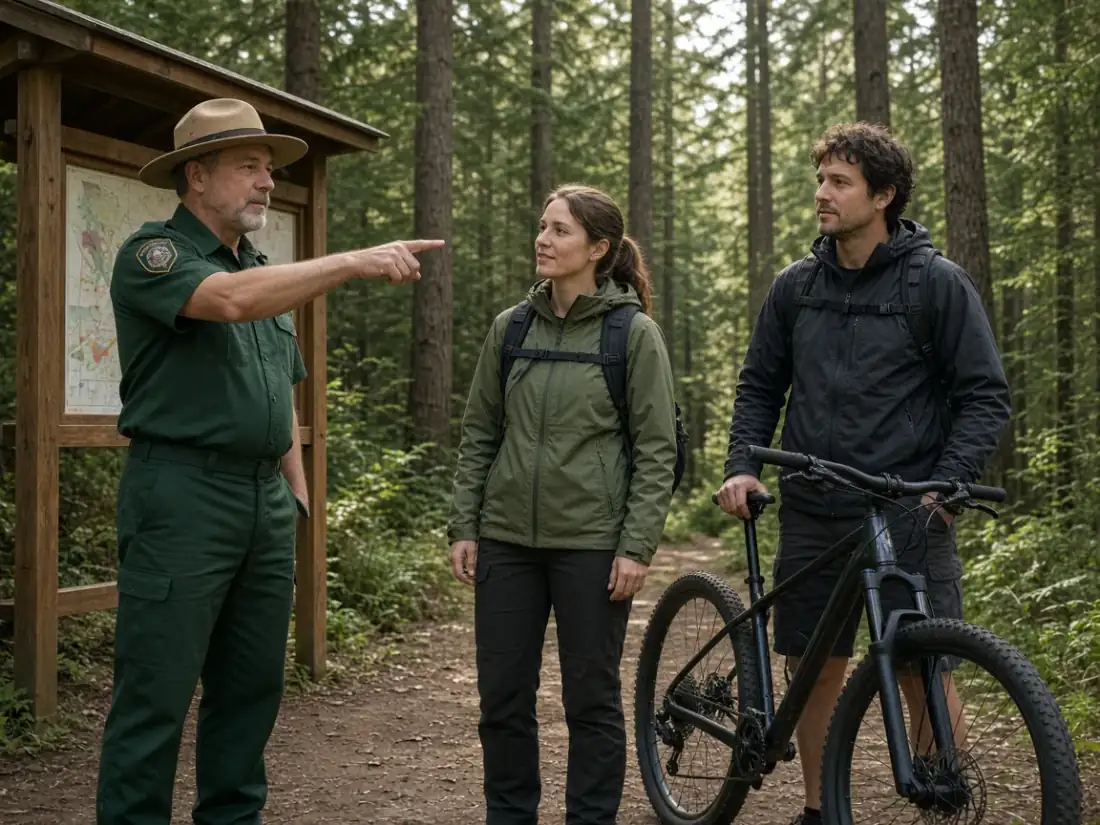
What is a city answering service for hiking and bike trails?
It is a service that answers the public for a city, a county or a trail organization when the office cannot pick up. Zanus AI does it with one AI on your own number, your website chat, your e-mail and your forms: it answers visitors from what your staff approved, books shelters and programs, opens tickets for trail reports and puts the calls your rules name through to a person.
Can the AI tell visitors whether a trail is open or closed?
Yes, from what your staff post. When the crew closes the creek section or reopens the ridge loop, the status is changed once in the knowledge base, and the phone, the chat and the e-mail all give the same answer. The AI does not guess at conditions it was not given; those questions go to a person.
Does it work for a parks department and for a private bike park?
Yes. A city or county parks department uses it as a government answering service for its trail system, and a trail conservancy, a nonprofit or a privately run bike park uses the same front office as park booking software and visitor line. Each department gets its own people, rules and calendars.
Can visitors book shelters, guided hikes and group rides?
Yes. Each pavilion, shelter, guide and class has its own calendar, and visitors book by phone, chat or web form. They get a confirmation and a reminder, and AI Auto-Call can ring them the day before: a yes keeps the place, a no frees it. Any fee or permit is handled by your office, not by the AI.
Does the AI sell trail passes or take payments?
No. It takes no card payment and issues no pass or permit on its own. It explains how your passes, parking and event permits work, holds a date when your rules allow it, and passes the request to your office. For group outings, a quote is drafted from your own price list and waits for your yes before it goes out.
What happens when a hiker calls about an injury or a lost person?
Your office writes an always-say rule with the words that matter, such as hurt, lost, fire or a wildlife encounter. A caller who uses one is told, in your approved words, to hang up and call 911, and nothing is booked. The conversation stays on record so your rangers can see what was said.
Will it replace our rangers or visitor center staff?
That is not the aim. The AI takes the repeat questions about parking, hours, dogs and e-bikes, the overflow on busy weekends and the calls after closing, so your rangers can stay out on the trails and the people at the visitor desk can help whoever is standing in front of them.
How does it handle reports of fallen trees, washouts and vandalism?
Every report, by phone, chat, e-mail or form, becomes a ticket with the location and the details in the visitor's own words, sent to the trail crew or the person you name. The visitor gets an answer at once, and the ticket stays on the list until someone on your team closes it.
Can we keep the phone number printed on our trailhead signs?
Yes. The number on your signs, maps and website stays yours. Calls to it are forwarded to the AI, nothing is ported and nothing is installed, and you can switch the forwarding off whenever you like. Visitors keep dialing the number they already know.
Which languages can trail visitors use?
Their own. Callers are answered in the language they speak, the website chat works in 40 languages by text or by voice, and a call can go to the colleague who speaks it. Tourists, new residents and school groups hear the same trail rules as everyone else.
Can we send closure notices and event news to our riders and hikers?
Yes, by e-mail. A campaign goes to a filtered group, such as everyone who booked a guided ride this season or the volunteers of one trail, once your staff approve it. Follow-ups stop the moment a person replies, so nobody gets chased after answering.
Does it help our trail crew and volunteers too?
Yes. The internal assistant answers your crew and volunteers only from your own documents, such as the trail maintenance manual or the volunteer handbook, with the source shown. A coordinator can write a training course by talking, and the file cabinet reads and files every signed form and document.
How much does a city answering service for trails cost?
The price is set per company, never per seat, so rangers, coordinators and volunteer leads all share one subscription, and adding seasonal staff in the busy months adds no seat cost. Choose the modules your trail office wants; every plan is listed on the pricing page.
What is the difference between the 7-day free trial and the demo?
The free trial takes your own trail system's website and builds a private sandbox from it that you can use for 7 days, with no card. The demo is ready-made: it shows the AI front office answering, booking and filing a report, and it arrives by e-mail in about 2 minutes with nothing to set up.