ZANUS AI FOR CUSTOMER SERVICE — OVERVIEW
Support that scales. The bill that doesn’t.
Phone and chat answered around the clock, tier-1 resolved before an agent touches it, and every agent fed cited answers from your own knowledge base mid-conversation. One AI system for the customer side and the agent side — unlimited agent users, flat price, in YOUR isolated tenant.
Private tenant or your own server · unlimited agent users · no per-seat pricing, ever
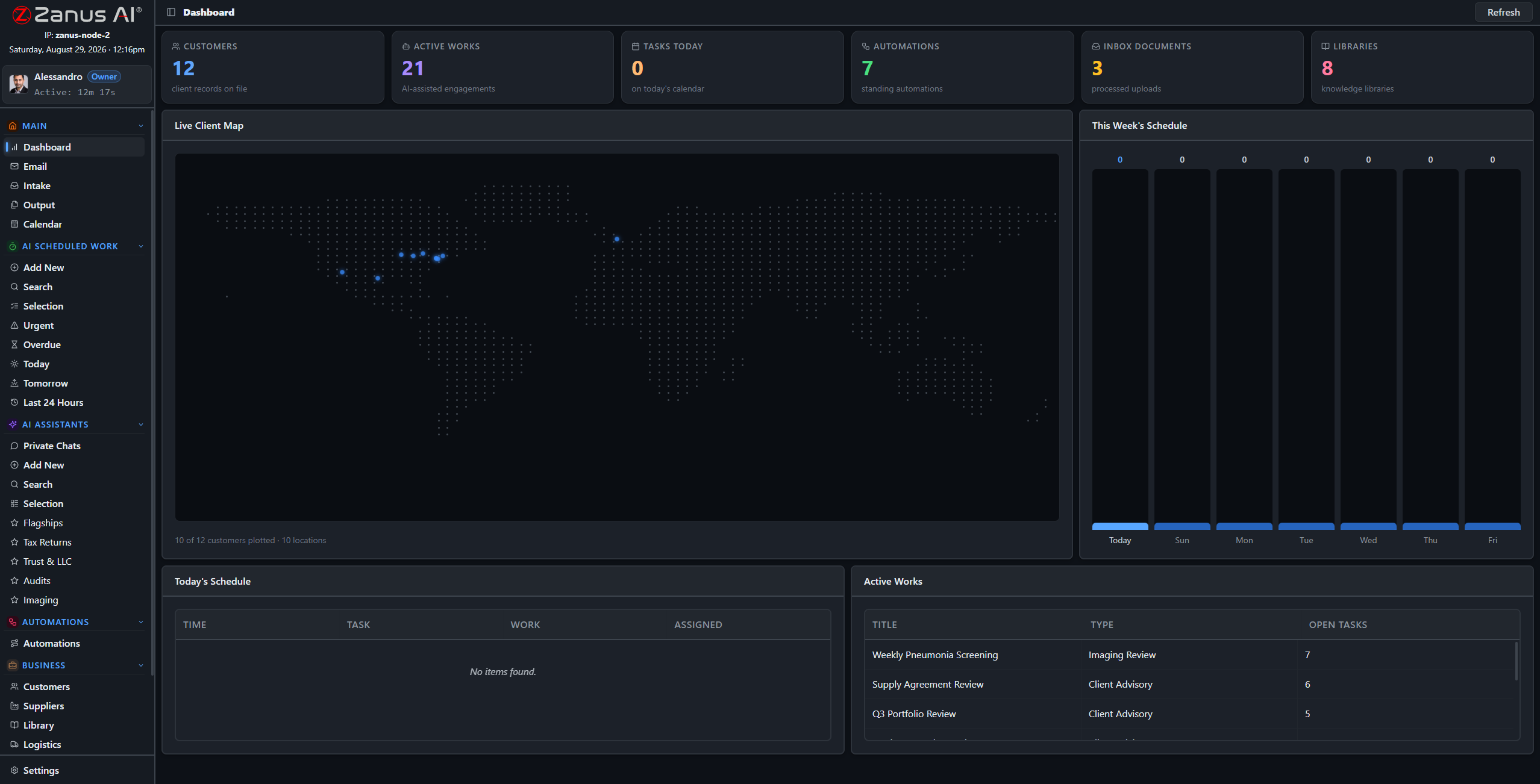
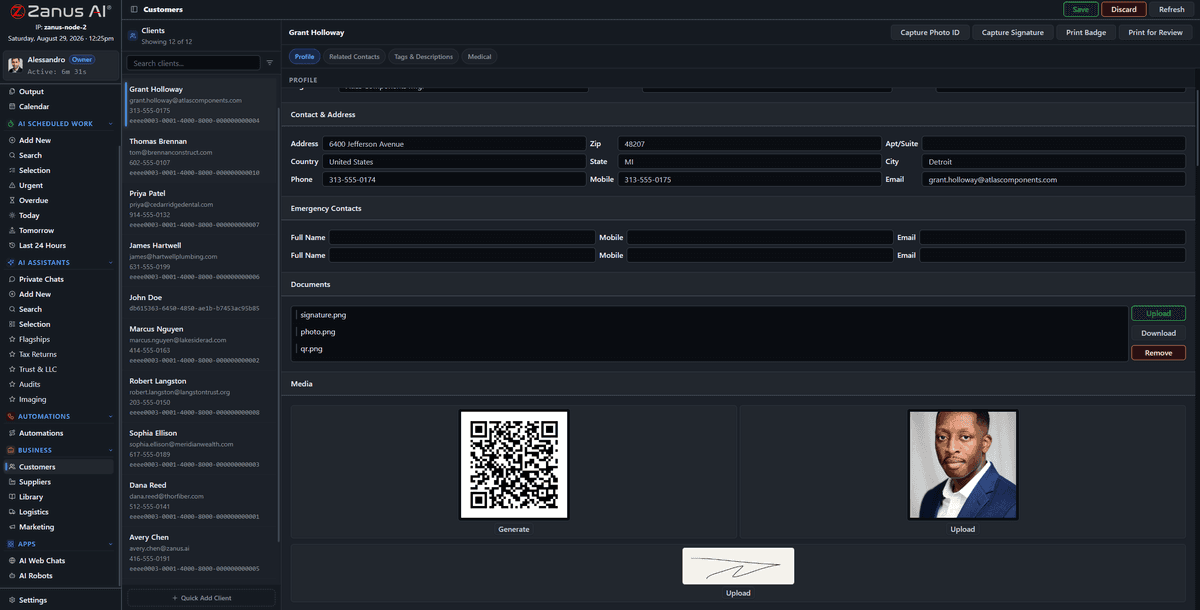
A real deployment view: customer records, ticket work, scheduled AI reviews of the queue.
What it does
Password resets, order status, plan questions: the AI resolves tier-1 around the clock from your approved knowledge — in up to 40 languages — and escalates by your rules with the transcript attached.
The agent on a hard call asks the assistant — “does the 2019 model qualify for the warranty exception?” — and gets the answer with the policy cited, in seconds, mid-call.
Seasonal surge from 20 agents to 60? Same tenant, same flat price. No per-seat penalty, no AI meter — growing the team stops being a procurement negotiation.
Front office: the customer side, handled
Every hold minute is a CSAT point burning. The Zanus front office answers phone and chat on your menu, resolves the repetitive tier-1 from approved knowledge, opens tickets with the conversation attached, and hands humans only what needs humans.
- AI phone and chat, 24/7, up to 40 languages
- Tickets and RMAs opened with transcripts attached
- Escalation by your rules — sentiment, keywords, customer tier
- See the Front Office for support →

Back office: the agent side, armed
Knowledge-base articles, macros, the escalation matrix, release notes: your answers exist — finding them mid-call is the problem. The Zanus back office turns them into verified, cited answers at conversation speed, and into scheduled AI work that reads the whole queue for patterns.
- Verified answers with the KB article cited
- Scheduled AI work: ticket-trend and KB-gap reviews
- Sentiment analysis flags at-risk customers early
- See the Back Office for support →
When transcripts cannot leave your walls
Support conversations carry account details, disputes and personal data. Teams with strict custody requirements run the identical OS on Zanus hardware they own: transcripts, knowledge and customer records physically in-house, your whole team, no recurring fees.
- Private On-Premises AI: owned, no recurring fees
- On-Prem Tokens Server for high-volume operations
- Explore the AI Servers →

Questions, answered
Does this replace our agents?
It removes the repetitive tier-1 so agents keep the conversations that need judgment and empathy — armed with cited answers instead of frantic KB searches. Escalation rules are entirely yours.
Really unlimited agents?
Yes. The tenant is priced flat: 10 agents or 200, the bill does not move. No per-seat licenses, no metered AI charges on top.
What if the AI does not know an answer?
Claim guard: no source in your knowledge base, no claim to the customer. It says so, opens a ticket and routes to a human — it never improvises policy.
See it working on YOUR queue — the demo IS the product.
ZANUS AI FOR CUSTOMER SERVICE — FRONT OFFICE
The queue at 9 AM Monday, already half-worked.
The weekend queue used to greet Monday’s shift like a wall. With the Zanus front office, phone and chat are answered as they arrive — tier-1 resolved from your approved knowledge, tickets opened with transcripts, escalations waiting sorted instead of buried.
Private tenant or your own server · unlimited agent users · no per-seat pricing, ever

Calls, chats, tickets and escalations — one dashboard your team lead reads at shift start.
What it does
The caller asking “where is my refund?” gets the answer in one ring, from the ticket record, in their language — not eleven minutes of hold music and a transfer.
Conversations become tickets with the transcript, the customer record and the relevant KB article already attached — agents start at the middle, not the beginning.
Refund-dispute language, legal keywords, a platinum account, rising frustration: routed to humans immediately, by rules you write — the AI never argues with an angry customer.
Tier-1, resolved without a human minute
Password resets, shipping status, plan comparisons, the how-do-I question your team answers forty times a day: the AI resolves them from your approved knowledge, identically and instantly, at 2 PM and 2 AM — and logs every conversation with a transcript.
- Answers only from approved knowledge — claim guard
- Up to 40 languages, one knowledge base
- Tickets and RMAs opened automatically when needed
- Every conversation logged with a transcript


The web channel, finally covered
Website chat grounded in your documentation, web forms worked in minutes instead of days, and instant answers to the questions that used to become tickets. The queue shrinks at the source.
- Grounded chat on your site, claim-guarded
- Web form inquiries answered in minutes
- Deflection you can audit — transcripts of everything
- See the full Front Office tour →
Questions, answered
Can customers still reach a human?
Always — by your rules: say-agent routing, sentiment triggers, customer-tier fast lanes. The AI is the first line, never a wall.
Do we keep our support numbers?
Yes. Your numbers stay; calls route AI-first, agent-first or any mix per line and per hour.
How does it handle angry customers?
Frustration language triggers your escalation rules — immediate transfer, priority ticket, team-lead alert. Sentiment is flagged, not debated.
See it working on YOUR queue — the demo IS the product.
ZANUS AI FOR CUSTOMER SERVICE — BACK OFFICE
Your agents know the answer exists.
Now they can find it mid-call.
The answer is in the knowledge base, the macro library or the release notes — somewhere. The Zanus back office makes it one question away, with the source cited, while the customer is still on the line — and reads the whole queue for the patterns no single agent can see.
Private tenant or your own server · unlimited agent users · no per-seat pricing, ever
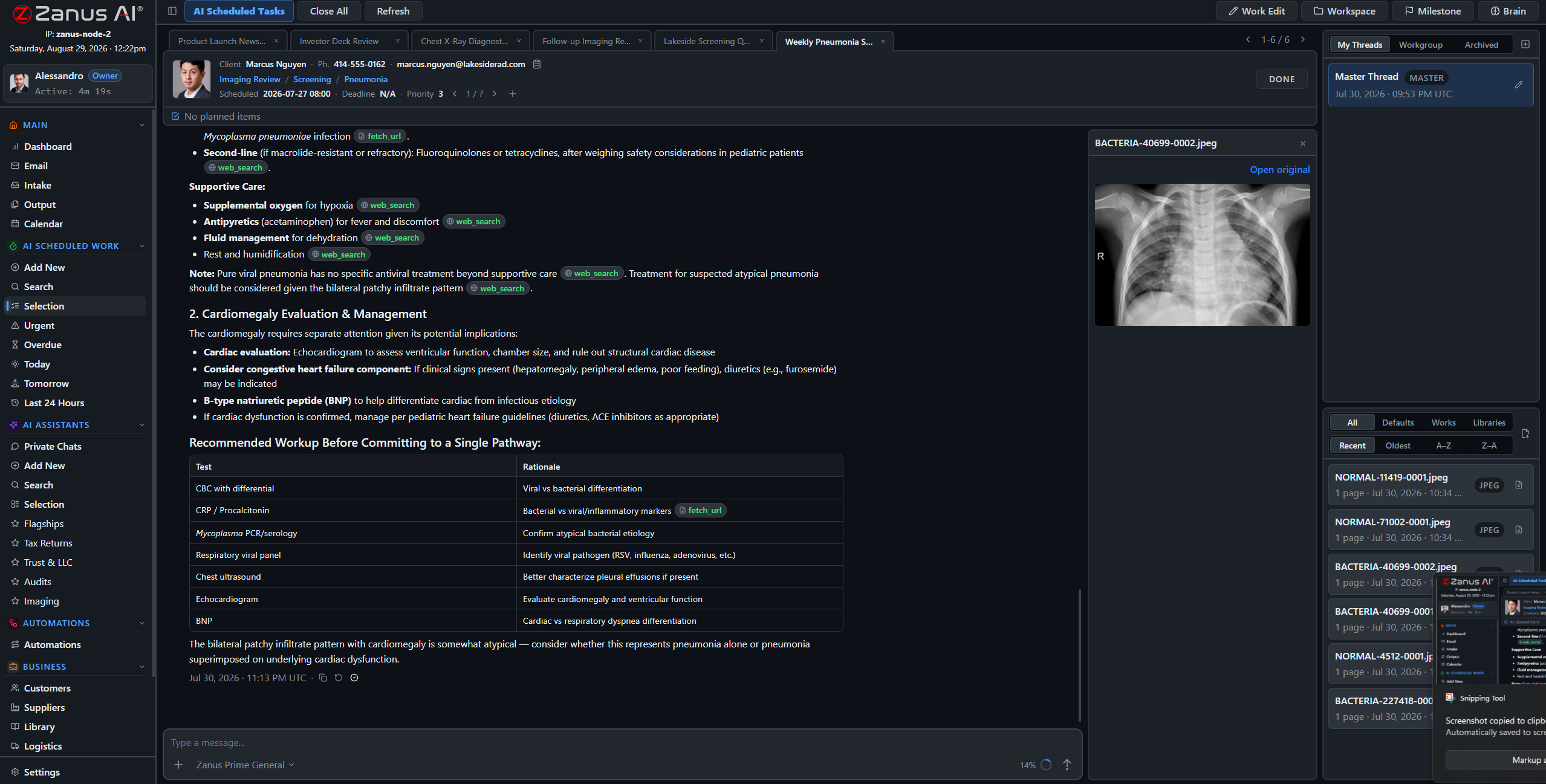
A real session: weekly ticket-trend review — patterns found, sources cited, team lead decides.
What it does
“Does the education discount stack with the annual plan?” — asked by the agent in a private chat, answered from the pricing policy with the document attached, before the customer finishes the sentence.
Scheduled AI reviews read the week’s tickets for what no one agent sees: the spike after Tuesday’s release, the confusing invoice line, the KB article everyone searches for and nobody finds.
Every AI-drafted reply, macro update and trend report lands in Output awaiting review. Your team lead decides what goes out and what goes live.
Draft replies that start at 90 percent
For the tickets that need a human, the AI drafts the reply first: grounded in the customer’s history and the relevant policy, in your support voice, with sources attached. The agent edits and sends — handling time drops without the quality dropping.
- Drafts grounded in ticket history and policy
- Your tone guide applied automatically
- Agent reviews and sends — always

The customer record that answers back
The CRM molds to support vocabulary: plans, entitlements, escalation history, promised follow-ups. Ask “what did we promise this account last quarter?” and get the answer with the tickets cited — before the renewal call, not after.
- Customer history searchable in plain language
- Sentiment analysis flags at-risk accounts early
- Follow-ups tracked so promises get kept
Questions, answered
Does this replace our helpdesk?
No — your helpdesk stays the system of record for tickets. Zanus is the system of work: it answers, drafts, reviews and reports. Bring your helpdesk to the demo and we map it.
Can the AI close tickets on its own?
Only in the categories you designate. Everything else is drafted for an agent’s review — the human sends, the system remembers.
YOU MIGHT ALSO LIKE
The Back Office executes. Who answers the phone?
Front Office AI picks up every call and chat — books, quotes, follows up, 24/7 in 40 languages. Watch it run a business like yours, live.
See it working on YOUR queue — the demo IS the product.
ZANUS AI FOR CUSTOMER SERVICE — KNOWLEDGE BASE
Ask the knowledge base. It answers back.
KB articles, macros, the escalation matrix, refund policy, release notes, the tribal knowledge in old ticket threads — loaded into curated libraries the AI reads from. Ask in plain language; get the answer with the source cited, at agent speed.
Private tenant or your own server · unlimited agent users · no per-seat pricing, ever
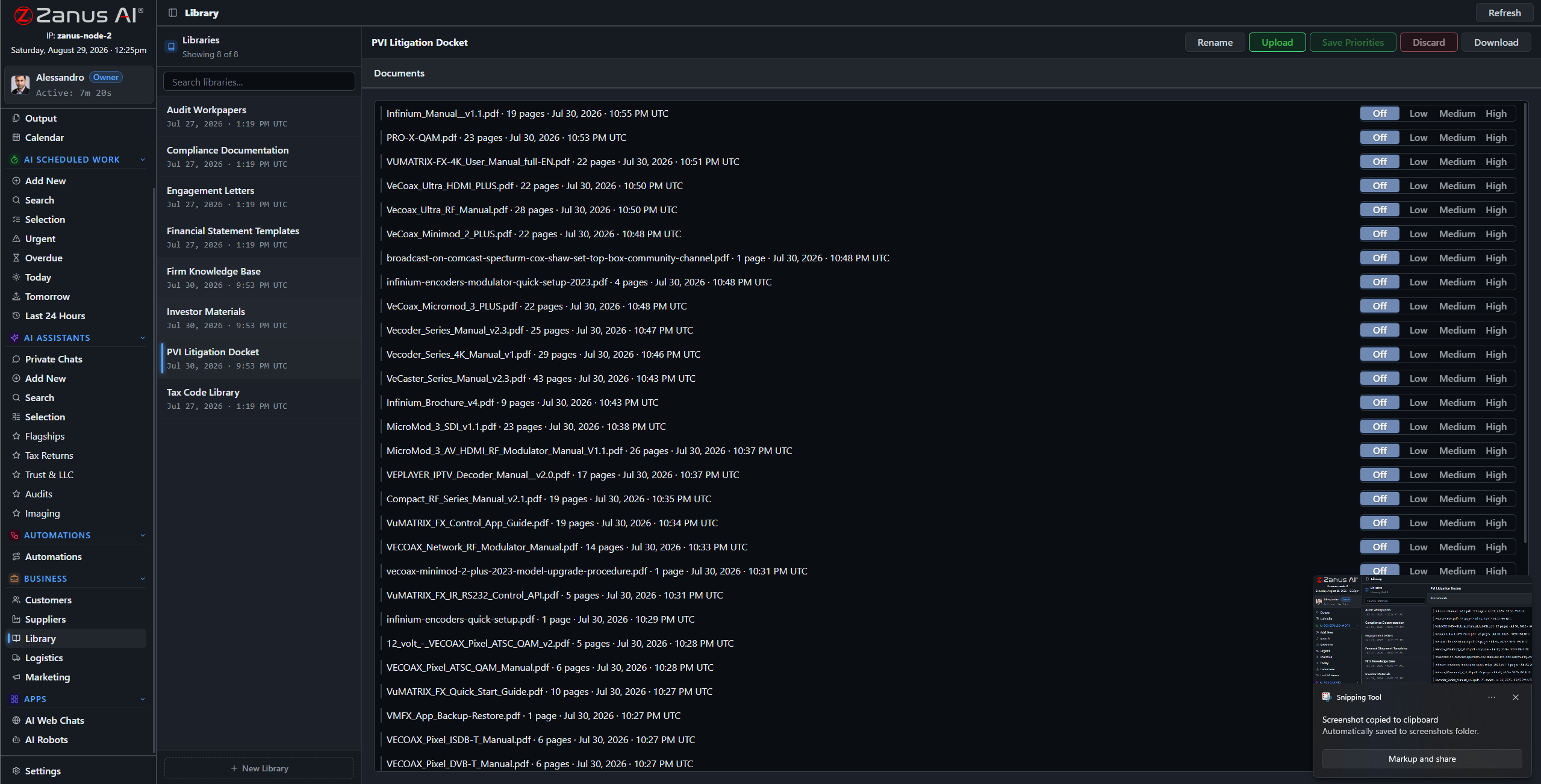
Libraries: current policy outranks the old macro, the signed SLA outranks the draft — you set the order.
What it does
KB exports, PDF policies, screenshots of error states, recorded walkthroughs — the ingestion pipeline turns the scattered knowledge into one queryable system.
The customer-facing AI and the agent assistant read the same libraries at different permission levels: update the refund policy once and both answer correctly from that moment.
If the knowledge base does not contain the answer, the AI says so — to the agent and to the customer. Guessing is not a support strategy.
Six years of resolved tickets, one question away
“How did we fix this error code last time?” “What did we tell customers during the March outage?” “Which accounts have the legacy SLA?” The archive answers in seconds with sources attached — instead of asking the one veteran who remembers.
- Plain-language questions across the archive
- Sources attached to every answer
- Priority order: current policy rules

Questions, answered
What sees the customer versus the agent?
Permissions decide: customers get the public KB libraries; agents get those plus internal policies and escalation guides — enforced server-side, not by prompt hope.
Do our transcripts train outside models?
Never. Your tenant is isolated; your knowledge, transcripts and customer records are yours alone — and the on-premises option keeps them physically in your building.
See it working on YOUR queue — the demo IS the product.
ZANUS AI FOR CUSTOMER SERVICE — AI WORKFORCE
The analyst your queue never had headcount for.
Assign work to the AI the way you assign it to staff: type, sources, deadline, recurrence. The weekly ticket-trend review, the monthly KB-gap report, the daily escalation digest — executed on schedule, with citations, under review.
Private tenant or your own server · unlimited agent users · no per-seat pricing, ever
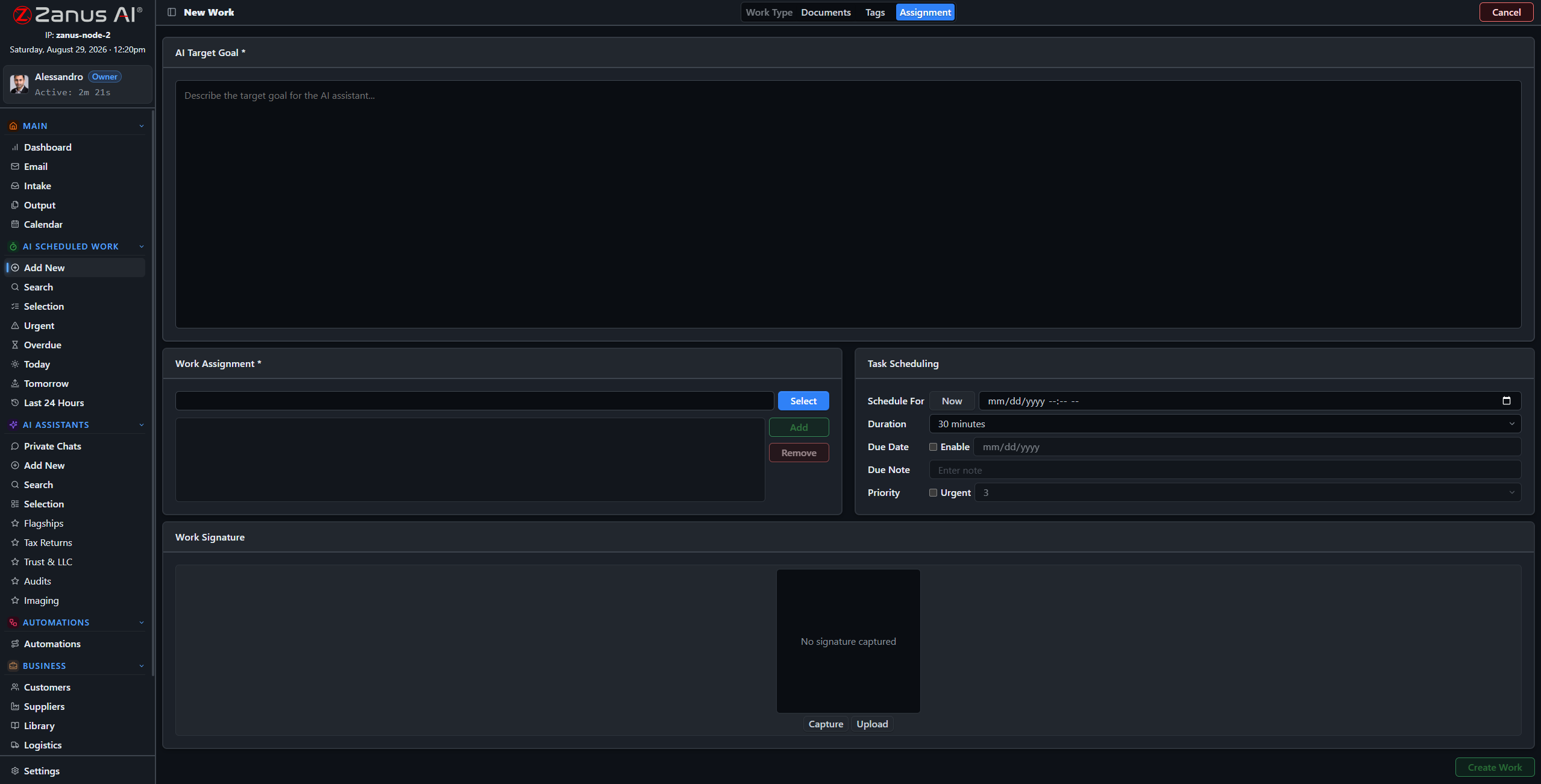
Four steps: work type, records and libraries, tags, schedule — the AI takes it from there.
What it does
Ticket-trend review, KB-gap report, escalation digest, QA sample review: work types molded to your operation, with default libraries and examples per type.
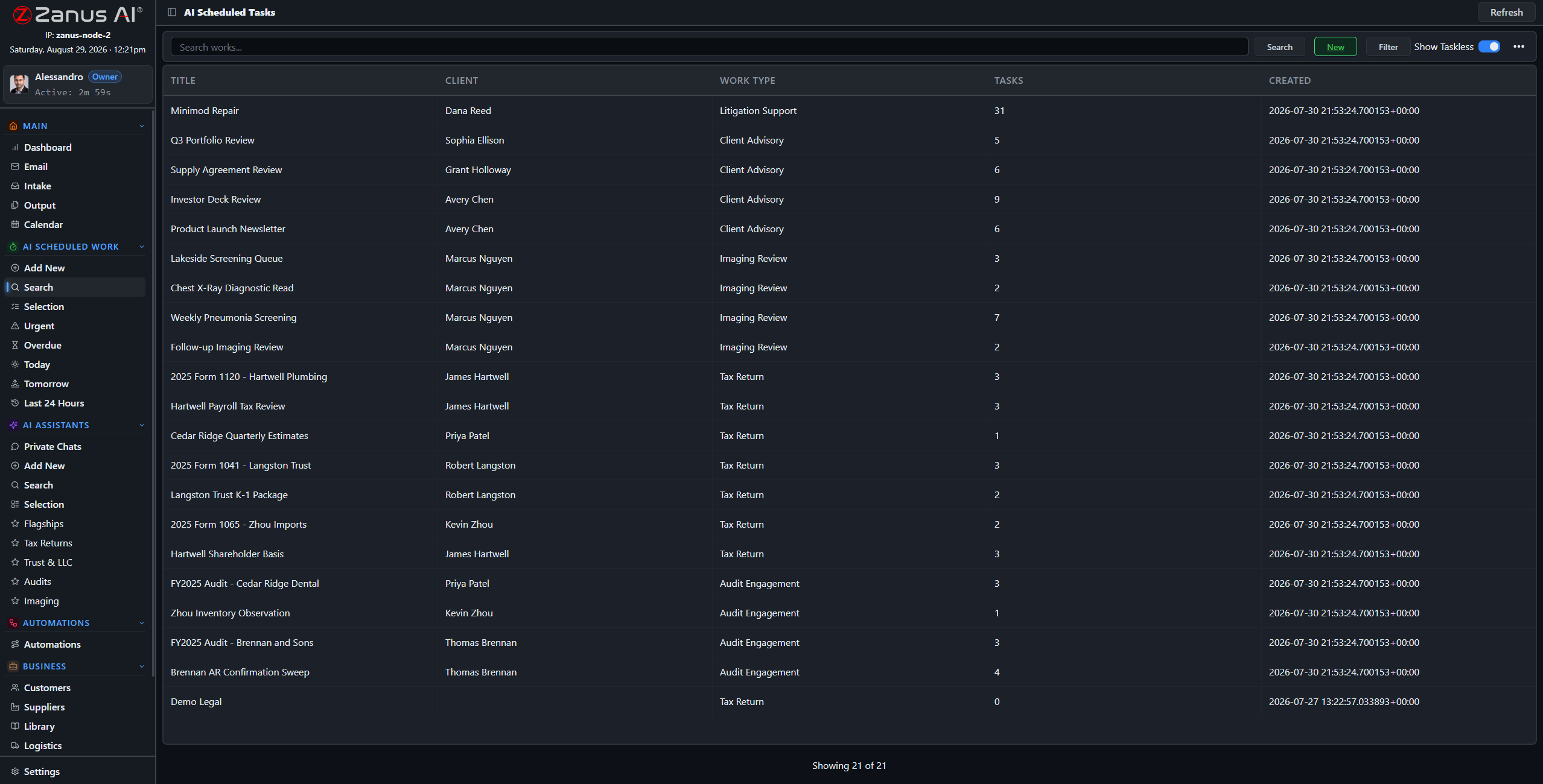
The AI’s workload is managed like the team’s: one-click views show what is urgent, late, today and tomorrow — nothing slips through shift change.
Every work is a full session: reasoning streamed, tickets cited, milestones tracked, linked to the release or the account it belongs to.
Monday, 8 AM: the trend review is done
Set “Weekly Ticket-Trend Review” once: every Monday the AI reads the week’s tickets, flags that refund-status contacts doubled after Thursday’s billing change, cites the twelve tickets that prove it, and files the report before standup.
- Recurring schedules for periodic queue analysis
- Findings cited to actual tickets and transcripts
- Report in Output, awaiting the lead’s sign-off
Questions, answered
Can we supervise mid-work?
Yes — open any session, read the reasoning, redirect it, or stop it. The AI works like staff: visible, accountable, interruptible.
Can it keep up with a high-volume queue?
It does not get tired at 5 PM Friday: the constraint is your review capacity, not the AI’s. Configurations size from a five-agent team to a multi-site center.
See it working on YOUR queue — the demo IS the product.
ZANUS AI FOR CUSTOMER SERVICE — PLAYBOOKS & SLAS
The escalation matrix, alive.
Playbooks only work when the agent on the hard call can find them — the current version at that. In Zanus, your escalation matrix, SLA tiers and incident playbooks are living documents: answerable in chat, attached to work, priority-ordered so the latest version always wins.
Private tenant or your own server · unlimited agent users · no per-seat pricing, ever
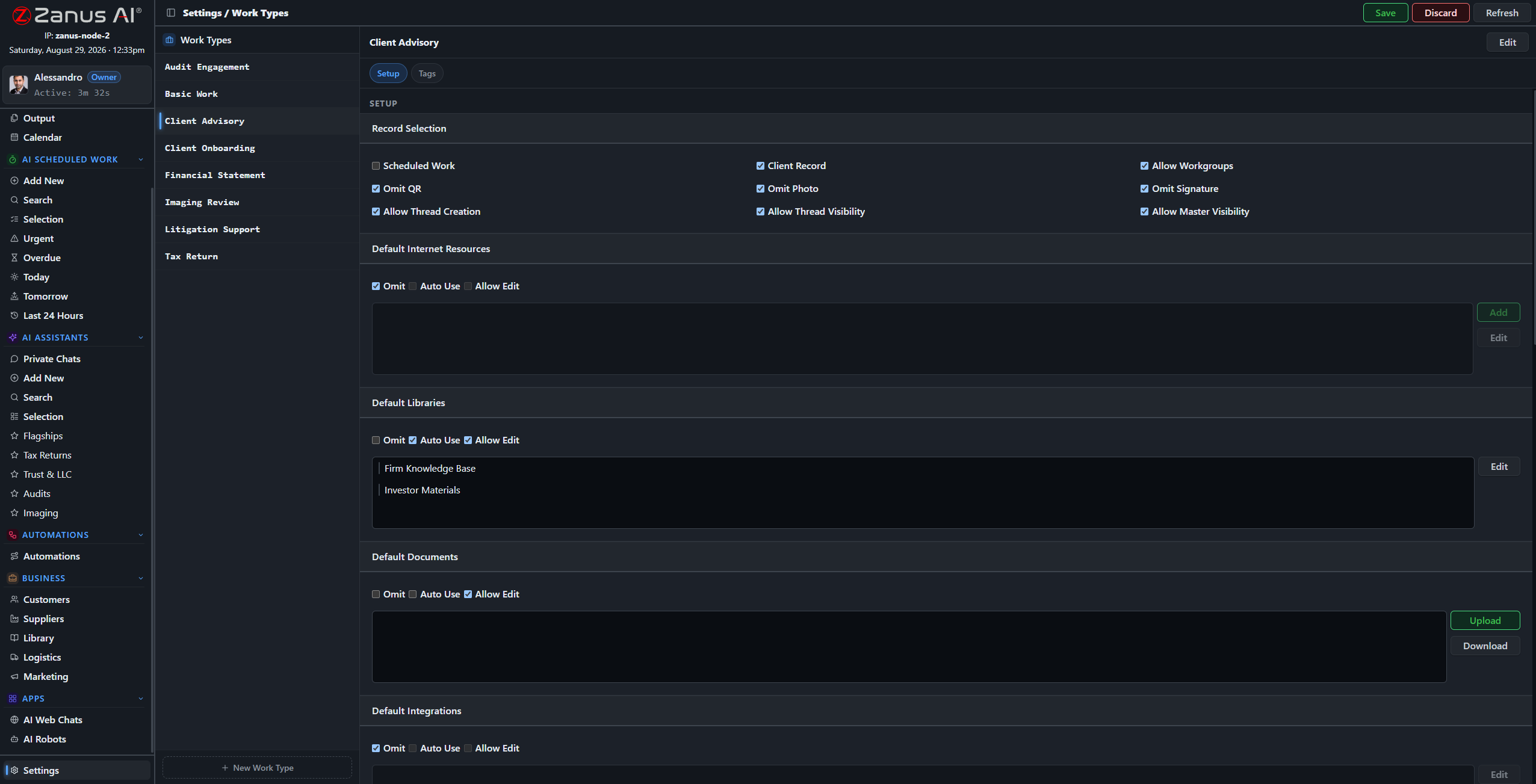
Work types carry their playbooks: the escalation review reads from the current matrix, by construction.
What it does
Escalation matrix, refund authority levels, SLA definitions, the incident-response playbook, the tone guide: one library, current versions on top, superseded drafts outranked.
“Can I authorize a refund over 500 without a lead?” — answered in seconds with the policy attached, while the customer is still on the line.
The AI drafting an outage notice reads from the incident playbook; the escalation digest reads from the matrix — by construction, not by memory.
Incident day, rehearsed on the calendar
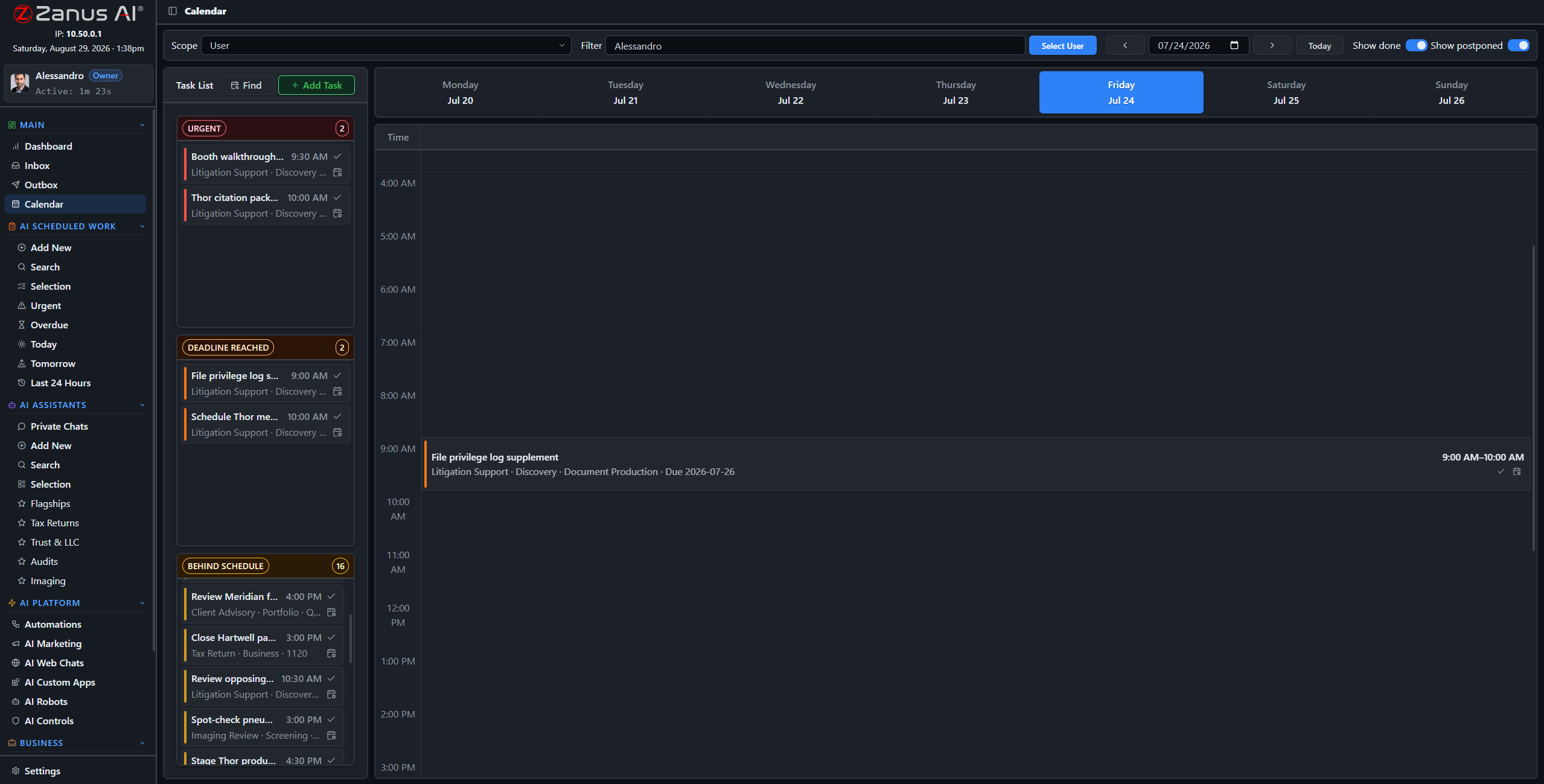
Quarterly reviews of the incident playbook, SLA-expiry checks on legacy accounts, policy-update summaries for the floor: assigned once as recurring AI works, executed on schedule — so the day the status page goes red, the playbook is current.
- Recurring review works with deadlines
- Update summaries drafted for team briefings
- Every review on the audit record
Questions, answered
How do policy updates reach the floor?
Upload the new version, set it on top: from that moment every agent answer and every AI draft cites the new policy. Old versions stay archived for audit.
See it working on YOUR queue — the demo IS the product.
ZANUS AI FOR CUSTOMER SERVICE — TEAM TRAINING
Agent turnover without knowledge turnover.
Support floors churn — the knowledge that walks out with each departing senior agent does not have to. New agents learn your policies and workflows from the AI, and every agent has an assistant that answers “how do we…?” without putting a customer on hold.
Private tenant or your own server · unlimited agent users · no per-seat pricing, ever

Training lives inside the software: the AI walks each new agent through the team’s own procedures.
What it does
New agents learn your ticket workflow, escalation rules, refund authority and tone guide through guided training — taking real tickets in days, with the assistant as a safety net.
“How do I merge duplicate tickets?” — asked to the assistant, answered from the playbook, without a hand in the air or a customer on hold.
Private chats work on any device with a login — the how-to knowledge follows the agent from the floor to the late shift to work-from-home.

The trainer that never sighs at the question
The tenth “how do I process a chargeback dispute?” of the week gets the same patient, sourced answer as the first. Training material stays current automatically, because the assistant reads from the same living playbooks as everything else.
- Answers cite the current playbook
- Personal preset assistants per role
- Training progress visible to team leads
Questions, answered
Does training content go stale?
No — the assistant answers from the live libraries. Update the policy once and every future answer updates with it, for this cohort and the next.
See it working on YOUR queue — the demo IS the product.
ZANUS AI FOR CUSTOMER SERVICE — AUTOMATIONS
The support floor’s repetitive work, set once.
Describe the job in plain words — “when a ticket arrives, classify it, route it, and draft the first reply from the matching KB article” — and it becomes connected blocks on a canvas, running on its own, with every run visible.
Private tenant or your own server · unlimited agent users · no per-seat pricing, ever
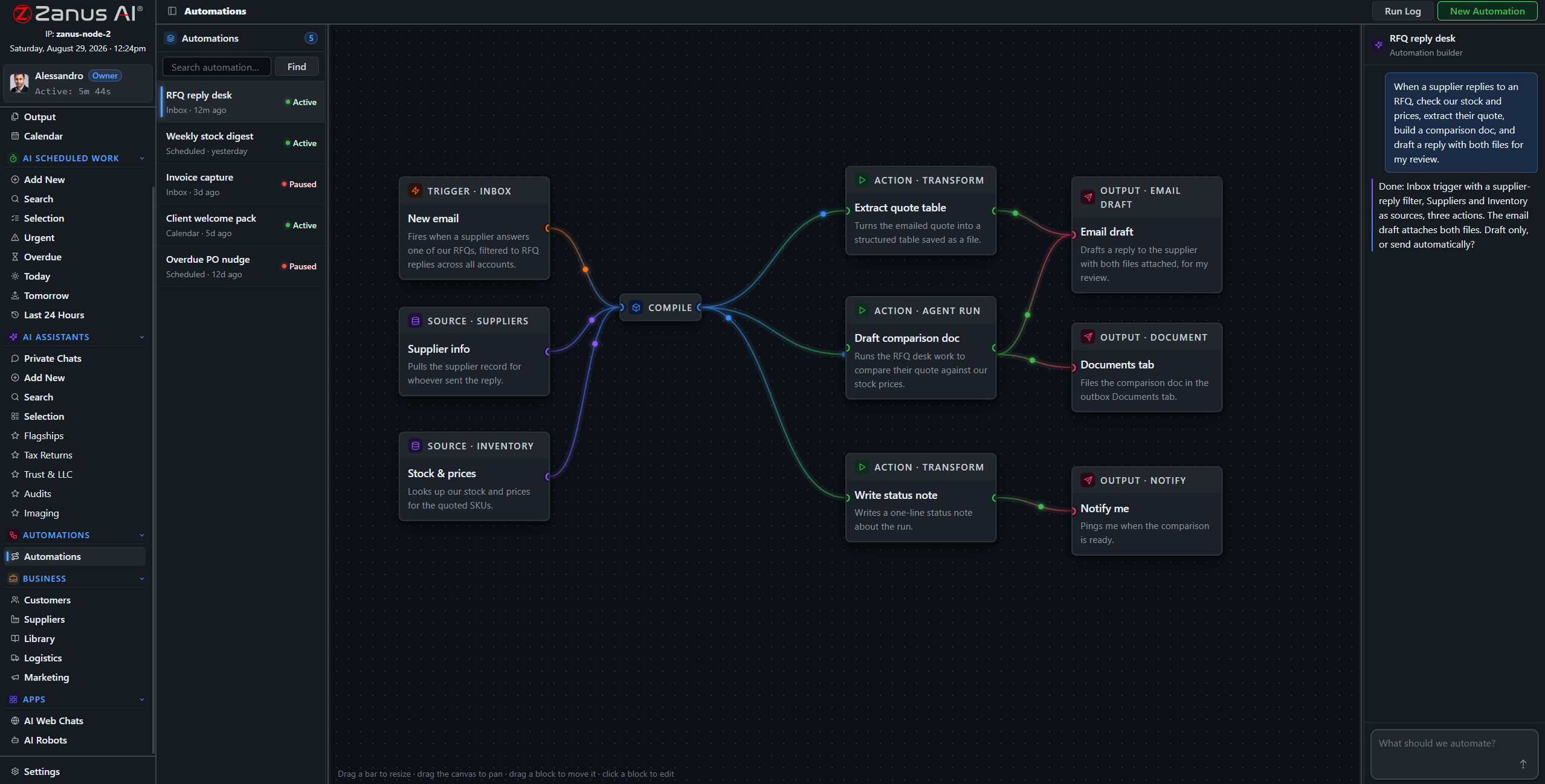
A real flow: ticket trigger, KB sources, AI classify and draft, outputs routed — drawn from a description.
What it does
Ticket arrives → classified by topic and urgency, routed to the right team, first reply drafted from the matching article — the agent opens a ticket that is already half-worked.
Sentiment drops across an account’s tickets → the team lead gets an alert with the history summarized and cited — the save call happens before the cancellation email.
Resolution → the follow-up goes out in the customer’s language, on your schedule; detractor responses open a review ticket automatically.
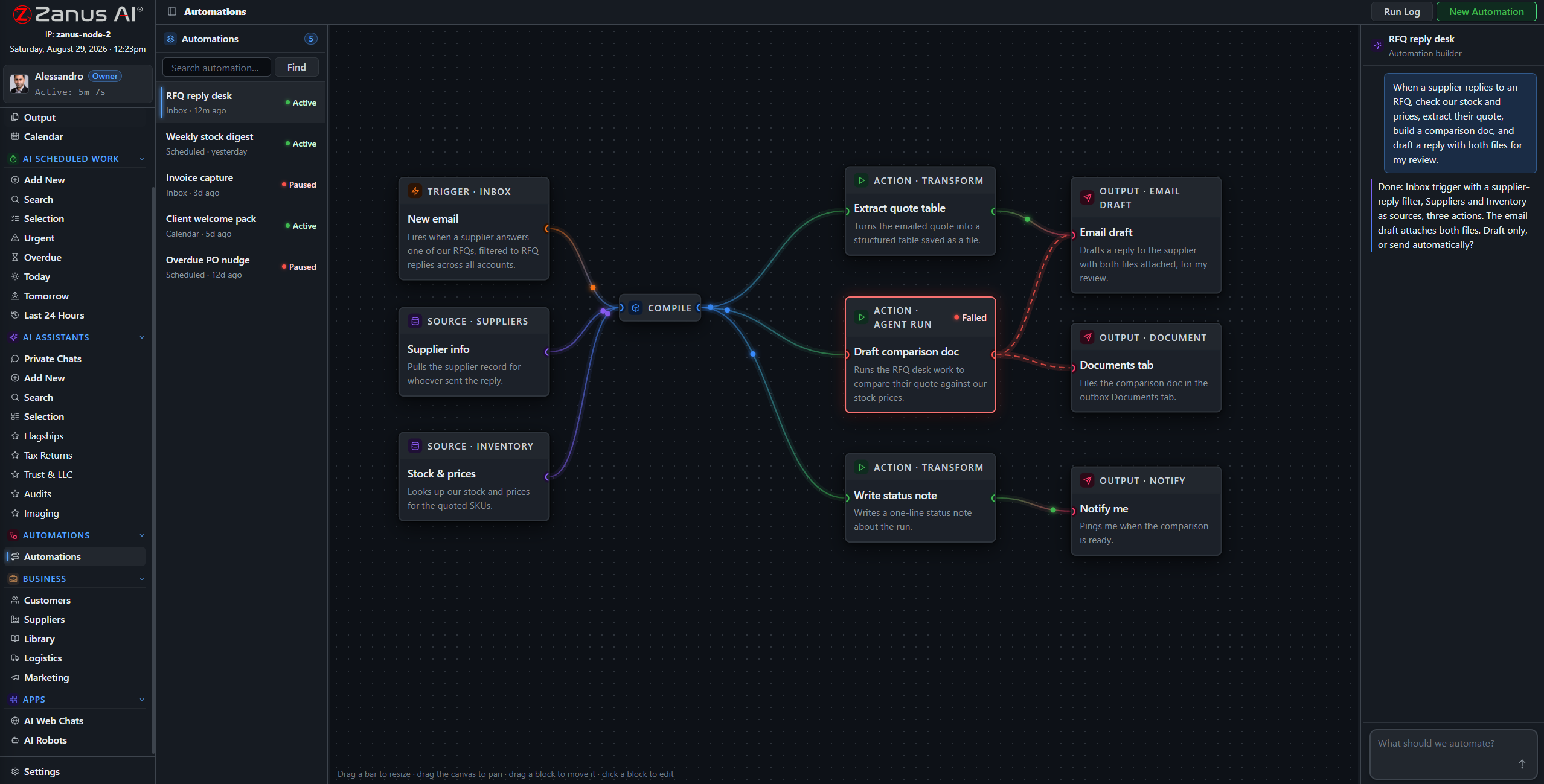
When something fails, you SEE it
Run states live on the flow: green success, red failure on the exact block. A silently broken routing flow means a platinum account sitting unanswered for a day — here, nothing fails silently.
- Run log per automation
- One-click retry on failures
- Finished drafts in Output, statused
Questions, answered
Who approves automated replies?
Your rules: queue everything for agent approval, or auto-send only the categories you designate as safe — order-status yes, refund decisions never.
See it working on YOUR queue — the demo IS the product.
ZANUS AI FOR CUSTOMER SERVICE — CSAT FOLLOW-UPS
The loop, actually closed.
CSAT surveys after resolution, winback notes to accounts gone quiet, proactive notices before customers discover the problem themselves — drafted by the AI from your own records, in the customer’s language, queued for approval. Follow-through, systematized.
Private tenant or your own server · unlimited agent users · no per-seat pricing, ever
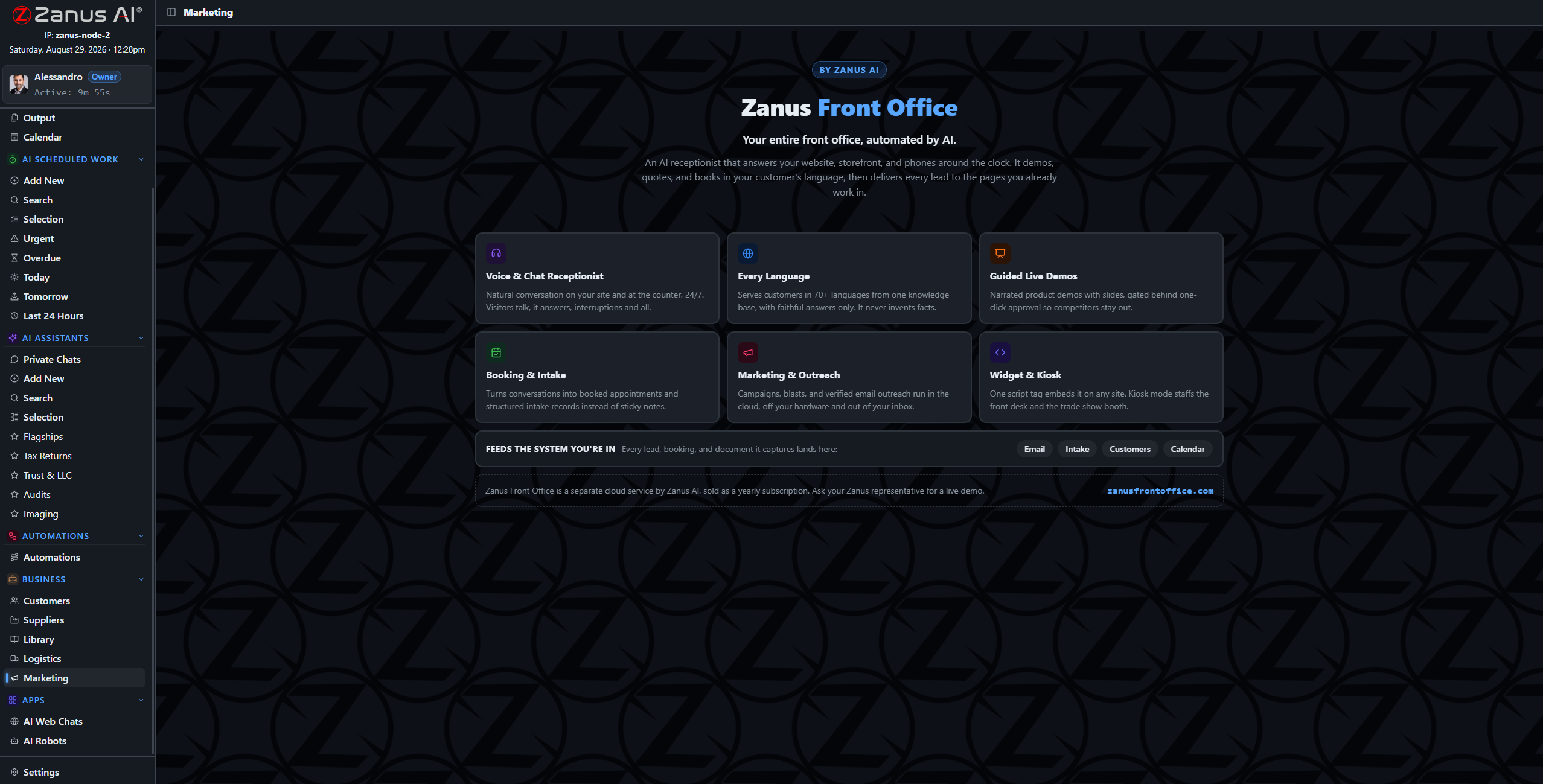
Follow-ups and sequences drafted from the support records — surveys, winbacks, notices — awaiting approval.
What it does
Detractors from last quarter, accounts with three-plus escalations, customers affected by Tuesday’s incident: audiences built from your own support history — no list ever exported.
The apology note and the survey read naturally in the customer’s own language — your support voice, their words.
Opt-outs and contact preferences are enforced by the system, not by memory. Every send is on the record.
Proactive beats apologetic
“Notify every customer on the affected plan before the invoice goes out wrong” becomes a drafted, scheduled sequence in minutes — grounded in your incident notes, sent before the queue fills with the tickets it prevents.
- Audiences from your own support data — private by architecture
- Sequences drafted for review, approval-first
- Results tracked: responses, saves, reopened accounts

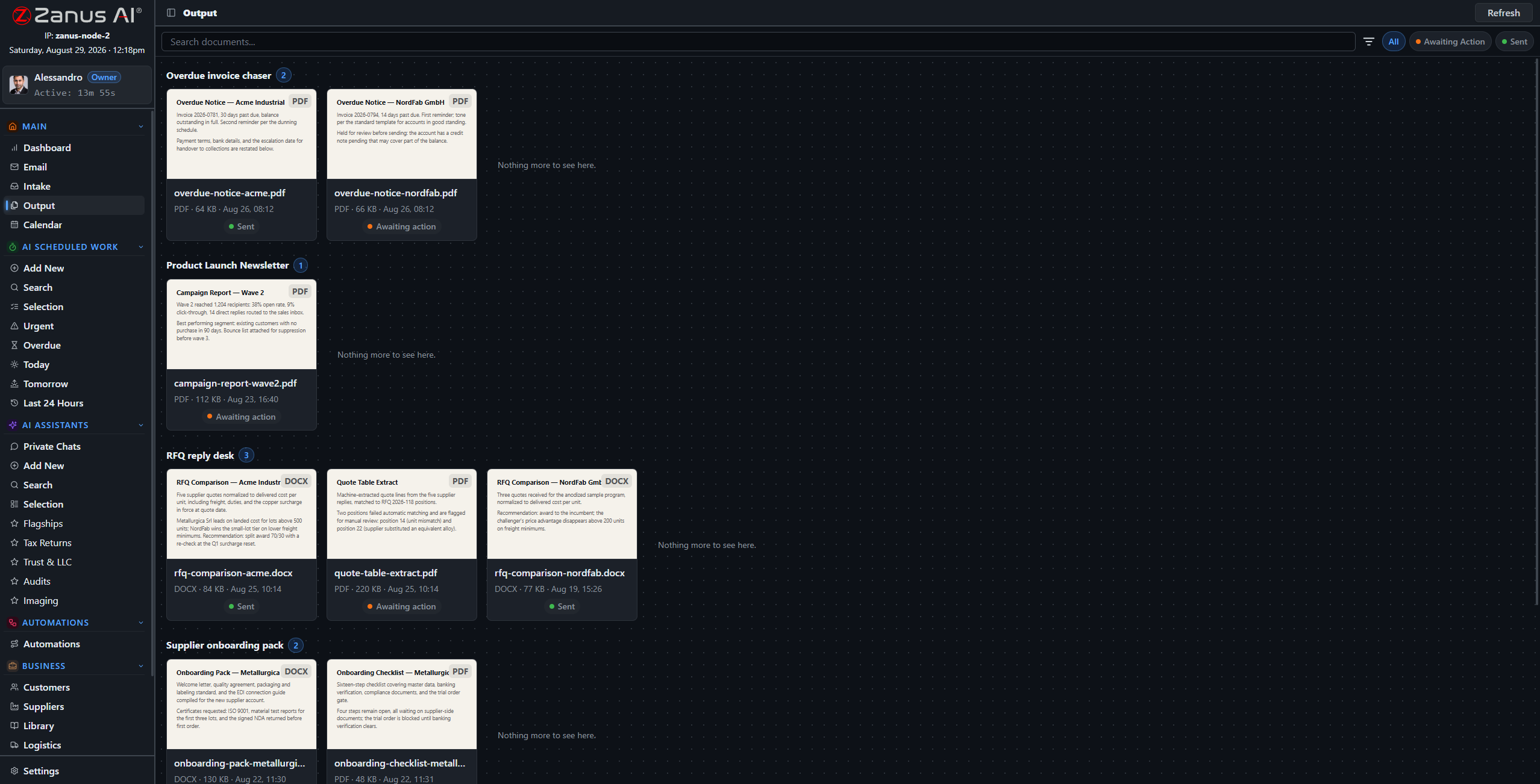
Approval first, always
Every outbound customer communication lands in the approval queue unless you designate the category as auto-send. The team stays in control of every word that reaches a customer.
- Approval workflow per communication type
- Full history of what was sent to whom
- Sequences pause automatically when a customer replies
Questions, answered
Can it help win back detractors?
It drafts the outreach from the actual history — what went wrong, what was promised — for your team’s review. The apology is informed, not generic.
Do customer lists ever leave our tenant?
No. Audiences, drafts and sends all happen inside your isolated tenant — your customer data is not shared with a mailing platform or anyone else.
See it working on YOUR queue — the demo IS the product.
ZANUS AI FOR CUSTOMER SERVICE — HELPDESK & INTEGRATIONS
Keep your helpdesk. Add the intelligence.
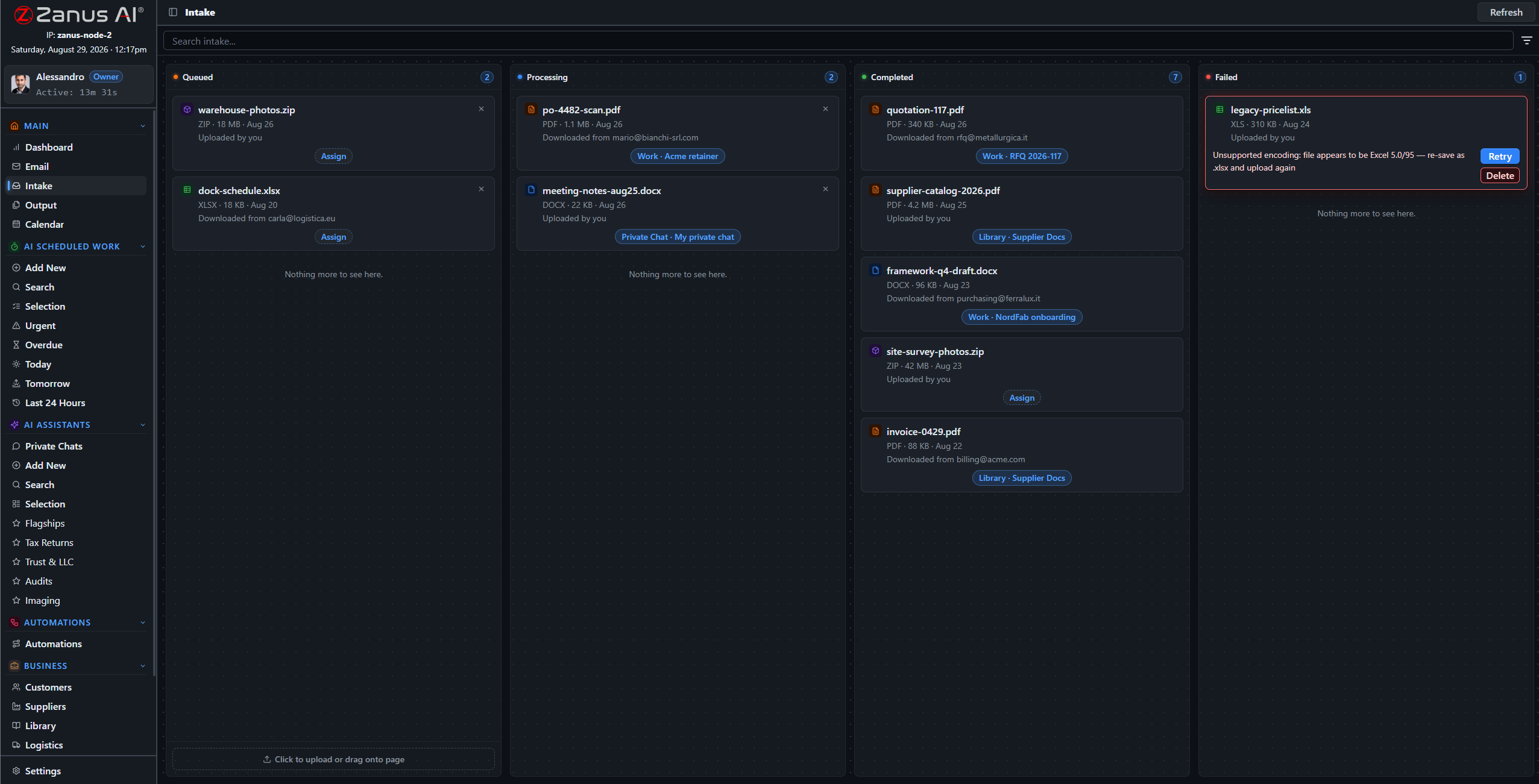
Your helpdesk stays the system of record for tickets. Zanus becomes the system of work: API connectors sync tickets, customers and knowledge both ways, the intake pipeline files what arrives, and AI-drafted replies flow back where they belong. No rip and replace.
Private tenant or your own server · unlimited agent users · no per-seat pricing, ever

No rip and replace: the helpdesk, CRM and billing stay — the AI layer connects to all of them.
What it does
Tickets, customers and articles mapped field by field, with a dry-run preview before anything writes — push, pull or two-way, your choice per object.
Connectors for the leading CRM suites sync accounts and contacts push, pull or two-way — support and sales finally read the same customer story.
A full API for whatever else the floor runs: the billing system, the status page, the QA tool — data in, results out, under scoped keys.
One question across all your systems
The ticket lives in the helpdesk, the contract in the CRM, the invoice in billing, the promise in an old email thread — and the AI reads across all of it. “What is the full story on this account?” becomes one question with one grounded answer.
- Field mapping with dry-run preview
- Each system stays master of its own records
- Every sync event on the audit record
- External systems appear as blocks on the automation canvas
Replies flow back where they belong
The reply the AI drafted, the KB update, the trend report: finished work returns to the systems that own it through the same connectors — reviewed and approved by your team first.
- AI output filed back to the ticket
- Approval workflow before anything writes back
- Webhooks notify your systems in real time
Questions, answered
Which helpdesks do you support?
Connectors are mapped per deployment — bring your helpdesk, CRM and billing to the demo and we walk through the exact integration path for your stack.
Does customer data pass through third parties?
No. The connectors run inside your tenant — or inside your building on the on-premises option. Data moves directly between your systems.
See it working on YOUR queue — the demo IS the product.
ZANUS AI FOR CUSTOMER SERVICE — DATA CUSTODY
Every transcript is customer data. Treat it that way.
Support conversations carry account numbers, disputes, addresses and grievances. Zanus holds them accordingly: isolated private tenants where nothing trains outside models, permissions to the field level, server-side redaction, a searchable audit trail — and a fully on-premises option.
Private tenant or your own server · unlimited agent users · no per-seat pricing, ever
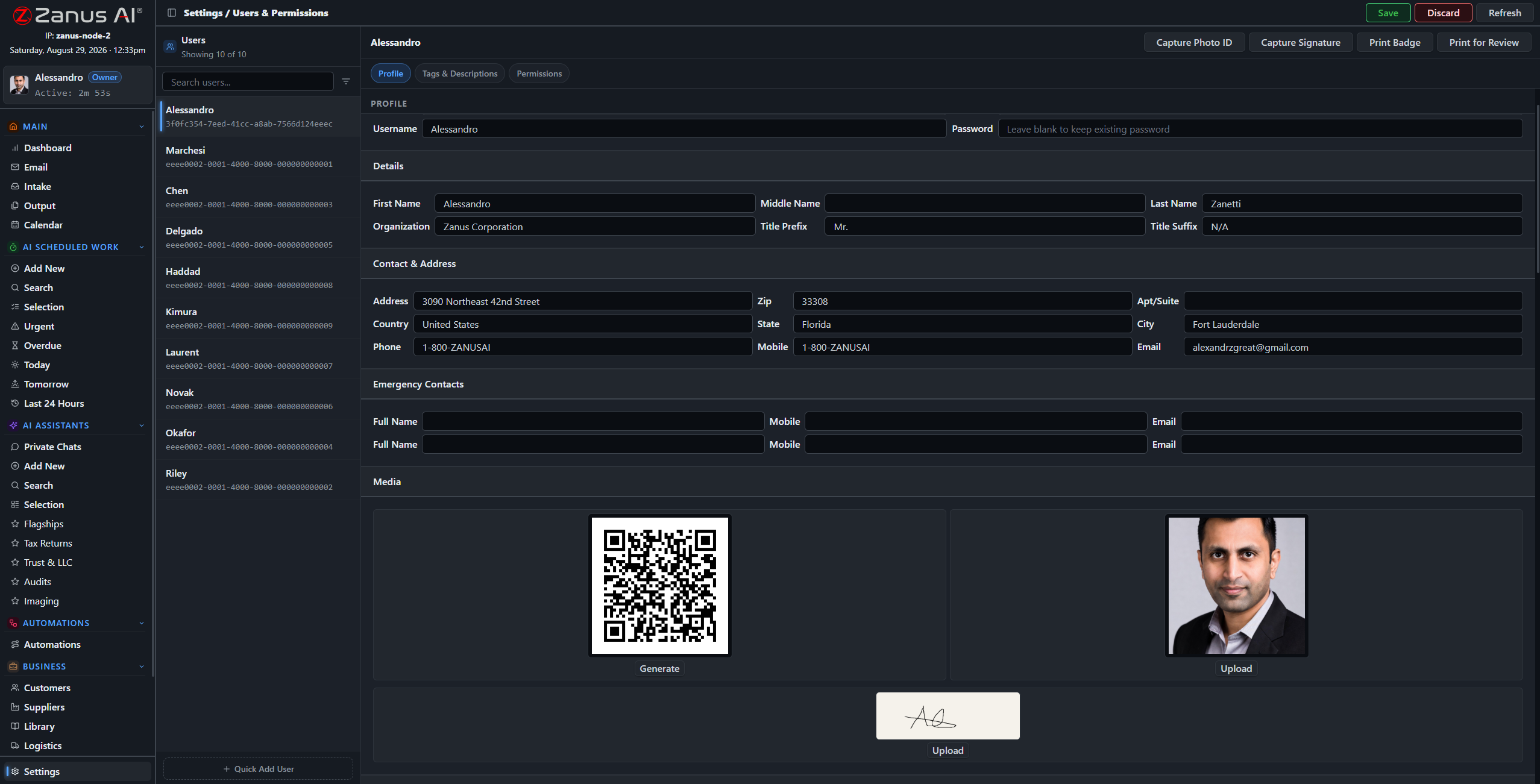
One record per user: role, tags, and granular permissions over every domain of the system.
What it does
The server redacts what a role cannot see — a tier-1 agent sees the ticket, not the account’s billing history; an outsourced agent sees even less, by your design.
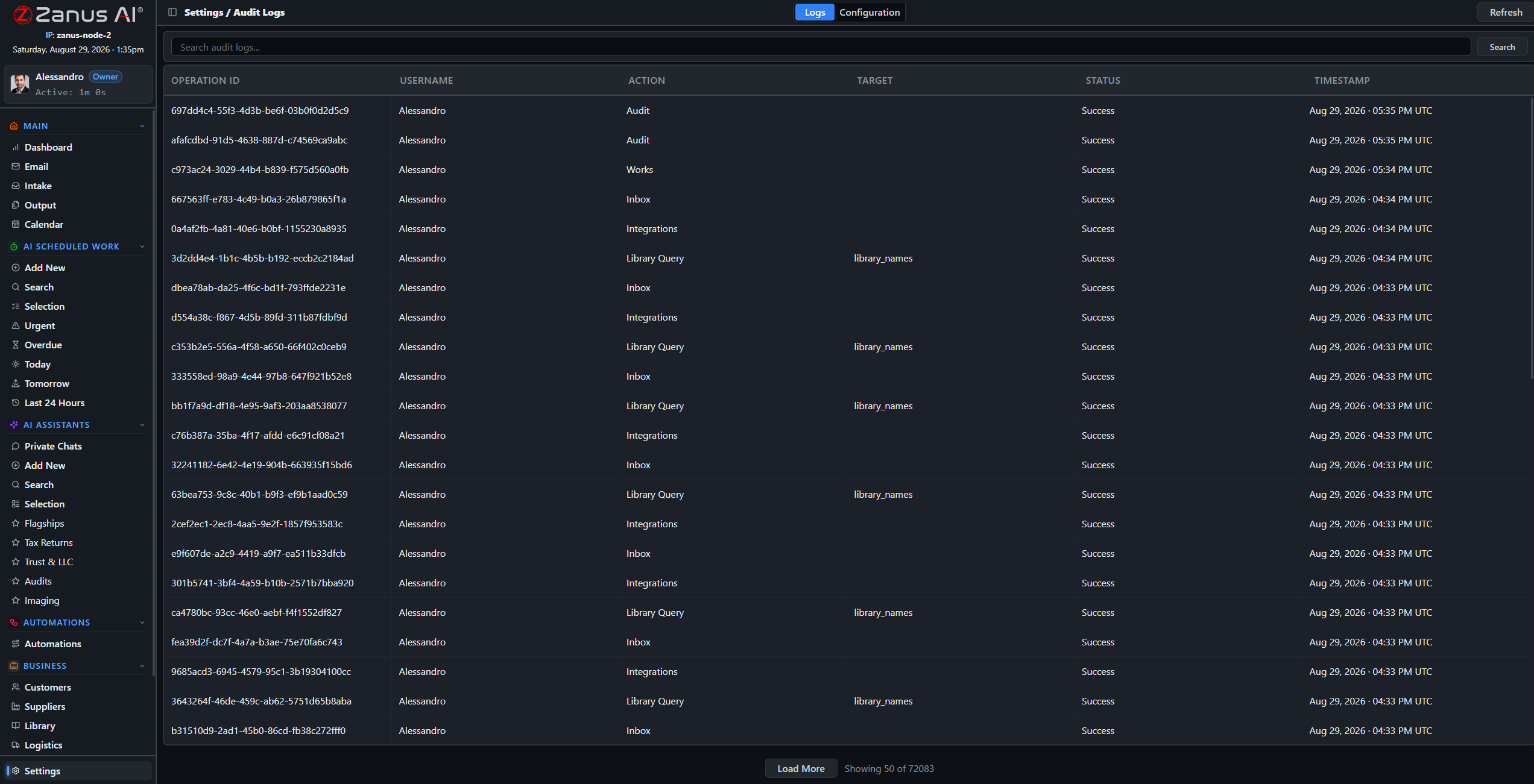
A searchable log of every audited action: who read which transcript, who changed the refund policy, who exported which report, and when.
Five-level workgroups map teams, tiers and sites; the on-premises option puts transcripts, knowledge and customer records physically inside your building.
The audit that takes minutes, not weeks
When the question comes — from a client’s security review, a privacy request or your own counsel — the answer is a search away: access records, transcript trails, update history, all in one place.
- Searchable audit trail
- Automatic pre-update snapshots with rollback
- SOC-2-aligned deployment path
Questions, answered
Where do transcripts live?
In your isolated tenant — never training outside models — or fully on-premises on hardware you own. Either way, they are yours alone.
Our clients audit our vendors — can you pass?
The architecture is built for scrutiny: isolation, permissions, redaction, audit trail. Bring your client’s security questionnaire to the demo and we walk it together.
See it working on YOUR queue — the demo IS the product.
ZANUS AI FOR CUSTOMER SERVICE — LIVE DEMO
Do not watch a video.
Talk to your AI.
Big vendors show contact-center demos as videos behind a form. Ours is the product itself, configured for support: open the chat below-right and try it — ask about an order, start a return, push it until it escalates.
The conversation you have with us IS the demo
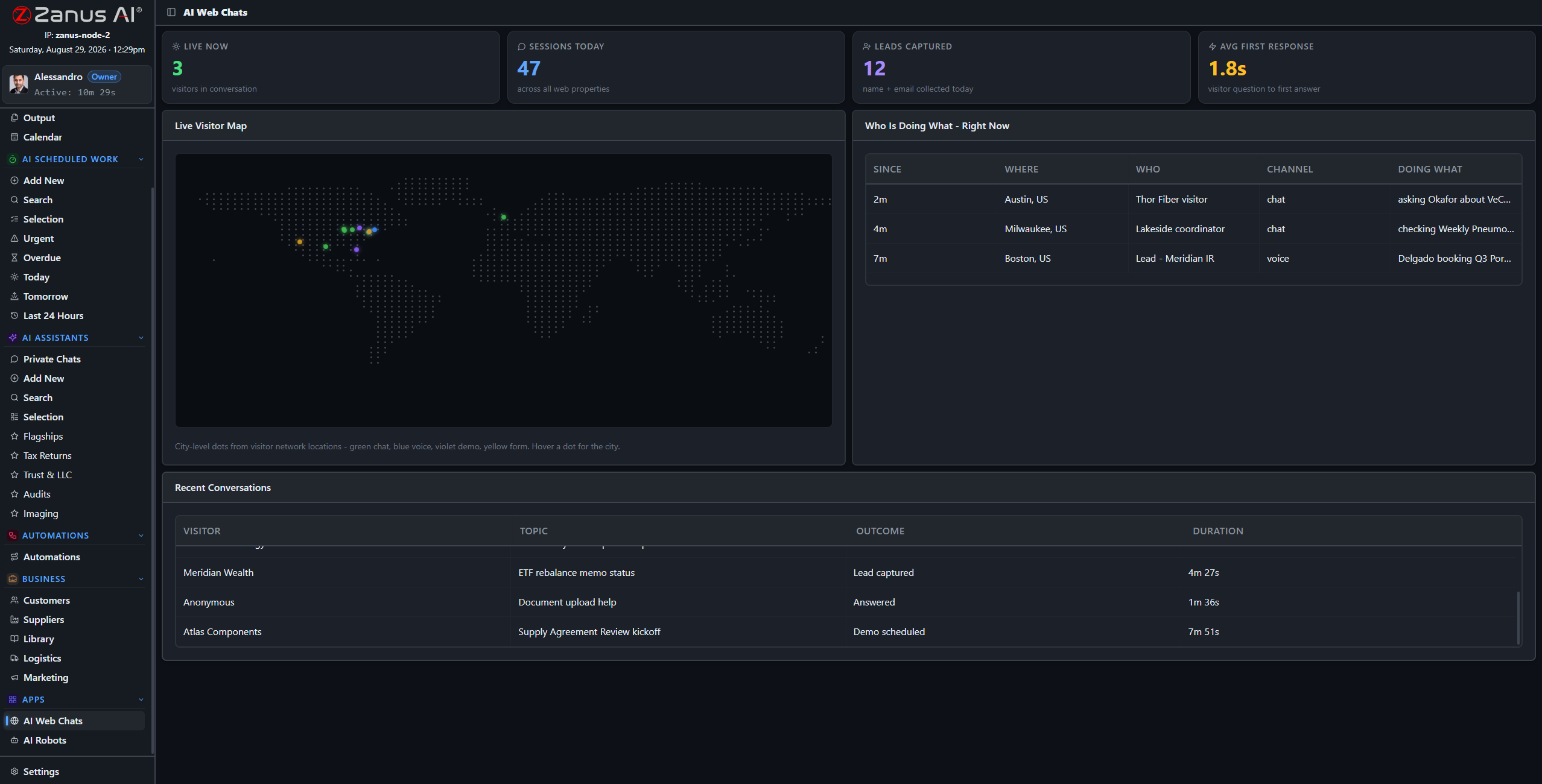
This screen is watching demos like yours happen: live conversations, outcomes, first response in seconds.
What it does
Ask the chat: “where is my refund?” — watch it answer from records, stay claim-guarded, and escalate gracefully when you push past its knowledge.
Ask: “how would you draft a reply to an angry billing ticket?” — it walks the workflow it would run in your tenant, grounded, cited, agent-reviewed.
The full demo loads a support tenant with sample tickets: routing, trend reviews, draft replies, CSAT flows — your queue, working.
Or pick your exact business
Every link below is a full live-demo page for that specific business — its vocabulary, its calls, its booking rules.
Two minutes to your inbox
Request the demo and the interactive support demo arrives in about two minutes — no sales call, no calendar dance. Watch it, interrupt it with questions, and book the human conversation when YOU are ready.
- Interactive demo, support-configured
- Ask questions mid-demo — it answers and resumes
- In your inbox in ~2 minutes, free

Questions, answered
Is the demo really the product?
Yes — the same AI, configured with a sample support tenant. What you see is what your agents get, with your knowledge base instead of the samples.
See it working on YOUR queue — the demo IS the product.
Sharing with a colleague? 📄 Get the PDF · ✉️ Email this page ·