ZANUS AI FOR TRANSCRIPTION & LITIGATION — OVERVIEW
From the record to the answer, before the hearing.
Scheduling calls answered, rush requests captured at 10 PM. Depositions and hearing audio transcribed with speakers identified, searchable to the exact moment, digested with page-line citations. One AI system for the client-facing desk and the litigation-support engine — in YOUR isolated tenant, or on hardware you own.
Private tenant or your own server · your whole team · privilege-conscious architecture
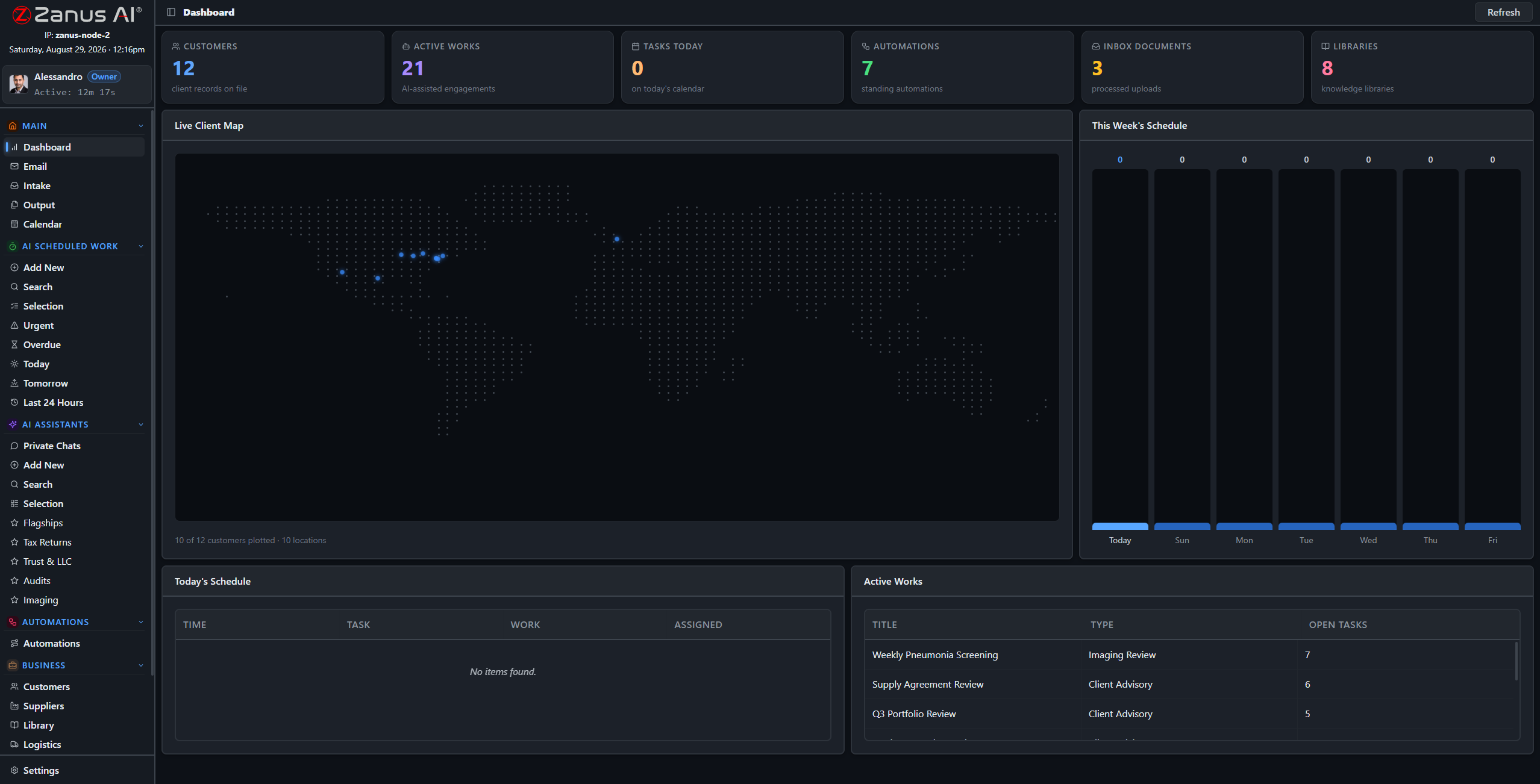
A real deployment view: matters, transcription jobs, overnight digests awaiting review.
What it does
Deposition audio, hearing recordings, witness interviews: transcribed with speaker identification, timestamped, filed to the matter — searchable the same day, not next week.
“Where does the witness discuss the maintenance schedule?” — answered across every transcript ever produced, with the segment cited and ready to jump to.
Matter walls as workgroups, protective-order-aware access levels, field-level permissions, server-side redaction, full audit trail — and nothing in your tenant trains anyone else’s model.
Front office: the desk that never misses a rush job
A trial team calls at 10 PM needing a deposition transcribed for a 9 AM hearing. The Zanus front office answers, captures the job — media, deadline, format, matter — quotes from your real rate card, and opens the work order before your competitors open their office.
- AI phone on your lines, 24/7, 40 languages
- Rush requests captured with deadline, format and matter details
- Quotes from your real price list, with payable links
- See the Front Office for litigation support →

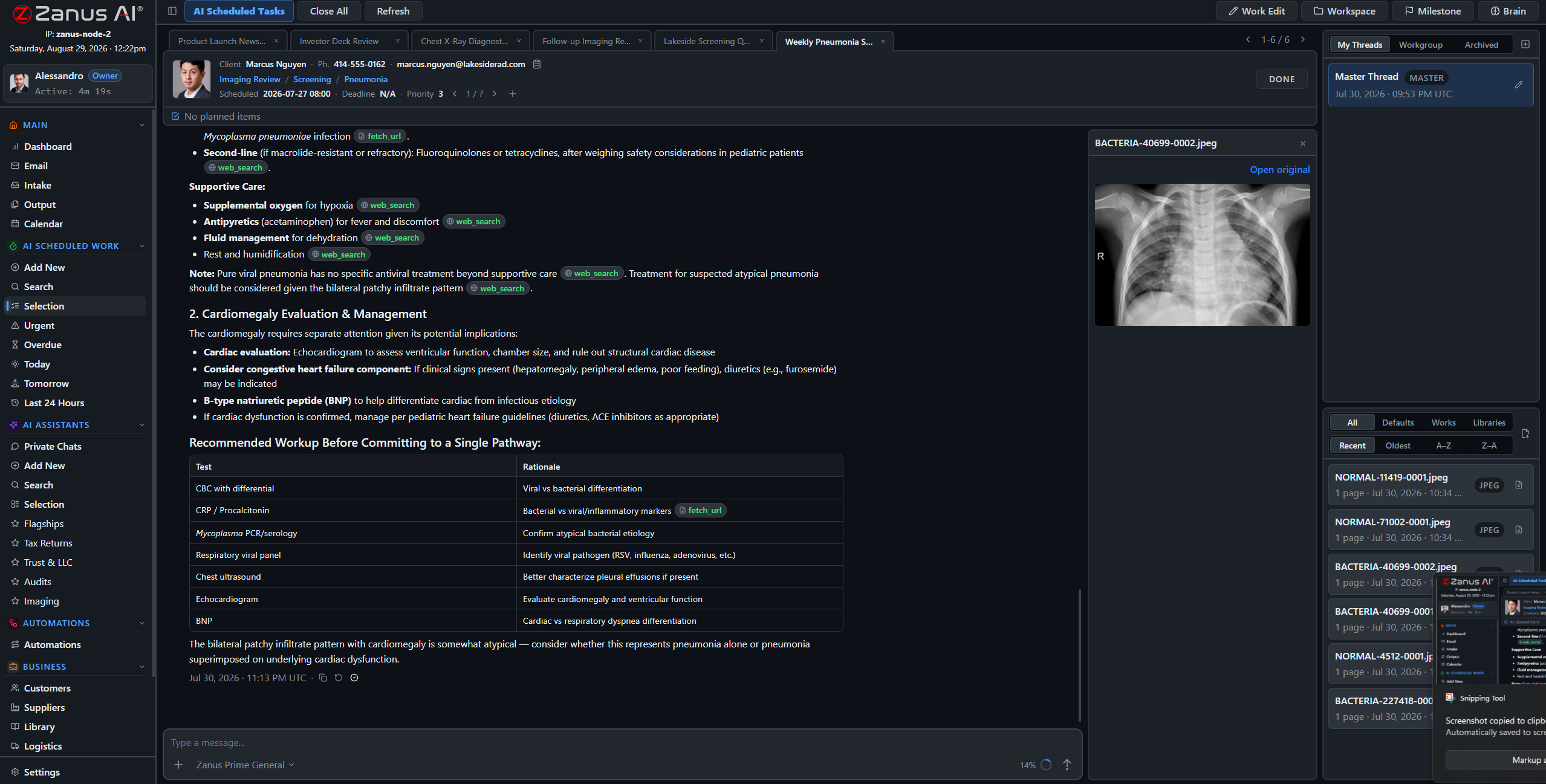
Back office: the testimony, worked
An overnight deposition digest with page-line citations, a designation cross-check against the protective order, an exhibit index built from the record — executed on schedule, cited, waiting for the litigation-support manager’s review.
- Scheduled AI work: digests, designation reviews, exhibit indexes
- Answers cited to page, line and timestamp
- Every draft waits in Output for human review
- See the Back Office for litigation support →
When the record cannot leave the building
Sealed matters, protective orders and government work can rule out any cloud. The identical OS runs on Zanus hardware inside your office: air-gap capable, USB updates, your whole team — case media physically incapable of leaving.
- Private On-Premises AI: owned, no recurring fees
- On-Prem Tokens Server for high-volume media processing
- Explore the AI Servers →

Questions, answered
Does this replace the certified court reporter?
No. Certified reporting and the official record remain the reporter’s domain. Zanus works the media around it: rough transcripts, searchable archives, digests and indexes — always marked as working product, always human-reviewed.
How accurate is speaker identification?
Speakers are identified and labeled in the transcript, and every segment links back to the audio so a human can verify in one click. Working product is reviewable by construction — nothing is presented as final without review.
Per-page or per-gigabyte pricing?
Neither. one price per company, your whole team, no metering on your own workload — the economics of rush season finally work in your favor.
See it working on YOUR docket — the demo IS the product.
ZANUS AI FOR TRANSCRIPTION & LITIGATION — FRONT OFFICE
The 10 PM rush request, captured.
Trial teams do not call during business hours — they call the night before the hearing. The Zanus front office answers on your menu, in your voices, captures the job with deadline and format, quotes from your real rate card, and books it — 24/7, in up to 40 languages.
Private tenant or your own server · your whole team · privilege-conscious architecture

Calls, chats, job intakes and quotes — one dashboard the operations manager can read.
What it does
Call your own office at 10 PM with a rush job. Voicemail? The AI answers in one ring, captures media, matter, deadline and delivery format, and opens the work order — confirmation in the client’s inbox in minutes.
Page rates, rush multipliers, video sync, copies: quoted from YOUR actual price list with a payable link — no morning-after spreadsheet reconciliation.
“Is my transcript ready?” answered from the live job record — in production, in review, delivered — without interrupting the production floor.
From first call to opened job, hands-free
A paralegal calls about a deposition happening Thursday; the AI answers, captures the caption, location, expected length and delivery deadline, checks reporter and videographer availability on real calendars, and books the assignment — while your scheduler sleeps.
- Real calendar sync for reporters and videographers
- Job details captured in a structured intake, filed to the matter
- Standing clients recognized, their preferences applied
- Anything unusual escalated to a human by your rules


The web and the inbox work too
Website chat that answers like your best scheduler, web order forms worked in minutes, inbound email with audio attachments filed to the right matter and acknowledged — every conversation transcribed, fittingly.
- Grounded website chat, 40 languages, no invented answers
- Email attachments filed to the matter automatically
- Every conversation logged with a transcript
- See the full Front Office tour →
Questions, answered
Can it handle conflict-of-interest screening at intake?
It captures the caption and parties and checks them against your records so conflicts are flagged before a job is accepted — the acceptance decision stays with your team.
Do we keep our phone numbers?
Yes. Your numbers stay; calls route AI-first after hours, scheduler-first during the day, or any mix per line and per hour.
What about non-English proceedings?
The front office speaks up to 40 languages, and multilingual media is part of the production workflow — bring a sample to the demo.
See it working on YOUR docket — the demo IS the product.
ZANUS AI FOR TRANSCRIPTION & LITIGATION — BACK OFFICE
The deposition ended at 5.
The digest is ready at 9.
Transcribe, digest, designate, index: litigation support is the factory behind the trial team. The Zanus back office turns audio into speaker-identified, timestamped transcripts and drafts the digests and indexes on top — every product cited to page, line and moment, every draft human-reviewed.
Private tenant or your own server · your whole team · privilege-conscious architecture
A real session: 6-hour deposition transcribed and digested — themes extracted, page-line cites attached, reviewer decides.
What it does
Deposition and hearing audio transcribed with speaker identification and timestamps — each segment linked to the audio for one-click verification, exportable by segment.
A six-hour deposition becomes a themed digest overnight: admissions, contradictions and exhibit references cited by page and line — ready for the motion, verifiable in seconds.
Deposition designations cross-checked against confidentiality orders, exhibit indexes built from the record, errata tracked — the tedium drafted, the judgment human.
Search the testimony, not the file names
“Every time any witness mentioned the brake inspection” — answered across all transcripts in the matter, segments cited with timestamps, ready to jump to the moment in the audio. The needle-in-a-haystack afternoon becomes a ten-second question.
- Plain-language search across every transcript produced
- Results cited to page, line and timestamp
- Exportable, citable segments for motions and briefs


The trial notebook, assembled
Witness-by-witness summaries, chronologies built from testimony and exhibits, inconsistency memos comparing what a witness said in deposition versus documents: drafted from the record in your templates, waiting for the attorney’s judgment.
- Your templates, your caption formats
- Chronologies cross-referenced to exhibits
- Approval workflow before anything reaches the trial team
Questions, answered
Is the AI transcript the official record?
No — the official record remains the certified reporter’s product. AI transcripts are working product: fast, searchable, linked to the audio, and always labeled as such.
Can it process video depositions?
Yes — the ingestion pipeline handles audio and video media alongside documents; transcripts stay synced to the source recording by timestamp.
YOU MIGHT ALSO LIKE
The Back Office executes. Who answers the phone?
Front Office AI picks up every call and chat — books, quotes, follows up, 24/7 in 40 languages. Watch it run a business like yours, live.
See it working on YOUR docket — the demo IS the product.
ZANUS AI FOR TRANSCRIPTION & LITIGATION — TRANSCRIPTS
Ask the record. It answers to the line.
Transcripts, exhibits, pleadings, productions, audio and video — loaded into curated libraries the AI reads from. Ask in plain language; get the answer cited to page, line and timestamp, scoped to who is allowed to ask.
Private tenant or your own server · your whole team · privilege-conscious architecture
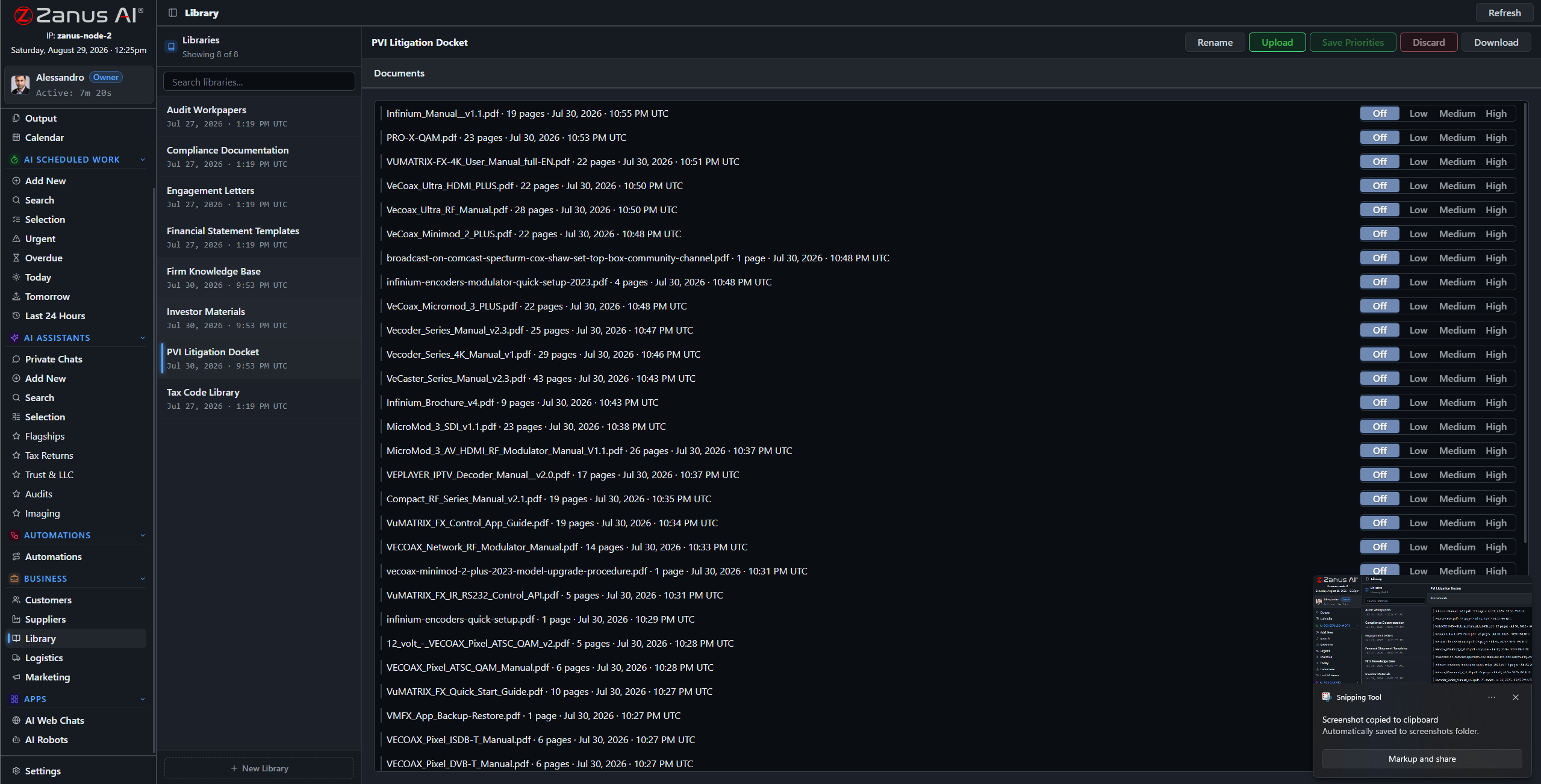
Libraries in priority order: final transcripts outrank roughs, current versions outrank superseded ones.
What it does
PDFs, scanned exhibits, deposition video, hearing audio, spreadsheet productions — the ingestion pipeline turns the whole record into queryable knowledge.
The AI cites the transcript page, the exhibit number, the timestamp — or says the answer is not in the record. An invented citation in litigation is sanctionable; here it is structurally blocked.
The contract paralegal on one matter sees that matter; the sealed case is invisible to everyone outside its wall — enforced server-side, not by folder discipline.
Every transcript you ever produced, one question away
“Has this expert testified about tread separation before?” “Which witnesses mentioned the emails from March?” “Where is the exchange about the settlement authority?” The archive answers in seconds with segments cited — across matters and years, permission permitting.
- Plain-language questions across the whole archive
- Segments cited to page, line and timestamp
- Priority order: final and current versions win

Questions, answered
Who can see a sealed matter’s media?
Only the roles and workgroups you authorize. Permissions reach the field level, the server redacts what a user cannot see, and every access is on the audit record.
Do transcripts train outside models?
Never. Your tenant is isolated; your clients’ testimony is theirs alone — and the on-premises option keeps the record physically inside your office.
See it working on YOUR docket — the demo IS the product.
ZANUS AI FOR TRANSCRIPTION & LITIGATION — AI WORKFORCE
The night shift that never calls in sick.
Assign work to the AI the way you assign it to production staff: type, media, deadline, recurrence. Overnight deposition digests, weekly designation reviews, exhibit indexes before the pretrial conference — executed on schedule, cited to the record, under review.
Private tenant or your own server · your whole team · privilege-conscious architecture
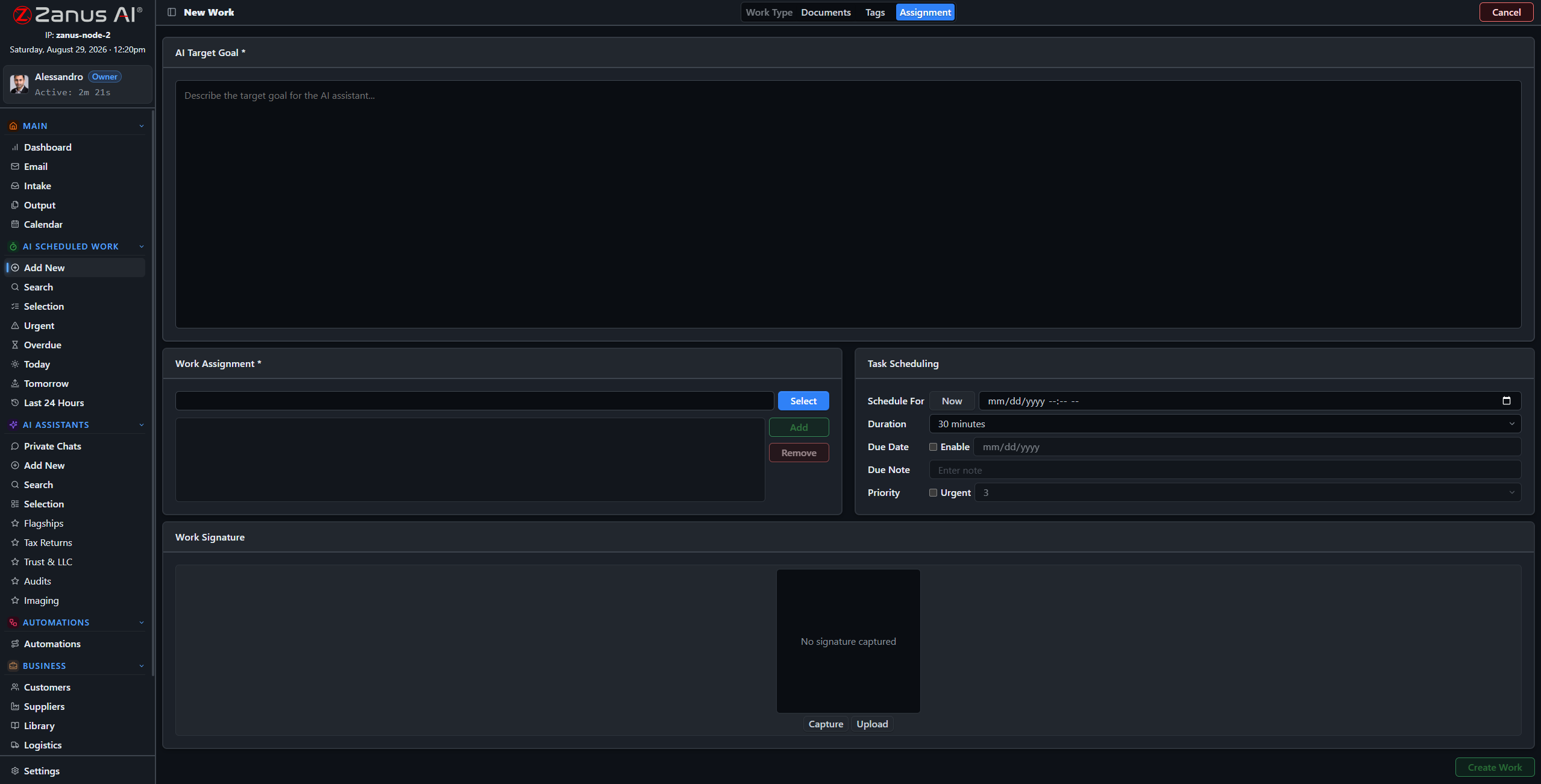
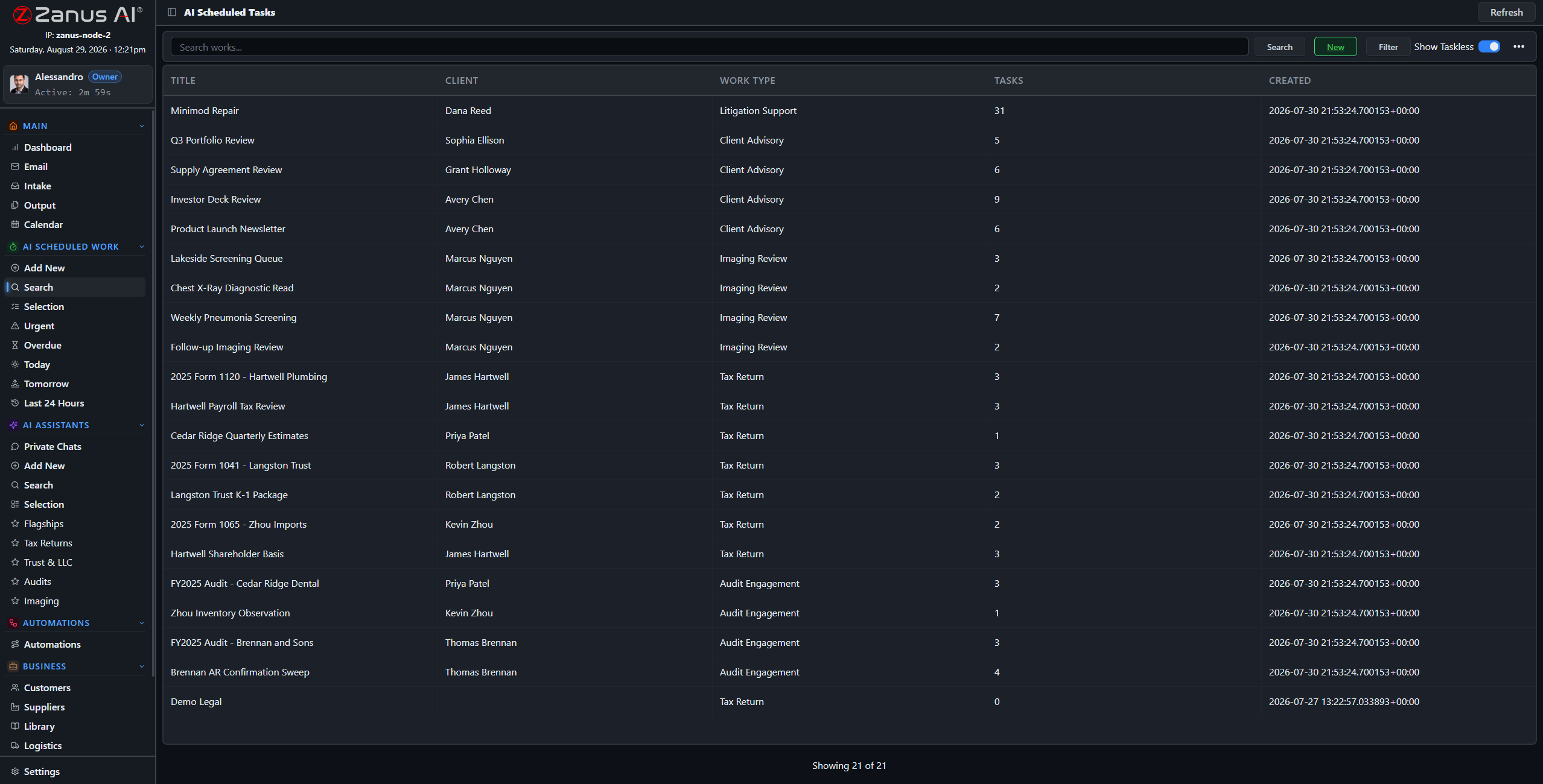
Four steps: work type, source media, tags, schedule — the AI takes it from there.
What it does
Deposition digest, designation review, exhibit index, witness chronology, testimony comparison: work types molded to your services, each with default sources and examples.
The AI’s workload reads like the production board: one-click views show what is urgent, late and due — the Thursday digest does not slip while everyone fights the Monday trial.
Reasoning streamed live, cites to page, line and timestamp, milestones tracked — supervisable mid-work, auditable after, linked to the matter and the calendar.
9 PM: audio arrives. 7 AM: the digest is filed.
Set “Overnight Deposition Digest” once: when the day’s audio lands, the AI transcribes with speakers identified, extracts themes and admissions with page-line cites, and files the digest for the litigation-support manager’s morning review — before the trial team’s war room opens.
- Triggered or scheduled — rush season runs itself
- Every finding cited to the transcript and timestamp
- Digest waits in Output for human review
Questions, answered
Can we supervise a digest mid-work?
Yes — open the session, read the streamed reasoning, redirect it or stop it. Visible, accountable, interruptible, like any member of the production team.
What happens in trial season when volume spikes?
The AI does not get tired and the price does not meter: the constraint is your review capacity. Deployments size from a two-reporter shop to a multi-office agency.
See it working on YOUR docket — the demo IS the product.
ZANUS AI FOR TRANSCRIPTION & LITIGATION — PROTOCOLS
The production manual, answerable.
Every shop has its rules: transcript formats per court, designation handling under each protective order, media chain-of-custody steps. In Zanus those protocols are living documents: answerable in chat, attached to AI work by construction, current version always on top.
Private tenant or your own server · your whole team · privilege-conscious architecture
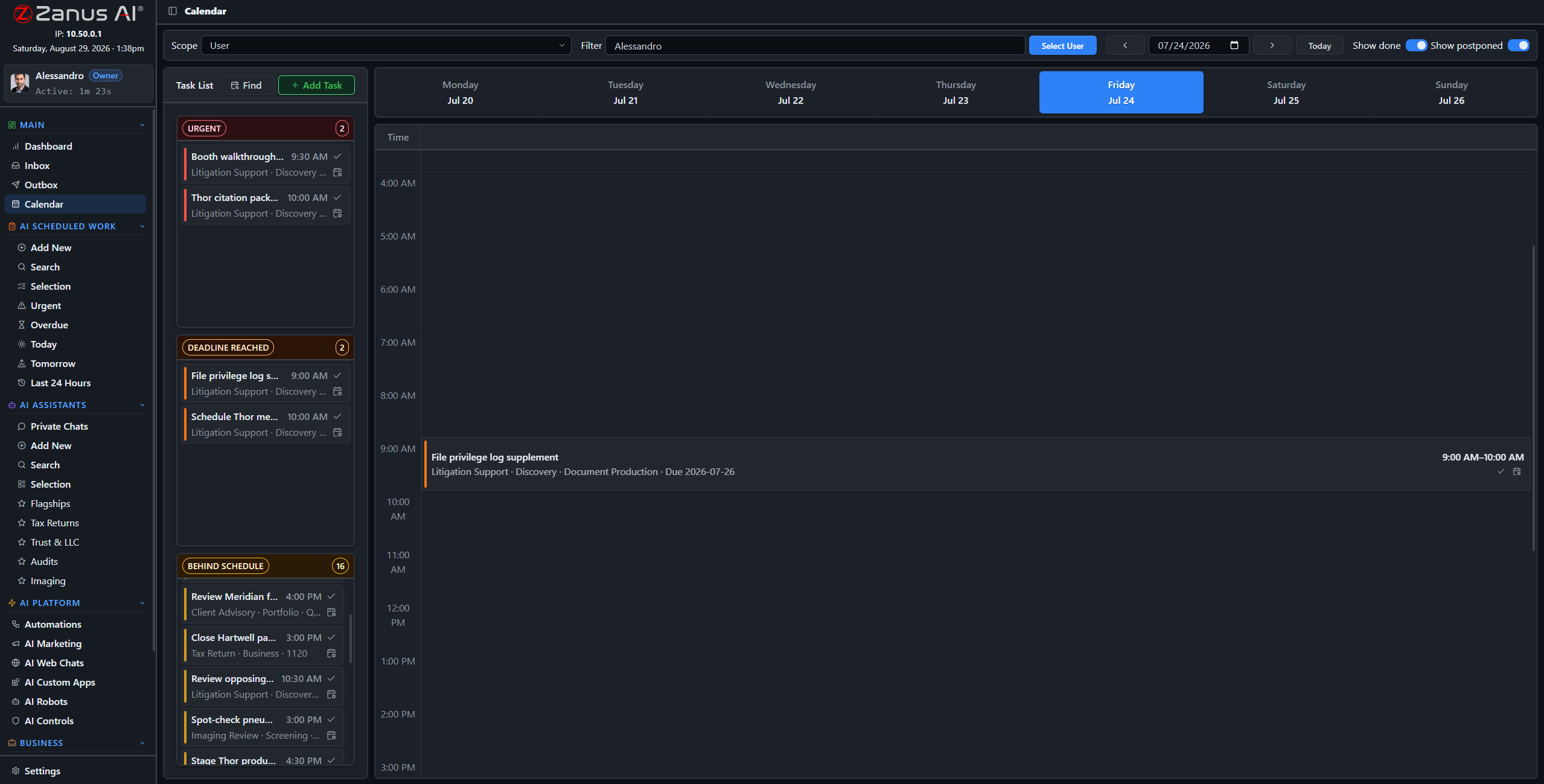
The protocol library: current format standards and handling procedures on top, superseded versions archived.
What it does
Court-specific transcript formats, errata procedures, designation rules, media-handling and retention protocols: one library, current versions ranked first.
“What is the format for this district’s realtime feed?” — answered in seconds with the standard attached, during the night shift, to any authorized team member.
The AI building an exhibit index reads the exhibit protocol; the designation review reads the protective order — by construction, not by memory.
Protocol upkeep, scheduled like production work
Court rule changes, client-specific format updates, retention-schedule reviews: assign them once as recurring AI work and the manual stops going stale — change summaries drafted for the production team, every review cycle on the audit record.
- Recurring review works with deadlines
- Change summaries drafted for team briefings
- Every review on the audit record
Questions, answered
How do format updates roll out?
Upload the new standard, set it on top: from that moment every answer and every AI work cites the new version. Old versions stay archived with dates — useful when a dispute turns on which standard applied.
See it working on YOUR docket — the demo IS the product.
ZANUS AI FOR TRANSCRIPTION & LITIGATION — TEAM TRAINING
Seasonal staff, trained before the trial calendar hits.
Trial season means contract paralegals, new scopists and overnight staff who have never seen your systems. In Zanus, they learn your protocols from the AI itself — and everyone has an assistant that answers “how do we…?” with the current procedure cited, at 2 PM or 2 AM.
Private tenant or your own server · your whole team · privilege-conscious architecture

Training lives inside the software: the AI walks each new hire through the shop’s own protocols.
What it does
New production staff learn your format standards, media handling and delivery procedures through guided training — productive on the first shift, progress visible to the manager.
“How do I handle an errata sheet for this client?” — asked to the assistant, answered from the protocol with the document attached, without waking the production manager.
Private chats work on any device with a login — the overnight scopist gets the same cited answer as the day team, in their own language.

The trainer that never tires of the question
The tenth “how do I mark confidential designations?” gets the same patient, cited answer as the first. Training content never goes stale because the assistant reads from the same living protocol libraries as everything else — update the procedure once and every future answer follows.
- Answers cite the current production protocol
- Preset assistants per role: scopist, paralegal, scheduler, biller
- Training progress visible to managers
Questions, answered
Does this train court reporters in stenography?
No — it teaches YOUR shop’s protocols and systems. Professional reporting skills and certification remain the reporter’s own craft.
See it working on YOUR docket — the demo IS the product.
ZANUS AI FOR TRANSCRIPTION & LITIGATION — AUTOMATIONS
The production pipeline, set once.
Describe the job in plain words — “when deposition audio arrives, transcribe it, digest it and notify the ordering attorney” — and it becomes connected blocks on a canvas, running on its own, with every run visible and retryable.
Private tenant or your own server · your whole team · privilege-conscious architecture
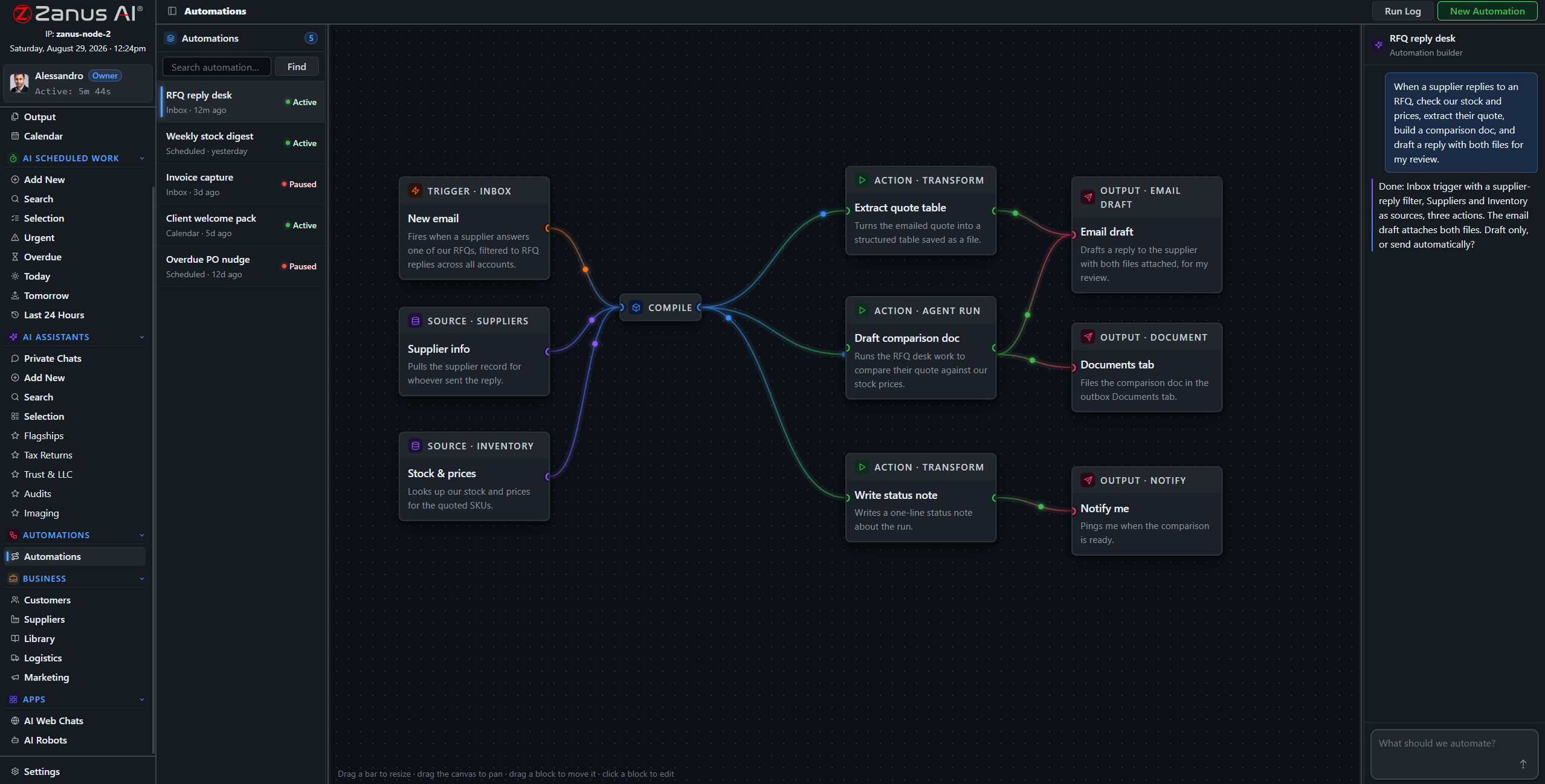
A real flow: media trigger, matter sources, AI transcription and digest steps, three outputs — drawn from a description.
What it does
Media lands: the flow transcribes with speakers identified, files the transcript to the matter, drafts the digest, and queues the delivery email — from one trigger, overnight.
A rush order is accepted: delivery deadlines land on the production calendar, review tasks are created, and the status page updates — nobody re-keys anything.
Finished transcripts delivered in the client’s format, invoice drafted from the rate card, confirmation logged — the paper trail writes itself.
In a deadline business, silent failure is disqualifying
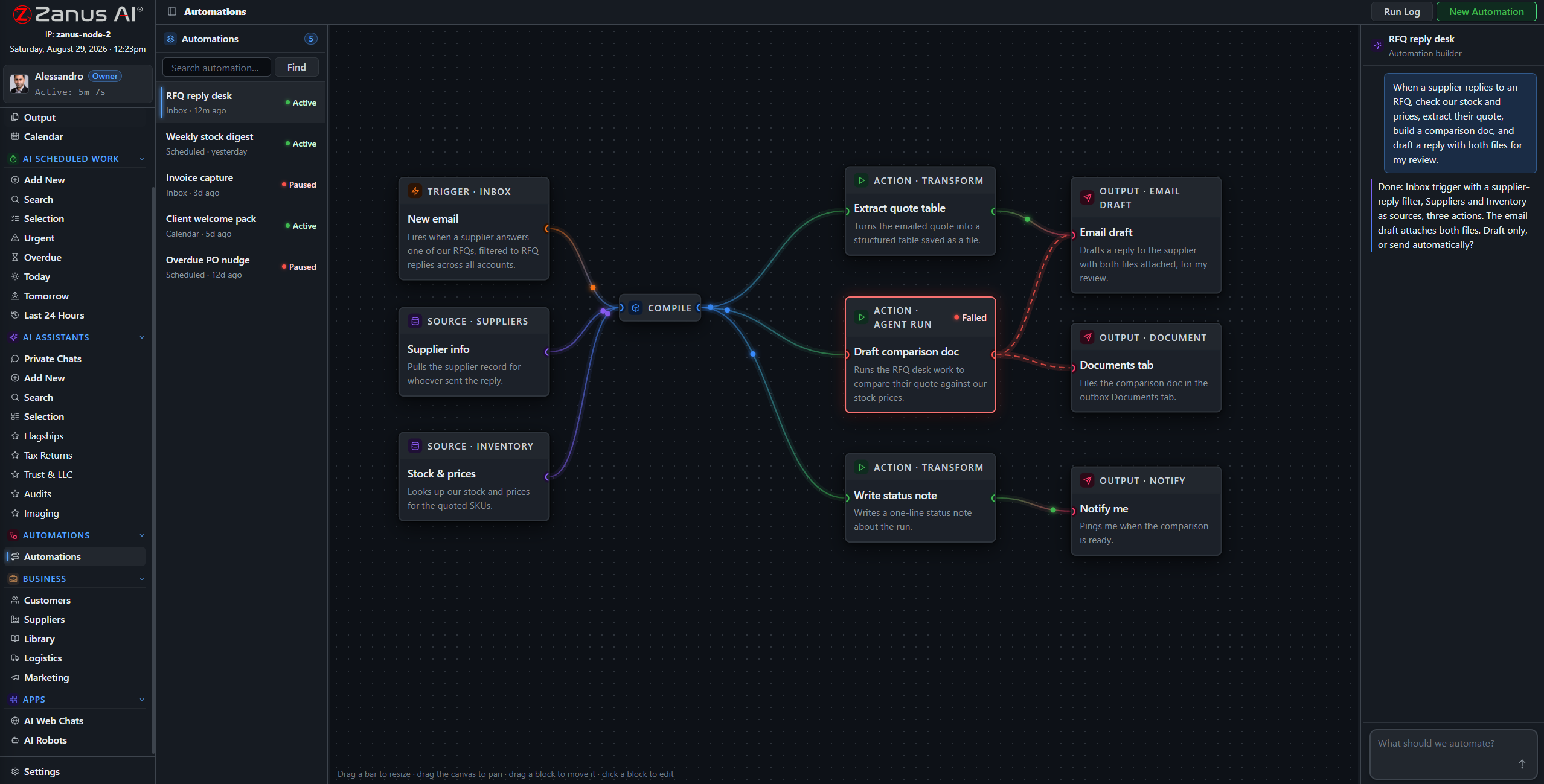
Run states live on the flow: green success, red failure on the exact block that broke. A transcription job that stalled or a delivery that failed to send is visible the moment it happens — with one-click retry and a run log the operations manager can read at 6 AM.
- Run log per automation, every execution recorded
- One-click retry on the failed block
- Finished products in Output, statused for review
Questions, answered
Does a digest go to the client without review?
Only if you designate that category as auto-send — by default every product waits at a human approval gate, a visible block on the canvas.
See it working on YOUR docket — the demo IS the product.
ZANUS AI FOR TRANSCRIPTION & LITIGATION — CLIENT OUTREACH
The firms that stopped calling, called back.
Trial-season availability notices, dormant-firm check-ins, new-service announcements, rate-card updates — drafted by the AI from your own client records, in your shop’s voice, queued for approval. The business development a production shop never has time for.
Private tenant or your own server · your whole team · privilege-conscious architecture
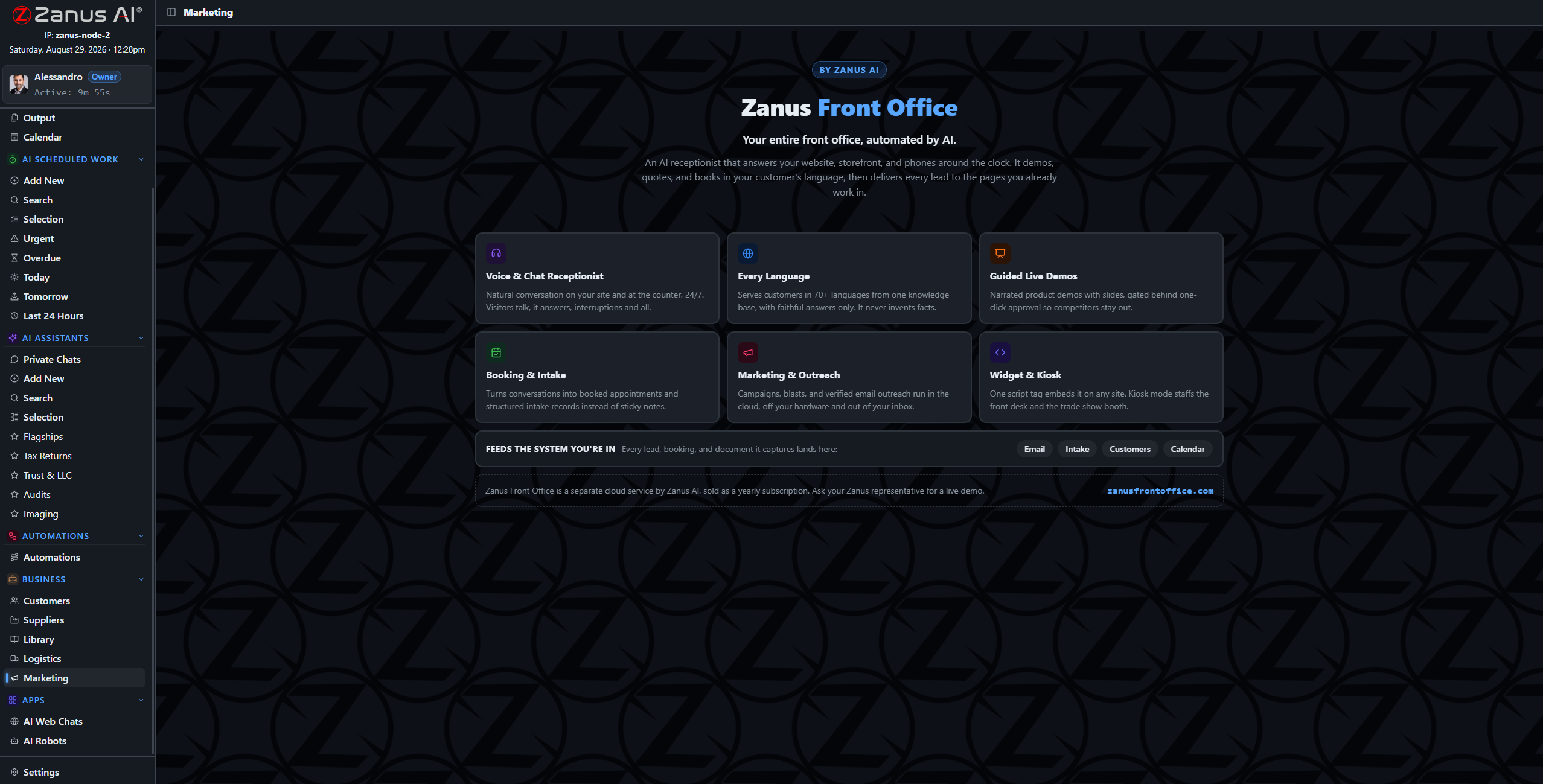
Campaigns and sequences drafted from client records — availability notices, check-ins, updates — awaiting approval.
What it does
Every firm that has not ordered in six months, every trial team with a matter on next quarter’s calendar, every client still on the old rate card: audiences built from your own records — no list exports.
Availability notices before trial season, check-ins after verdicts, capacity updates when the calendar opens: sequences drafted for approval, timed to when firms actually buy.
Opt-outs and contact preferences are enforced by the system, not by memory. Every send is on the record, tied to the client.
From the client records to the campaign, without export
Audience, content and sending live in the same system as the client and matter records — nothing leaves your tenant to reach a mailing platform. “Check in with every firm we served last trial season” becomes a drafted, scheduled sequence in minutes.
- Audiences from your own client data — private by architecture
- Sequences drafted for review, in your shop’s voice
- Replies tracked back to the client record

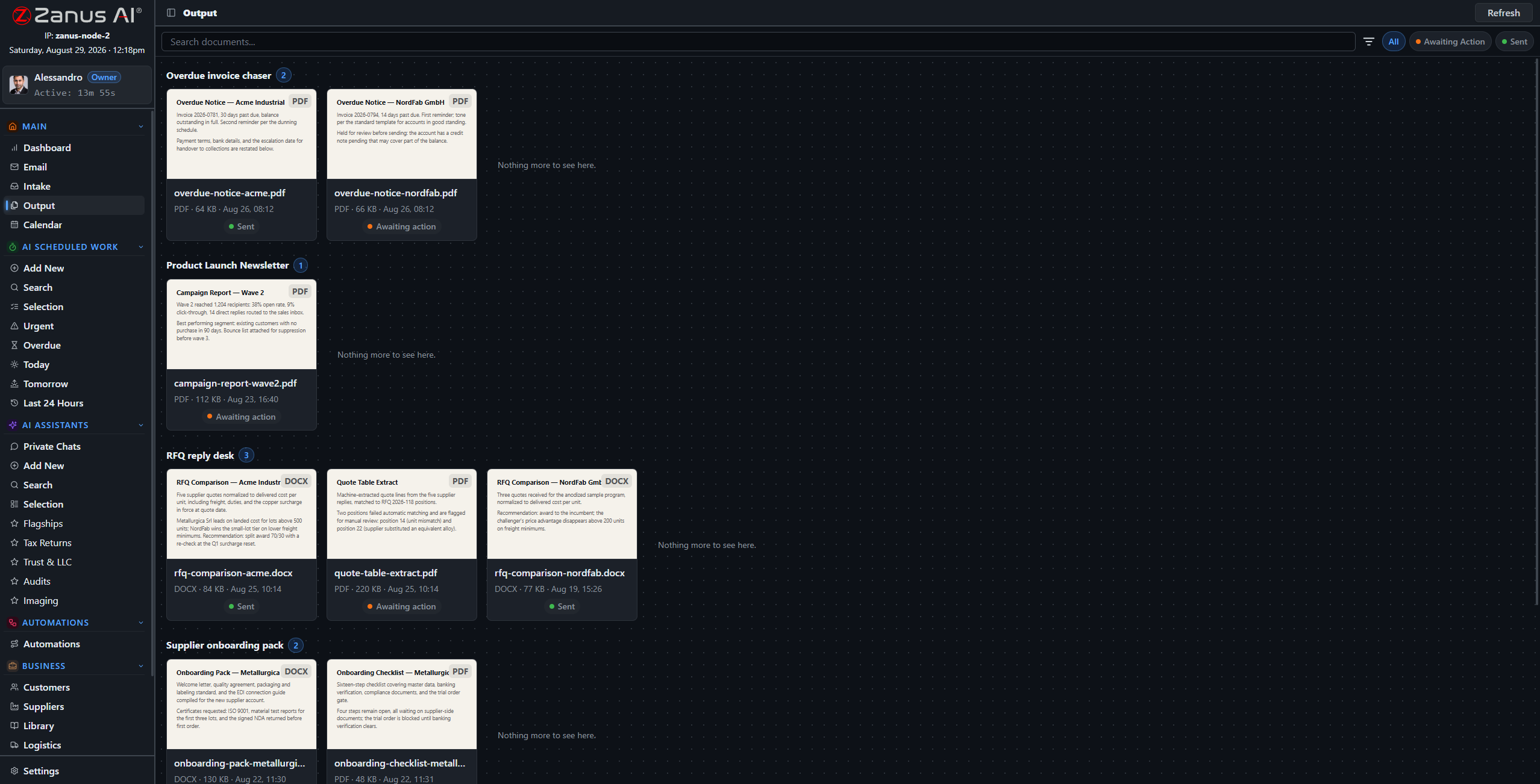
Approval first, always
Every outbound client communication waits in the approval queue unless you designate the category as auto-send. Law firms are exacting clients — every word that reaches them stays under your control.
- Approval workflow per communication type
- Full history of what was sent to whom, when
- Results tracked: replies, orders, reactivated firms
Questions, answered
Can it announce new services to the right firms?
Yes — launch video-sync or realtime services and the AI drafts the announcement to the segment of clients whose order history suggests they need it, for your approval.
Does it help win new firms too?
Yes — website chat and interactive AI demos qualify inquiring firms, and follow-up sequences keep the pipeline warm, under the same approval rules.
See it working on YOUR docket — the demo IS the product.
ZANUS AI FOR TRANSCRIPTION & LITIGATION — E-DISCOVERY & INTEGRATIONS
Keep the e-discovery platform. Add the intelligence.
Your e-discovery platform, case management and billing stay the systems of record. Zanus becomes the system of work: API connectors sync matters, media and documents both ways, and citable segments export where the trial team needs them. No rip and replace.
Private tenant or your own server · your whole team · privilege-conscious architecture

No rip and replace: e-discovery, case management and billing stay — the AI layer connects to all of them.
What it does
Matters, custodians, productions and media mapped field by field, with a dry-run preview before anything writes — push, pull or two-way, your choice.
Transcript segments with page-line-timestamp cites export in the formats trial teams use — straight into the platform where the review lives.
A full API for the rest of the stack: repository portals, delivery systems, billing — data in, results out, under scoped keys, every event logged.
One question across the platform, billing and the record
The production lives in the e-discovery platform, the invoice in billing, the transcript in the matter library — and the AI reads across all of it. “What is outstanding on this matter?” becomes one question with one grounded, cited answer.
- Field mapping with dry-run preview
- Each system stays master of its own records
- Every sync event on the audit record
- External systems appear as blocks on the automation canvas
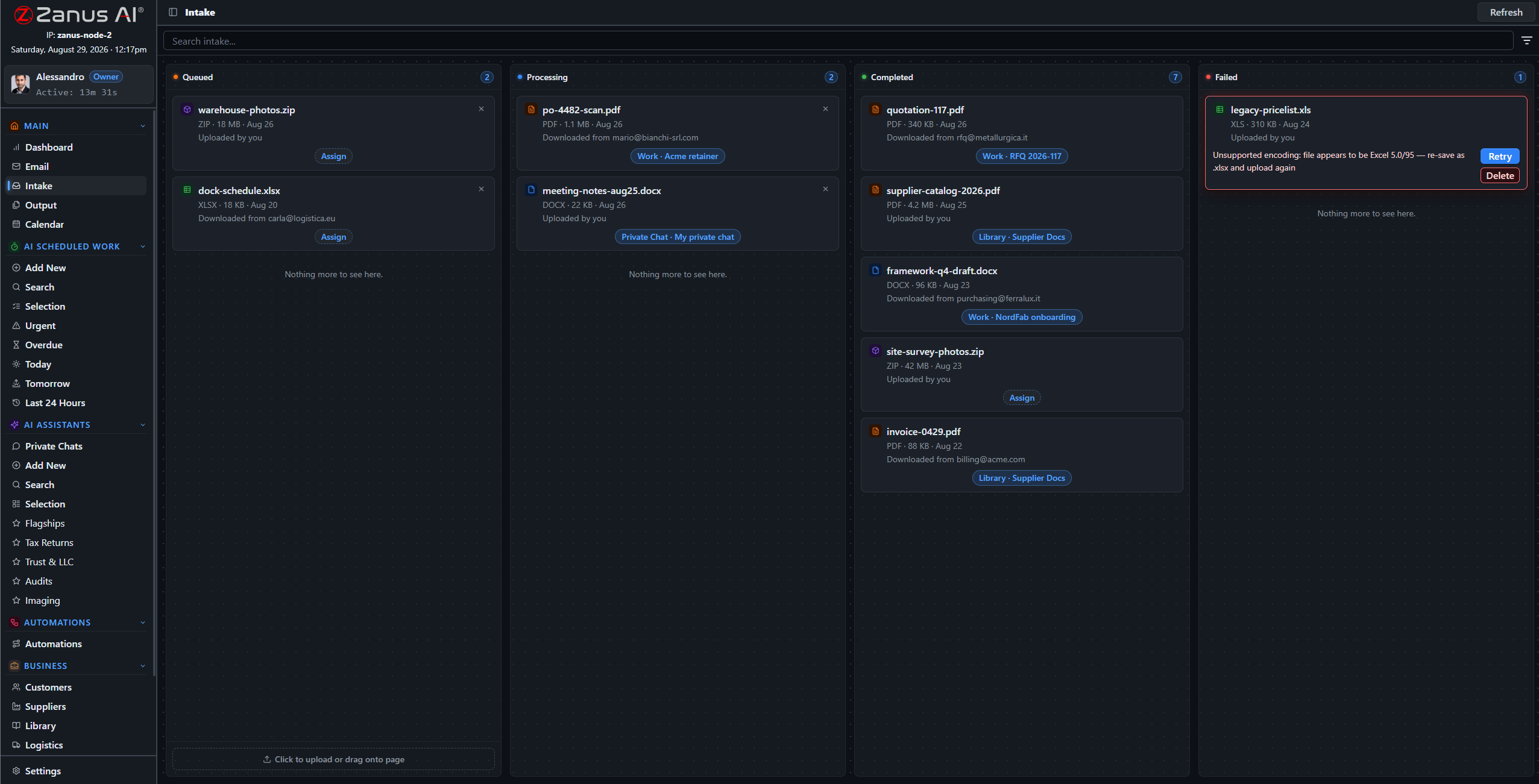
Products flow back where they belong
The digest the AI drafted, the exhibit index, the designation memo: finished products return to the case-management matter through the same connectors — after human review, never before.
- AI output filed back to the matter record
- Approval gate before anything writes back
- Webhooks notify your systems in real time
Questions, answered
Which e-discovery platforms do you support?
Connectors are mapped per deployment — bring your e-discovery platform, case management and billing systems to the demo and we walk through the exact path.
Does case media pass through third parties?
No. The connectors run inside your tenant — or inside your office on the on-premises option. Media moves directly between your systems.
See it working on YOUR docket — the demo IS the product.
ZANUS AI FOR TRANSCRIPTION & LITIGATION — CONFIDENTIALITY
Built like the protective order is watching.
Litigation support lives under other people’s confidentiality obligations: protective orders, sealed filings, attorneys-eyes-only designations. Here the discipline is architectural: matter walls as workgroups, permissions to the field level, server-side redaction, a searchable audit trail, and an air-gapped option.
Private tenant or your own server · your whole team · privilege-conscious architecture
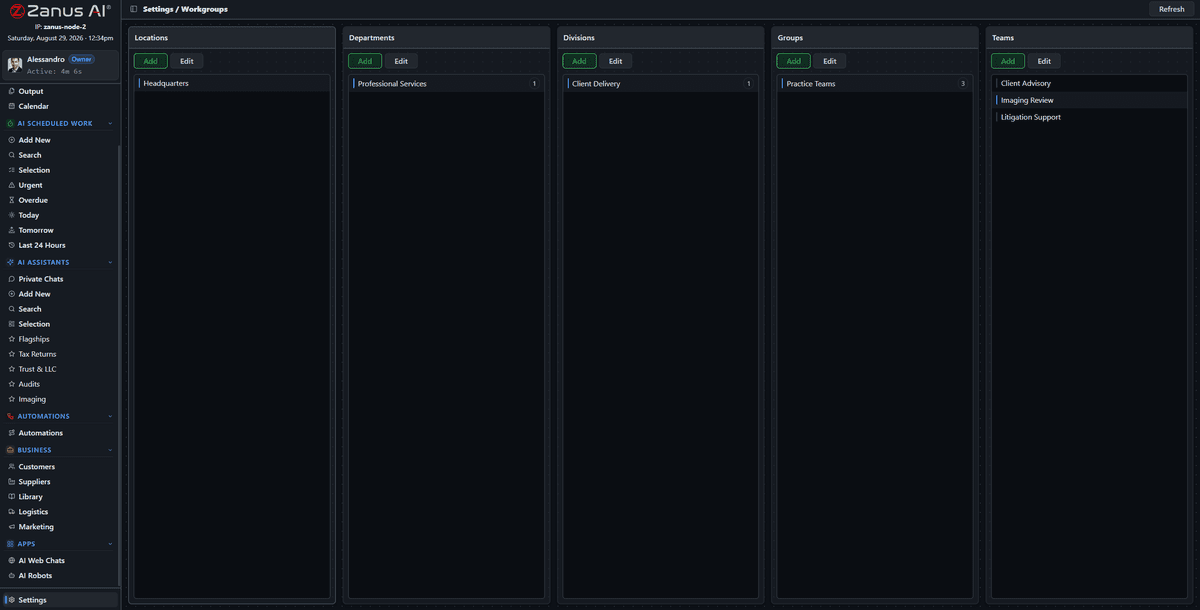
Five-level workgroups: offices, teams and walled matters — access shaped exactly to the engagement and the order.
What it does
Attorneys-eyes-only material lives behind stricter walls than standard confidential — tiers you model in workgroups and permissions, enforced server-side, not by labeling alone.
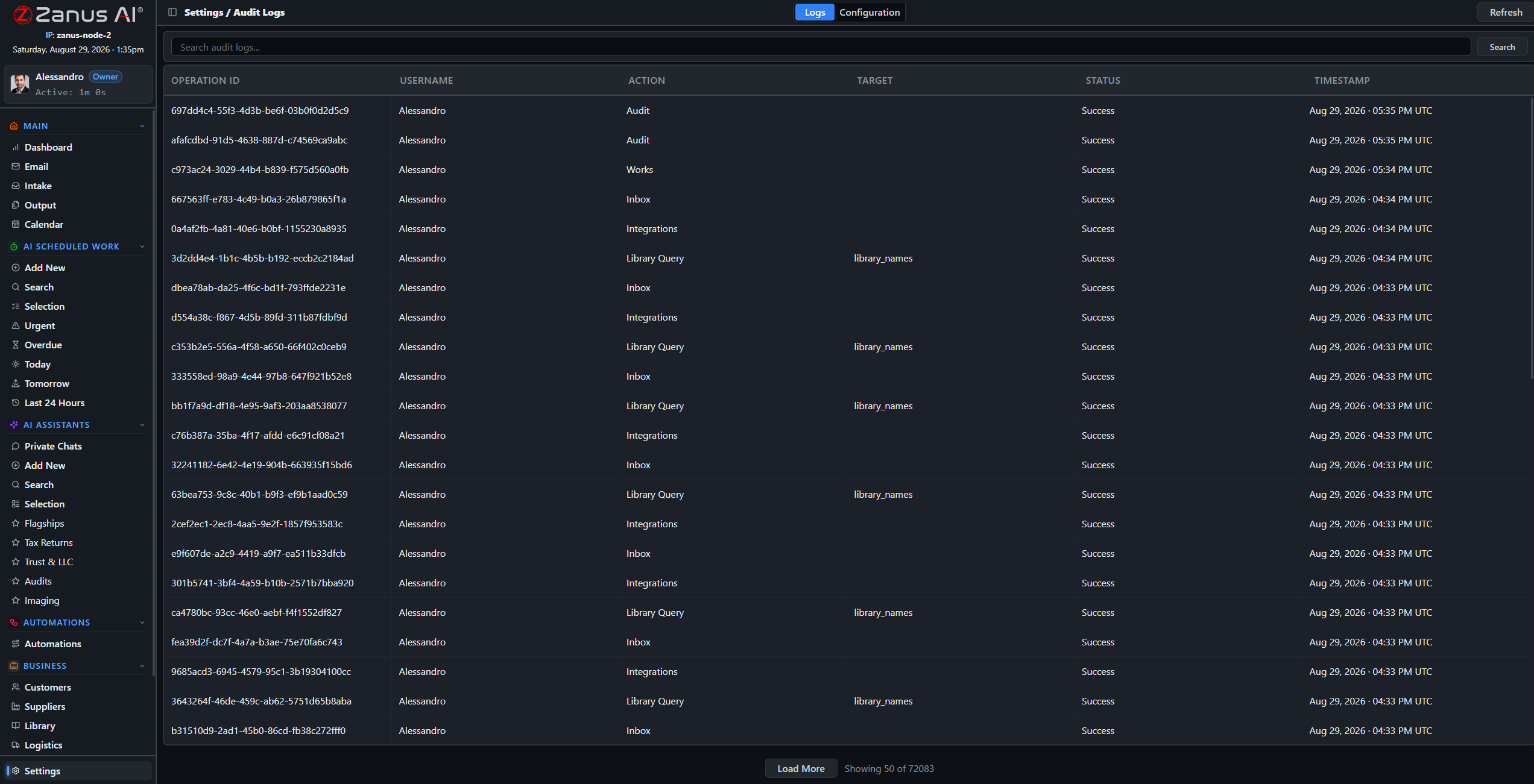
A searchable log of every audited action: who played the recording, who opened the sealed transcript, when — the answer for the court in minutes, not a forensics project.
Your tenant is isolated: testimony never trains outside models. The on-premises option puts the entire archive on hardware you own, air-gap capable, USB updates.
When the firm audits its vendor — you
Law firms pass their clients’ security demands down to litigation-support vendors. The answers are built in: isolated tenant or owned hardware, field-level access control, server-side redaction, audit trail, pre-update snapshots with rollback — walk their questionnaire through the architecture.
- Searchable audit trail with configurable categories
- Automatic pre-update snapshots with rollback
- USB updates for air-gapped deployments
Questions, answered
Can we honor a protective order’s access limits?
Yes — model the order’s tiers as workgroups and permissions: the server enforces who can see designated material, and the audit trail proves it afterward. Bring a sample order to the demo.
What happens when a matter closes?
Retention is yours to control: archive, restrict or remove by your schedule, with pre-update snapshots and the audit record preserving what the process was.
See it working on YOUR docket — the demo IS the product.
ZANUS AI FOR TRANSCRIPTION & LITIGATION — LIVE DEMO
Do not watch a video.
Talk to your AI.
Litigation tech vendors demo by webinar behind a lead form. Ours is the product itself, configured for litigation support: open the chat below-right and try it — place a rush order, ask how the overnight digest works, request the testimony-search walkthrough.
The conversation you have with us IS the demo
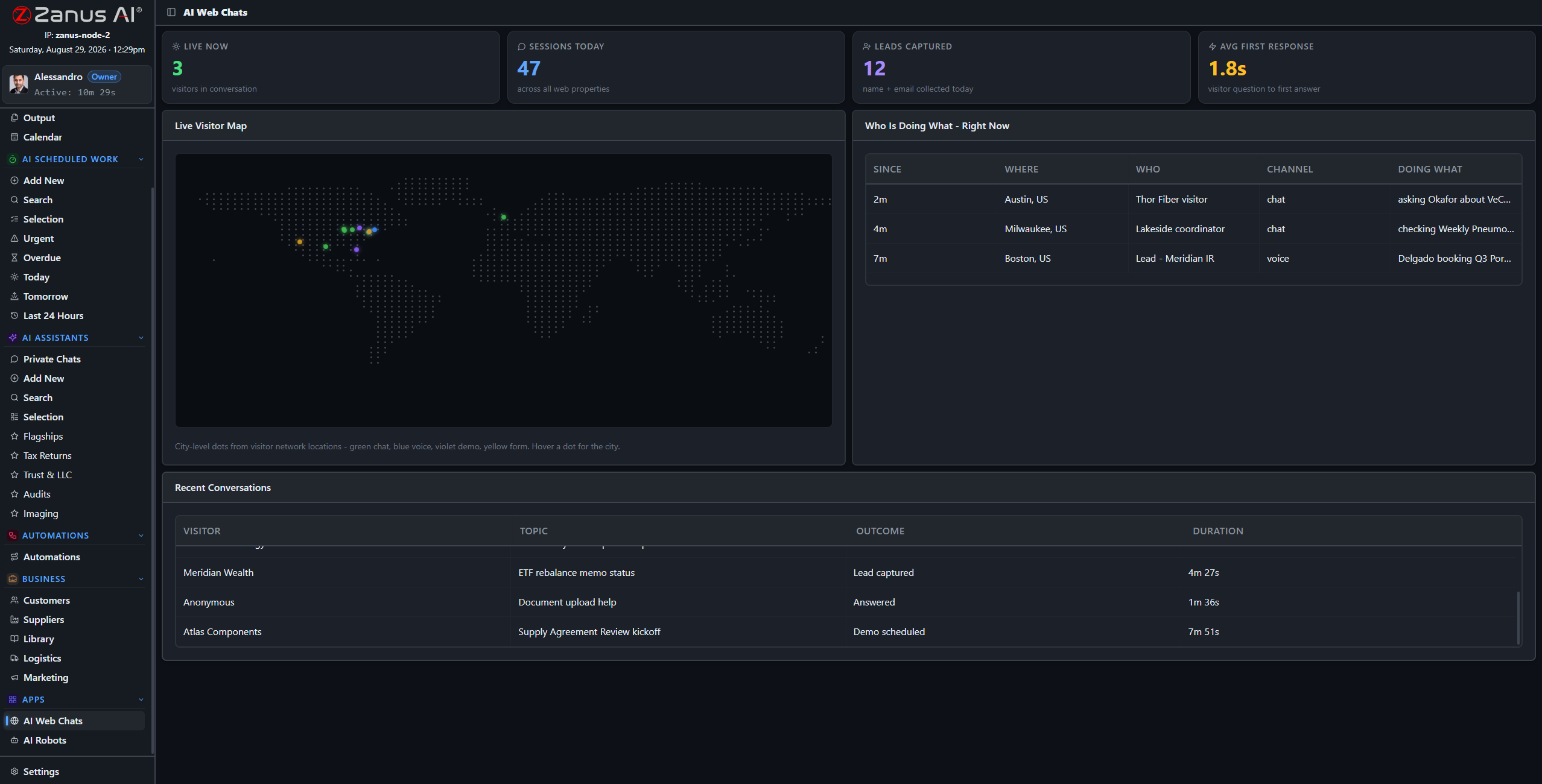
This screen is watching demos like yours happen: live conversations, outcomes, first response in seconds.
What it does
Ask the chat what a trial paralegal would: “I need a deposition transcribed by 9 AM tomorrow” — watch it capture the job, quote it and confirm.
Ask: “how would you digest a six-hour deposition?” — it walks the workflow it would run in your tenant: speakers, themes, page-line cites, review gate included.
The full demo loads a litigation tenant with sample matters: overnight digests, testimony search, protocol answers — your world, working.
Or pick your exact business
Every link below is a full live-demo page for that specific business — its vocabulary, its calls, its booking rules.
Two minutes to your inbox
Request the demo and the interactive litigation-support demo arrives in about two minutes — no sales call, no calendar dance. Watch it, interrupt it with questions, and book the human conversation when YOU are ready.
- Interactive demo, litigation-configured
- Ask questions mid-demo — it answers and resumes
- In your inbox in ~2 minutes, free

Questions, answered
Is the demo really the product?
Yes — the same AI, configured with a sample litigation tenant. What you see is what your shop gets, with your matters and media instead of the samples.
See it working on YOUR docket — the demo IS the product.
Sharing with a colleague? 📄 Get the PDF · ✉️ Email this page ·