ZANUS AI FOR TRANSCRIPTION & LITIGATION — TRANSCRIPTS
Ask the record. It answers to the line.
Transcripts, exhibits, pleadings, productions, audio and video — loaded into curated libraries the AI reads from. Ask in plain language; get the answer cited to page, line and timestamp, scoped to who is allowed to ask.
Private tenant or your own server · your whole team · privilege-conscious architecture
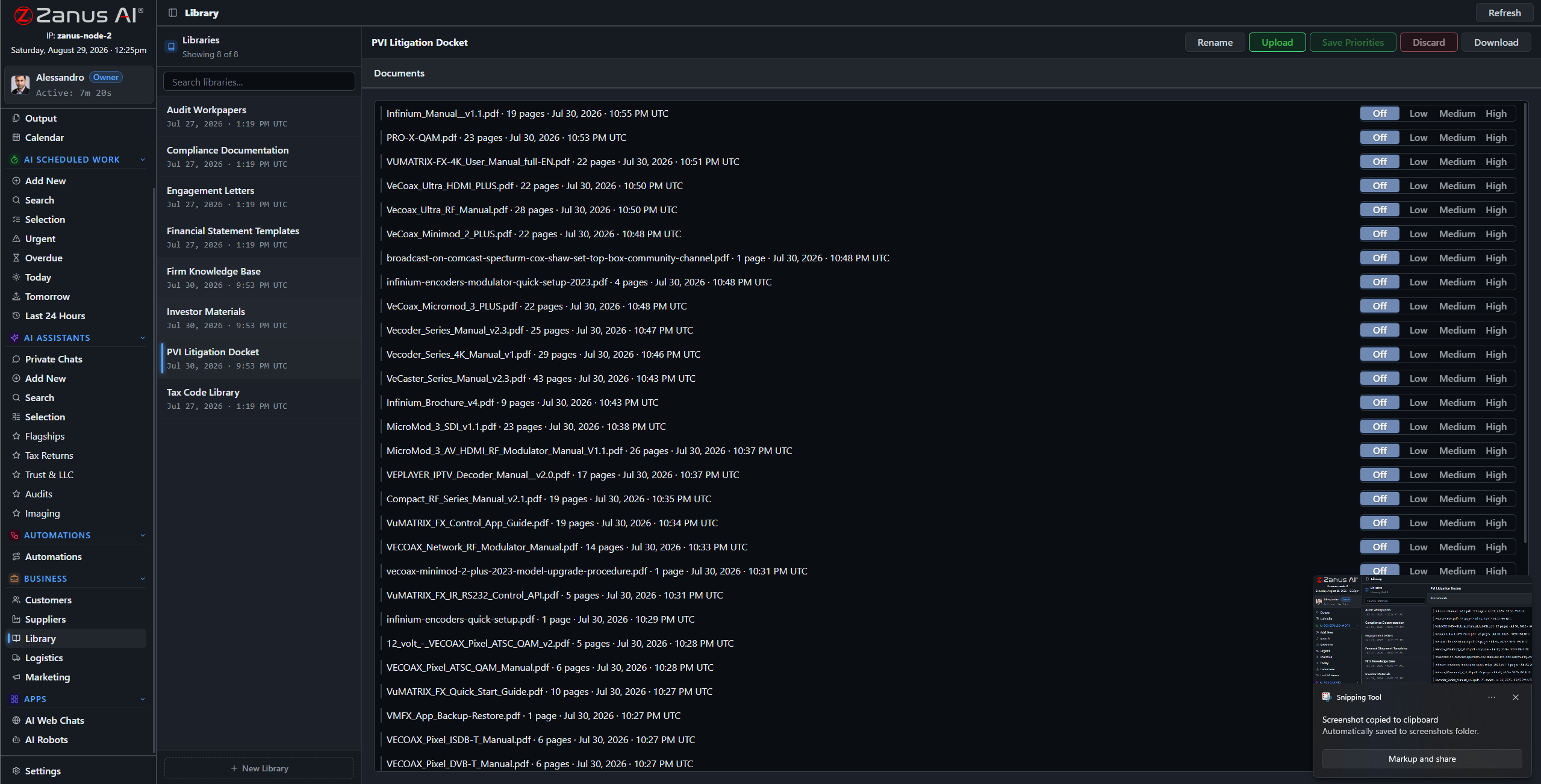
Libraries in priority order: final transcripts outrank roughs, current versions outrank superseded ones.
What it does
PDFs, scanned exhibits, deposition video, hearing audio, spreadsheet productions — the ingestion pipeline turns the whole record into queryable knowledge.
The AI cites the transcript page, the exhibit number, the timestamp — or says the answer is not in the record. An invented citation in litigation is sanctionable; here it is structurally blocked.
The contract paralegal on one matter sees that matter; the sealed case is invisible to everyone outside its wall — enforced server-side, not by folder discipline.
Every transcript you ever produced, one question away
“Has this expert testified about tread separation before?” “Which witnesses mentioned the emails from March?” “Where is the exchange about the settlement authority?” The archive answers in seconds with segments cited — across matters and years, permission permitting.
- Plain-language questions across the whole archive
- Segments cited to page, line and timestamp
- Priority order: final and current versions win

Questions, answered
Who can see a sealed matter’s media?
Only the roles and workgroups you authorize. Permissions reach the field level, the server redacts what a user cannot see, and every access is on the audit record.
Do transcripts train outside models?
Never. Your tenant is isolated; your clients’ testimony is theirs alone — and the on-premises option keeps the record physically inside your office.
See it working on YOUR docket — the demo IS the product.
← Previous: Back Office · Sharing with a colleague? 📄 Get the PDF · ✉️ Email this page ·