ZANUS AI FOR TRANSCRIPTION & LITIGATION — CONFIDENTIALITY
Built like the protective order is watching.
Litigation support lives under other people’s confidentiality obligations: protective orders, sealed filings, attorneys-eyes-only designations. Here the discipline is architectural: matter walls as workgroups, permissions to the field level, server-side redaction, a searchable audit trail, and an air-gapped option.
Private tenant or your own server · your whole team · privilege-conscious architecture
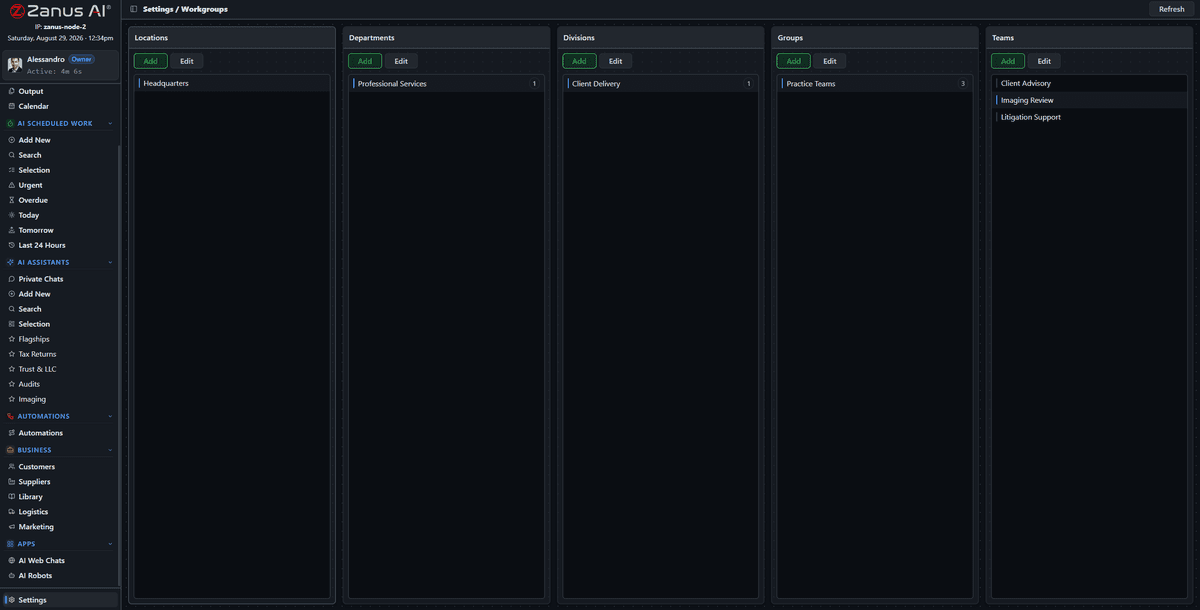
Five-level workgroups: offices, teams and walled matters — access shaped exactly to the engagement and the order.
What it does
Attorneys-eyes-only material lives behind stricter walls than standard confidential — tiers you model in workgroups and permissions, enforced server-side, not by labeling alone.
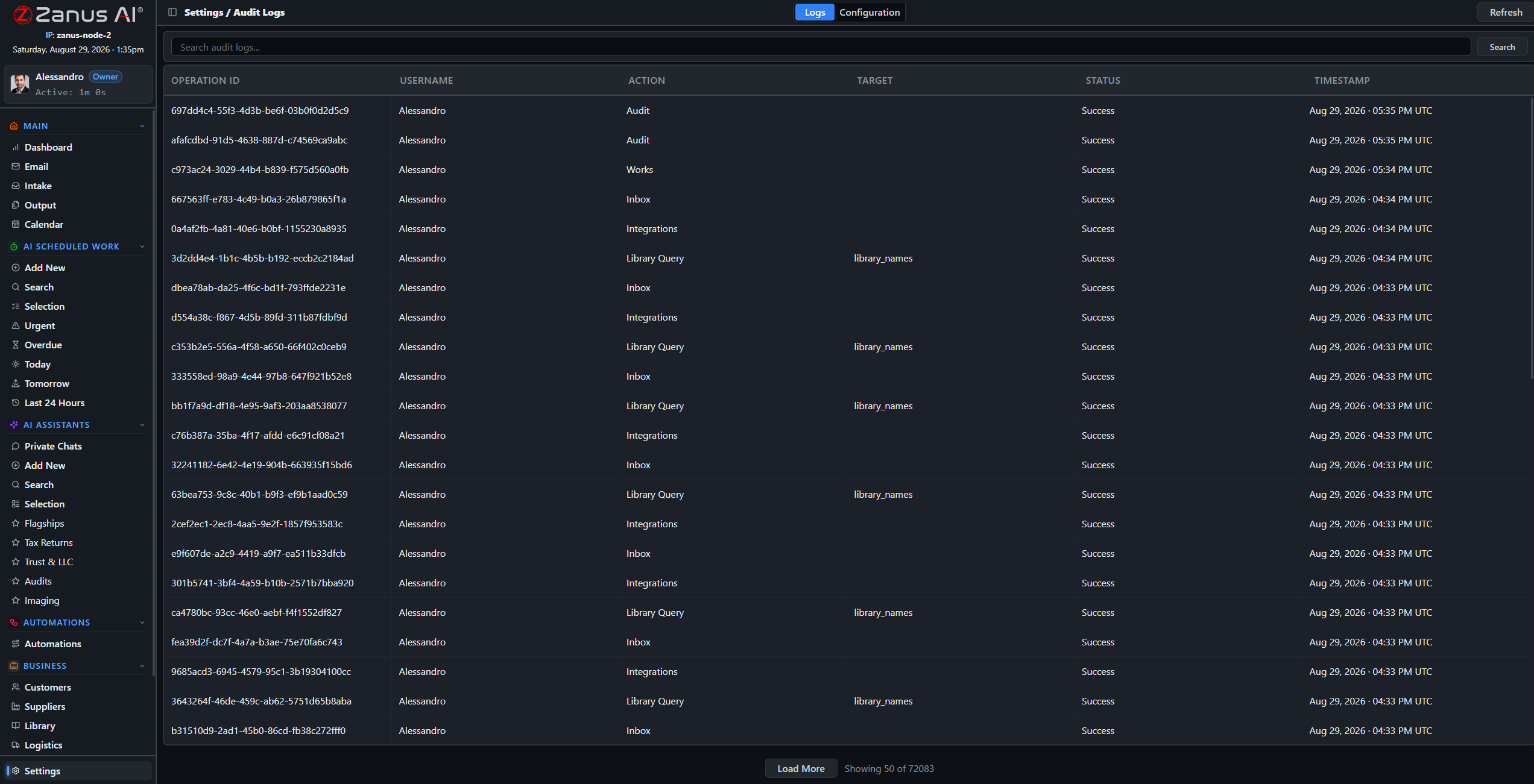
A searchable log of every audited action: who played the recording, who opened the sealed transcript, when — the answer for the court in minutes, not a forensics project.
Your tenant is isolated: testimony never trains outside models. The on-premises option puts the entire archive on hardware you own, air-gap capable, USB updates.
When the firm audits its vendor — you
Law firms pass their clients’ security demands down to litigation-support vendors. The answers are built in: isolated tenant or owned hardware, field-level access control, server-side redaction, audit trail, pre-update snapshots with rollback — walk their questionnaire through the architecture.
- Searchable audit trail with configurable categories
- Automatic pre-update snapshots with rollback
- USB updates for air-gapped deployments
Questions, answered
Can we honor a protective order’s access limits?
Yes — model the order’s tiers as workgroups and permissions: the server enforces who can see designated material, and the audit trail proves it afterward. Bring a sample order to the demo.
What happens when a matter closes?
Retention is yours to control: archive, restrict or remove by your schedule, with pre-update snapshots and the audit record preserving what the process was.
See it working on YOUR docket — the demo IS the product.
← Previous: E-Discovery & Integrations · Sharing with a colleague? 📄 Get the PDF · ✉️ Email this page ·