ZANUS AI FOR TRANSPORTATION & AUTOMOTIVE — OVERVIEW
The freight moves. Now the paperwork keeps up.
Shipper calls and service bookings answered around the clock. Driver qualification files, DVIRs and maintenance manuals turned into a system that answers dispatchers and stays audit-ready — in YOUR private tenant, or on a server in your own building.
Private tenant or your own server · your whole team · DOT-conscious documentation
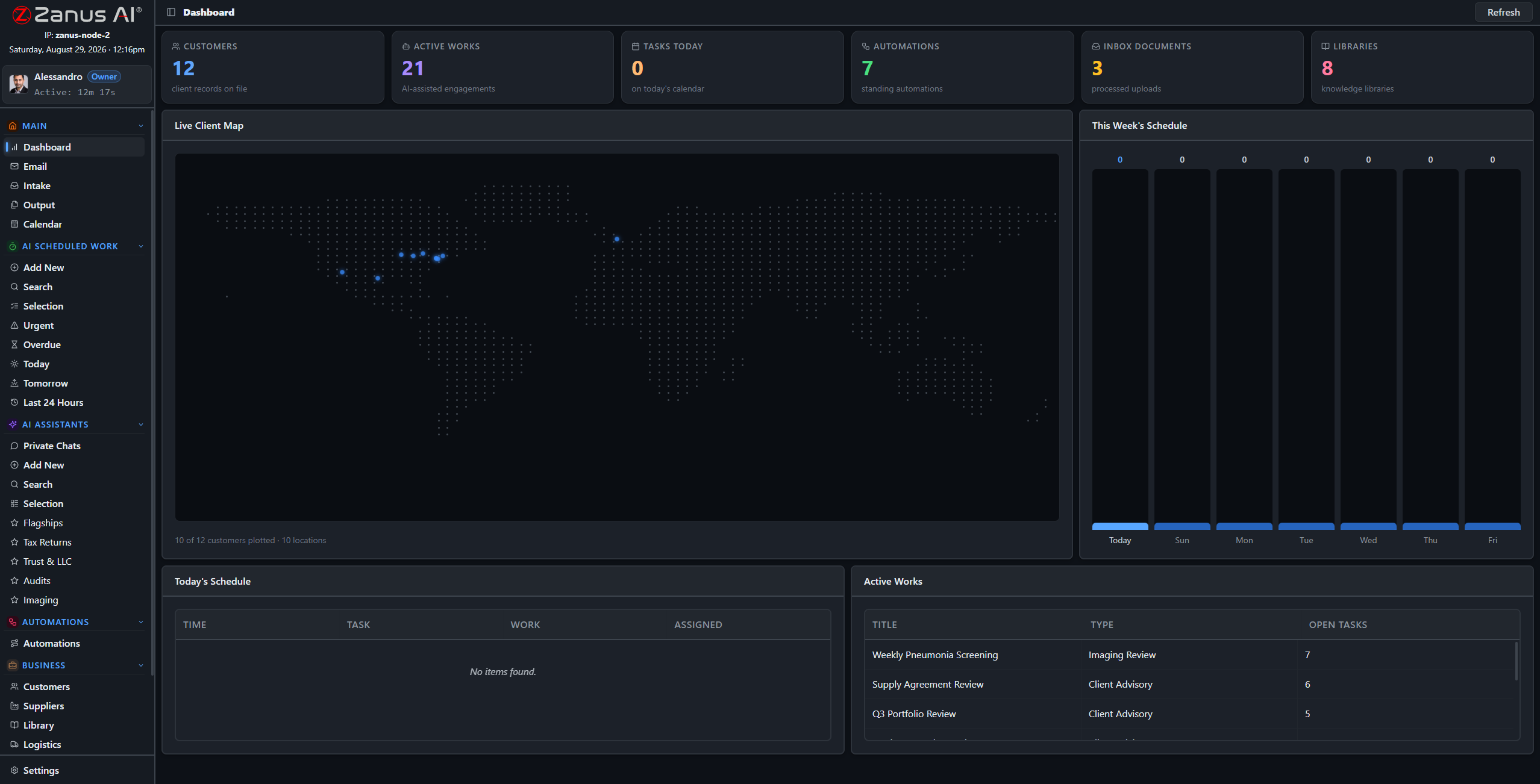
A real deployment view: customer records, scheduled DVIR reviews, documents awaiting sign-off.
What it does
Shippers and service customers get an answer in one ring, every hour of every day — status from your approved records, appointments booked, tickets logged — while dispatch keeps dispatching.
Driver qualification files, hours-of-service policies and inspection records organized, tracked and answerable — so audit week is a search, not a scramble.
Maintenance manuals, service bulletins and unit histories become a system any technician or dispatcher can query — with the source page cited.
Front office: every call, every hour, answered
A shipper calling for a pickup quote at 7 PM, a service customer booking a bay for Thursday, a driver’s family asking for the office — the Zanus front office answers on your menu, in your voices, quotes from your real rates and books into real calendars, in up to 40 languages.
- AI phone on your lines and voices, 24/7
- Service bays and dock appointments booked into real calendars
- Quotes from your actual rates, with payable links
- See the Front Office for transportation →

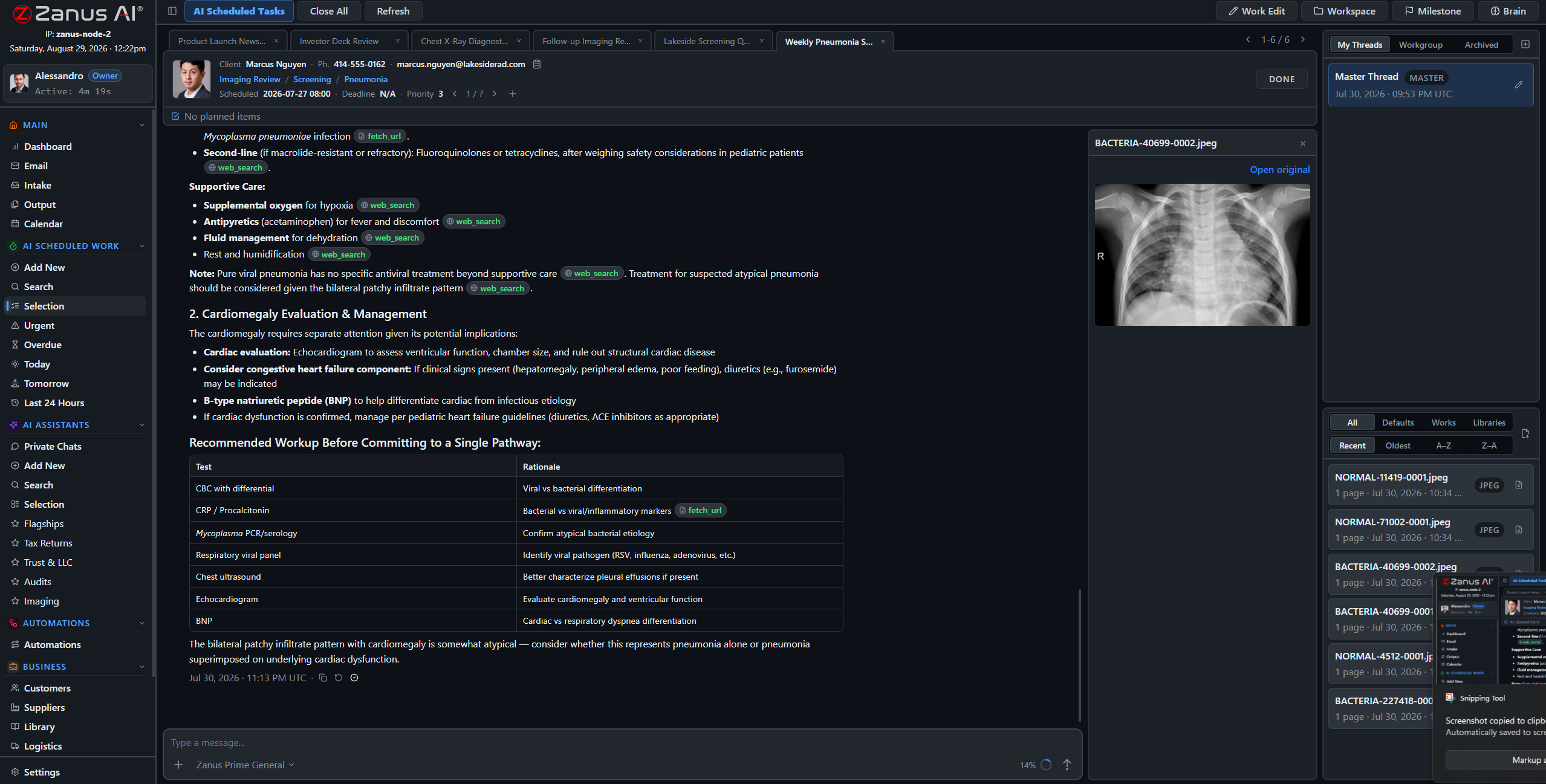
Back office: the fleet’s paper trail, working
Monday 6 AM the DVIR exception report is drafted: every defect written up overnight, matched to the unit’s history, flagged for the shop — with sources cited and the safety manager’s sign-off waiting. That is one of the scheduled AI works below.
- Scheduled AI work: DVIR reviews, audit-readiness checks, maintenance reports
- Verified answers from YOUR manuals and fleet records
- Finished documents await human sign-off
- See the Back Office for fleets →
When fleet data should stay in the building
Carriers and dealer groups that want full custody run the identical OS on Zanus hardware in their own building: air-gap capable, USB updates, owned outright, your whole team — and dashcam and inspection analysis lives on this on-premises path.
- Private On-Premises AI: owned, no recurring fees
- On-Prem Tokens Server for high-volume processing
- Explore the AI Servers →

Questions, answered
Does this replace our TMS or ELD?
No. Your TMS, ELD and shop system stay the systems of record. Zanus is the system of work on top: it reads, drafts, answers and reports across them — connectors are mapped at the demo.
Is this DOT compliant?
The architecture is DOT-conscious: records organized and tracked, every change on the audit trail, role-based access throughout. The AI drafts and organizes — your safety manager decides. Bring your compliance officer to the demo for specifics.
We run several terminals and a service arm — one system?
Yes: one tenant with workgroups per terminal and per line of business, or separate tenants. Dispatch, shop and office each see exactly what their role allows.
See it working on YOUR fleet — the demo IS the product.
ZANUS AI FOR TRANSPORTATION & AUTOMOTIVE — FRONT OFFICE
Every “where’s my truck?” call, answered.
Dispatch phones ring off the wall while dispatchers dispatch — and the service desk loses bookings to voicemail every evening. The Zanus front office answers on your menu, in your voices: status, quotes, bookings, reminders — 24/7, in up to 40 languages.
Private tenant or your own server · your whole team · DOT-conscious documentation

Calls, chats, bookings and follow-ups — one dashboard your operations manager can read.
What it does
A shipper calls at 5 PM Friday needing a Monday pickup. The AI answers in one ring, quotes from your real rates, confirms the pickup window and logs it — no voicemail, no lost load.
Oil changes, brake jobs, fleet PMs booked into real bay calendars — confirmations and reminders cut the no-shows, cancellations reopen the slot.
Rates and service prices quoted from your actual catalog with payable links — no invented discount, no wrong number, ever.
From inquiry to booked appointment, hands-free
A fleet customer calls about a vibration at highway speed; the AI books the diagnostic bay, collects the unit number and mileage through a form, and confirms — while your service writer finishes with the customer at the counter.
- Real calendar sync for bays and docks — no double-booking
- Unit details collected by form before arrival
- Rate and service questions answered from your approved information
- Breakdown and emergency calls escalated to on-call, by your rules


The web side hauls too
Website chat grounded in your services and coverage, web forms for quote requests worked in minutes, and a transcript of every conversation — the lead that lands at 11 PM is answered at 11 PM.
- Grounded chat on your site, up to 40 languages
- Quote-request forms answered in minutes, not days
- Every conversation logged with a transcript
- See the full Front Office tour →
Questions, answered
Do we keep our phone numbers?
Yes. Your numbers stay; calls route AI-first, staff-first, or any mix — configured per line and per hour, dispatch separate from the service desk.
What about after-hours breakdown calls?
Routed by YOUR rules: breakdown language triggers immediate transfer to your on-call contact — the AI takes the details, logs the ticket and never improvises roadside advice.
What languages?
Up to 40 — drivers, shippers and service customers are each answered in their own language, with your company’s approved information.
See it working on YOUR fleet — the demo IS the product.
ZANUS AI FOR TRANSPORTATION & AUTOMOTIVE — BACK OFFICE
The fleet’s paperwork, working the night shift.
Driver qualification files, DVIRs, hours-of-service policies, warranty claims, maintenance records: a fleet generates paper faster than it burns diesel. The Zanus back office turns that pile into a working AI staff — reviewing, drafting and answering with sources cited, under your managers’ sign-off.
Private tenant or your own server · your whole team · DOT-conscious documentation
A real session: the night’s DVIRs reviewed, defects matched to unit histories, safety manager decides.
What it does
Nightly DVIR exception reviews, monthly audit-readiness checks, quarterly maintenance-interval analyses — assigned to the AI like to a compliance clerk, executed on schedule, fully auditable.
Maintenance manuals, service bulletins, warranty terms and company policies become a system the shop and dispatch can query — with the source one click away.
Every AI-drafted report and letter lands in Output awaiting review. Nothing about your drivers or units ships without a human decision.
The DVIR exception report drafts itself
Overnight, drivers write up defects; by 6 AM the AI has compiled the exceptions, matched each to the unit’s maintenance history — the third air-leak write-up on unit 412 this month gets flagged — and filed the report for the shop foreman and safety manager.
- Exceptions compiled with unit histories attached
- Repeat defects flagged with the records cited
- Report in Output before the morning meeting


Warranty claims and letters, drafted
The documents that eat office afternoons: warranty claims with the service records attached, insurance letters after an incident, customer damage responses — drafted in minutes, in your templates, queued for approval.
- Your letterheads and templates
- Service records and photos attached automatically
- Approval workflow before anything sends
Questions, answered
Does the AI edit hours-of-service records?
No. HOS data stays in your ELD system. The AI reads, summarizes and flags for review — drafting and organizing support, with every decision made by your safety manager.
Does it connect to our TMS and shop system?
API connectors integrate with existing systems; documents and data flow through the intake pipeline under your handling rules. Bring your TMS, ELD and shop software to the demo and we map them.
YOU MIGHT ALSO LIKE
The Back Office executes. Who answers the phone?
Front Office AI picks up every call and chat — books, quotes, follows up, 24/7 in 40 languages. Watch it run a business like yours, live.
See it working on YOUR fleet — the demo IS the product.
ZANUS AI FOR TRANSPORTATION & AUTOMOTIVE — FLEET RECORDS
Every unit’s history, one question away.
Driver qualification files, maintenance manuals, DVIRs, accident files, permit books, lease agreements — loaded into curated libraries the AI reads from. Ask in plain language; get the answer with the source cited, at the permission level of whoever asks.
Private tenant or your own server · your whole team · DOT-conscious documentation
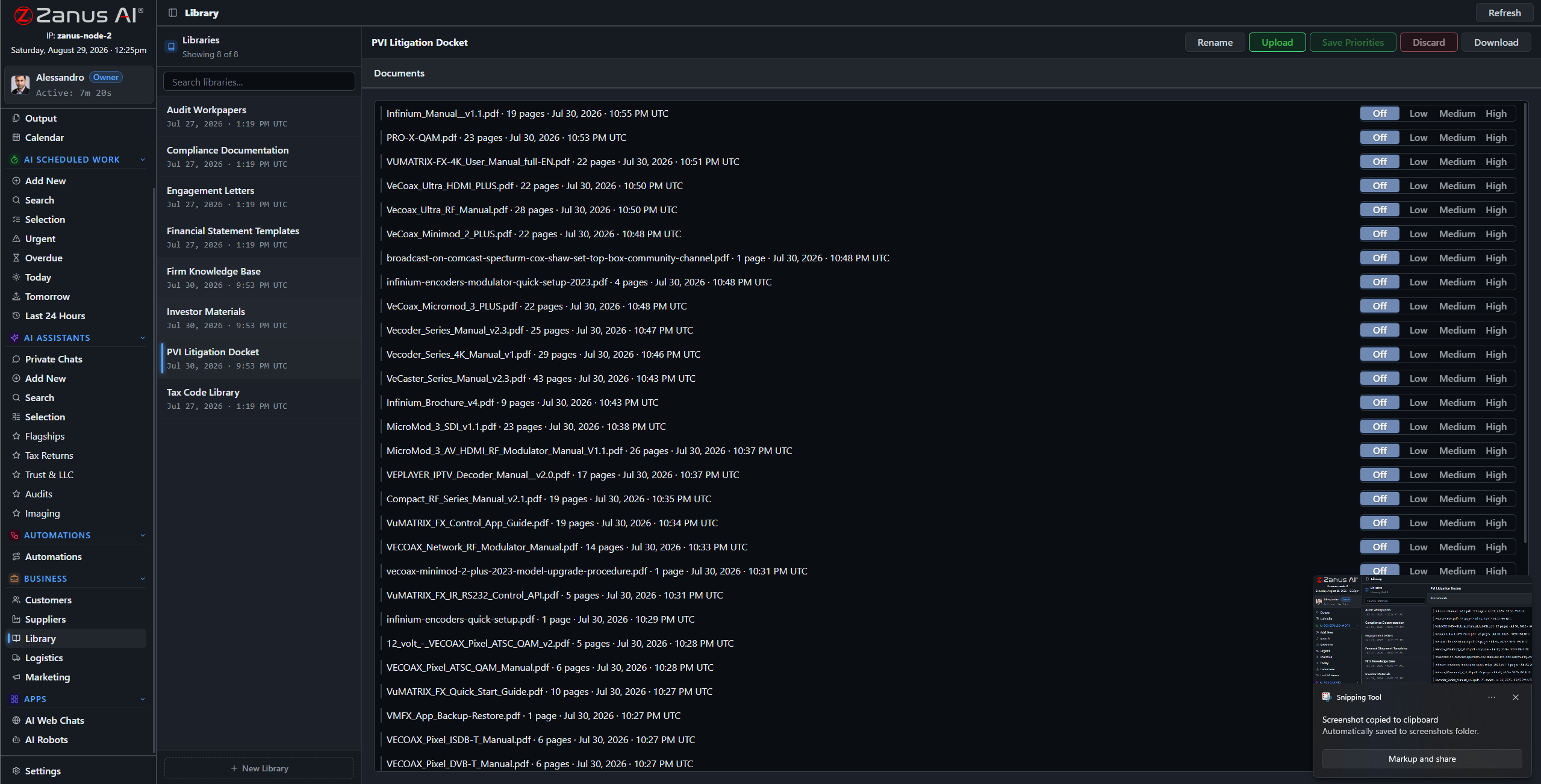
Libraries: current manuals outrank superseded bulletins, signed leases outrank drafts — you set the order.
What it does
PDF manuals, scanned inspection sheets, photos of damage, spreadsheets of PM schedules — the ingestion pipeline turns what a fleet accumulates into queryable knowledge.
No source in your library, no claim: the AI cites the manual page, the work order, the permit — or says it cannot answer. Guesswork does not pass a DOT audit.
The dispatcher asks about a unit’s status; the safety manager asks about a driver’s file: each gets answers scoped to their role, enforced server-side.
“When was unit 412’s last brake job?”
Answered in seconds with the work order attached — instead of a walk to the shop office and a dig through the folder. The same for “which drivers’ med cards expire this quarter?” and “what does the lease say about tire replacement?”
- Plain-language questions across the whole archive
- Work orders and source documents attached to answers
- Priority order: current manuals and policies always win

Questions, answered
Who can see driver files?
Only roles you authorize. Permissions reach the field level and the server redacts what a user cannot see — a dispatcher sees availability, not the medical record.
Do our documents train outside models?
Never. Your tenant is isolated; your fleet knowledge is yours alone — and the on-premises option keeps it physically inside your building.
See it working on YOUR fleet — the demo IS the product.
ZANUS AI FOR TRANSPORTATION & AUTOMOTIVE — AI WORKFORCE
The compliance desk that works weekends.
Assign work to the AI the way you assign it to staff: type, records, deadline, priority. DVIR reviews, audit-readiness checks, maintenance-interval analyses — executed on schedule, with citations, under review.
Private tenant or your own server · your whole team · DOT-conscious documentation
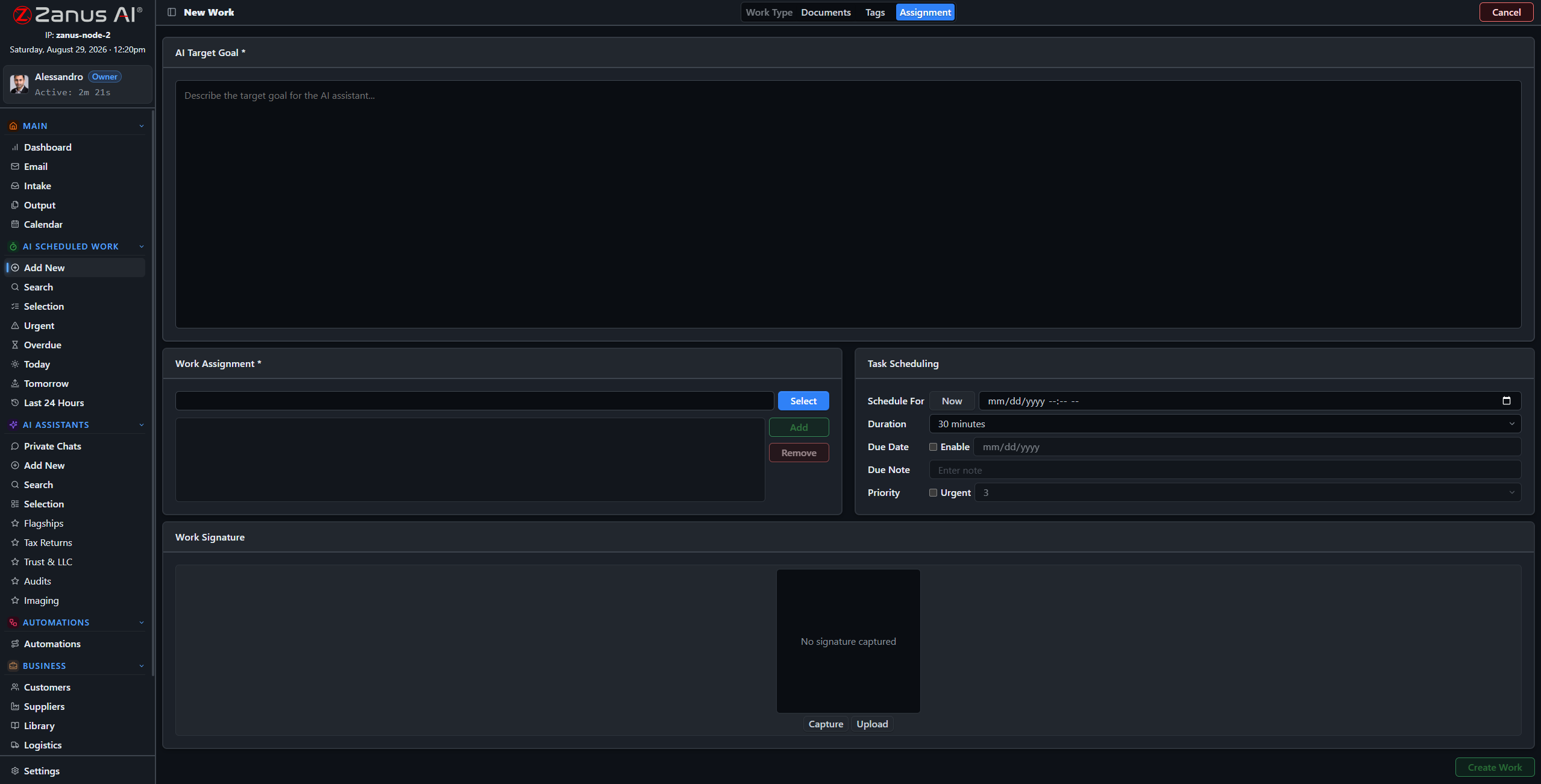
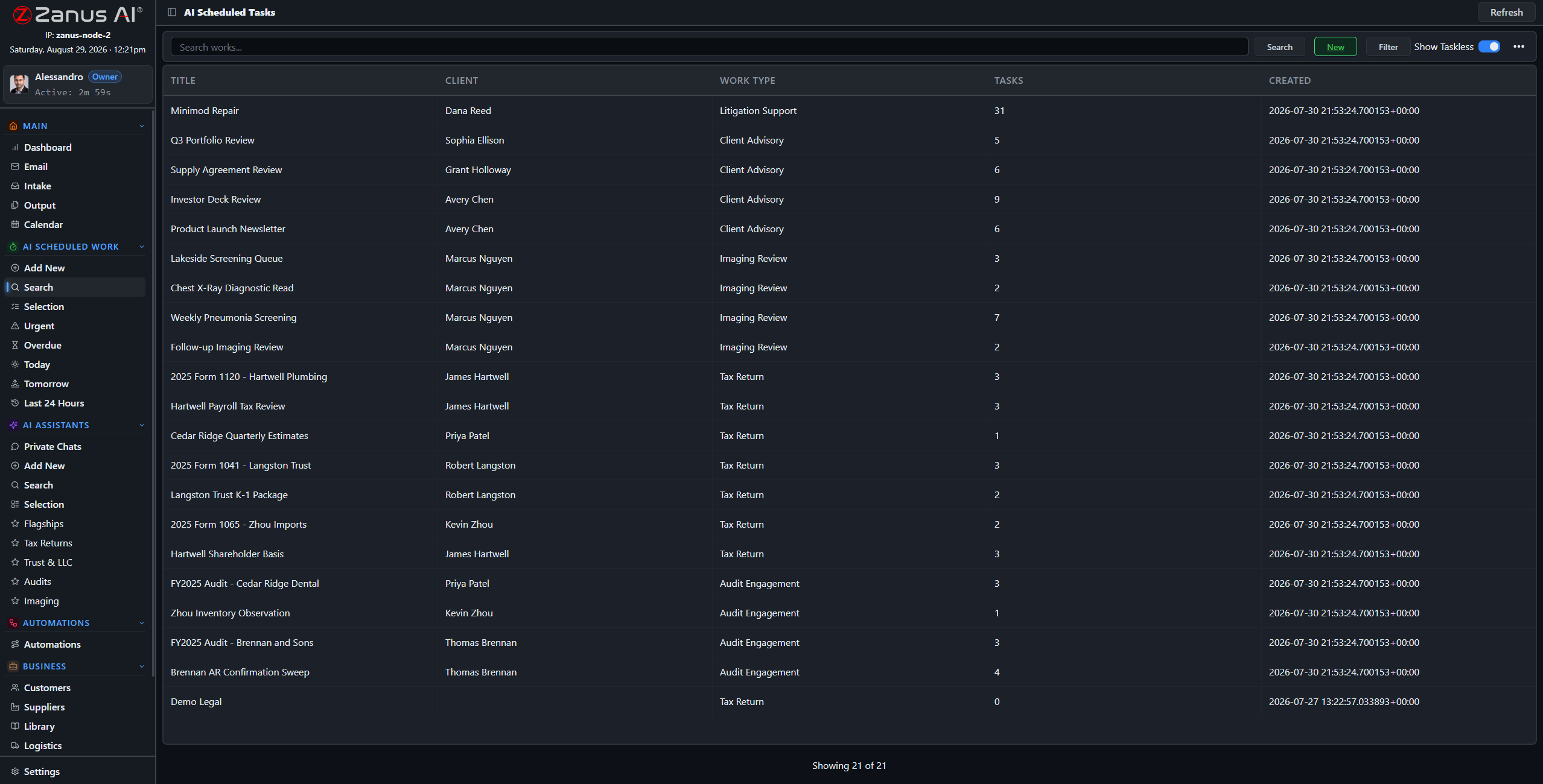
Four steps: work type, records and libraries, tags, schedule — the AI takes it from there.
What it does
DVIR exception review, driver-file expiration check, maintenance-interval analysis, audit-readiness report: work types molded to your operation, with default libraries per type.
The AI’s workload is managed like the team’s: one-click views show what is urgent, late, today and tomorrow — an expiring med card never slips silently.
Every work is a full session: reasoning streamed, sources cited, milestones tracked, linked to the unit, the driver and the calendar.
First of the month: the audit-readiness report is filed
Set “Monthly DOT Audit-Readiness Review” once: the AI checks driver qualification files for expirations, inspection records for gaps and maintenance files for missed intervals — and files the findings, cited, before your safety meeting.
- Recurring schedules for periodic compliance work
- Gaps and expirations flagged with the records cited
- Report in Output, awaiting the safety manager
Questions, answered
Can we supervise mid-work?
Yes — open any session, read the reasoning, redirect it, or stop it. The AI works like staff: visible, accountable, interruptible.
What volume can it handle?
It does not get tired: the constraint is your review capacity, not the AI’s. Configurations size from a 10-truck fleet to a multi-terminal carrier.
See it working on YOUR fleet — the demo IS the product.
ZANUS AI FOR TRANSPORTATION & AUTOMOTIVE — SAFETY & SOPS
Safety policy that answers the driver.
A safety manual only prevents violations if drivers and techs can find the current rule — at the dock, in the cab, on Saturday. In Zanus, safety policies and SOPs are living documents: answerable in chat, attached to work, priority-ordered so the latest revision always wins.
Private tenant or your own server · your whole team · DOT-conscious documentation
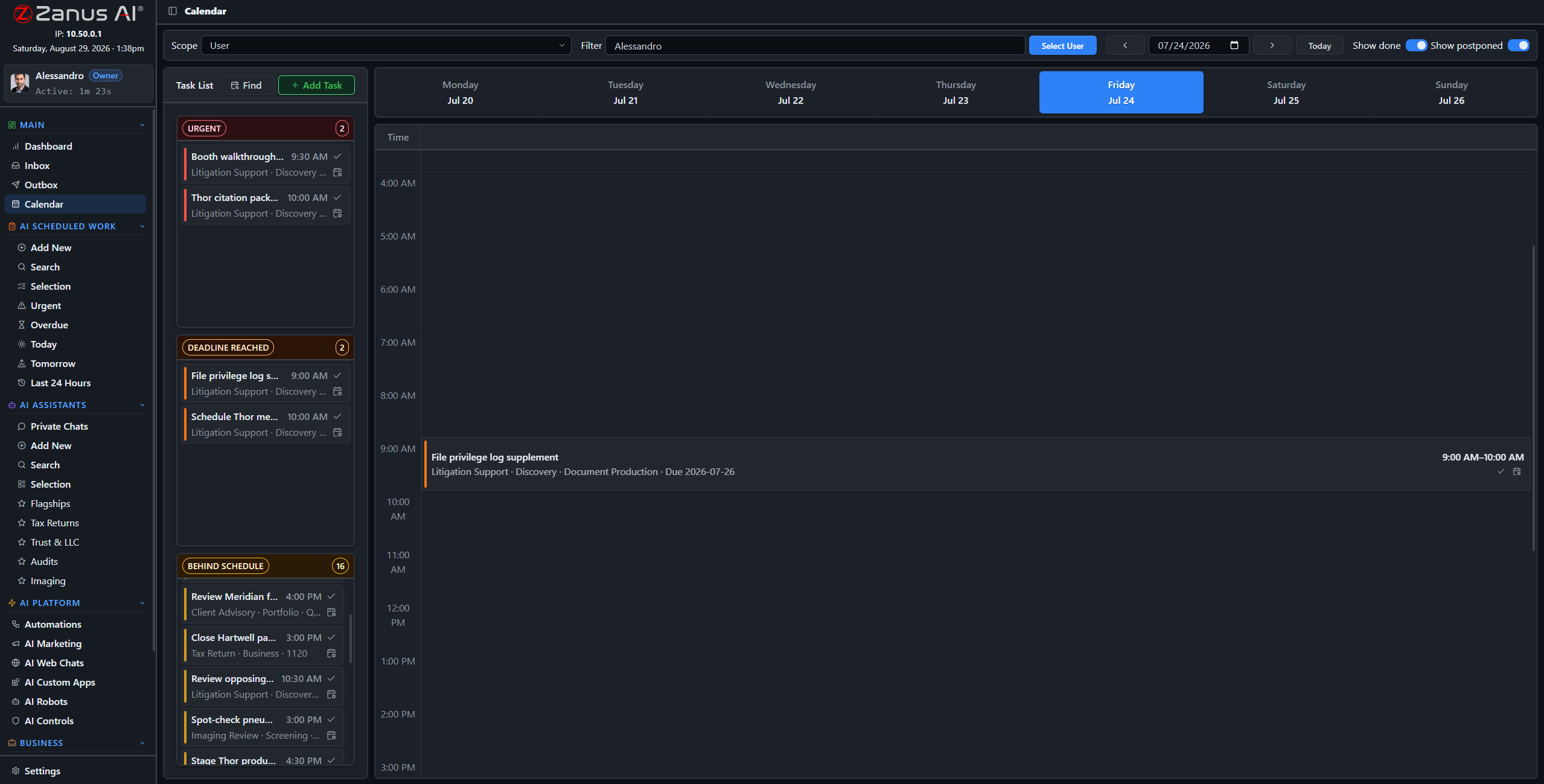
Policy upkeep, scheduled like fleet work: quarterly reviews and revision checks on the calendar.
What it does
Pre-trip inspection procedures, hours-of-service policies, hazmat handling rules, shop lockout procedures: one library, current versions on top, superseded drafts outranked.
“What is the procedure after a roadside inspection?” — answered in seconds with the policy attached, to any authorized driver or dispatcher, on any device.
Work types carry their default policies: the AI drafting an incident summary reads from the current safety procedure — by construction.
Policy upkeep, scheduled like fleet work
Quarterly policy reviews, revision checks after every regulation update, change summaries for the driver meeting: assign them once as recurring AI work and the safety manual never goes stale again.
- Recurring review works with deadlines
- Change summaries drafted for driver briefings
- Every review on the audit record
Questions, answered
How do updates roll out?
Upload the new policy, set it on top: from that moment every answer and every AI work cites the new version. Old versions remain archived for audit.
See it working on YOUR fleet — the demo IS the product.
ZANUS AI FOR TRANSPORTATION & AUTOMOTIVE — TEAM TRAINING
Driver turnover without losing the playbook.
Trucking turnover is measured in double digits and every departure takes tribal knowledge with it. New drivers, dispatchers and techs learn your procedures from the AI, and everyone has an assistant that answers “how do we…?” instantly.
Private tenant or your own server · your whole team · DOT-conscious documentation

Training lives inside the software: the AI walks each new hire through the fleet’s own procedures.
What it does
New drivers learn your inspection procedures and paperwork flow; new dispatchers learn your systems and escalation rules — guided training, ramped in days.
“How do I document a cargo claim?” — asked to the assistant from the truck stop, answered from the SOP, without tying up the dispatch line.
Private chats work on any device with a login — the how-to knowledge rides along in the cab, the shop and the office.

The dispatcher who trains without stopping
The tenth “how do I file this trip report?” gets the same patient, sourced answer as the first — from the assistant, not from your busiest dispatcher. Training stays current automatically, because the assistant reads from the same living policies as everything else.
- Answers cite the current SOP
- Personal preset assistants per role
- Training progress visible to managers
Questions, answered
Does training content go stale?
No — the assistant answers from the live libraries. Update the policy once and every future answer updates with it.
See it working on YOUR fleet — the demo IS the product.
ZANUS AI FOR TRANSPORTATION & AUTOMOTIVE — AUTOMATIONS
The depot’s repetitive work, set once.
Describe the job in plain words — “when a DVIR reports a defect, open a work-order draft and flag the unit” — and it becomes connected blocks on a canvas, running on its own, with every run visible.
Private tenant or your own server · your whole team · DOT-conscious documentation
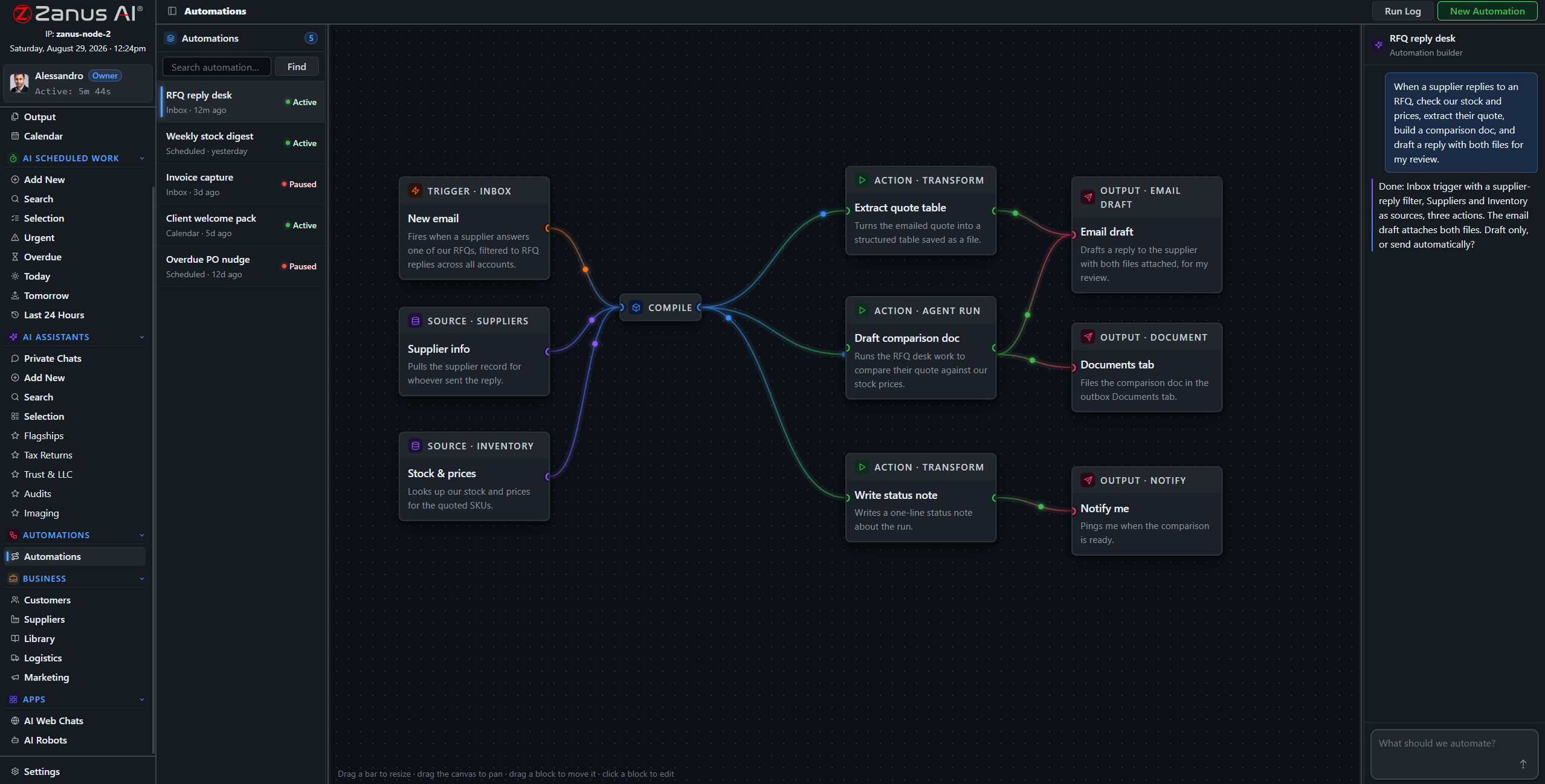
A real flow: inbox trigger, record sources, AI compile, three outputs — drawn from a description.
What it does
A DVIR with a defect lands; the AI drafts the work order, attaches the unit’s history and flags the vehicle — before the shop opens.
A delivery confirmation arrives; the AI drafts the status update to the customer from your records, in their language, queued or sent by your rules.
The Friday fleet summary — units down, PMs due, open claims: compiled by the AI, filed to Output, on time every time.
When something fails, you SEE it
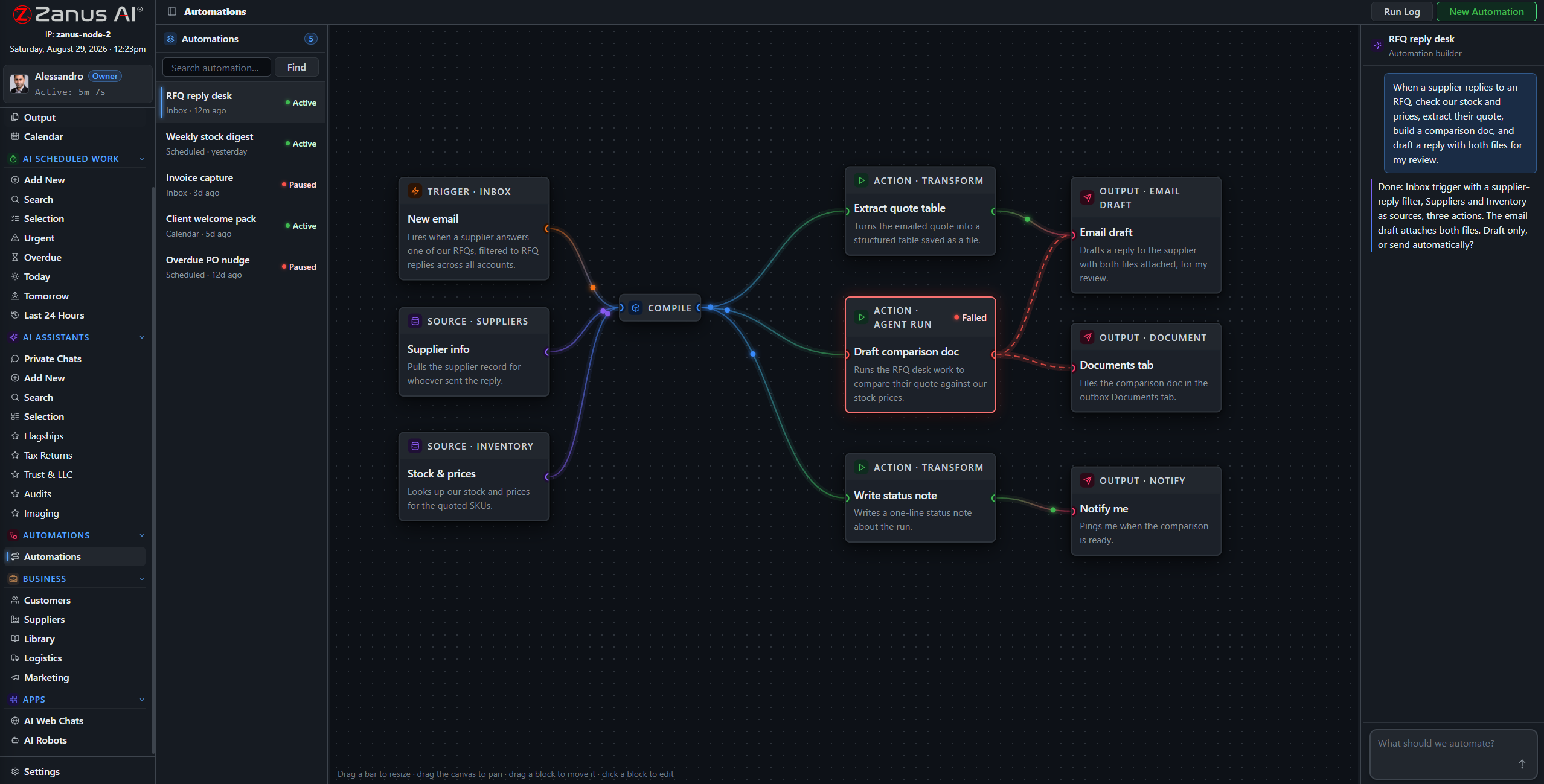
Run states live on the flow: green success, red failure on the exact block. In a fleet, a silently failed defect-routing flow is a truck on the road that should not be — here, nothing fails silently.
- Run log per automation
- One-click retry on failures
- Finished documents in Output, statused
Questions, answered
Who approves outgoing customer updates?
Your rules: queue everything for human approval, or auto-send only the categories you designate as safe — delivery confirmations, say, but never incident communications.
See it working on YOUR fleet — the demo IS the product.
ZANUS AI FOR TRANSPORTATION & AUTOMOTIVE — CUSTOMER UPDATES
Status updates that beat the phone call.
Delivery notices, service-due reminders, win-back campaigns for lapsed accounts — drafted by the AI from your own records, in the customer’s language, queued for your approval. The customer who was told does not call to ask.
Private tenant or your own server · your whole team · DOT-conscious documentation
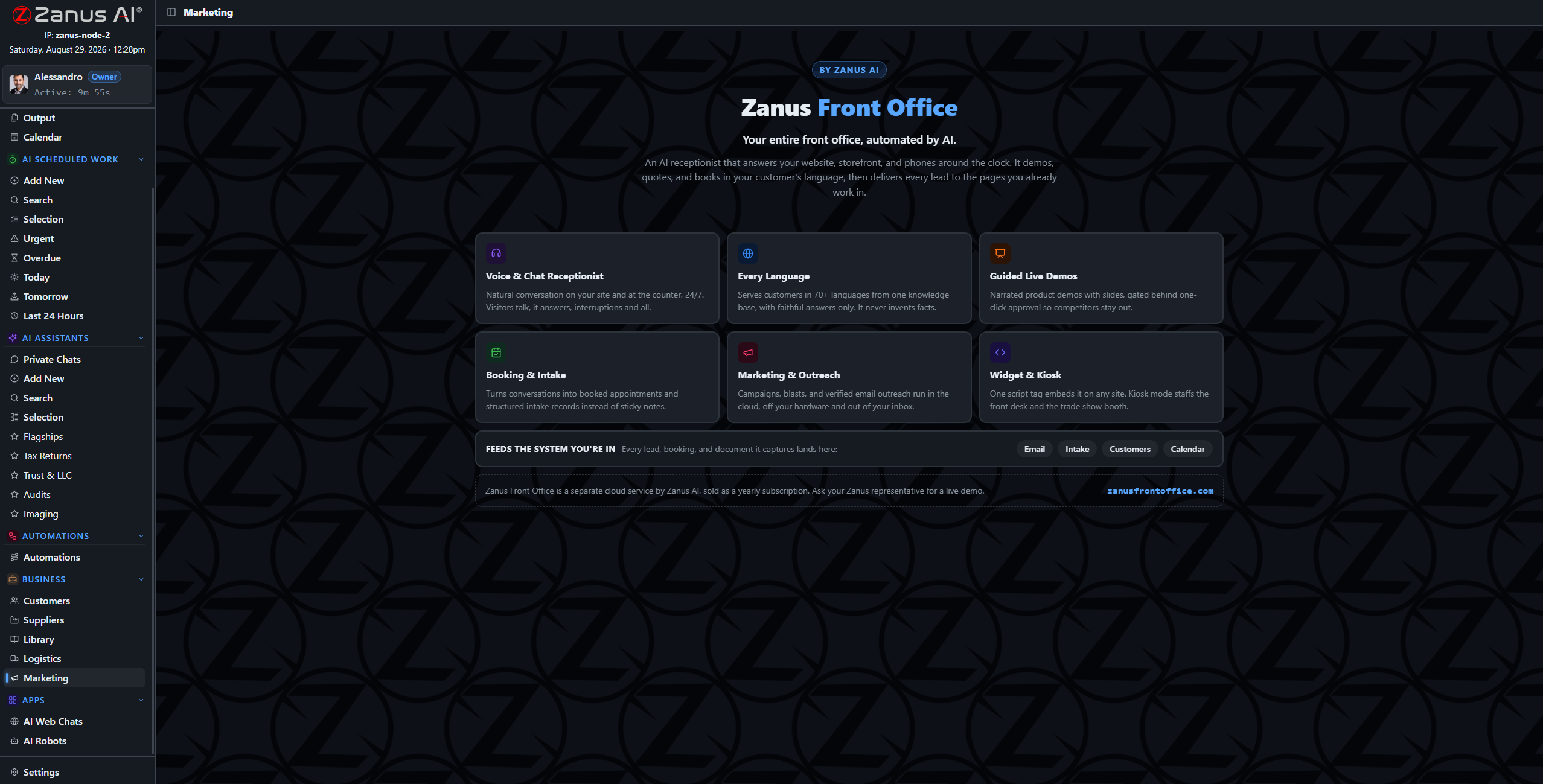
Campaigns and sequences drafted from the records — status notices, reminders, win-backs — awaiting approval.
What it does
Vehicles due for service by date or mileage, accounts idle for six months, shippers on a lane you are expanding: audiences built from your own data — no list exports to a third-party tool.
Updates written the way customers actually read them — plain, direct, in their own language, with your company’s voice.
Opt-outs and contact preferences are enforced by the system, not by memory. Every send is on the record.
Service reminders that fill the bays
The audience, the content and the sending all live in the same system as the customer records — nothing leaves your tenant to reach a mailing platform. “Remind every fleet customer whose units are due for PM this month” becomes a drafted, scheduled campaign in minutes.
- Audiences from your own service records — private by architecture
- Campaigns and sequences drafted for review
- Booked responses land in the real bay calendars

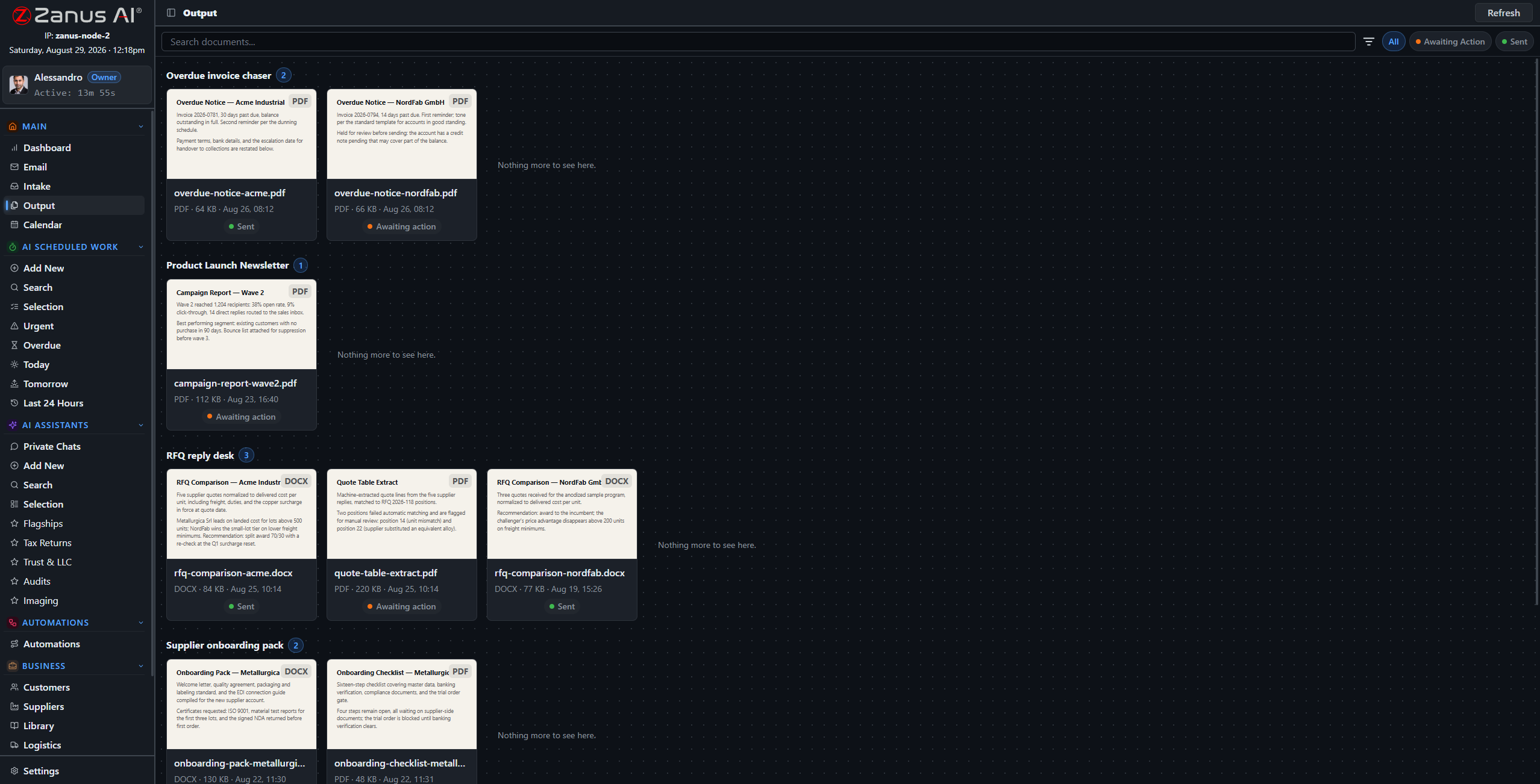
Approval first, always
Every outbound customer communication lands in the approval queue unless you designate the category as auto-send. The company stays in control of every word that reaches a customer.
- Approval workflow per communication type
- Full history of what was sent to whom
- Results tracked: bookings, replies, reactivated accounts
Questions, answered
Can it notify customers about delays?
Yes — a schedule change in your records can trigger a drafted notice to the affected customers, queued for approval or auto-sent if you designate that category as safe.
Does customer data leave our tenant for this?
No. Audiences, drafting and sending all run inside your isolated tenant — your customer list never touches a third-party marketing platform.
See it working on YOUR fleet — the demo IS the product.
ZANUS AI FOR TRANSPORTATION & AUTOMOTIVE — FLEET SYSTEMS & INTEGRATIONS
The TMS stays. The ELD stays. The answers are new.
Loads live in the TMS, hours in the ELD, work orders in the shop system — and none of them answers a question. Zanus becomes the system of work on top: connectors sync data both ways, the intake pipeline files what arrives, and AI-drafted documents flow back where they belong. No rip and replace.
Private tenant or your own server · your whole team · DOT-conscious documentation

No rip and replace: the TMS, ELD, telematics and shop system stay — the AI layer connects to all of them.
What it does
Customers, units and documents mapped field by field, with a dry-run preview before anything writes — push, pull or two-way, your choice.
Rate confirmations, PODs, inspection sheets and warranty letters route through the intake pipeline to the right customer or unit record — and the AI can draft the follow-ups.
A full API for whatever else the operation runs: fuel systems, telematics feeds, customer portals — data in, results out, under scoped keys.
One question across all your systems
The load lives in the TMS, the hours in the ELD, the work order in the shop system — and the AI reads across all of it. “What is open on this account?” becomes one question with one grounded answer.
- Field mapping with dry-run preview
- Each system stays master of its own records
- Every sync event on the audit record
- External systems appear as blocks on the automation canvas
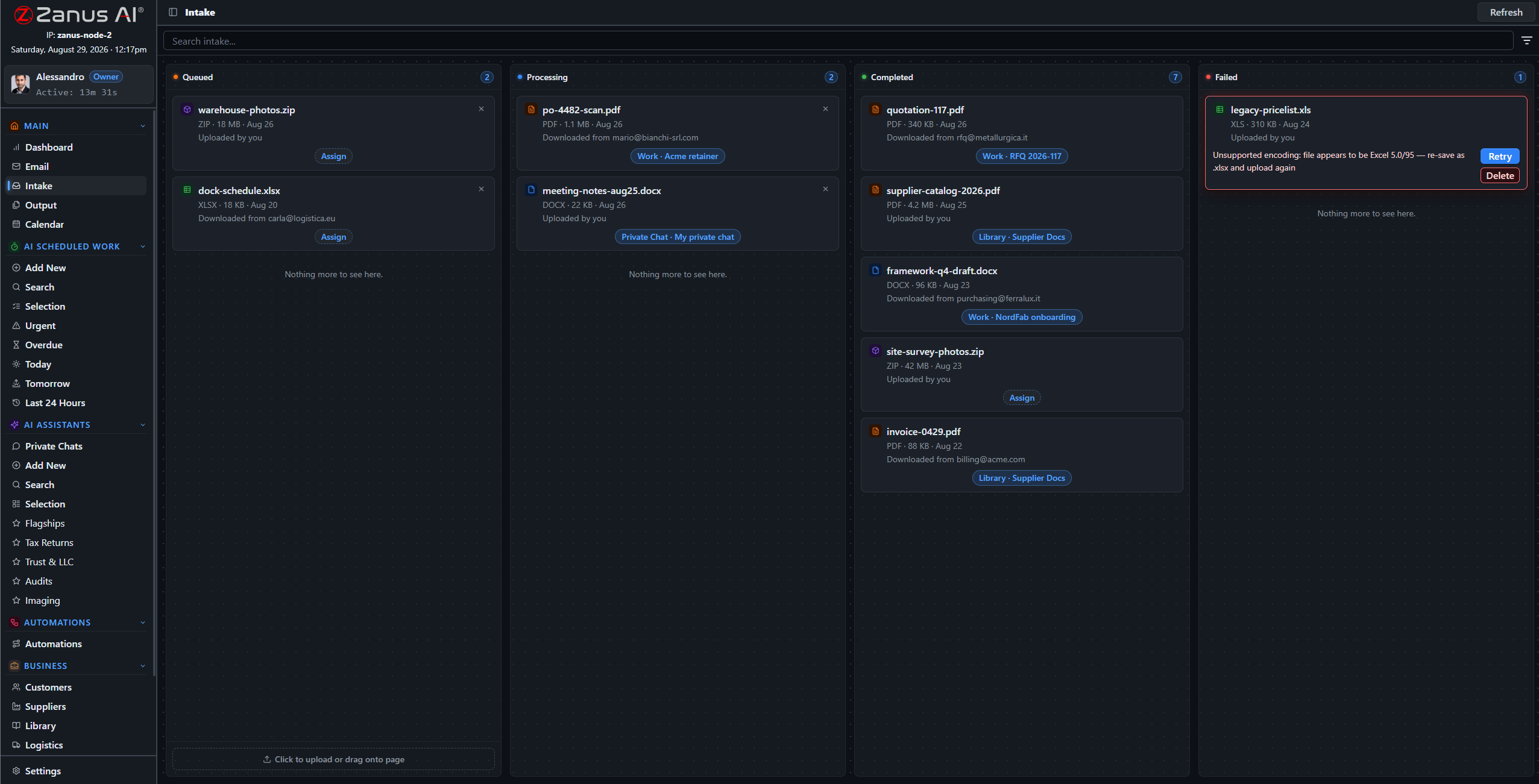
Documents flow back where they belong
The warranty claim the AI drafted, the audit-readiness report, the customer status letter: finished documents return to the records they belong to through the same connectors — reviewed and approved by your people first.
- AI output filed back to the unit or account
- Approval workflow before anything writes back
- Webhooks notify your systems in real time
Questions, answered
Which TMS and ELD systems do you support?
Connectors are mapped per deployment — bring your TMS, ELD, telematics and shop software to the demo and we walk through the exact integration path.
Does fleet data pass through third parties?
No. The connectors run inside your tenant — or inside your building on the on-premises option. Data moves directly between your systems.
See it working on YOUR fleet — the demo IS the product.
ZANUS AI FOR TRANSPORTATION & AUTOMOTIVE — COMPLIANCE
Audit week without the panic.
When the DOT audit letter arrives, the question is simple: can you produce the records, complete and current, on demand? The architecture answers: DOT-conscious documentation, permissions to the field level, server-side redaction, a searchable audit trail — audit-ready all year, not just audit week.
Private tenant or your own server · your whole team · DOT-conscious documentation
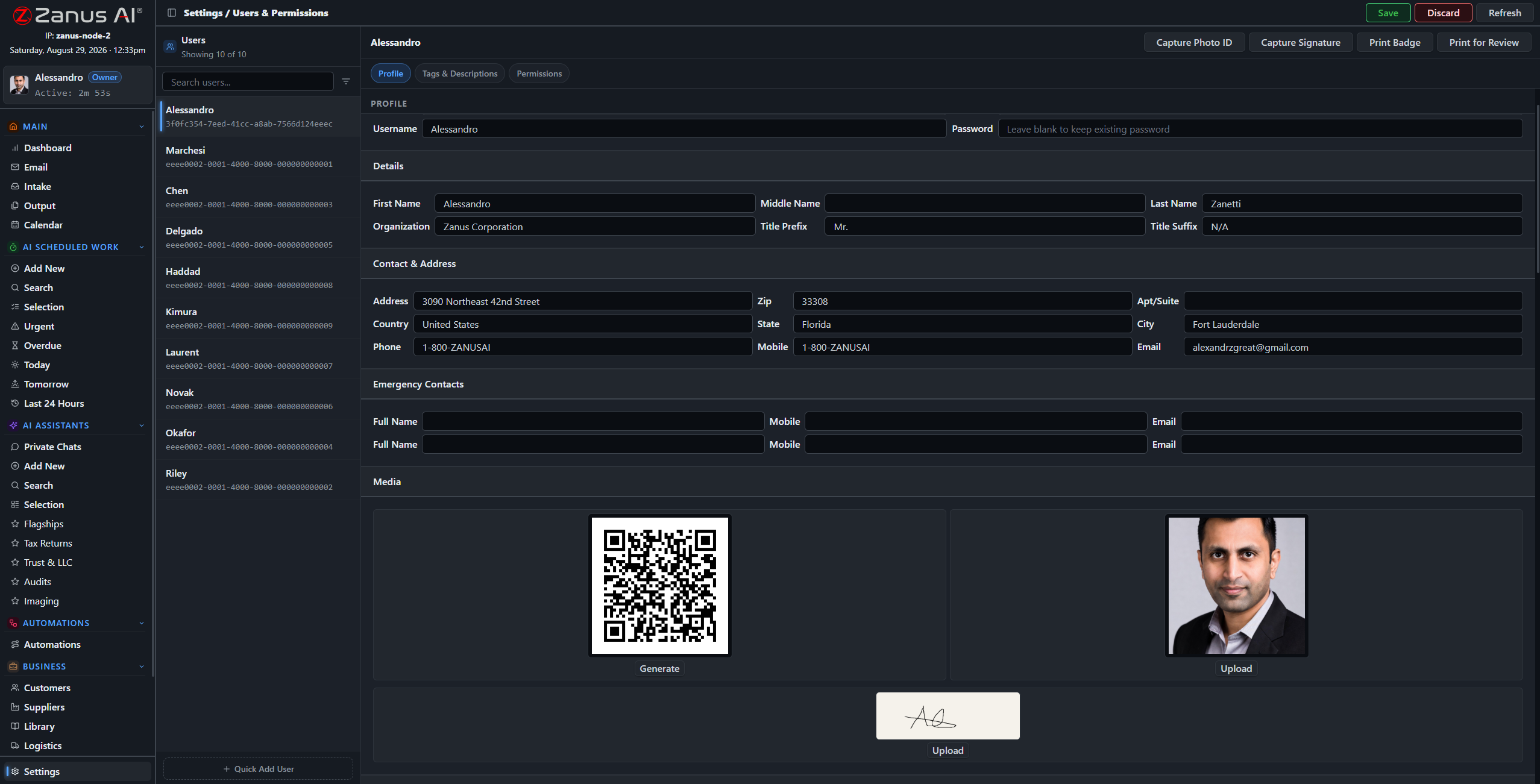
One record per user: role, tags, and granular permissions over every domain of the system.
What it does
The server redacts what a role cannot see — a dispatcher sees availability and assignments, never the medical certificate or the CDL details behind them.
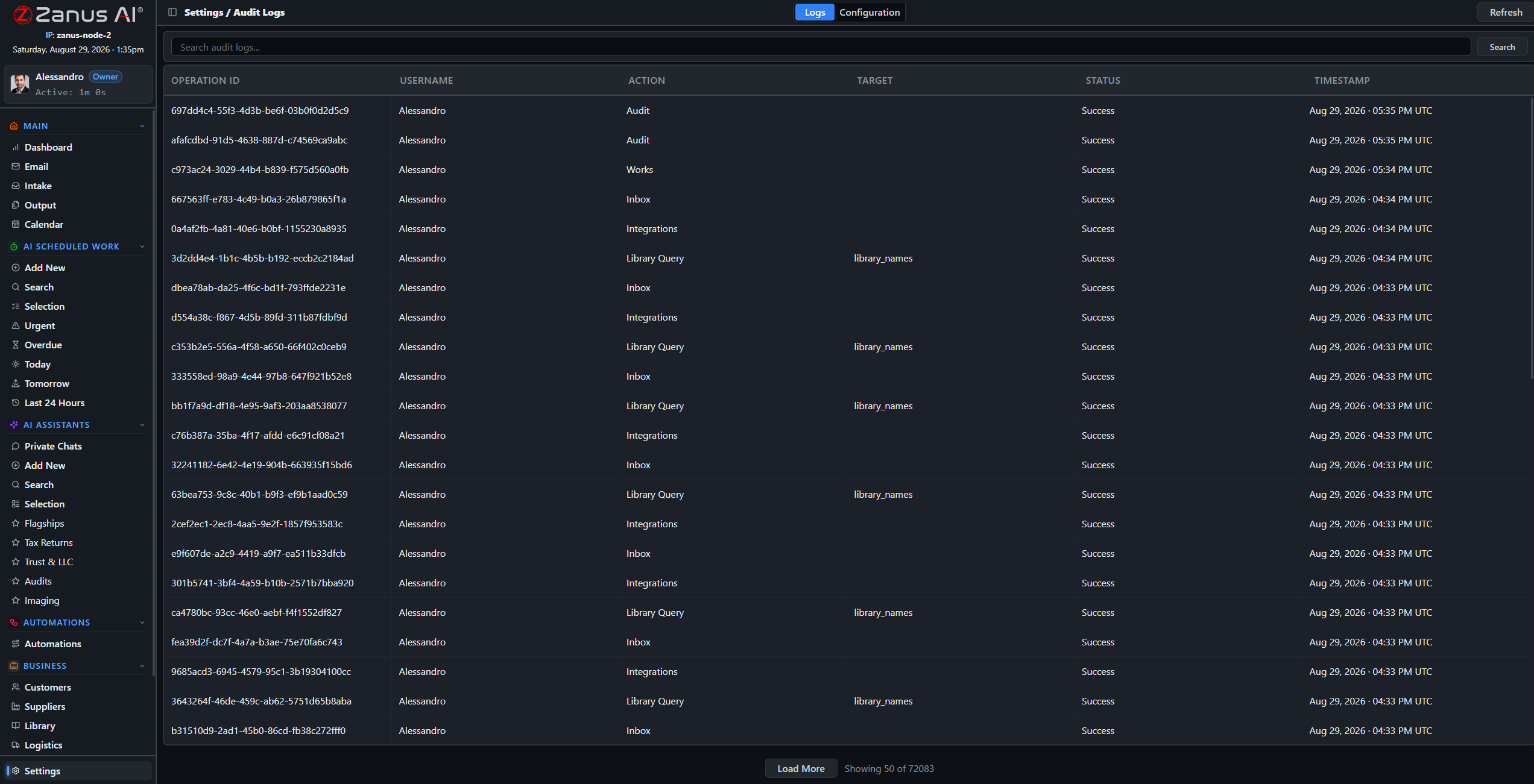
A searchable log of every audited action, with configurable categories: who opened which driver file, who changed which record, when.
Five-level workgroups map terminals, the shop and the office; the on-premises option puts the whole system inside your building, air-gap capable.
The audit that takes minutes, not weeks
When the auditor asks for inspection records, driver files and maintenance histories, the answer is a search away: documents current, expirations tracked, every change on the record — assembled in minutes instead of a week of folder archaeology.
- Searchable audit trail
- Automatic pre-update snapshots with rollback
- USB updates for air-gapped deployments
Questions, answered
Does this make us DOT compliant?
The architecture is DOT-conscious: it organizes, tracks and audits your records so compliance work is fast and visible. Your safety manager owns the decisions — bring your compliance officer to the demo and we walk the specifics.
Where does our fleet data live?
In your isolated tenant — never training outside models — or fully on-premises on hardware you own, physically incapable of internet exposure.
See it working on YOUR fleet — the demo IS the product.
ZANUS AI FOR TRANSPORTATION & AUTOMOTIVE — LIVE DEMO
Skip the sales video.
Talk to the AI instead.
Big vendors show fleet demos as videos behind a lead form. Ours is the product itself, configured for transportation: open the chat below-right and try it — ask for a pickup quote, book a service appointment, request a demo of the DVIR review workflow.
The conversation you have with us IS the demo
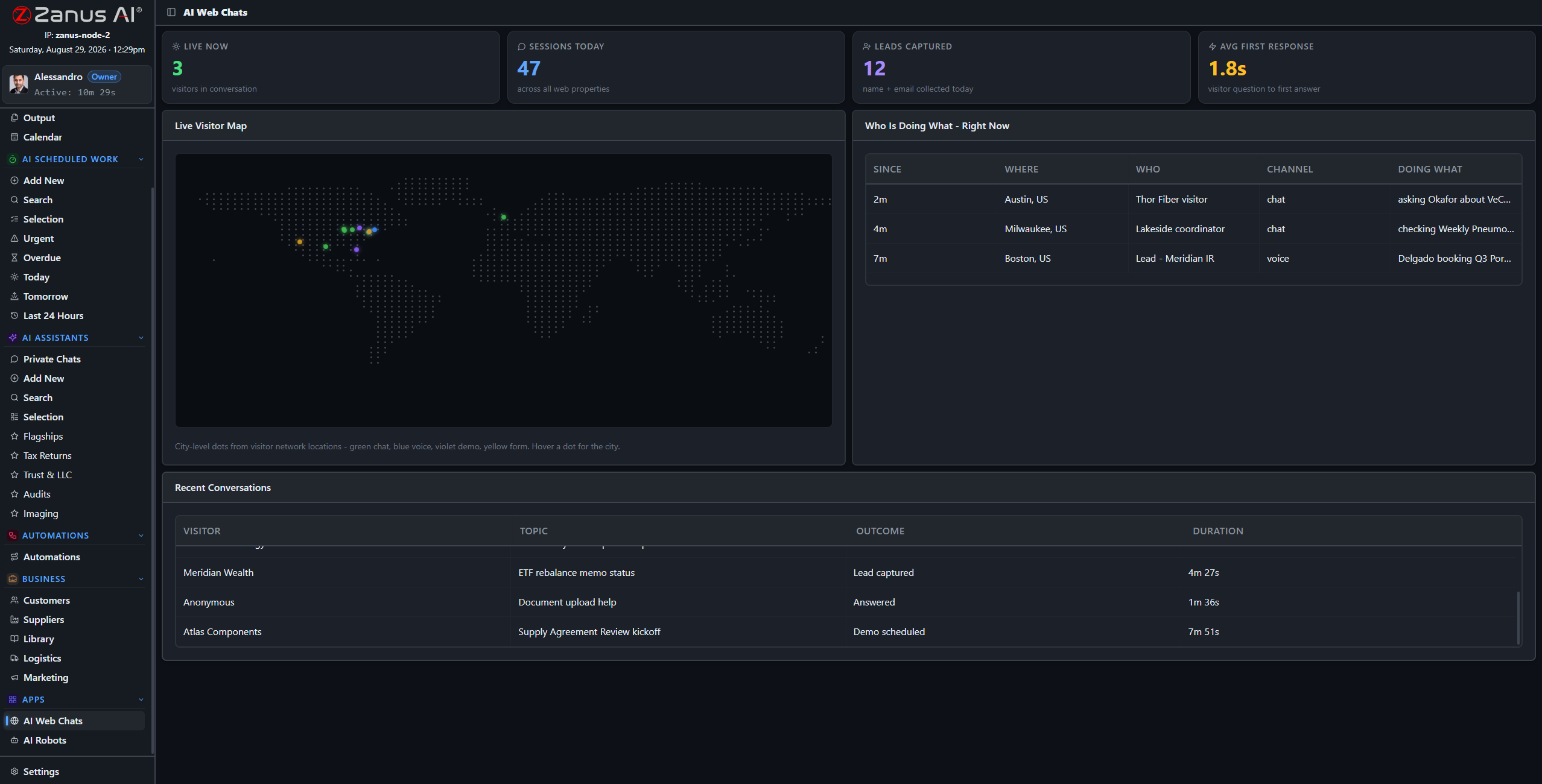
This screen is watching demos like yours happen: live conversations, outcomes, first response in seconds.
What it does
Ask the chat: “I need a pickup Monday morning” — watch it qualify the load, quote from real rates and confirm, like your best dispatcher on their best day.
Ask: “how would you run a DOT audit-readiness check?” — it walks the workflow it would run in your tenant, grounded, cited, sign-off included.
The full demo loads a fleet tenant with sample records: DVIR reviews, service reminders, manual answers — your world, working.
Or pick your exact business
Every link below is a full live-demo page for that specific business — its vocabulary, its calls, its booking rules.
Two minutes to your inbox
Request the demo and the interactive fleet demo arrives in about two minutes — no sales call, no calendar dance. Watch it, interrupt it with questions, and book the human conversation when YOU are ready.
- Interactive demo, fleet-configured
- Ask questions mid-demo — it answers and resumes
- In your inbox in ~2 minutes, free

Questions, answered
Is the demo really the product?
Yes — the same AI, configured with a sample fleet tenant. What you see is what your team gets, with your records and manuals instead of the samples.
See it working on YOUR fleet — the demo IS the product.
Sharing with a colleague? 📄 Get the PDF · ✉️ Email this page ·