ZANUS AI FOR LOCAL GOVERNMENT & MUNICIPAL — OVERVIEW
City hall, without the hold music.
Citizen calls answered every hour — trash schedules, permit questions, utility billing. Ordinances, zoning codes and council minutes that answer back with sources cited. One AI system for the counter side and the clerk’s side — on a private tenant now, inside city hall when residency requires it.
Cloud tenant or on-premises at city hall · your whole team · data-residency-conscious architecture
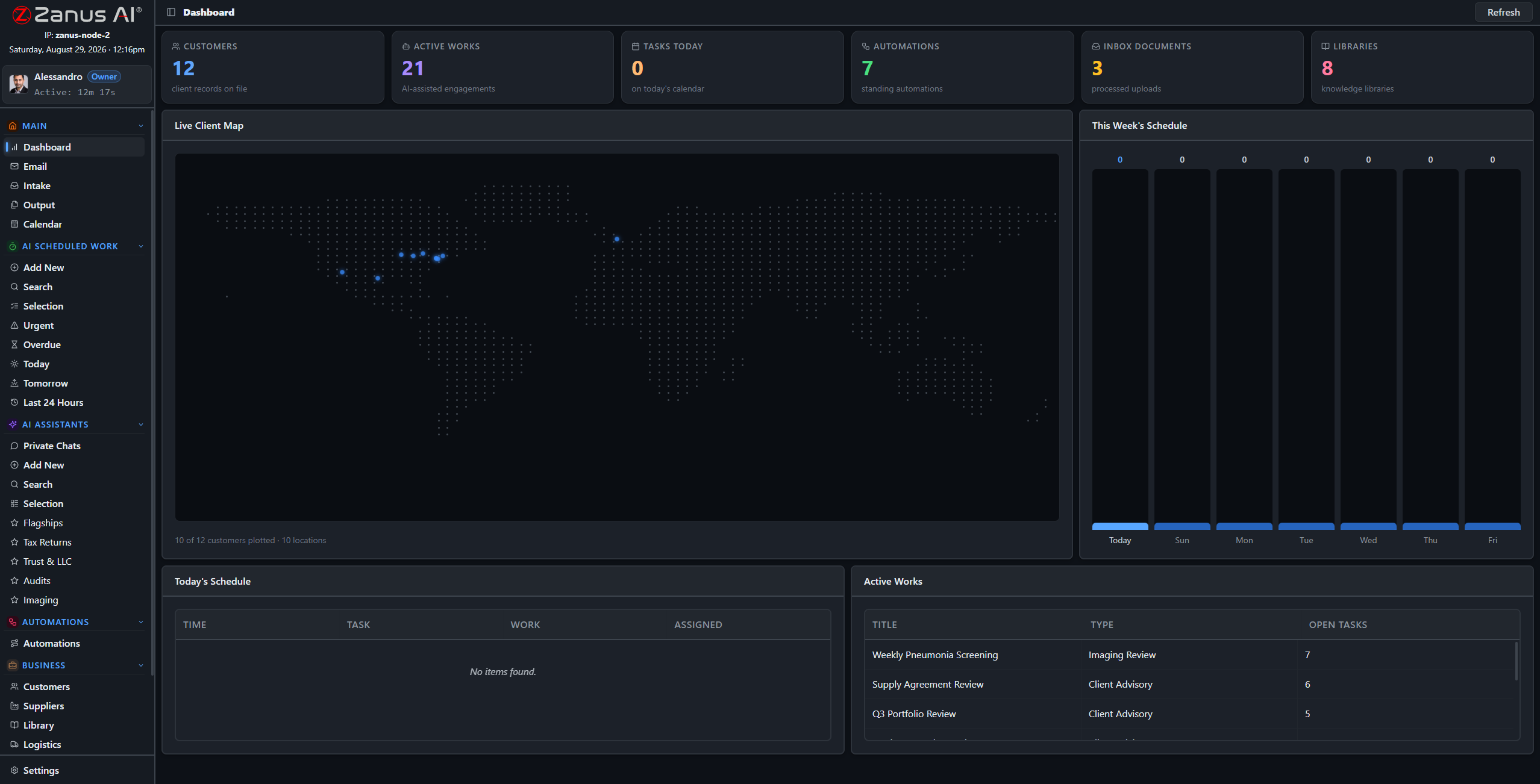
A real deployment view: ordinance libraries, permit-review works, records requests in flight.
What it does
The AI answers your published lines 24/7 in up to 40 languages — pickup schedules, permit requirements, meeting dates — and routes case matters to staff, by your rules.
Application packets checked for completeness, zoning questions answered from the code with the section cited, status updates drafted — the permit technician reviews instead of retyping.
Pilot on an isolated private tenant this month. When policy requires full data residency, the identical system runs on hardware the city owns — air-gap capable, no recurring fees.
Front office: the counter, answered
Monday after a storm the lines melt down: downed limbs, missed pickups, permit deadlines. The Zanus front office answers every ring at once, in the caller’s language, from the city’s approved information — and books counter appointments into real staff calendars.
- AI phone on your lines, 24/7, up to 40 languages
- Counter appointments booked into synced calendars
- Service and schedule questions answered identically every time
- See the Front Office for municipalities →

Back office: the clerk’s side, working
A public-records request for three years of code-enforcement files, the Tuesday council agenda packet, the fence-height question from lot 14 — the AI searches the ordinances, minutes and files, drafts the answer with the section cited, and queues it for the clerk’s review.
- Scheduled AI work: records triage, packet assembly, permit pre-review
- Verified answers from the municipal code — section cited
- Every draft awaits staff sign-off
- See the Back Office for municipalities →
When the data must live at city hall
Counties and cities with residency requirements run the identical OS on Zanus hardware in their own server room: air-gap capable, USB updates, owned outright — resident data physically incapable of leaving the building.
- Private On-Premises AI: owned, no recurring fees
- On-Prem Tokens Server for high-volume document work
- Same system as the cloud pilot — zero migration pain
- Explore the AI Servers →

Questions, answered
Can a small city afford this?
The subscription is flat with your whole team — the meter reader, the permit tech and the city manager all fit in one price. The on-premises server, when you want it, is owned outright by RFQ with no recurring fees.
Does the AI make zoning determinations?
No. It answers from your adopted code with the section cited and drafts for staff review — determinations, variances and enforcement decisions stay with your planners and officials.
We are a county with many departments — one system?
Yes: one tenant with five-level workgroups mapping departments and offices. The assessor, the clerk and public works each see exactly what their role allows.
See it working on YOUR city — the demo IS the product.
ZANUS AI FOR LOCAL GOVERNMENT & MUNICIPAL — FRONT OFFICE
Every resident call answered. Every answer from the code.
Bulk-trash day, water-bill due dates, “can I build a six-foot fence?”, “when is the council meeting?” — city hall answers the same questions hundreds of times a week. The Zanus front office answers them from your approved information, identically, 24/7 — in up to 40 languages.
Cloud tenant or on-premises at city hall · your whole team · data-residency-conscious architecture

Calls, chats and counter appointments — one dashboard the city manager can actually read.
What it does
Monday after a windstorm, every line rings at once. The AI answers all of them simultaneously — logs the service requests, gives the debris-pickup schedule, and escalates emergencies by your rules.
“What are the setback rules for my lot?” answered from the adopted zoning code with the section cited — the same correct answer at the counter, on the phone, at midnight.
Up to 40 languages on the same published lines. The resident who speaks no English gets the same service-day answer without waiting for a callback.
From call to counter appointment, hands-free
A homeowner calls about a deck permit; the AI confirms the project type, lists the required documents from your checklist, books a counter slot on the permit technician’s real calendar and emails the application packet — while staff serve the residents already in line.
- Appointments synced to real staff calendars
- Permit checklists sent before the visit
- Utility-billing and schedule questions answered from your rules
- Enforcement and legal matters escalated to staff, never improvised


The web counter never closes
Website chat grounded in the code and your published schedules, web forms for service requests and records requests worked in minutes — the resident reporting a streetlight at 10 PM gets a ticket number at 10:01.
- Grounded chat on the city site — no source, no claim
- Service and records-request forms acknowledged instantly
- Every conversation logged with a transcript
- See the full Front Office tour →
Questions, answered
What about emergency calls?
Emergency language triggers your rules instantly: transfer to dispatch or the instruction to call 911. The AI handles the trash-schedule calls so your staff are free for the calls that matter.
Do we keep our published numbers?
Yes. Your numbers stay; calls route AI-first, staff-first, or any mix per line and per hour — many cities start with after-hours and overflow only.
Can it log service requests?
Yes — pothole, streetlight, missed pickup: the AI collects the location and details, opens the request, and gives the resident a reference number, every time in the same format.
See it working on YOUR city — the demo IS the product.
ZANUS AI FOR LOCAL GOVERNMENT & MUNICIPAL — BACK OFFICE
The city runs on paper.
Now the paper works.
Permit applications, records requests, agenda packets, code-enforcement files, budget books: a municipality is its paperwork. The Zanus back office turns that archive into a working AI staff — checking, drafting and cross-referencing with sections cited, under your clerks’ and managers’ sign-off.
Cloud tenant or on-premises at city hall · your whole team · data-residency-conscious architecture
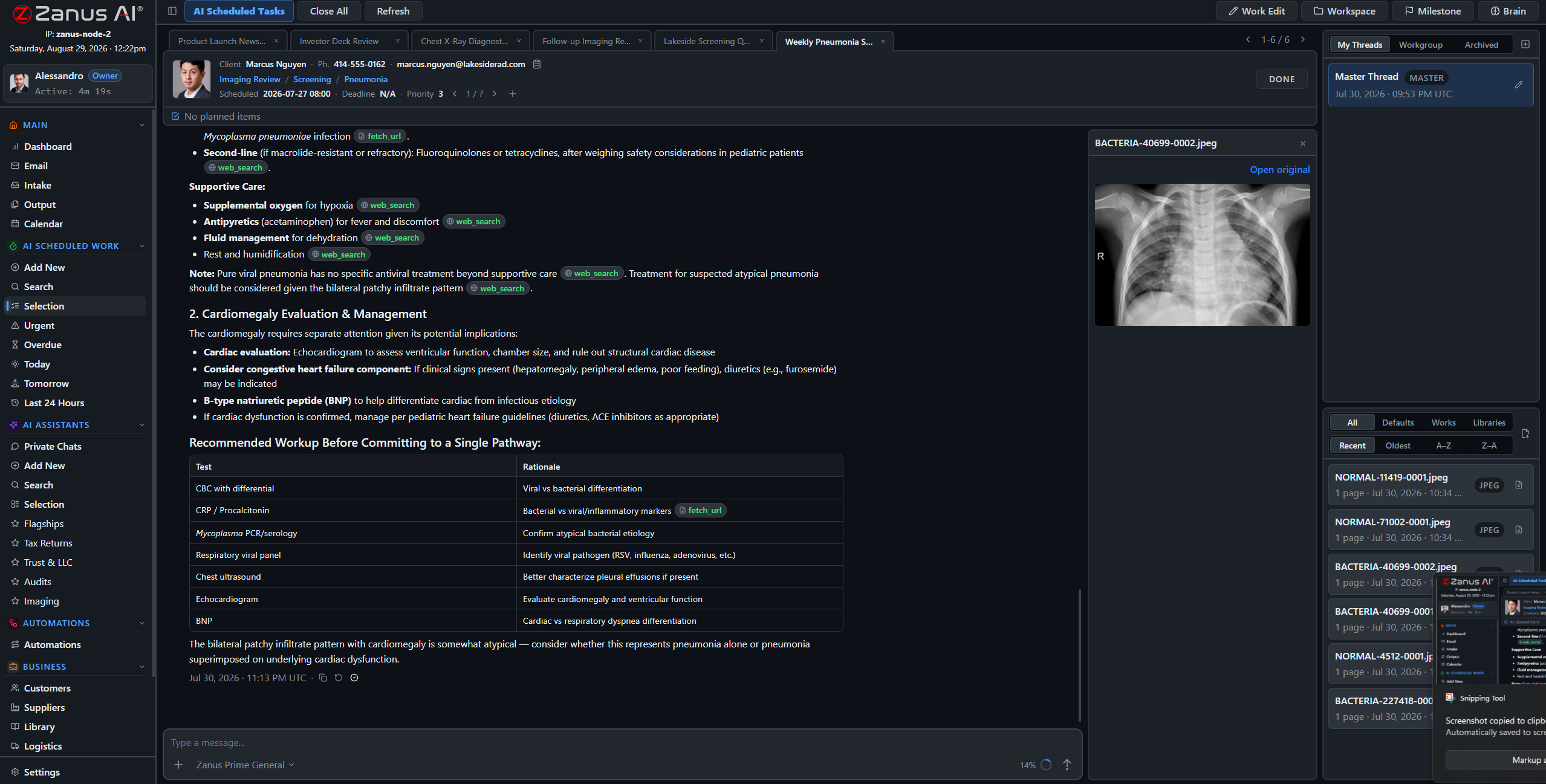
A real session: permit packet checked against the code — gaps flagged, sections cited, technician decides.
What it does
Every application checked for completeness against your own checklist and code: missing site plan flagged, wrong zone flagged, status letter drafted — before the technician opens the file.
Staff reports, resolutions and attachments compiled for the Tuesday council meeting from the files where they live — the clerk reviews a draft packet instead of chasing departments.
Every AI-drafted letter, packet and response lands in Output awaiting review. Nothing reaches a resident or the council without a human decision on the record.
The records request that answered itself (almost)
A request arrives for all code-enforcement correspondence on one address since 2019. The AI searches the files, assembles the candidate set with each document cited, flags items that may need exemption review, and drafts the response letter — the clerk reviews, redacts and releases, the same afternoon.
- Archive search across departments in minutes
- Candidate responsive set with citations attached
- Exemption-sensitive items flagged for clerk review


Letters, reports and minutes — drafted
The documents that eat municipal evenings: violation letters citing the ordinance, staff reports in your template, draft minutes from the meeting recording. Drafted in minutes, sourced to the record, waiting for review.
- Your letterheads and report templates
- Ordinance sections cited automatically
- Approval workflow before anything sends or files
Questions, answered
Does it decide permit approvals?
No. It checks completeness, cites the applicable sections and drafts correspondence — approvals, conditions and enforcement remain with your planners, inspectors and officials.
Can it read our old scanned files?
Yes — the ingestion pipeline handles scans, images and PDFs. The 2003 subdivision file becomes as searchable as last week’s application. Bring a sample box to the demo.
YOU MIGHT ALSO LIKE
The Back Office executes. Who answers the phone?
Front Office AI picks up every call and chat — books, quotes, follows up, 24/7 in 40 languages. Watch it run a business like yours, live.
See it working on YOUR city — the demo IS the product.
ZANUS AI FOR LOCAL GOVERNMENT & MUNICIPAL — ORDINANCES & RECORDS
Ask the ordinance. It answers.
The municipal code, zoning ordinances, council minutes, budget books, permit files, easements — loaded into curated libraries the AI reads from. Ask in plain language; get the answer with the section cited, at the permission level of whoever asks.
Cloud tenant or on-premises at city hall · your whole team · data-residency-conscious architecture
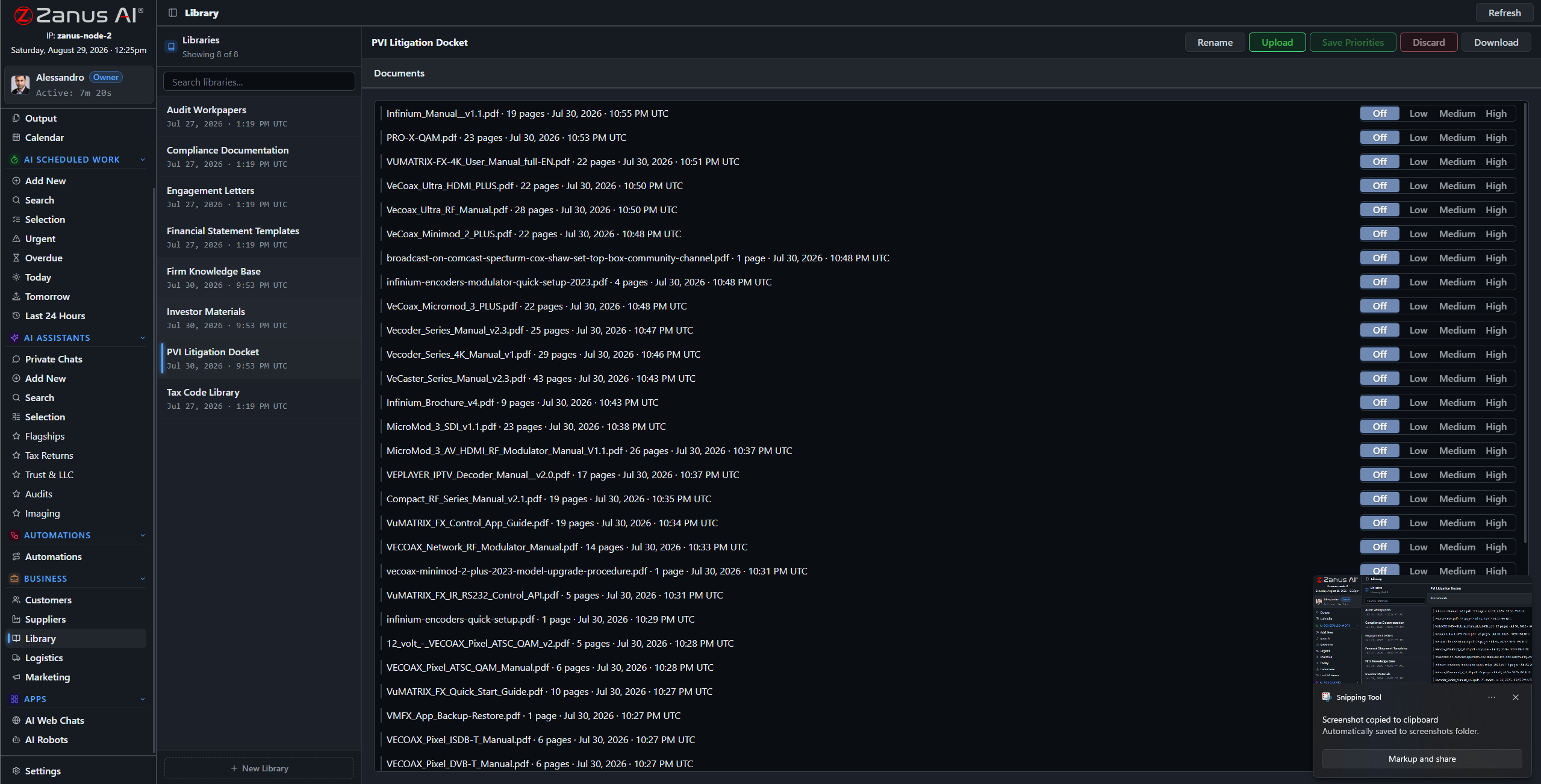
Libraries: the codified ordinance outranks the old scan, the adopted budget outranks the proposal — you set the order.
What it does
Codified ordinances, scanned plat maps, recorded meetings, spreadsheet budgets — the ingestion pipeline turns what a city actually stores into queryable knowledge.
No source in the library, no claim: the AI cites chapter and section of the code, the minute entry, the resolution number — or says it cannot answer.
The counter clerk asks about published fees; the attorney asks about the enforcement file: each gets answers scoped to their role, enforced server-side.
Sixty years of minutes, one question away
“When did the council last amend the sign ordinance?” “What conditions were attached to the 2011 rezoning on Mill Road?” “Which budget line funded the pump station?” The archive answers in seconds with the documents attached — instead of an afternoon in the vault.
- Plain-language questions across the whole archive
- Sources attached to every answer
- Priority order: the codified version always wins

Questions, answered
Who can see which files?
Only roles you authorize. Permissions reach the field level and the server redacts what a user cannot see — personnel files and pending enforcement stay exactly as restricted as they should be.
Do our records train outside models?
Never. The tenant is isolated; the city’s records are the city’s alone — and the on-premises option keeps them physically inside city hall.
See it working on YOUR city — the demo IS the product.
ZANUS AI FOR LOCAL GOVERNMENT & MUNICIPAL — AI WORKFORCE
The staff the budget never allowed.
Assign work to the AI the way you assign it to staff: type, sources, deadline, priority. Nightly permit pre-reviews, weekly records triage, the Thursday agenda packet — executed on schedule, with citations, under review.
Cloud tenant or on-premises at city hall · your whole team · data-residency-conscious architecture
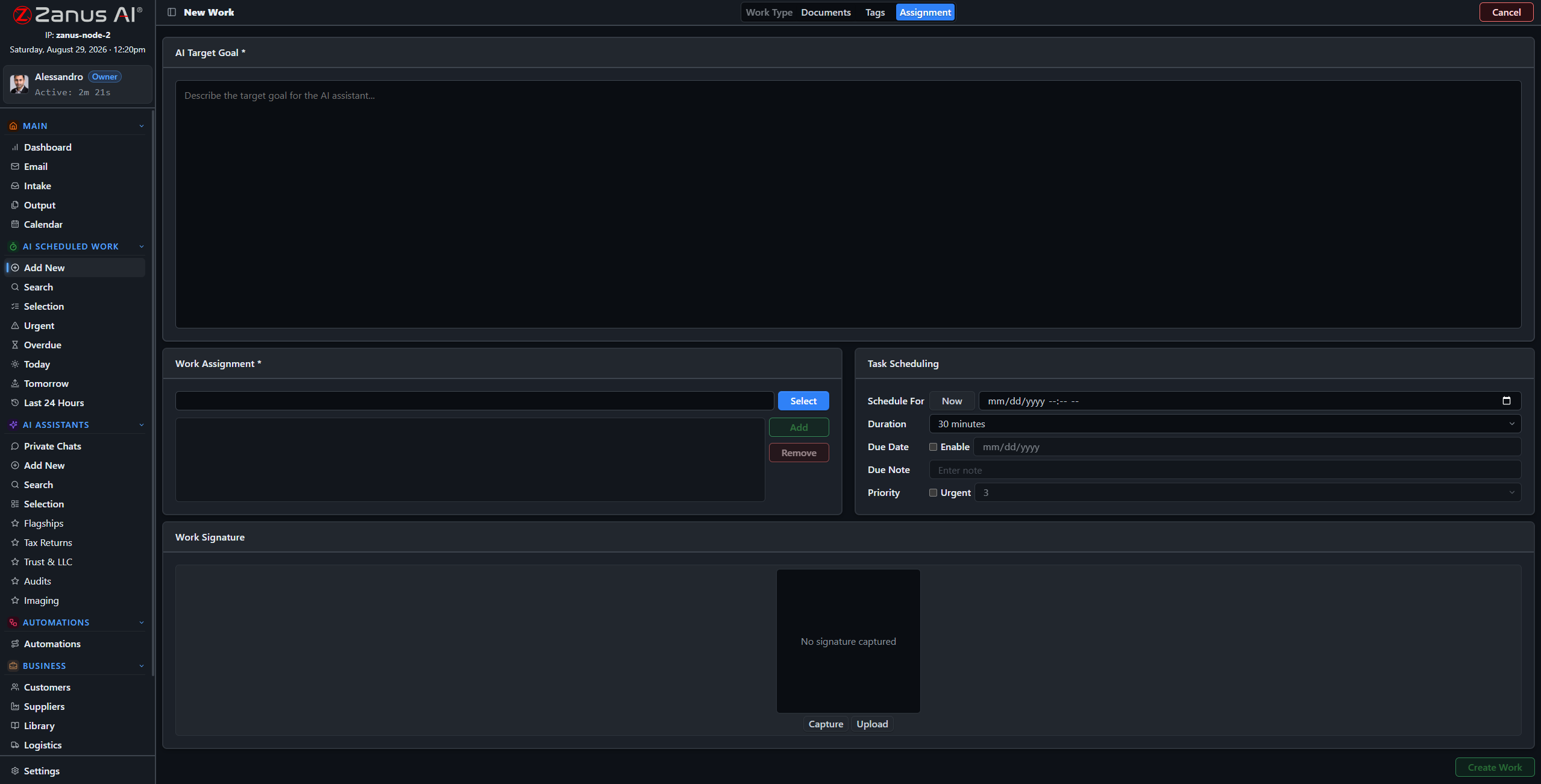
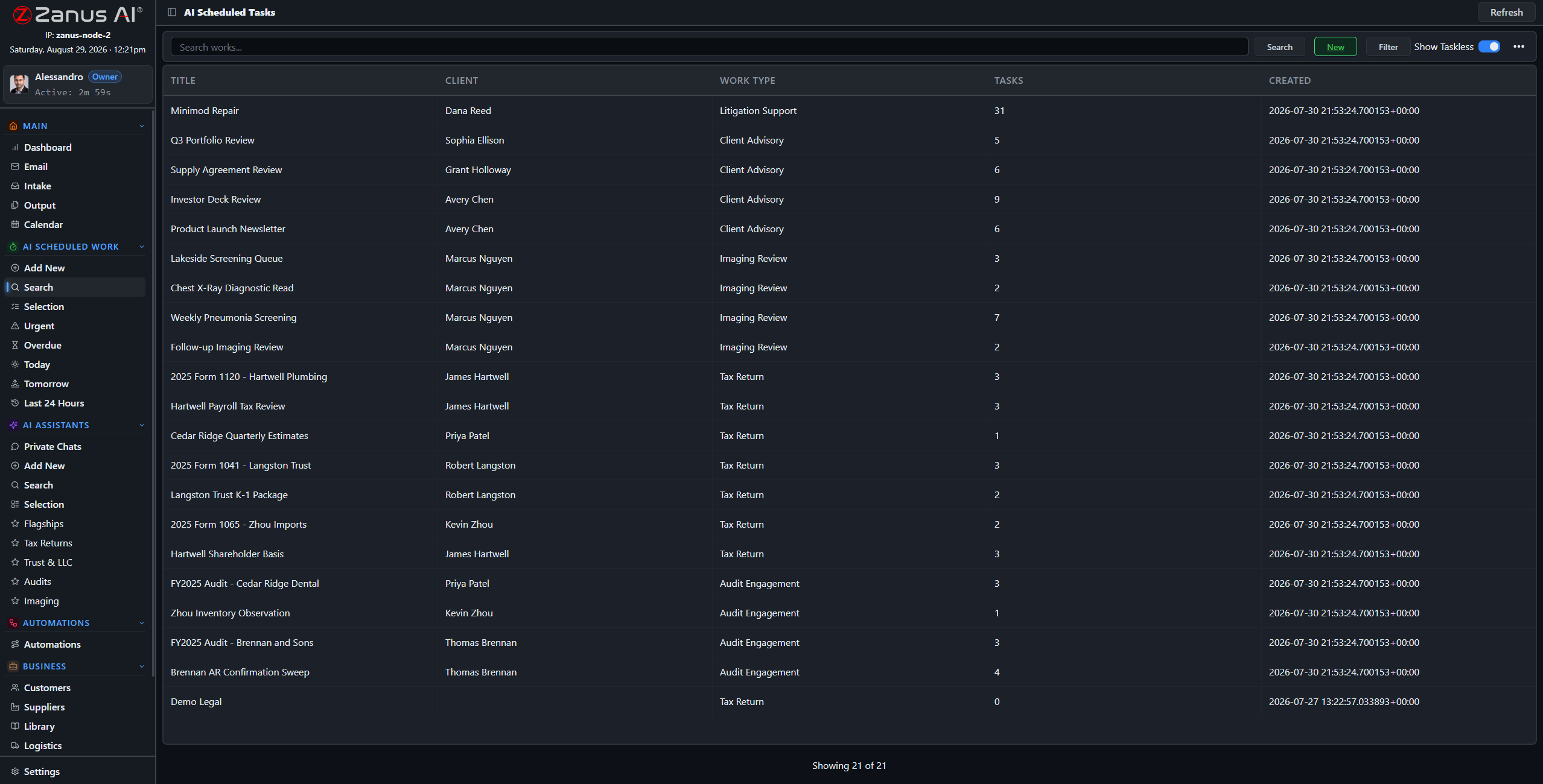
Four steps: work type, records and libraries, tags, schedule — the AI takes it from there.
What it does
Permit pre-review, records-request triage, violation-letter draft, minutes draft, budget summary: work types molded to your operation, with default libraries per type.
The AI’s workload is managed like the team’s: one-click views show what is urgent, late, today and tomorrow — statutory response deadlines never slip silently.
Every work is a full session: reasoning streamed, code sections cited, milestones tracked, linked to the file and the calendar.
Thursday, 4 PM: the packet is assembled
Set “Council Agenda Packet” once: every Thursday the AI gathers the staff reports, resolutions and attachments filed during the week, assembles the draft packet in your format, and files it for the clerk’s review — before the Friday publication deadline, every week.
- Recurring schedules matched to meeting cycles
- Every item sourced to its filed document
- Draft packet in Output, awaiting the clerk’s sign-off
Questions, answered
Can staff supervise mid-work?
Yes — open any session, read the reasoning, redirect it, or stop it. The AI works like staff: visible, accountable, interruptible.
What about seasonal spikes?
Building season, budget season, election season: the AI does not tire — the constraint is your review capacity, not its throughput, and the flat price never changes with volume.
See it working on YOUR city — the demo IS the product.
ZANUS AI FOR LOCAL GOVERNMENT & MUNICIPAL — PROCEDURES
The counter procedure book, alive.
Procedures only work when the person at the counter can find them — the current version, at that. In Zanus, counter procedures, utility SOPs and enforcement checklists are living documents: answerable in chat, attached to work, priority-ordered so the adopted version always wins.
Cloud tenant or on-premises at city hall · your whole team · data-residency-conscious architecture
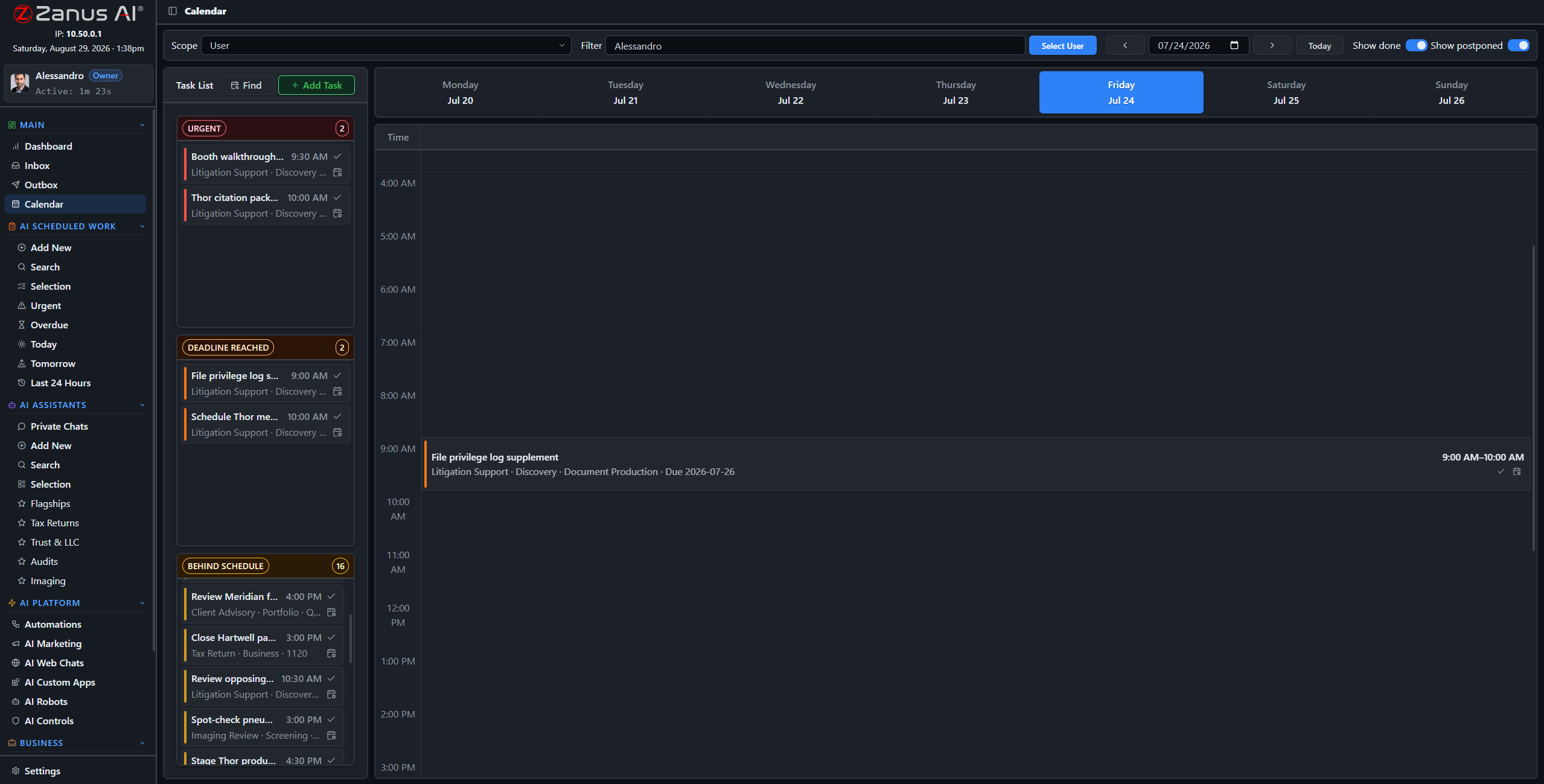
Procedure upkeep, scheduled like city work: annual reviews and fee-schedule checks on the calendar.
What it does
Cash-handling procedures, permit-intake checklists, utility shutoff rules, records-request handling: one library, adopted versions on top, superseded drafts outranked.
“What is the procedure for a same-day water reconnection?” — answered in seconds with the SOP attached, to any authorized employee, during the rush or after hours.
Work types carry their governing procedures: the AI drafting a violation letter reads from the enforcement SOP and the ordinance — by construction.
Procedure upkeep, scheduled like city work
Annual fee-schedule reviews, checklist updates when the council amends the code, summaries of procedure changes for the staff meeting: assign them once as recurring AI work and the counter book never goes stale — every review on the audit record.
- Recurring review works with deadlines
- Change summaries drafted for staff briefings
- Every review event on the audit trail
Questions, answered
How do updates roll out after a council vote?
Upload the amended ordinance and updated SOP, set them on top: from that moment every answer and every AI work cites the new version. Superseded versions stay archived for audit.
See it working on YOUR city — the demo IS the product.
ZANUS AI FOR LOCAL GOVERNMENT & MUNICIPAL — TEAM TRAINING
The clerk retires. The knowledge stays.
Every city has the one person who knows where everything is — until they retire. In Zanus, that knowledge lives in the system: new hires learn your city’s own procedures from the AI, and every employee has an assistant that answers “how do we…?” instantly.
Cloud tenant or on-premises at city hall · your whole team · data-residency-conscious architecture

Training lives inside the software: the AI walks each new hire through the city’s own procedures.
What it does
New counter staff learn your intake checklists, cash-handling rules and systems through guided training — productive in days, not after a year of shadowing.
“How do I process a records request for police reports?” — asked to the assistant, answered from the SOP with the source attached, without pulling the deputy clerk off the counter.
Private chats work on any device with a login — the how-to knowledge follows the employee from the counter to the field truck to the council chamber.

The trainer that never gets tired of the question
The tenth “how do I code this utility adjustment?” gets the same patient, sourced answer as the first. Training content never goes stale, because the assistant reads from the same living procedure libraries as everything else — update the SOP once and every future answer updates with it.
- Answers cite the current SOP or ordinance
- Preset assistants per role: counter, utilities, permits
- Training progress visible to supervisors
Questions, answered
Can we capture a retiring employee’s knowledge?
Load their procedures, notes and correspondence into the libraries before the retirement party: their answers keep answering. Several cities make this the first project.
See it working on YOUR city — the demo IS the product.
ZANUS AI FOR LOCAL GOVERNMENT & MUNICIPAL — AUTOMATIONS
City hall’s repetitive work, set once.
Describe the job in plain words — “when a permit application arrives, check it for completeness and draft the status letter” — and it becomes connected blocks on a canvas, running on its own, with every run visible.
Cloud tenant or on-premises at city hall · your whole team · data-residency-conscious architecture
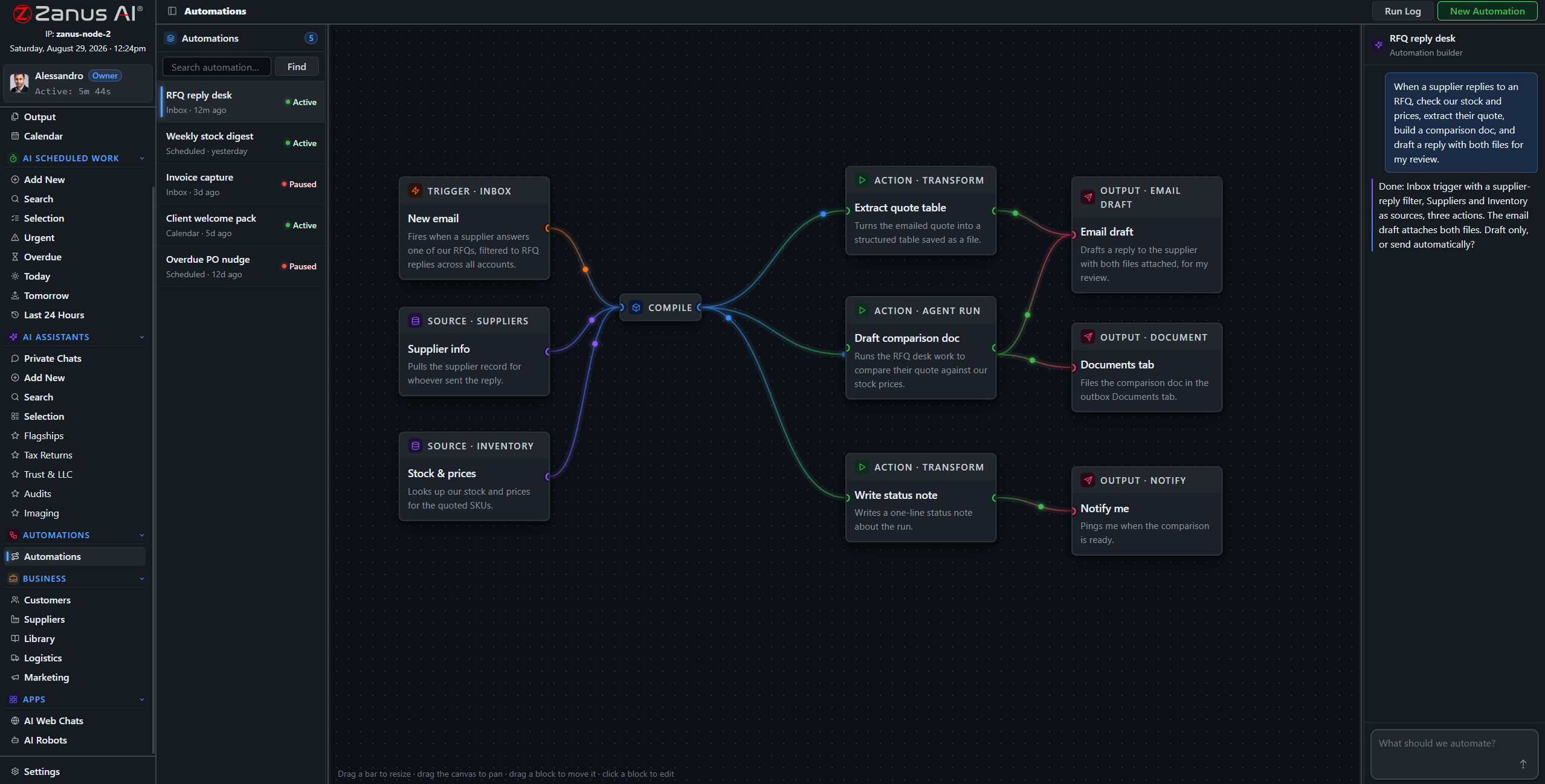
A real flow: intake trigger, code sources, AI check, three outputs — drawn from a description.
What it does
A permit application arrives: completeness checked against your checklist, gaps listed, the incomplete-application letter drafted and queued — before the technician opens the file.
Pothole to streets, leak to utilities, barking dog to animal control — classified, routed with a drafted summary, and acknowledged to the resident with a reference number.
The Friday manager’s summary, the monthly permit-activity report, the quarterly budget-to-actual: compiled by the AI, filed to Output, on time every cycle.
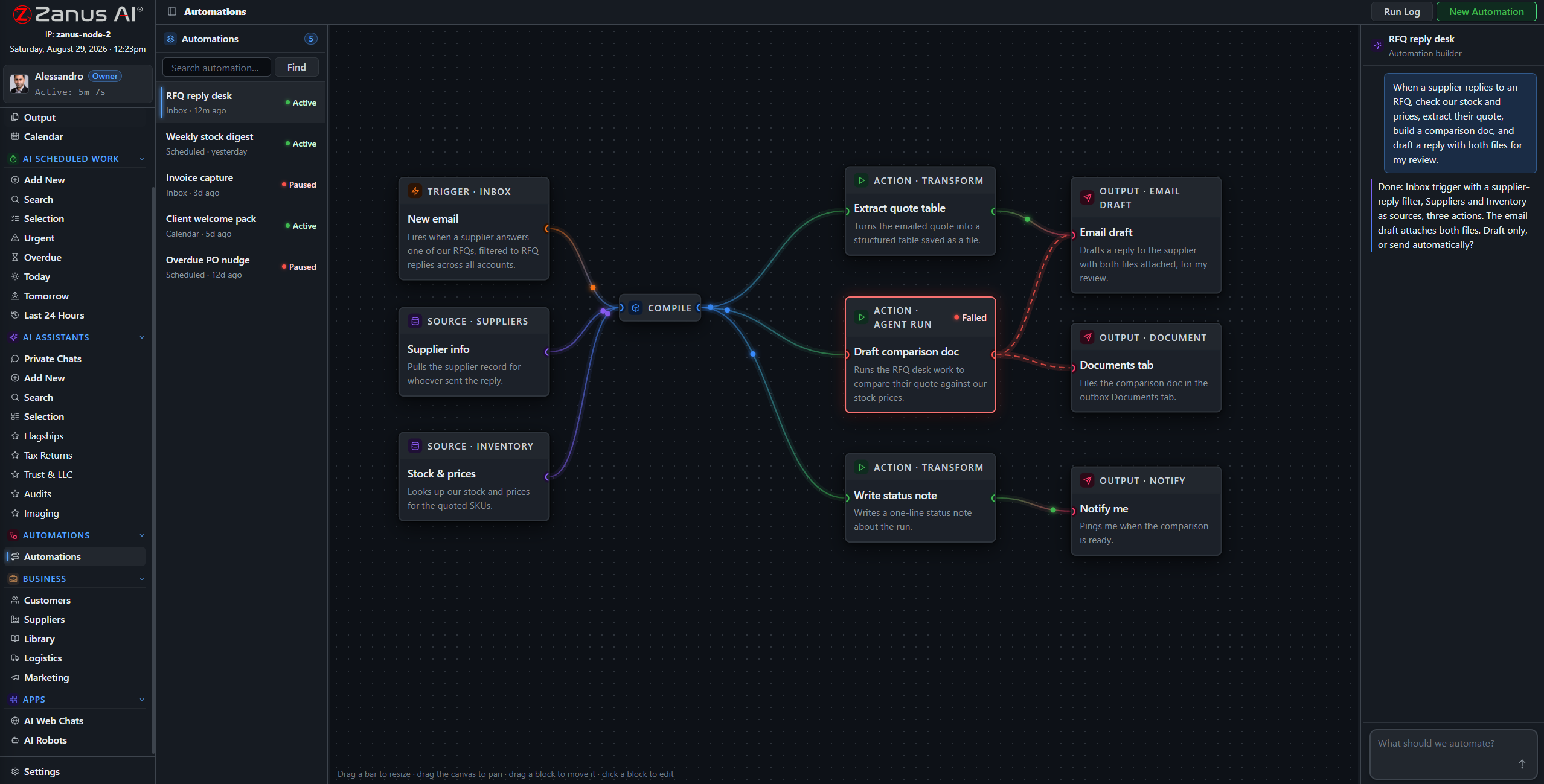
When something fails, you SEE it
Run states live on the flow: green success, red failure on the exact block. In a city with statutory deadlines and council meetings, silent failures are unacceptable — here, nothing fails silently and every run is on the record.
- Run log per automation
- One-click retry on failures
- Finished documents in Output, statused
Questions, answered
Who approves what an automation sends?
Your rules: queue everything for staff approval, or auto-send only the categories you designate as safe — acknowledgments and reference numbers yes, violation letters never without review.
See it working on YOUR city — the demo IS the product.
ZANUS AI FOR LOCAL GOVERNMENT & MUNICIPAL — CITIZEN NOTICES
Citizen notices, drafted and on the record.
Public hearing notices, service-change alerts, permit status letters, the city newsletter — drafted by the AI from your own records, in plain language, queued for approval. Nothing reaches a resident without staff sign-off, and every send is logged.
Cloud tenant or on-premises at city hall · your whole team · data-residency-conscious architecture
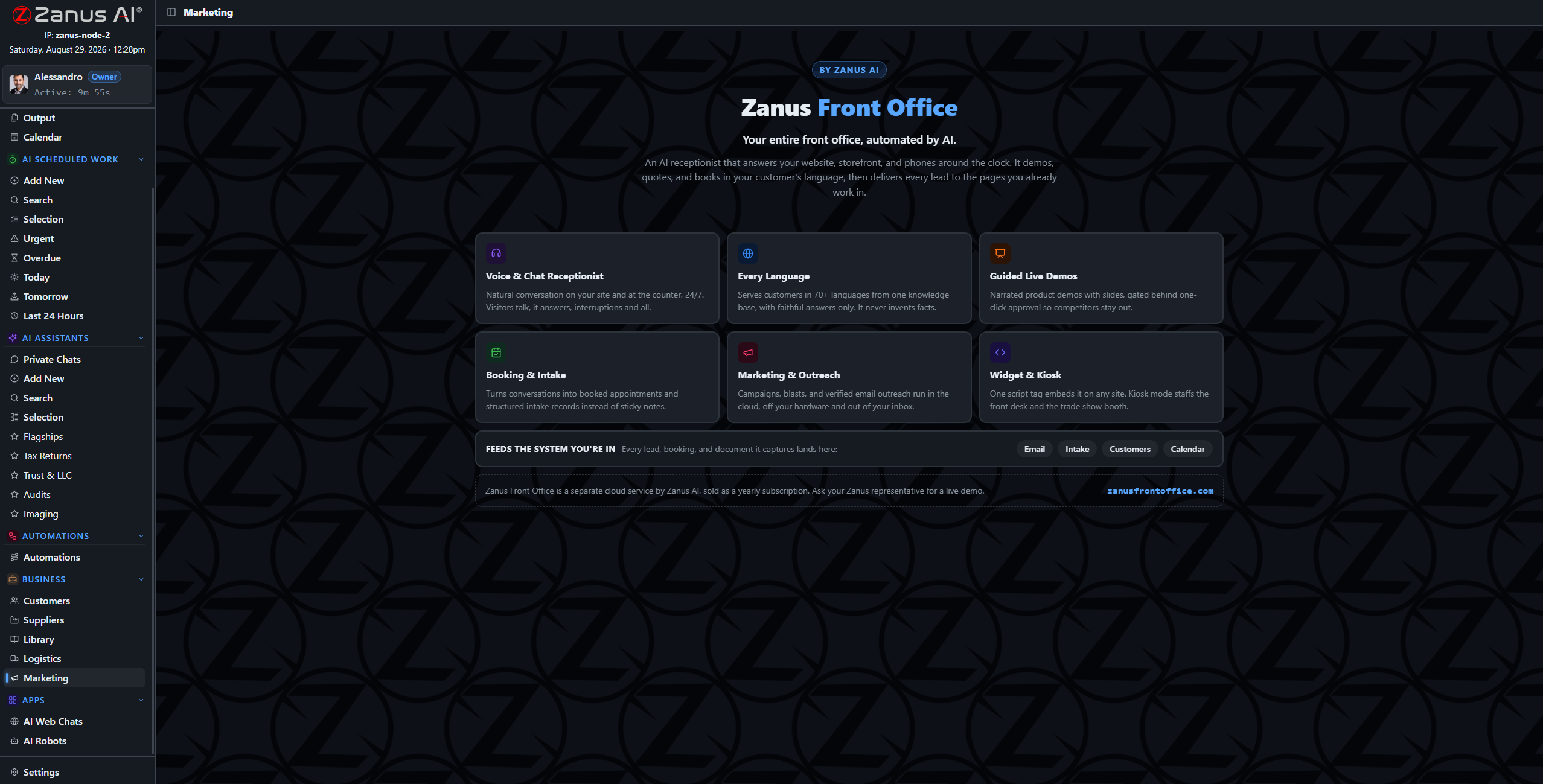
Notices and newsletters drafted from the municipal record — every one awaiting approval.
What it does
Hearing notices from the agenda item, road-closure alerts from the work order, assessment notices from the roll — drafted with the source document on file.
Residents read at every level and in every language. The AI drafts the same official content plainly and translates it — one review, one send, everyone informed.
Subscription lists and communication preferences are enforced by the system, not by memory. Every notice sent is on the audit record.
From the council vote to the notice, same day
The council amends the water rates Tuesday night. Wednesday morning the AI has drafted the rate-change notice from the adopted resolution, the website text, and the bill insert — consistent with each other because they share one source — all waiting for the manager’s approval.
- Audiences built from your own records, not exported lists
- Consistent language across notice, web and mail
- Every send on the audit record

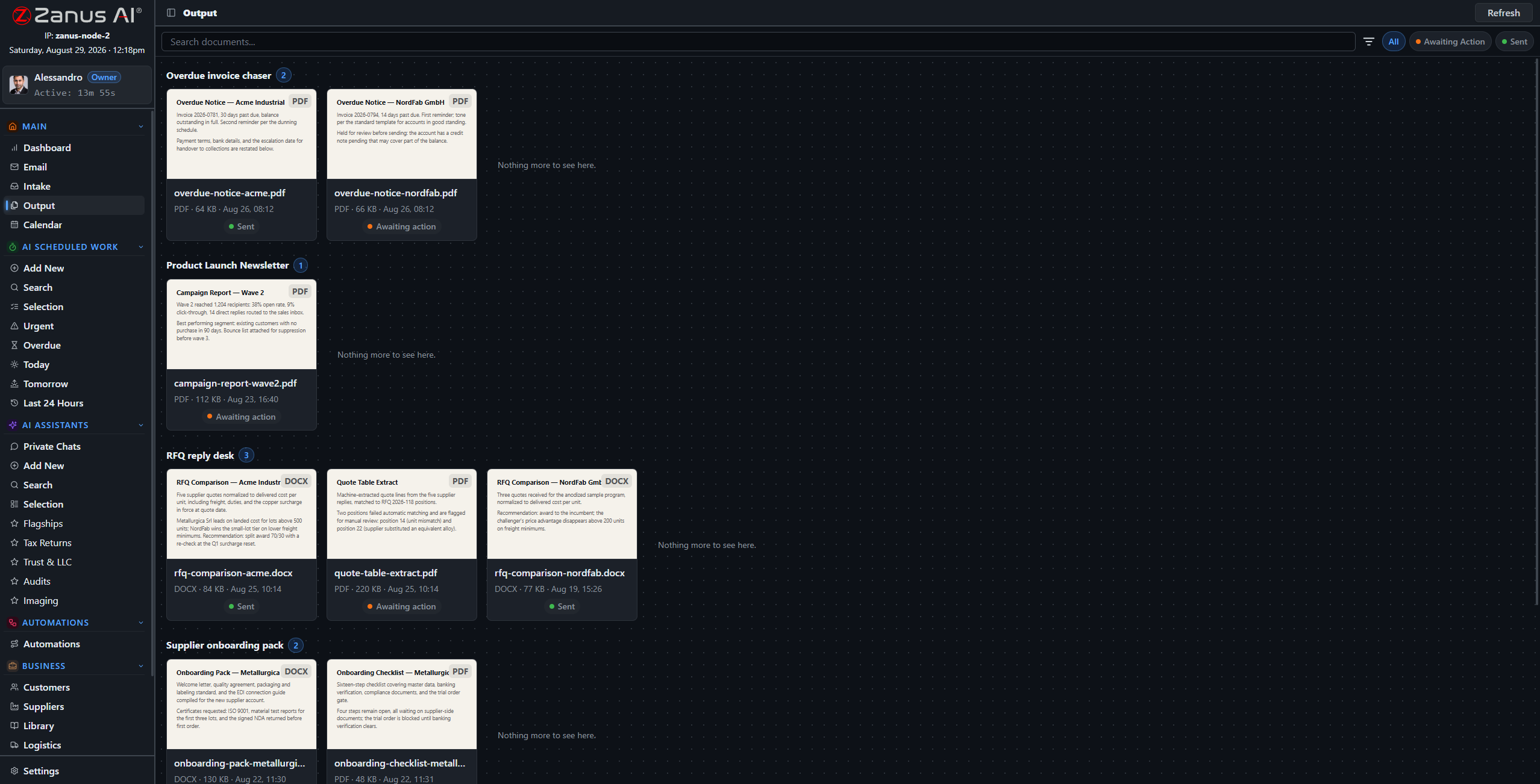
Approval first, always
Every outbound notice lands in the approval queue unless you designate the category as auto-send. The city stays in control of every word that reaches a resident — and can prove who approved it, when.
- Approval workflow per notice category
- Full history of what was sent to whom
- Results tracked: delivery, replies, follow-ups
Questions, answered
Can it handle legal notice requirements?
It drafts to your templates and deadlines and keeps every notice on the record; publication and posting requirements stay with your clerk, who approves every notice before it moves.
Can permit applicants get status updates?
Yes — status changes can trigger drafted update letters in the applicant’s language, queued for the technician’s one-click approval. The “any news on my permit?” calls fall away.
See it working on YOUR city — the demo IS the product.
ZANUS AI FOR LOCAL GOVERNMENT & MUNICIPAL — PERMIT SYSTEMS & INTEGRATIONS
Keep the permit system. Add the intelligence.
Your permitting system, utility billing, GIS and agenda software stay exactly where they are. Zanus becomes the system of work: API connectors sync applications, accounts and documents both ways, the intake pipeline files what arrives, and AI-drafted letters flow back where they belong. No rip and replace.
Cloud tenant or on-premises at city hall · your whole team · data-residency-conscious architecture

No rip and replace: permitting, billing and GIS stay — the AI layer connects to all of them.
What it does
Applications, parcels and inspections mapped field by field, with a dry-run preview before anything writes — push, pull or two-way, your choice per system.
Account questions answered from your billing rules, adjustment letters drafted, delinquency follow-ups queued — the billing system stays master of the balances.
A full API for whatever else the city runs: GIS layers, agenda software, asset management — data in, results out, under scoped keys.
One question across every system
The parcel lives in GIS, the permit in the permitting system, the complaint in the request tracker — and the AI reads across all of it. “What is open on 412 Mill Road?” becomes one question with one grounded, cited answer.
- Field mapping with dry-run preview
- Each system stays master of its own records
- Every sync event on the audit record
- External systems appear as blocks on the automation canvas
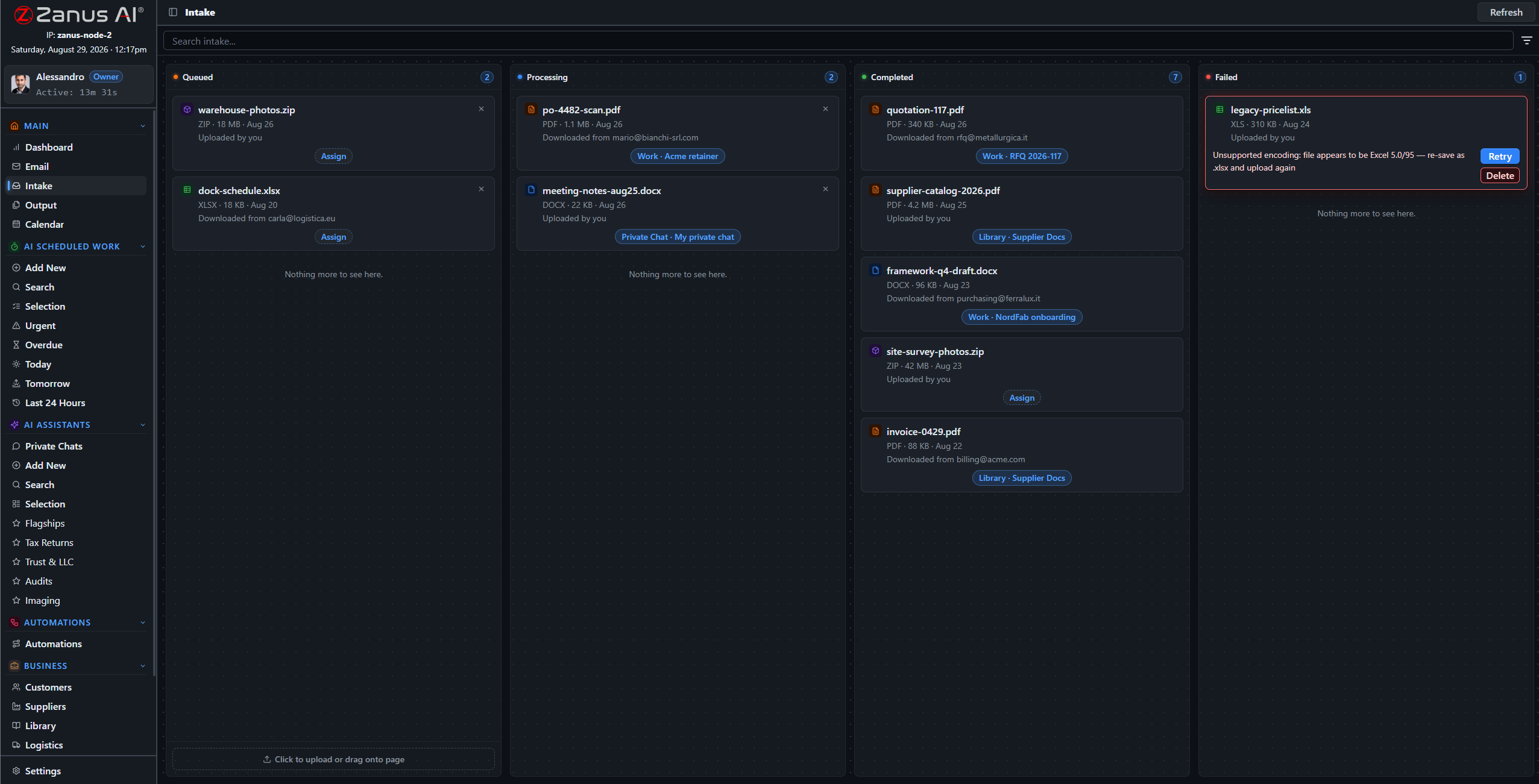
Documents flow back where they belong
The status letter the AI drafted, the violation notice, the completeness checklist: finished documents return to the permit file in your system through the same connectors — reviewed and approved by your staff first.
- AI output filed back to the system of record
- Approval workflow before anything writes back
- Webhooks notify your systems in real time
Questions, answered
Which permit systems do you support?
Connectors are mapped per deployment — bring your permitting and billing systems to the demo and we walk through the exact integration path for your stack.
Does resident data pass through third parties?
No. Connectors run inside your tenant — or entirely inside city hall on the on-premises option. Data moves directly between your systems.
See it working on YOUR city — the demo IS the product.
ZANUS AI FOR LOCAL GOVERNMENT & MUNICIPAL — DATA RESIDENCY
Built like the public trust depends on it.
A city holds resident data, personnel files and enforcement records under open-records law — accountability is the architecture. Permissions to the field level, server-side redaction, a searchable audit trail, and an on-premises option where the data never leaves city hall.
Cloud tenant or on-premises at city hall · your whole team · data-residency-conscious architecture
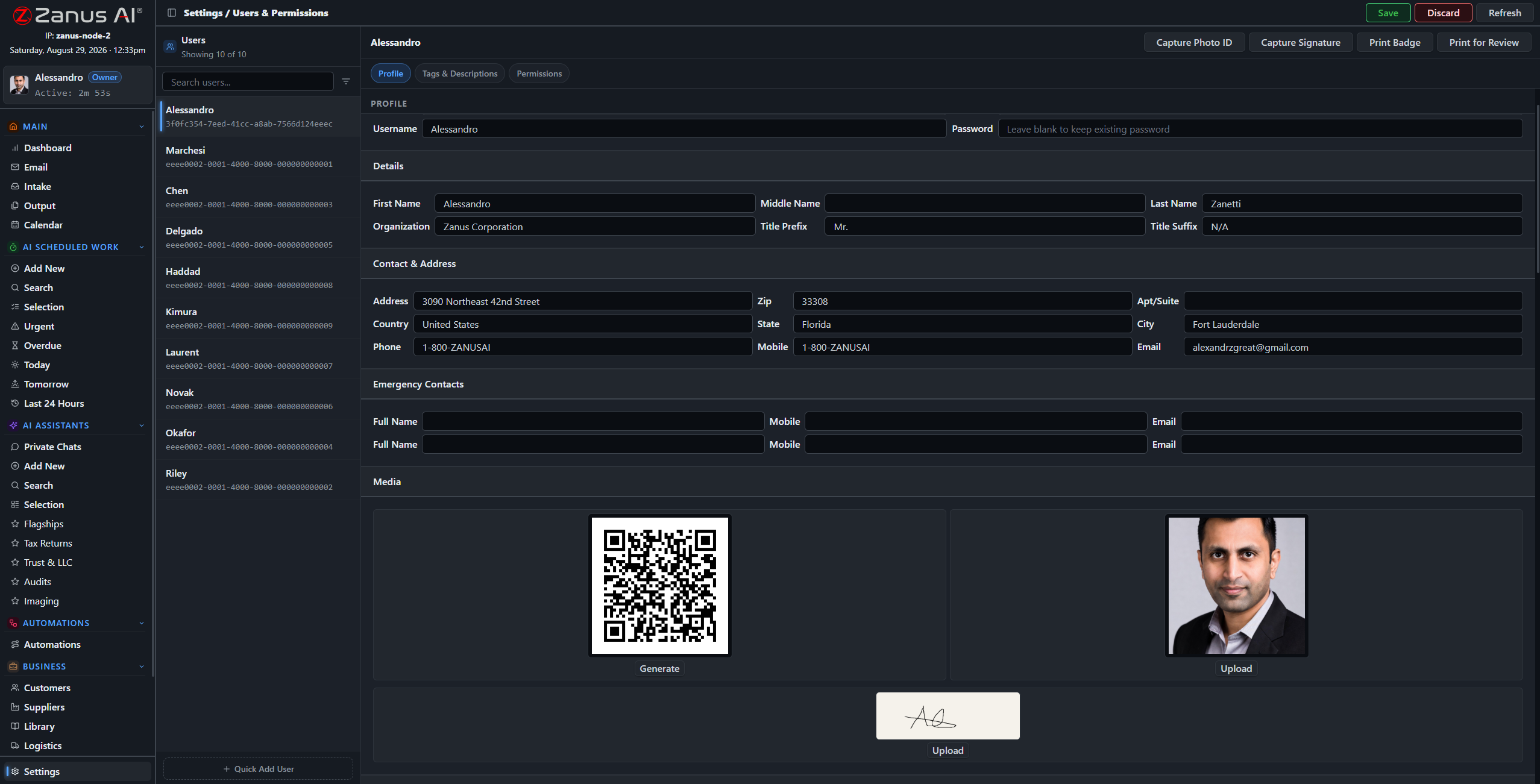
One record per user: role, tags, and granular permissions over every domain of the system.
What it does
The server redacts what a role cannot see — the counter clerk sees the utility account, not the payment plan; the intern sees the agenda, not the personnel item.
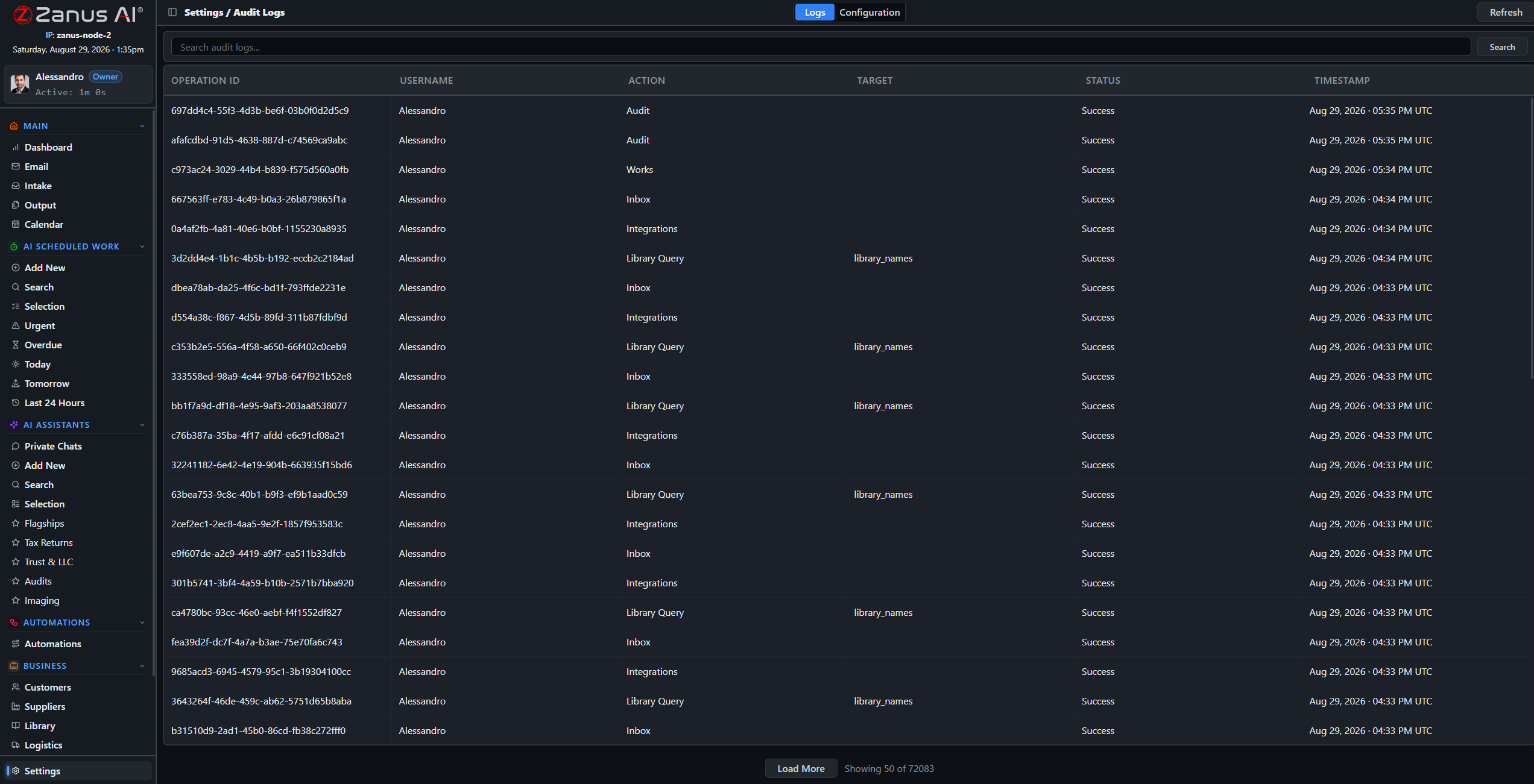
A searchable log of every audited action: who viewed which file, who changed what, when — the open-records answer about your own system is a search away.
Pilot on an isolated tenant; when policy requires it, run the identical system on hardware the city owns in its own server room — air-gap capable, USB updates, records-retention-conscious by design.
The audit that takes minutes, not weeks
When the question comes — from the state auditor, the council, or a records request about the records process itself — the answer is a search away: access records, document trails, update history, all in one place, with pre-update snapshots and rollback.
- Searchable audit trail across the system
- Automatic pre-update snapshots with rollback
- USB updates keep on-premises deployments current
The residency path, concretely
Month one: isolated cloud tenant, real permits and records, nothing training outside models. When the council or the county policy requires full residency, the identical OS moves onto Zanus hardware at city hall — same screens, same libraries, zero migration pain.
- Cloud tenant → on-premises at city hall, same system
- Air-gap capable: resident data cannot leave the building
- Owned outright — no recurring fees on the server
- Explore the AI Servers →
Questions, answered
Is this compliant with our state’s records laws?
The architecture is built for accountability: field-level permissions, server-side redaction, full audit trail and retention-conscious libraries. Statute-specific details are reviewed with your clerk and attorney during onboarding.
Where does resident data live?
In your isolated tenant — never training outside models — or fully on-premises at city hall on hardware the city owns, physically incapable of internet exposure.
See it working on YOUR city — the demo IS the product.
ZANUS AI FOR LOCAL GOVERNMENT & MUNICIPAL — LIVE DEMO
Do not watch a video.
Talk to your AI.
Government-software vendors show demos as videos behind a sales form. Ours is the product itself, configured for a municipality: open the chat below-right and try it — ask a zoning question, walk a permit intake, see the residency path explained.
The conversation you have with us IS the demo
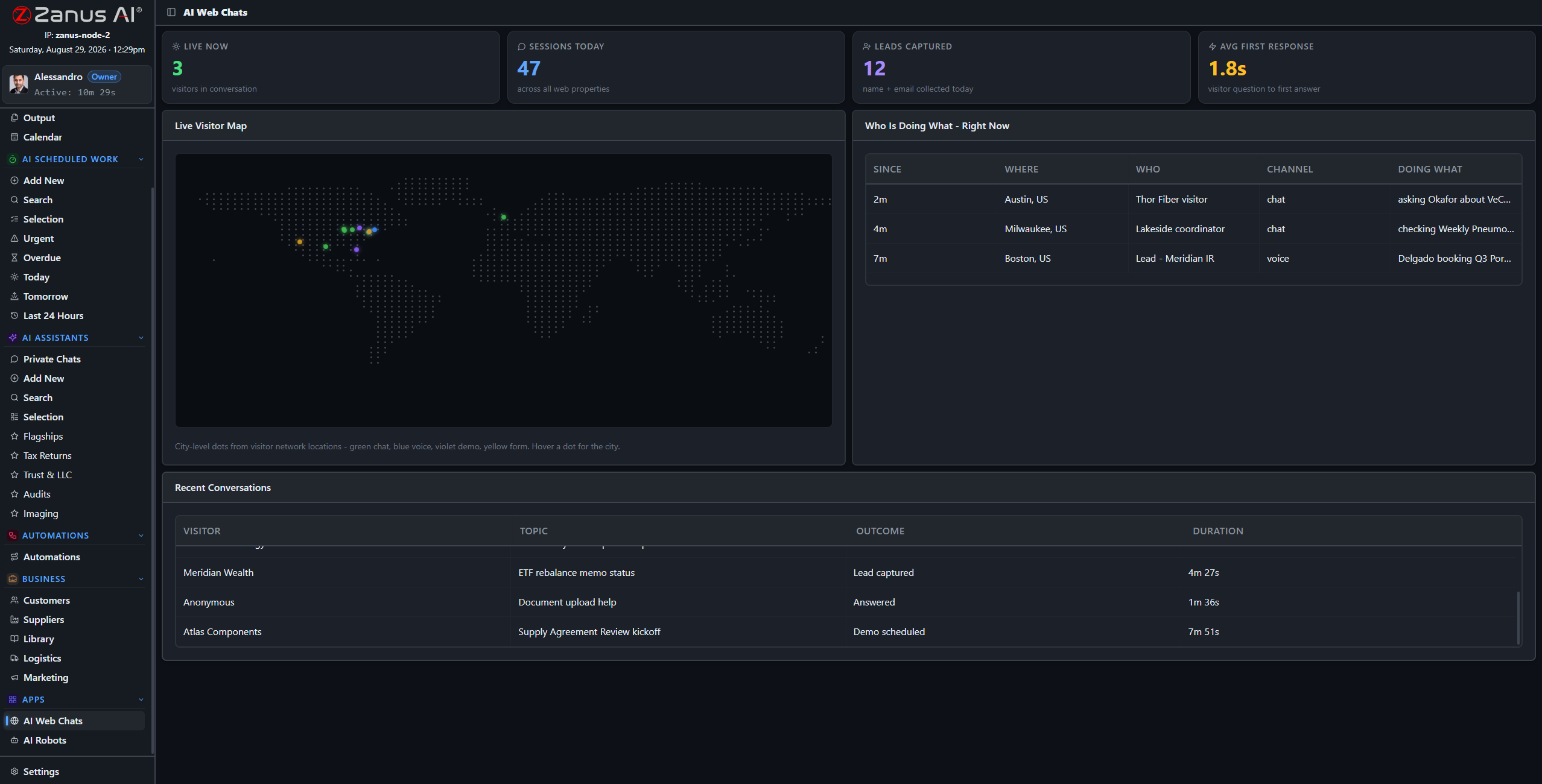
This screen is watching demos like yours happen: live conversations, outcomes, first response in seconds.
What it does
Ask the chat: “what do I need for a deck permit?” — watch it answer from a sample code, list the checklist, and offer the counter appointment.
Ask: “how would you handle a records request?” — it walks the workflow it would run in your tenant: search, cite, flag, draft, clerk sign-off included.
The full demo loads a municipal tenant with sample records: permit pre-review, ordinance answers, the Thursday packet — your city hall, working.
Or pick your exact business
Every link below is a full live-demo page for that specific business — its vocabulary, its calls, its booking rules.
Two minutes to your inbox
Request the demo and the interactive municipal demo arrives in about two minutes — no sales call, no calendar dance. Watch it, interrupt it with questions, and bring the clerk and the city manager when YOU are ready.
- Interactive demo, municipality-configured
- Ask questions mid-demo — it answers and resumes
- In your inbox in ~2 minutes, free

Questions, answered
Is the demo really the product?
Yes — the same AI, configured with a sample municipal tenant. What you see is what your staff gets, with your ordinances and files instead of the samples — cloud for the pilot, city hall hardware for production.
See it working on YOUR city — the demo IS the product.
Sharing with a colleague? 📄 Get the PDF · ✉️ Email this page ·