ZANUS AI FOR LOCAL GOVERNMENT & MUNICIPAL — ORDINANCES & RECORDS
Ask the ordinance. It answers.
The municipal code, zoning ordinances, council minutes, budget books, permit files, easements — loaded into curated libraries the AI reads from. Ask in plain language; get the answer with the section cited, at the permission level of whoever asks.
Cloud tenant or on-premises at city hall · your whole team · data-residency-conscious architecture
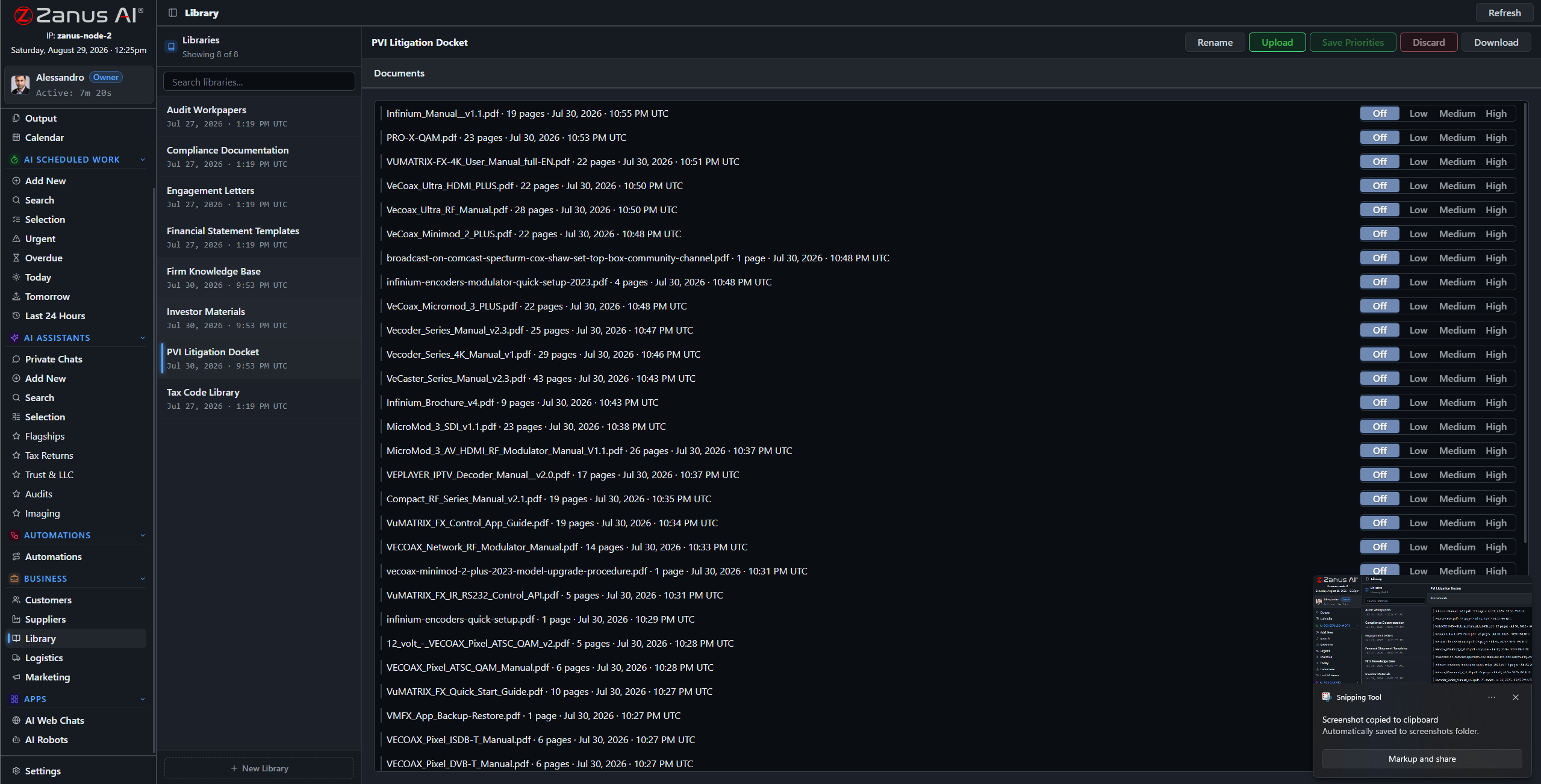
Libraries: the codified ordinance outranks the old scan, the adopted budget outranks the proposal — you set the order.
What it does
Codified ordinances, scanned plat maps, recorded meetings, spreadsheet budgets — the ingestion pipeline turns what a city actually stores into queryable knowledge.
No source in the library, no claim: the AI cites chapter and section of the code, the minute entry, the resolution number — or says it cannot answer.
The counter clerk asks about published fees; the attorney asks about the enforcement file: each gets answers scoped to their role, enforced server-side.
Sixty years of minutes, one question away
“When did the council last amend the sign ordinance?” “What conditions were attached to the 2011 rezoning on Mill Road?” “Which budget line funded the pump station?” The archive answers in seconds with the documents attached — instead of an afternoon in the vault.
- Plain-language questions across the whole archive
- Sources attached to every answer
- Priority order: the codified version always wins

Questions, answered
Who can see which files?
Only roles you authorize. Permissions reach the field level and the server redacts what a user cannot see — personnel files and pending enforcement stay exactly as restricted as they should be.
Do our records train outside models?
Never. The tenant is isolated; the city’s records are the city’s alone — and the on-premises option keeps them physically inside city hall.
See it working on YOUR city — the demo IS the product.
← Previous: Back Office · Sharing with a colleague? 📄 Get the PDF · ✉️ Email this page ·