ZANUS AI FOR UNIVERSITY & RESEARCH — OVERVIEW
The grant is due Friday. The draft is done Monday.
Admissions and registrar calls answered in 40 languages. Grant proposals drafted from your own award history. Papers, policies and committee minutes that answer back with sources. One AI system for the student-facing side and the research side — isolated in YOUR private tenant, or on servers the institution owns.
Private tenant or your own servers · your whole team · FERPA-conscious handling
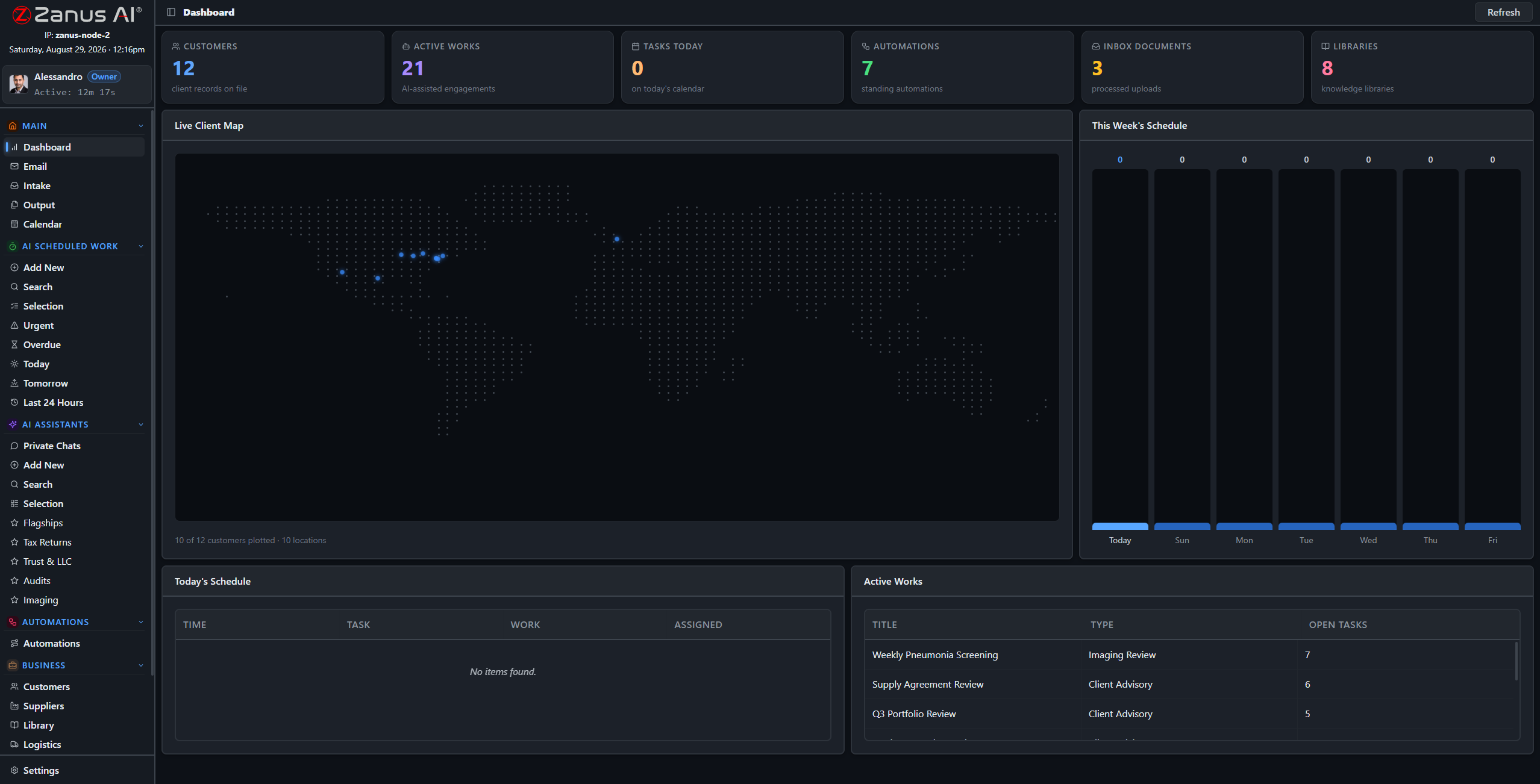
A real deployment view: grant records, scheduled AI works, the week’s proposal drafts in progress.
What it does
The AI answers admissions, registrar and department lines 24/7 in your chosen voices — application status, transcript requests, program questions — and escalates individual student matters to your staff, by your rules.
Budget justifications, biosketches-adjacent summaries, progress reports and grant sections drafted from your own prior awards and program records — reviewed and submitted by humans.
Twenty years of papers, proposals and committee minutes become a system that answers with citations — and none of it trains anyone else’s model.
Front office: the student-facing side, handled
Application season floods the phones; international applicants call across time zones. The Zanus front office answers every ring on your menu, in the caller’s language, books advising appointments into real calendars, and answers the questions the registrar’s office repeats a hundred times a week.
- AI phone on your menu and voices, 24/7
- Advising and campus-visit bookings synced to real calendars
- Up to 40 languages — built for international admissions
- See the Front Office for universities →

Back office: the research side, working
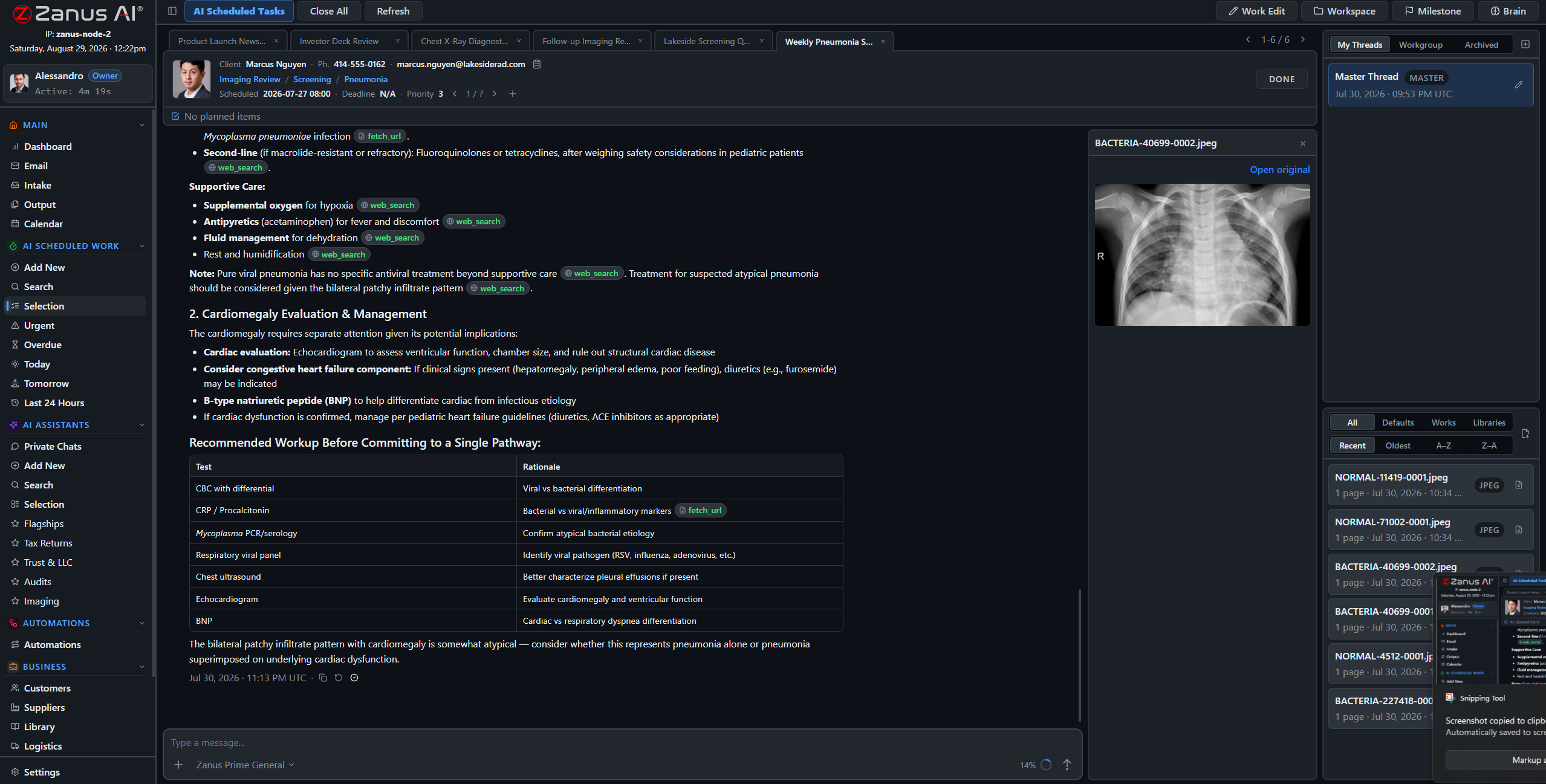
The grants officer facing a Friday deadline does not start from a blank page: prior proposals, award budgets and program outcomes are in the libraries, and the AI drafts the new sections from them — cited, in your templates, awaiting the PI’s review.
- Scheduled AI work: proposal sections, progress reports, summaries
- Verified answers from YOUR institutional library
- Finished documents await human sign-off
- See the Back Office for research →
When research data cannot leave campus
Institutions with sensitive research data or strict residency requirements run the identical OS on Zanus hardware inside their own facilities: air-gap capable, USB updates, your whole team — a multi-campus path as adoption grows.
- Private On-Premises AI: owned, no recurring fees
- On-Prem Tokens Server for high-volume processing
- Explore the AI Servers →

Questions, answered
How does this handle FERPA?
The handling is FERPA-conscious by design: isolated private tenants, role-based access to the field level, server-side redaction and a searchable audit trail — plus an on-premises option. Specifics are reviewed with your compliance and records teams during onboarding.
Does the AI write our grant proposals?
It drafts — from your own award history, program records and templates, with sources cited. The PI and the grants officer review, revise and decide. Nothing is submitted without human sign-off.
One department first, or the whole institution?
Either. A single department can run its own tenant and be live in days; workgroups scale the same system across colleges and campuses, with each unit seeing only what its role allows.
See it working on YOUR campus — the demo IS the product.
ZANUS AI FOR UNIVERSITY & RESEARCH — FRONT OFFICE
Application season answered, every call.
Admissions lines jam in January, the registrar’s office drowns at term start, and international applicants call at 3 AM local time. The Zanus front office answers on your menu, in your voices, in up to 40 languages — every hour of every day.
Private tenant or your own servers · your whole team · FERPA-conscious handling

Calls, chats, bookings and follow-ups — one dashboard the admissions director can read.
What it does
A prospective student in another hemisphere calls about application requirements. The AI answers in one ring, in their language, from YOUR approved information — and books the virtual visit.
Transcript requests, enrollment verification steps, add-drop deadlines: answered instantly and identically every time — while your registrar staff works the queue instead of the phone.
Campus tours, advising appointments and department visits booked into real synced calendars, confirmed and reminded in the visitor’s language.
From inquiry to booked visit, hands-free
A prospective family calls about the engineering program: the AI answers, walks the admission requirements from your approved materials, offers real open tour slots and books the visit — while your admissions counselors work the applicants already in the funnel.
- Real calendar sync — no double-booking
- Program and requirements questions from your approved information
- Individual student records questions escalated to staff, never improvised
- Every conversation logged, transcript included


The web works too
Website chat that answers like your best admissions counselor, web forms for information requests worked in minutes, and instant responses to every inquiry — prospect-to-applicant in minutes, not voicemail days.
- Grounded chat on your site, 40 languages
- Information request forms worked in minutes
- Lead qualification and follow-up built in
- See the full Front Office tour →
Questions, answered
Can it answer questions about a specific student?
No — individual student matters are escalated to authorized staff by your rules. The AI handles program information, logistics and scheduling from your approved materials.
Do we keep our phone numbers?
Yes. Department, admissions and registrar numbers stay; calls route to the AI first, staff first, or any mix per line and per hour.
What languages?
Up to 40 — the AI answers each caller in the caller’s language, with your institution’s approved information.
See it working on YOUR campus — the demo IS the product.
ZANUS AI FOR UNIVERSITY & RESEARCH — BACK OFFICE
Research runs on documents.
Now the documents work.
Proposals, award budgets, progress reports, committee minutes, department policies: a university is documentation with a campus attached. The Zanus back office turns that archive into a working AI staff — drafting, cross-referencing and answering with sources cited, under your faculty’s sign-off.
Private tenant or your own servers · your whole team · FERPA-conscious handling
A real session: an annual progress report compiled from award records — sources cited, PI decides.
What it does
Progress report drafts, pipeline summaries, budget-versus-actual reviews — assigned to the AI like to a research administrator, executed on schedule, fully auditable.
“What indirect rate did we use on the 2021 proposal?” “Which aims did the reviewers score highest?” The grants archive answers with the document attached.
Every AI-drafted section lands in Output awaiting review. Nothing reaches a sponsor, a journal or the provost without a human decision.
The Friday deadline, without the blank page
The grants officer opens the proposal work session Monday: the AI has drafted the budget justification from three comparable prior awards and pulled the program outcomes into the narrative — with every figure cited to its source. The week goes to strengthening the science, not reconstructing boilerplate.
- Sections drafted from your own award history
- Every figure cited to the source record
- Draft in Output, awaiting the PI and grants officer


Department paperwork — drafted
The documents that eat faculty evenings: committee meeting summaries, annual review packets, accreditation-support narratives compiled from department records. Drafted in minutes, in your templates, sources attached.
- Your letterheads and templates
- Record excerpts attached automatically
- Approval workflow before anything sends
Questions, answered
Does the AI do the science?
No. It drafts, organizes, cross-references and cites from YOUR records — the research judgment, the analysis and the submission decision belong to your faculty.
Does it connect to our grants management system?
API connectors integrate with existing systems; documents and data flow through the intake pipeline under your handling rules. Bring your grants system to the demo and we map it.
YOU MIGHT ALSO LIKE
The Back Office executes. Who answers the phone?
Front Office AI picks up every call and chat — books, quotes, follows up, 24/7 in 40 languages. Watch it run a business like yours, live.
See it working on YOUR campus — the demo IS the product.
ZANUS AI FOR UNIVERSITY & RESEARCH — GRANTS & PAPERS
Ask twenty years of papers. They answer.
Grant proposals, published papers, institutional policies, funding-agency guidelines, committee minutes — loaded into curated libraries the AI reads from. Ask in plain language; get the answer with the source cited, at the permission level of whoever asks.
Private tenant or your own servers · your whole team · FERPA-conscious handling
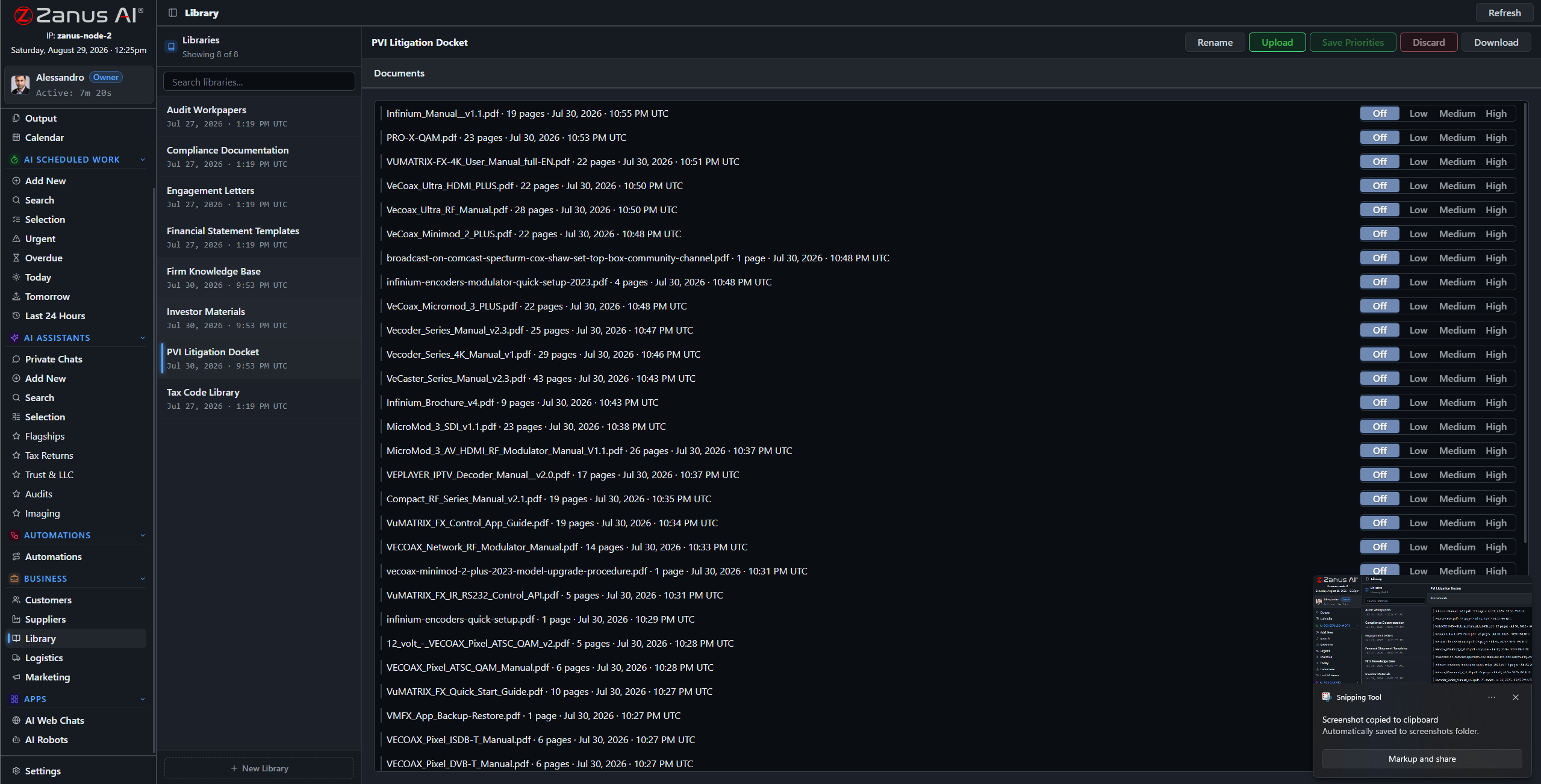
Libraries: current policies outrank drafts, final proposals outrank versions — you set the order.
What it does
PDFs, Word, spreadsheets, scanned agreements, images and media — the ingestion pipeline turns what the institution actually holds into queryable knowledge.
No source in your library, no claim: the AI cites the paper, the policy, the award document — or says it cannot answer. Critical for work that gets peer-reviewed.
A grad student asks about lab procedures; the department chair asks about budgets: each gets answers scoped to their role, enforced server-side.
The literature review that starts at 80%
“Which of our published papers used this method?” “What did the 2019 site-visit report recommend?” “What is the current policy on data retention?” The archive answers in seconds, with documents attached — instead of a week of hunting across shared drives and inboxes.
- Plain-language questions across the archive
- Sources attached to every answer
- Priority order: current versions rule

Questions, answered
Who can see student or personnel records?
Only roles you authorize. Permissions reach the field level and the server redacts what a user cannot see — FERPA-conscious handling by architecture, not by policy memo.
Do our papers and proposals train outside models?
Never. Your tenant is isolated; your institutional knowledge is yours alone — and the on-premises option keeps it physically inside your facilities.
See it working on YOUR campus — the demo IS the product.
ZANUS AI FOR UNIVERSITY & RESEARCH — AI WORKFORCE
A research administrator that never falls behind.
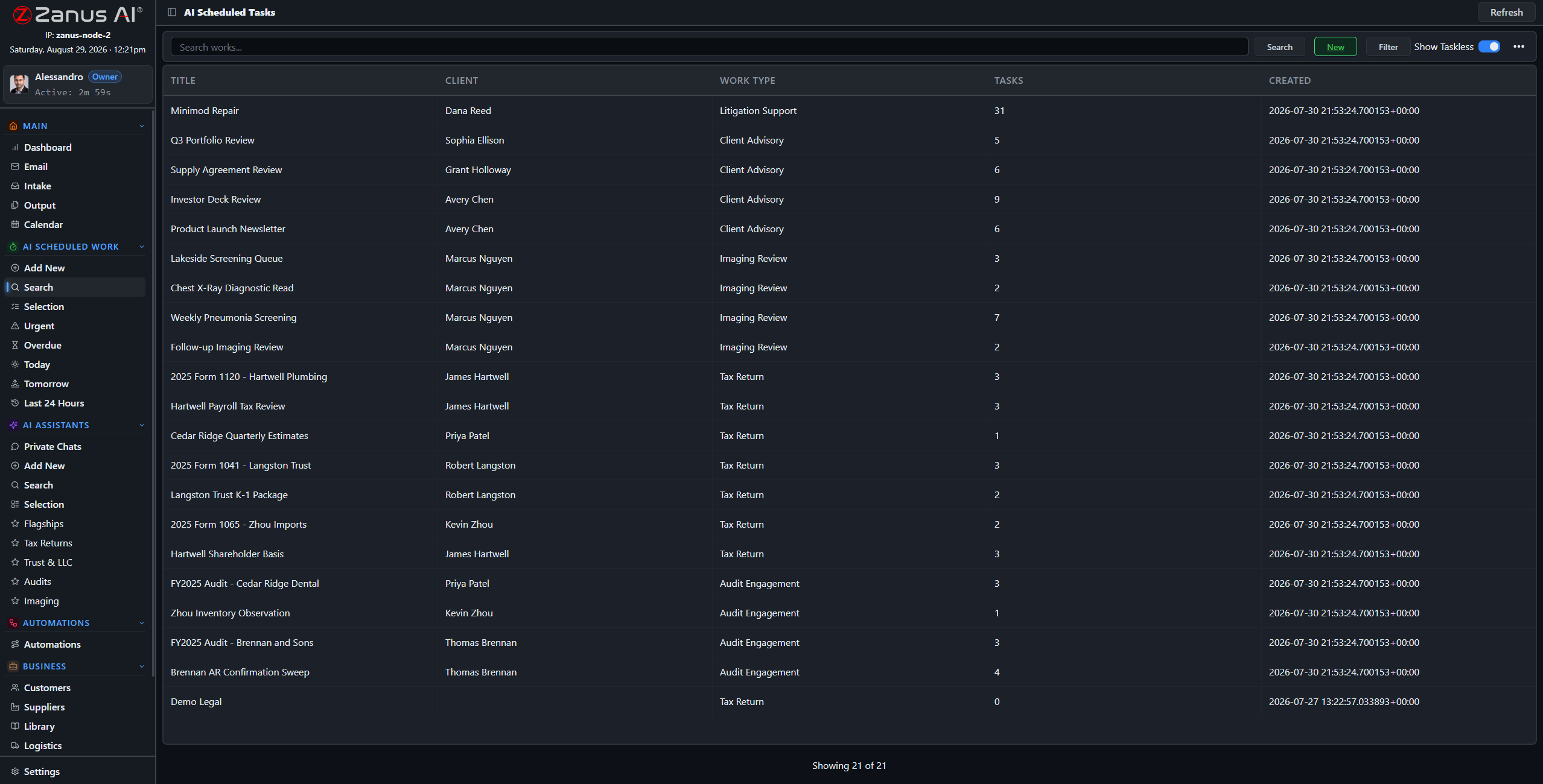
Assign work to the AI the way you assign it to staff: type, sources, deadline, priority. Progress report drafts, grants pipeline summaries, committee-minutes digests — executed on schedule, with citations, under review.
Private tenant or your own servers · your whole team · FERPA-conscious handling
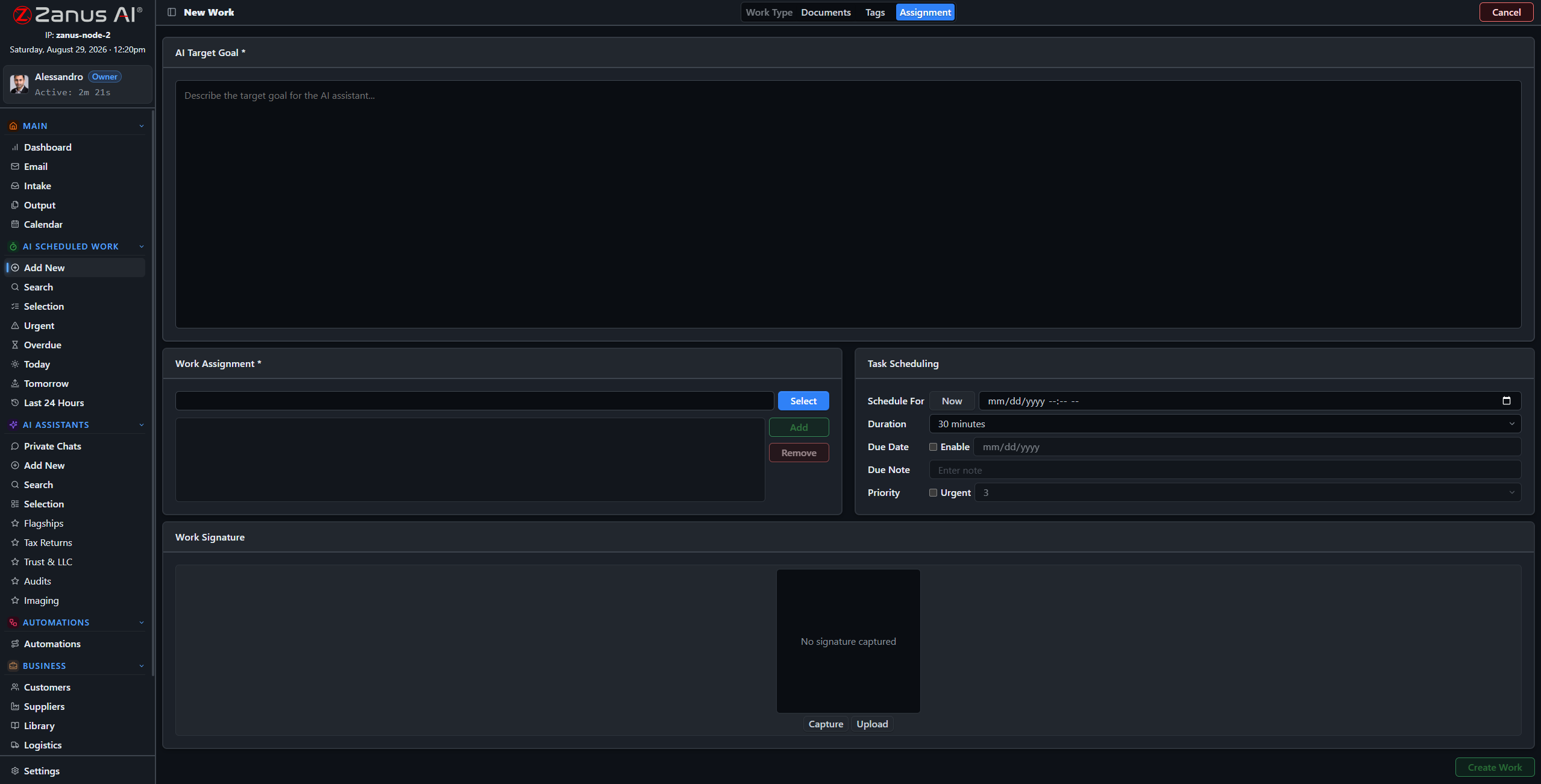
Four steps: work type, records and libraries, tags, schedule — the AI takes it from there.
What it does
Proposal section, progress report, pipeline summary, policy digest: work types molded to your institution, with default libraries and examples per type.
The AI’s workload is managed like the team’s: one-click views show what is urgent, late, today and tomorrow — nothing slips silently in submission season.
Every work is a full session: reasoning streamed, sources cited, milestones tracked, linked to the award record and the calendar.
Monday, 7 AM: the pipeline report is done
Set “Weekly Grants Pipeline Review” once: every Monday the AI summarizes proposal statuses, upcoming deadlines and outstanding items from your records, and files the report for the research office before the first meeting.
- Recurring schedules for periodic admin work
- Findings cited to award and proposal records
- Report in Output, awaiting sign-off
Questions, answered
Can we supervise mid-work?
Yes — open any session, read the reasoning, redirect it, or stop it. The AI works like staff: visible, accountable, interruptible.
What volume can it handle?
It does not get tired: the constraint is your review capacity, not the AI’s. Configurations size from one lab to a multi-campus institution.
See it working on YOUR campus — the demo IS the product.
ZANUS AI FOR UNIVERSITY & RESEARCH — POLICIES & PROTOCOLS
The policy manual, alive.
Policies only work when people can find them — and the current version at that. In Zanus, lab procedures, research-administration SOPs and academic policies are living documents: answerable in chat, attached to work, priority-ordered so the latest approved version always wins.
Private tenant or your own servers · your whole team · FERPA-conscious handling
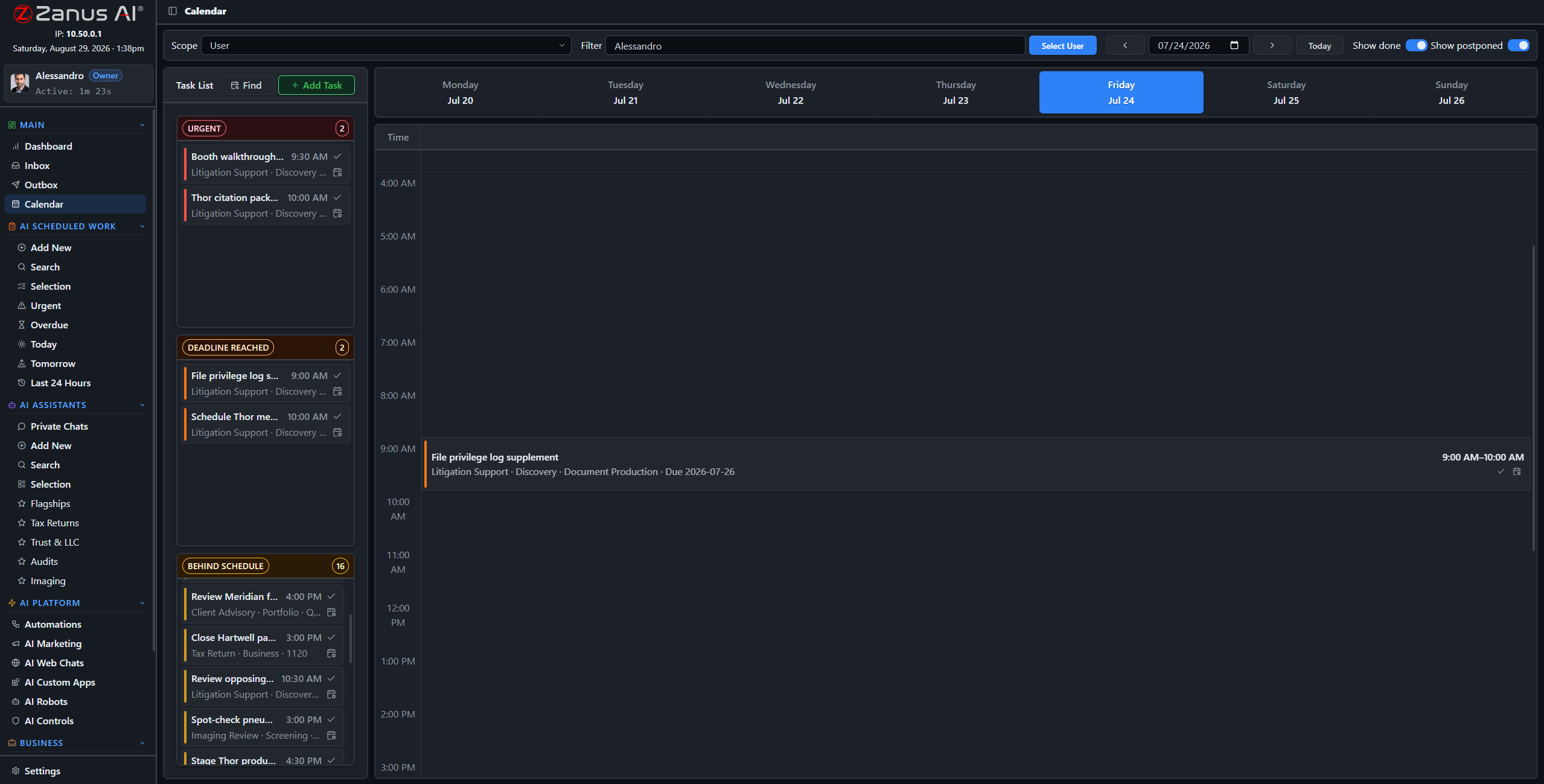
Policy upkeep, scheduled like academic work: annual reviews and expiration checks on the calendar.
What it does
Lab safety procedures, data-retention rules, submission checklists, travel policies: one library, approved versions on top, superseded drafts outranked.
“What is the procedure for a chemical spill in the wet lab?” — answered in seconds with the document attached, at 2 PM or 2 AM, to any authorized member.
Work types carry their default policies: the AI drafting a progress report reads from the sponsor’s reporting guidelines — by construction.
Compliance upkeep, scheduled like coursework
Annual policy reviews, expiration checks on agreements and training certifications, guideline-update summaries for lab meetings: assign them once as recurring AI work and the manual never goes stale again.
- Recurring review works with deadlines
- Update summaries drafted for lab and staff briefings
- Every review on the audit record
Questions, answered
How do updates roll out?
Upload the new version, set it on top: from that moment every answer and every AI work cites the new policy. Old versions remain archived for audit.
See it working on YOUR campus — the demo IS the product.
ZANUS AI FOR UNIVERSITY & RESEARCH — TEAM TRAINING
A new cohort every year, without knowledge reset.
Grad students arrive every fall, research administrators rotate, lab managers move on — and the knowledge usually leaves with them. New members learn your procedures from the AI, and everyone has an assistant that answers “how do we…?” instantly.
Private tenant or your own servers · your whole team · FERPA-conscious handling

Training lives inside the software: the AI walks each new member through the department’s own procedures.
What it does
New grad students and staff learn your lab procedures, purchasing rules, systems and policies through guided training — productive in days, not a semester.
“How do I submit a reimbursement for conference travel?” — asked to the assistant, answered from the SOP, without pulling the lab manager off an experiment.
Private chats work on any device with a login — the how-to knowledge follows the researcher to the lab bench, the library or the field site.

The trainer that never tires of the question
The tenth “how do I book the confocal microscope?” gets the same patient, sourced answer as the first. Training material stays current automatically, because the assistant reads from the same living libraries as everything else.
- Answers cite the current SOP
- Personal preset assistants per role
- Training progress visible to PIs and managers
Questions, answered
Does training content go stale?
No — the assistant answers from the live libraries. Update the lab SOP once and every future answer updates with it.
See it working on YOUR campus — the demo IS the product.
ZANUS AI FOR UNIVERSITY & RESEARCH — AUTOMATIONS
The department’s repetitive work, set once.
Describe the job in plain words — “when an award notice arrives, file it to the grant record and draft the kickoff checklist” — and it becomes connected blocks on a canvas, running on its own, with every run visible.
Private tenant or your own servers · your whole team · FERPA-conscious handling
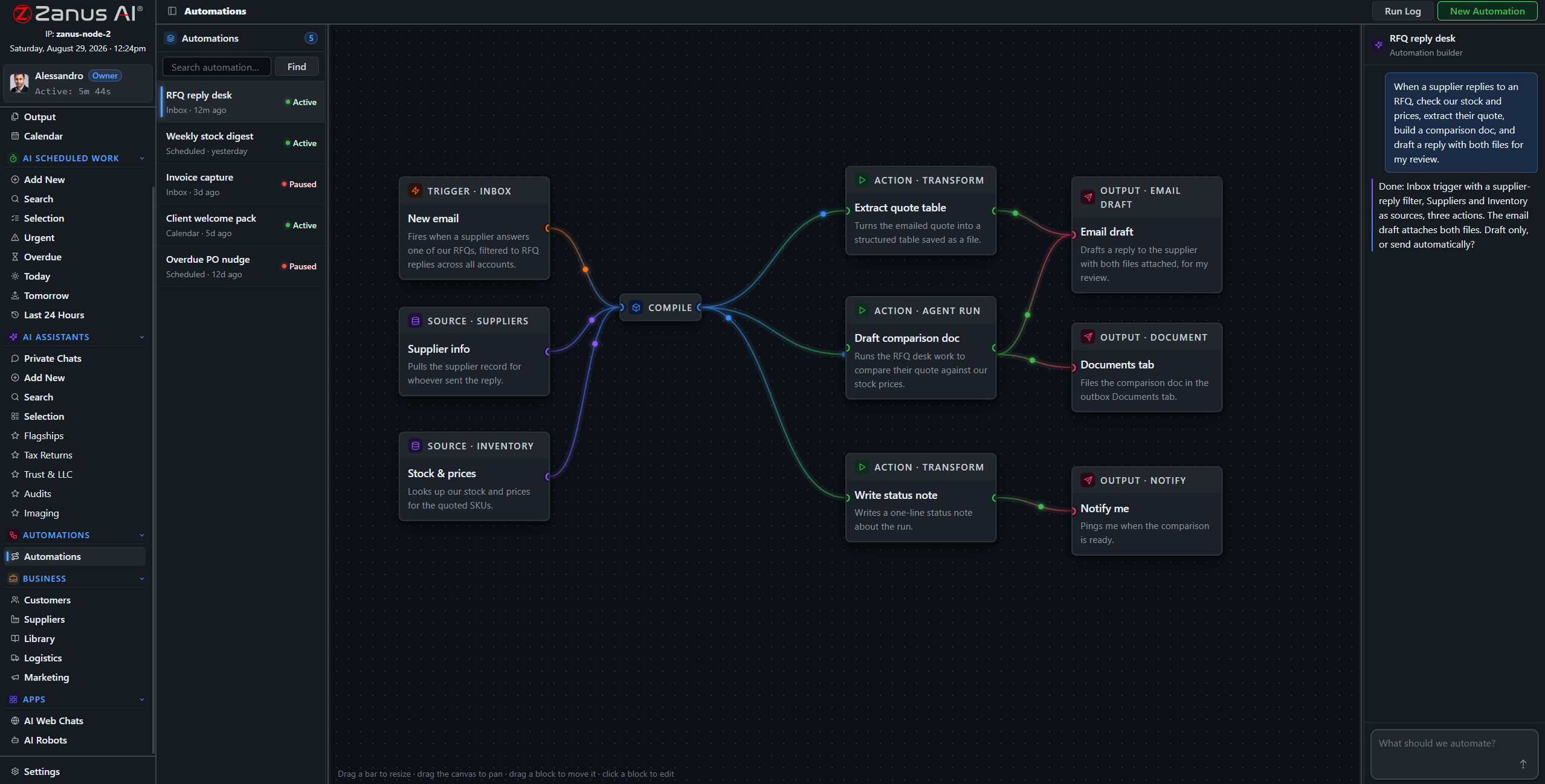
A real flow: inbox trigger, record sources, AI compile, outputs — drawn from a description.
What it does
Sponsor deadlines, report due dates and renewal windows drawn from your records trigger reminders and draft the required documents ahead of time — queued for review.
Award notices, sponsor correspondence and signed agreements routed to the right grant record with handling instructions — no lost-email archaeology.
The weekly pipeline summary, the monthly department report, the semester teaching digest: compiled by the AI, filed to Output, on time every time.
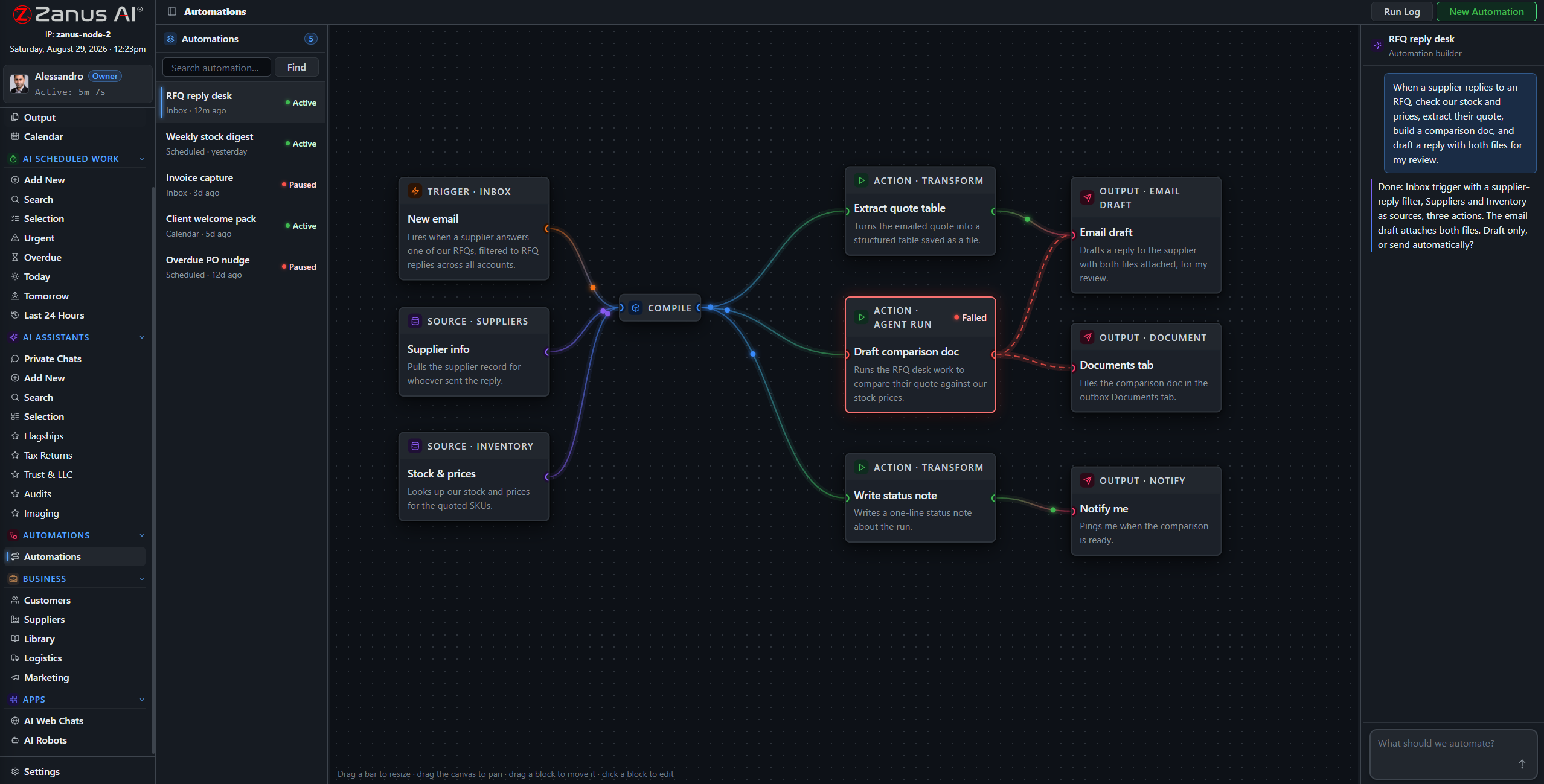
When something fails, you SEE it
Run states live on the flow: green success, red failure on the exact block. When a sponsor deadline is in the chain, silent failures are not acceptable — here, nothing fails silently.
- Run log per automation
- One-click retry on failures
- Finished documents in Output, statused
Questions, answered
Who approves outgoing documents?
Your rules: queue everything for human approval, or auto-send only the categories you designate as safe. Sponsor-facing documents always wait for sign-off.
See it working on YOUR campus — the demo IS the product.
ZANUS AI FOR UNIVERSITY & RESEARCH — ALUMNI & DONORS
Stewardship that never lets a donor lapse.
Alumni newsletters, giving-day campaigns, event invitations, thank-you sequences — drafted by the AI from your own records, in the donor’s language, queued for your approval. Advancement-office reach, whatever the advancement office’s size.
Private tenant or your own servers · your whole team · FERPA-conscious handling
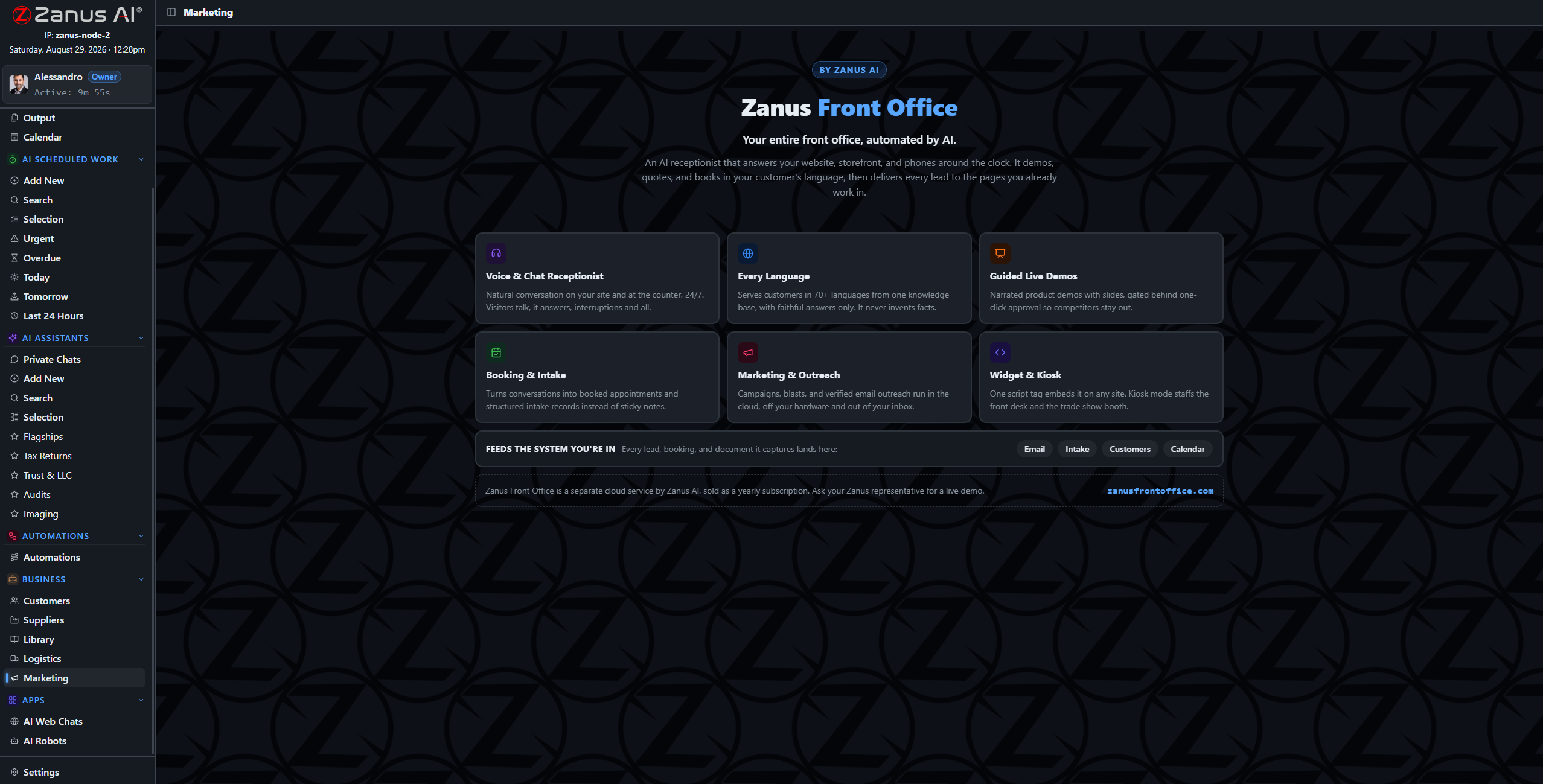
Campaigns and sequences drafted from the records — newsletters, invitations, stewardship — awaiting approval.
What it does
Engineering alumni of the last decade, lapsed annual donors, event attendees who never gave: audiences built from your own categories — no exporting lists to a third-party tool.
Stewardship notes and newsletters written the way alumni actually read them — warm, specific, in your institution’s voice, in the recipient’s language.
Opt-outs and contact preferences are enforced by the system, not by memory. Every send is on the record.
From the records to the campaign, without export
The audience, the content and the sending all live in the same system as the records — nothing leaves your tenant to reach a mailing platform. “Invite every alum of the chemistry department to the lab dedication” becomes a drafted, scheduled campaign in minutes.
- Audiences from your own data — private by architecture
- Campaigns and sequences drafted for review
- Follow-up sequences for non-responders, approval-first

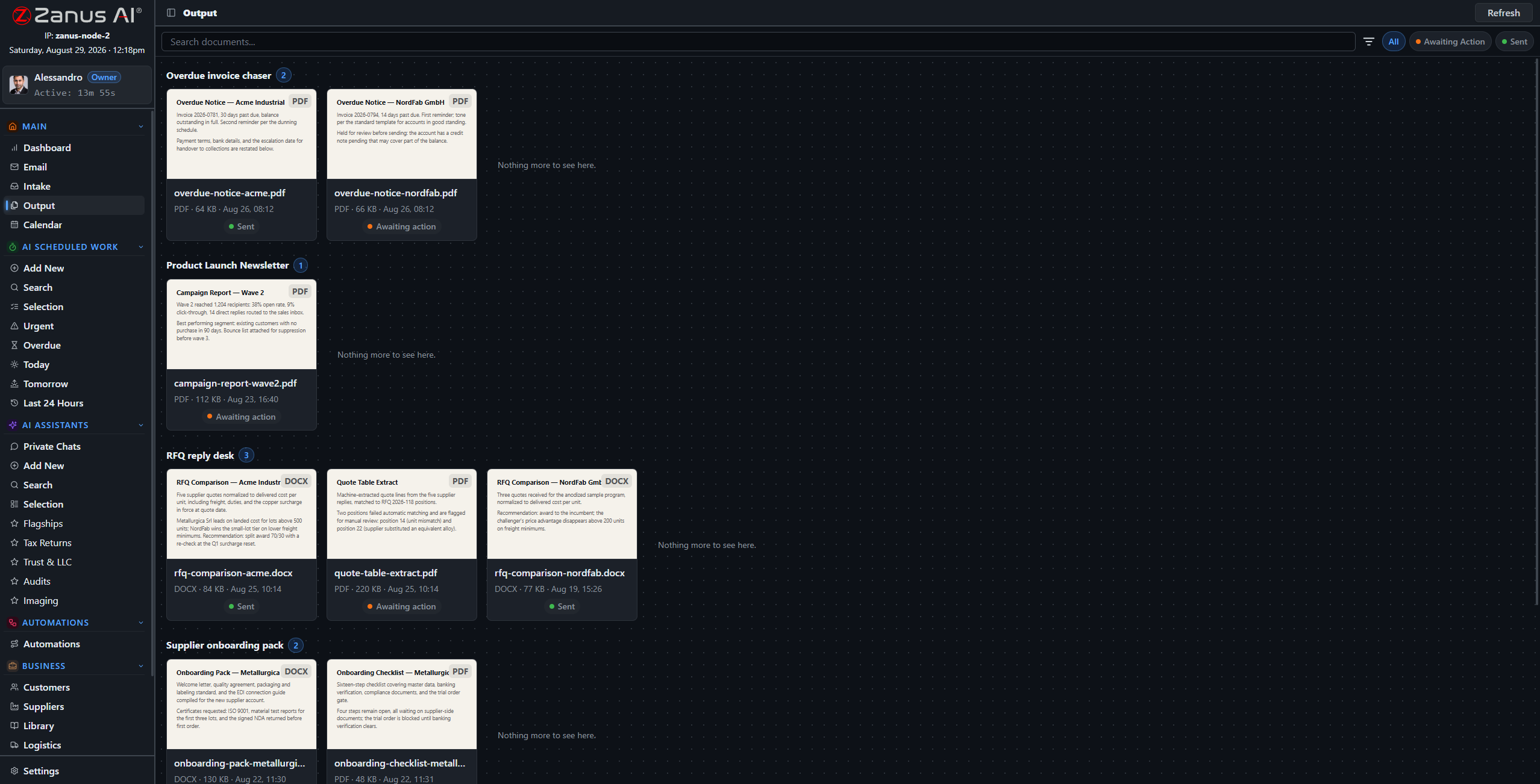
Approval first, always
Every outbound communication lands in the approval queue unless you designate the category as auto-send. The advancement office stays in control of every word that reaches an alum or a donor.
- Approval workflow per communication type
- Full history of what was sent to whom
- Results tracked: replies, RSVPs, gifts
Questions, answered
Can it draft individual thank-you letters?
Yes — from the gift record and the donor’s history, in your templates, queued for a human signature. The development director edits and sends; nothing goes out automatically.
Does donor data leave our system?
No. Audiences, content and sending happen inside your tenant — donor data never travels to an outside marketing platform.
See it working on YOUR campus — the demo IS the product.
ZANUS AI FOR UNIVERSITY & RESEARCH — RESEARCH SYSTEMS & INTEGRATIONS
Keep your systems of record. Add the intelligence.
Your SIS, grants management system and LMS stay the systems of record. Zanus becomes the system of work: API connectors sync records and documents both ways, the intake pipeline files what arrives, and AI-drafted documents flow back where they belong. No rip and replace.
Private tenant or your own servers · your whole team · FERPA-conscious handling

No rip and replace: the SIS, grants system and LMS stay — the AI layer connects to all of them.
What it does
Proposals, awards and documents mapped field by field, with a dry-run preview before anything writes — push, pull or two-way, your choice.
Enrollment data, course materials and calendars sync with the AI layer — so the assistant answering a question reads the same systems the campus runs on.
A full API for whatever else the institution runs: library systems, facilities tools, department databases — data in, results out, under scoped keys.
One question across all your systems
The award lives in the grants system, the effort data in HR, the publications in the repository — and the AI reads across all of it. “What is outstanding on this award?” becomes one question with one grounded answer.
- Field mapping with dry-run preview
- Each system stays master of its own records
- Every sync event on the audit record
- External systems appear as blocks on the automation canvas
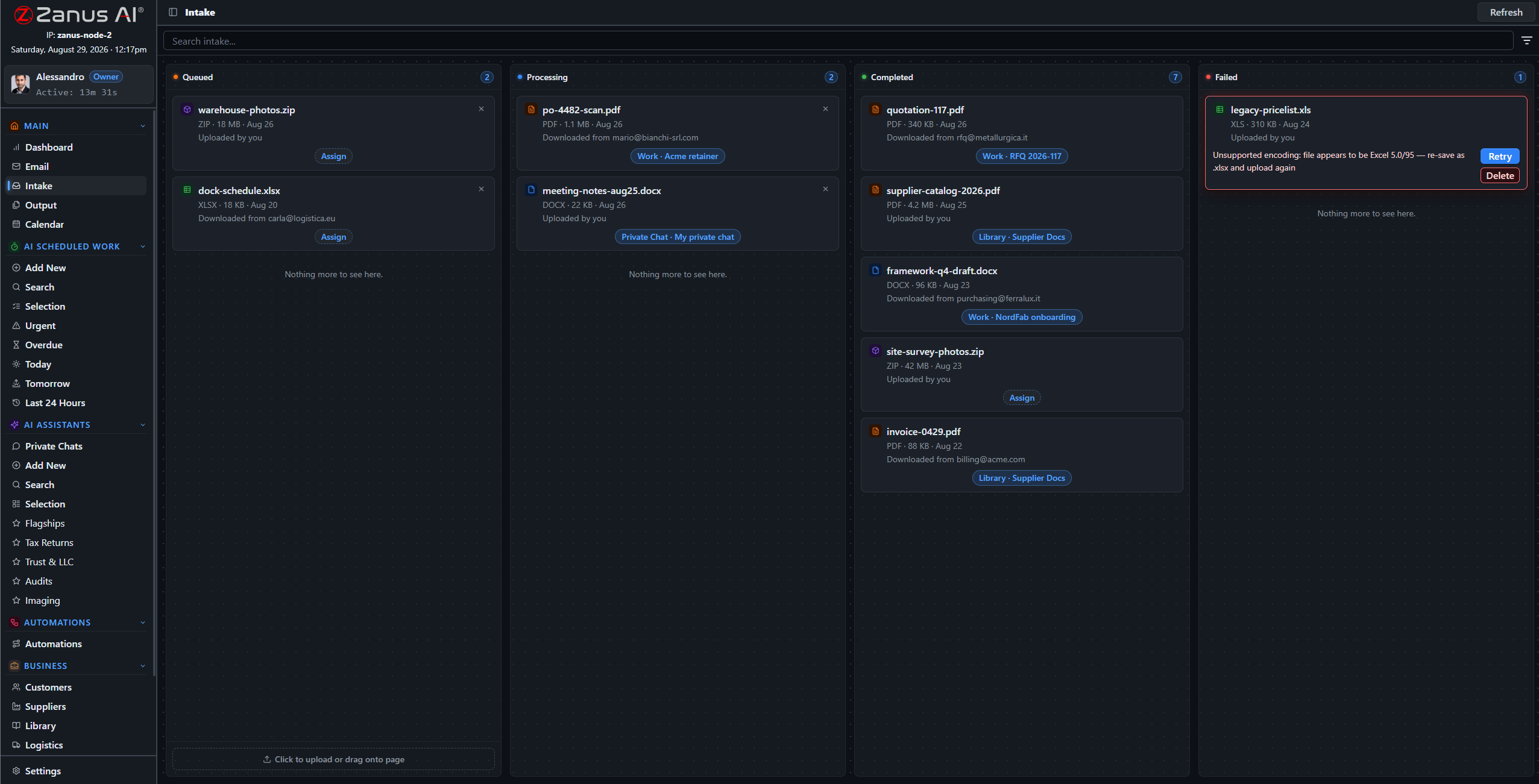
Documents flow back where they belong
The progress report the AI drafted, the budget justification, the committee summary: finished documents return to the right system through the same connectors — reviewed and signed by your faculty and staff first.
- AI output filed back to the system of record
- Approval workflow before anything writes back
- Webhooks notify your systems in real time
Questions, answered
Which grants and student systems do you support?
Connectors are mapped per deployment — bring your systems to the demo and we walk through the exact integration path for each one.
Does institutional data pass through third parties?
No. The connectors run inside your tenant — or inside your facilities on the on-premises option. Data moves directly between your systems.
See it working on YOUR campus — the demo IS the product.
ZANUS AI FOR UNIVERSITY & RESEARCH — FERPA & SECURITY
Built like the registrar is watching.
Student records, personnel files, unpublished research: a university’s data anxieties are plural. The answer is architecture: admin-created accounts, permissions to the field level, server-side redaction, a searchable audit trail, and an on-premises option where sensitive data never touches the internet.
Private tenant or your own servers · your whole team · FERPA-conscious handling
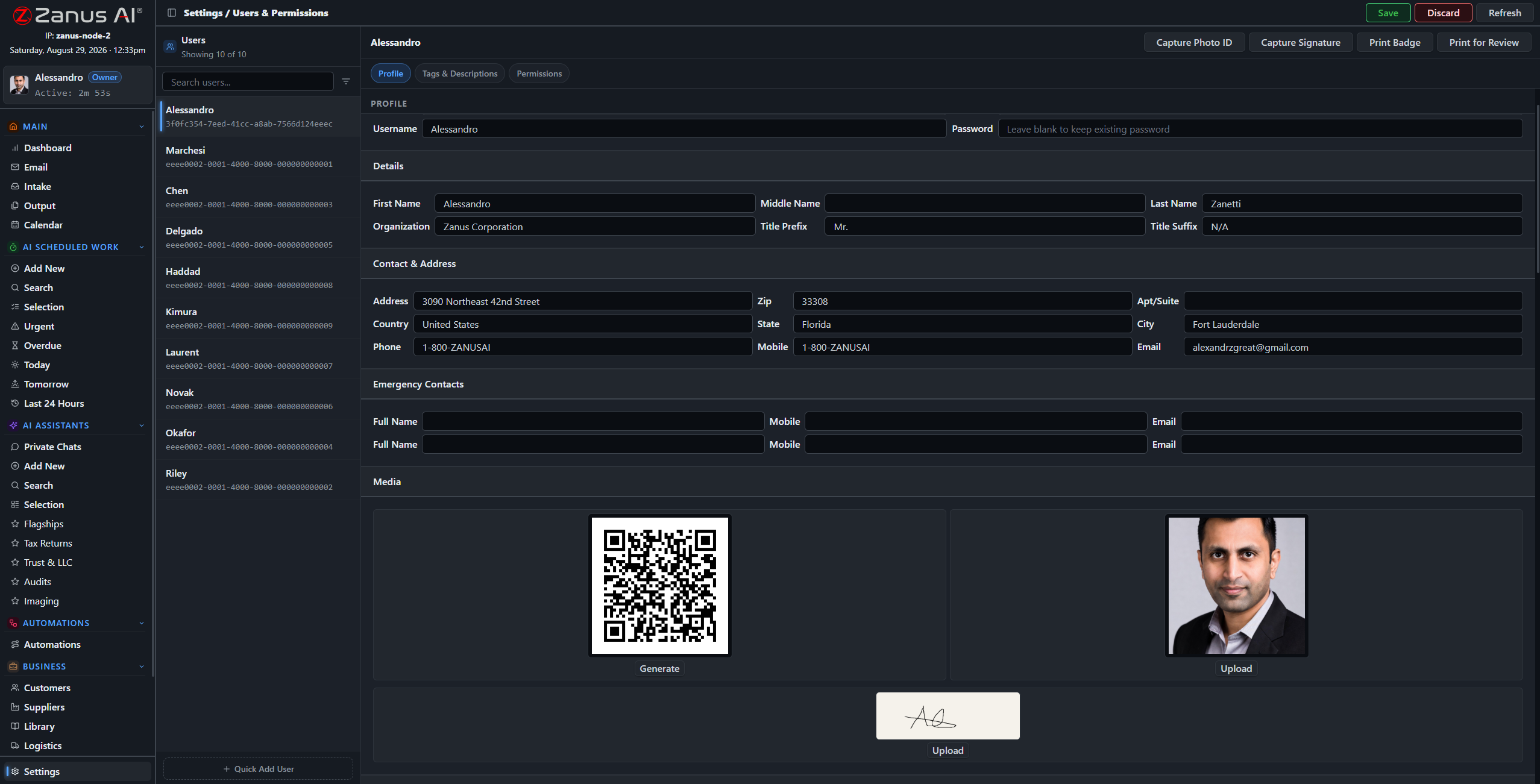
One record per user: role, tags, and granular permissions over every domain of the system.
What it does
The server redacts what a role cannot see — a student worker scheduling appointments sees the slot, not the record. FERPA-conscious handling, enforced in code.
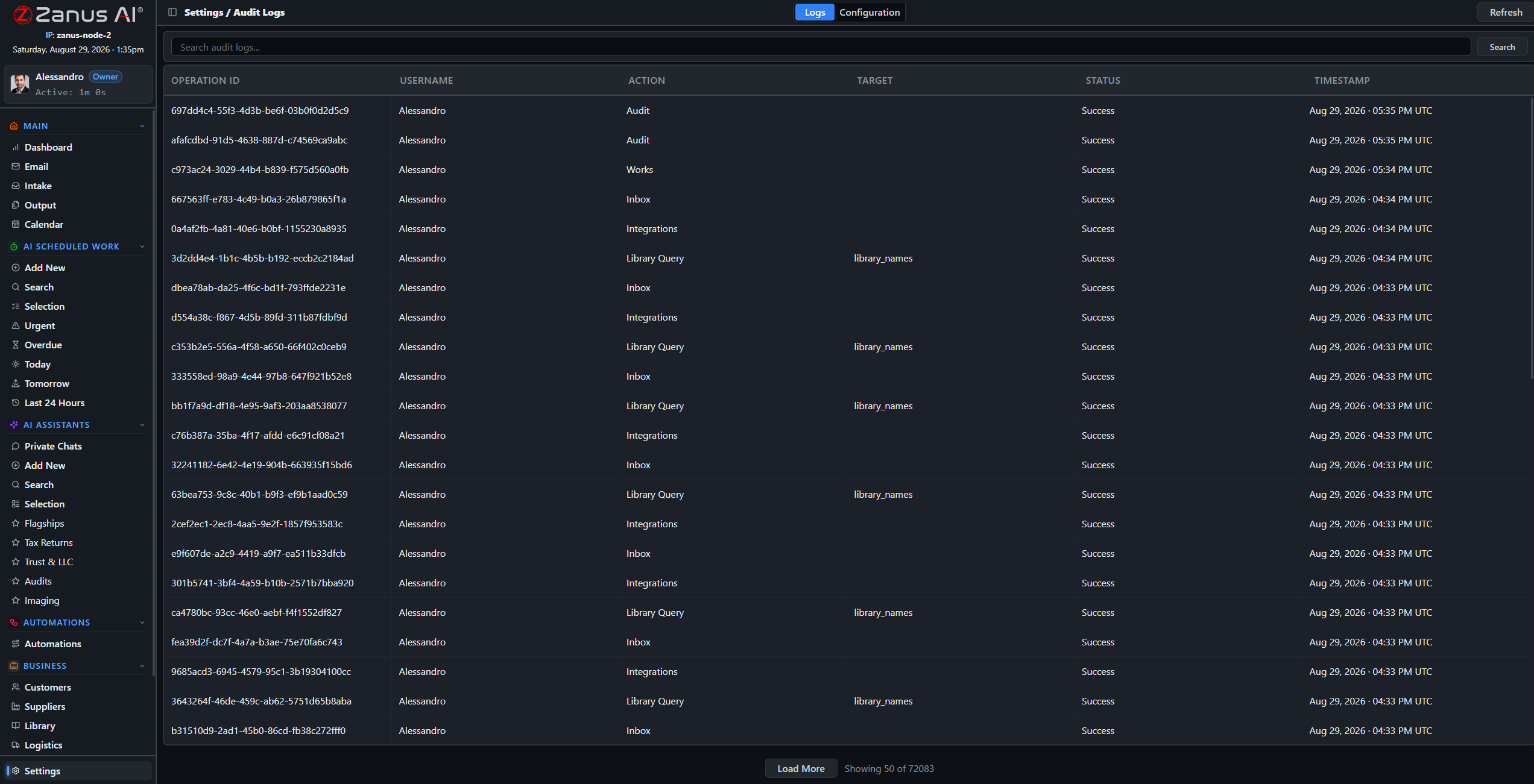
A searchable log of every audited action, with configurable categories: who saw what record, who changed what, when.
Five-level workgroups map colleges, departments and labs; the on-premises option puts the whole system inside your facilities, air-gap capable, multi-campus ready.
The audit that takes minutes, not weeks
When the question comes — from a sponsor, an accreditor or your own records office — the answer is a search away: access records, document trails, update history, all in one place. Automatic pre-update snapshots mean even a mistaken change can be rolled back.
- Searchable audit trail
- Automatic pre-update snapshots with rollback
- USB updates for air-gapped deployments
Questions, answered
Where do student records and research data live?
In your isolated tenant — never training outside models — or fully on-premises on hardware the institution owns, physically incapable of internet exposure.
Is this FERPA compliant?
The handling is FERPA-conscious by architecture: isolation, field-level permissions, redaction and audit. Compliance specifics are reviewed with your records and legal teams during onboarding — bring your compliance officer to the demo.
See it working on YOUR campus — the demo IS the product.
ZANUS AI FOR UNIVERSITY & RESEARCH — LIVE DEMO
Do not watch a video.
Talk to your AI.
Big vendors show higher-ed demos as videos behind a form. Ours is the product itself, configured for universities: open the chat below-right and try it — ask an admissions question, book a visit, request a demo of the grant-drafting workflow.
The conversation you have with us IS the demo
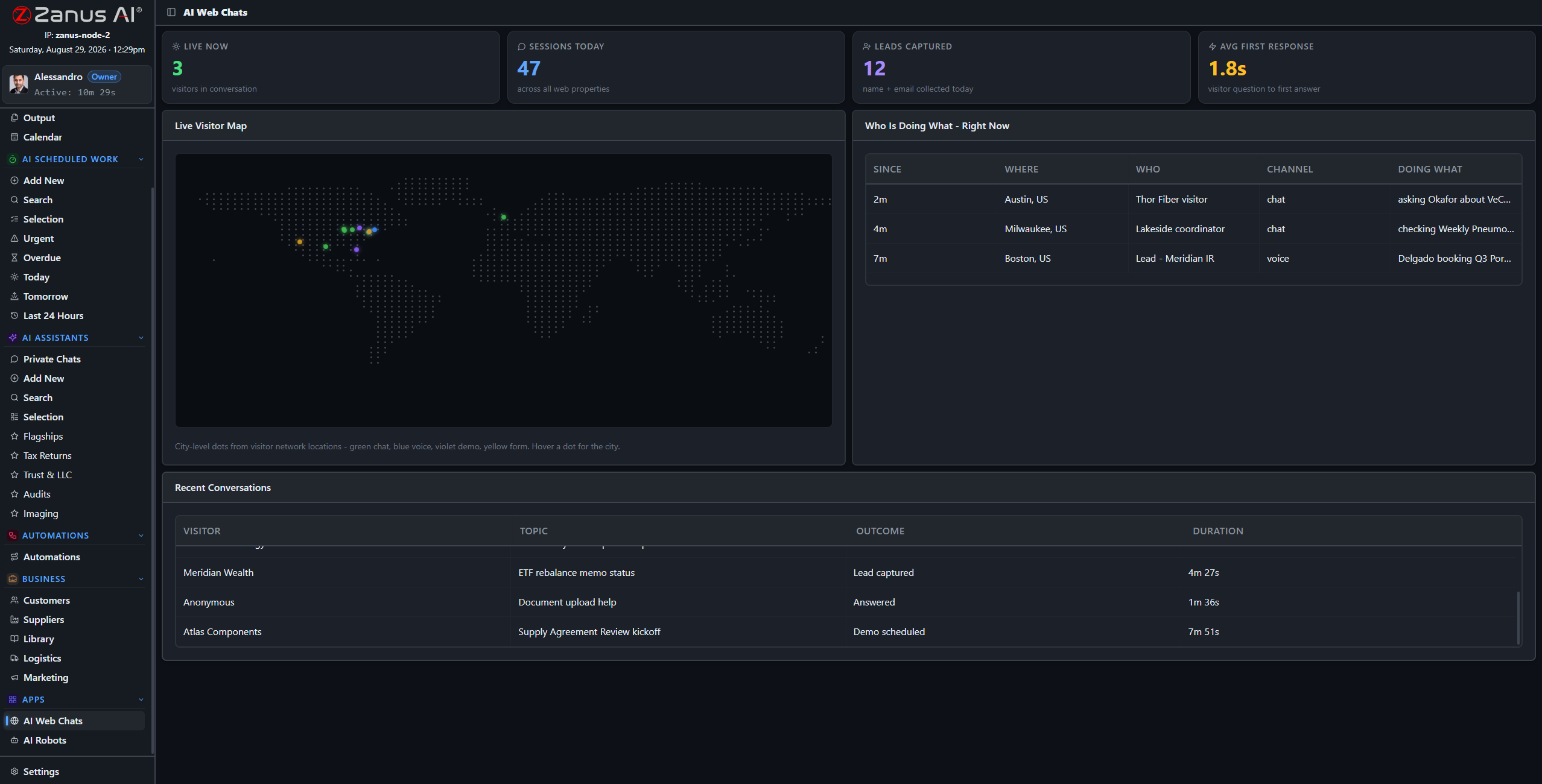
This screen is watching demos like yours happen: live conversations, outcomes, first response in seconds.
What it does
Ask the chat: “what are the requirements for the graduate program?” — watch it answer from approved information and offer to book the visit.
Ask: “how would you draft a budget justification?” — it walks the workflow it would run in your tenant, grounded, cited, sign-off included.
The full demo loads a university tenant with sample records: proposal drafting, pipeline reports, policy answers — your world, working.
Or pick your exact business
Every link below is a full live-demo page for that specific business — its vocabulary, its calls, its booking rules.
Two minutes to your inbox
Request the demo and the interactive university demo arrives in about two minutes — no sales call, no calendar dance. Watch it, interrupt it with questions, and book the human conversation when YOU are ready.
- Interactive demo, university-configured
- Ask questions mid-demo — it answers and resumes
- In your inbox in ~2 minutes, free

Questions, answered
Is the demo really the product?
Yes — the same AI, configured with a sample university tenant. What you see is what your staff gets, with your documents instead of the samples.
See it working on YOUR campus — the demo IS the product.
Sharing with a colleague? 📄 Get the PDF · ✉️ Email this page ·