ZANUS AI FOR PHARMA & BIOTECH — OVERVIEW
The science moves fast.
The paperwork finally keeps up.
Site coordinators and medical-information callers reach an answer every hour. Deviation reports, stability summaries and submission sections drafted from your own archives with every claim cited. One AI system for the outside-facing desk and the regulated inside work — in YOUR isolated tenant, or air-gapped in your facility.
Private tenant or your own server · your whole team · GxP-conscious architecture
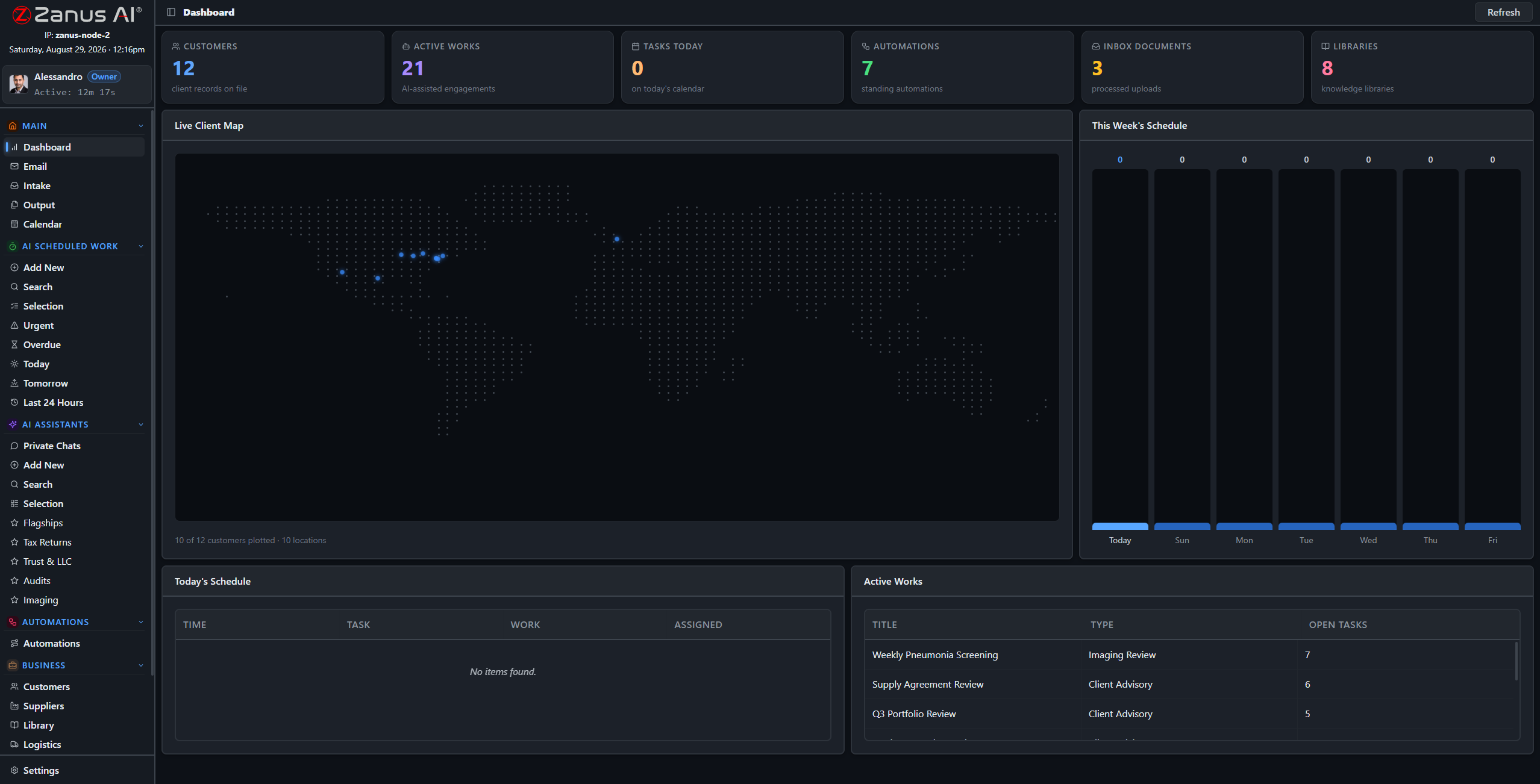
A real deployment view: study records, scheduled literature surveillance, AI works awaiting QA sign-off.
What it does
Weekly surveillance of the journals and databases YOUR team designates, findings summarized with citations, filed for medical review before Monday standup.
Deviation narratives, CAPA drafts, stability summaries and submission sections drafted in your templates — every sentence traceable to a source, every output awaiting human sign-off.
Your tenant is isolated; molecules, protocols and trial data train nobody else’s model. Need more? The identical OS runs air-gapped on hardware you own.
Front office: the calls science teams miss
A site coordinator with an enrollment question at 6 PM, a pharmacist asking about storage conditions, a CRO chasing a signature — the Zanus front office answers on your menu in up to 40 languages, routes by your rules, and escalates anything medical to your medical-information staff.
- AI phone on your lines, 24/7, your voices
- Site and partner questions answered from approved information only
- Meetings booked into real study-team calendars
- See the Front Office for pharma →

Back office: the regulated work, drafted
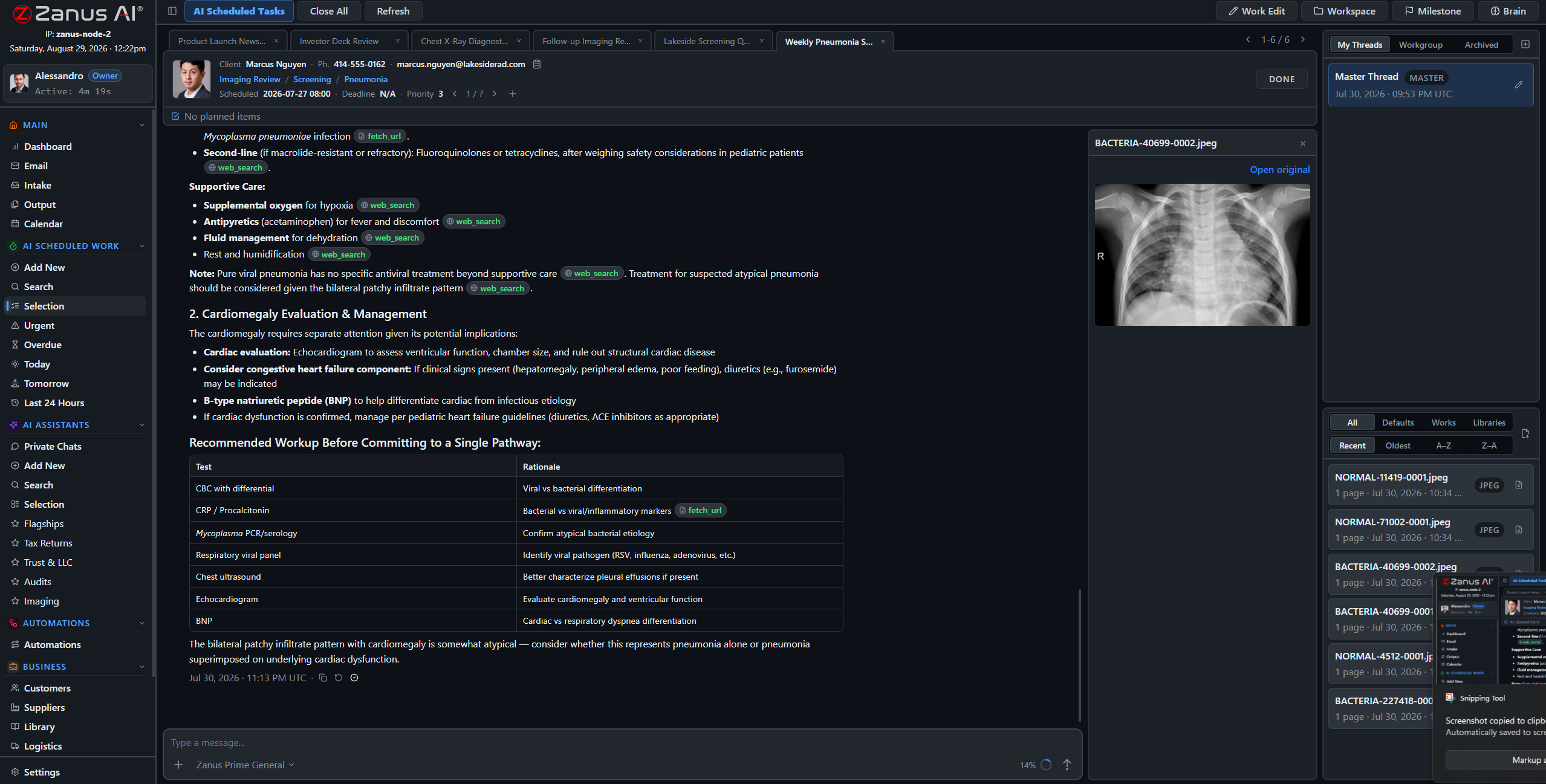
A monthly stability data summary, executed on schedule with every figure cited to the source record — that is what a Zanus work session looks like. Protocols, batch records and registration archives become a system that drafts, cross-references and answers back.
- Scheduled AI work: literature reviews, deviation trends, report drafts
- Verified answers from YOUR protocols and records
- Every draft lands in Output for QA and medical review
- See the Back Office for pharma →
When the data cannot leave the facility
Pre-clinical assets, unpublished trial data and CMC documentation are the crown jewels. The identical OS runs on Zanus hardware inside your walls: air-gap capable, USB updates, your whole team — owned, not rented.
- Private On-Premises AI: owned, no recurring fees
- On-Prem Tokens Server for high-volume document processing
- Explore the AI Servers →

Questions, answered
Is this validated for GxP use?
The architecture is built for regulated work: isolated tenants, role-based access, server-side redaction, searchable audit trail, pre-update snapshots with rollback, and a fully air-gapped option. Validation and qualification specifics are walked through with your quality unit during onboarding.
Does the AI make regulatory or medical decisions?
No. It drafts, summarizes, cross-references and cites from YOUR archives. Regulatory affairs, QA and medical reviewers decide — every AI output waits in a sign-off queue until a human approves it.
We run multiple studies and sites — one system?
Yes: workgroups separate programs, studies and sites inside one tenant, and permissions reach the field level. A CRA sees the study; the QA lead sees the quality record; nobody sees past their role.
See it working on YOUR lab — the demo IS the product.
ZANUS AI FOR PHARMA & BIOTECH — FRONT OFFICE
Every site call answered. Every inquiry on the record.
Study sites call about enrollment windows. Pharmacists email about storage excursions. Partners chase timelines. The Zanus front office answers on your menu, from your approved information, logs every conversation with a transcript, and escalates anything clinical to your medical-information team — 24/7, in up to 40 languages.
Private tenant or your own server · your whole team · GxP-conscious architecture

Calls, chats and emails from sites, pharmacists and partners — one dashboard, every interaction logged.
What it does
A coordinator in another time zone calls after your office closes. The AI answers, resolves the scheduling question from the study calendar, and files the transcript — no voicemail, no lost day.
Medical-information requests are captured verbatim, acknowledged instantly, and routed to your MI staff by your rules — the AI never improvises a medical answer.
Shipping schedules, document status, meeting logistics, portal access: answered identically every time from YOUR approved sources — claim guard on, no source means no claim.
Inbound email, answered and filed
The study inbox is where timelines go to die. Zanus reads what arrives — a CRO query, a vendor COA, a site question — drafts the reply from approved information, files attachments to the right study record, and queues anything sensitive for human approval.
- Replies drafted from approved study information
- Attachments filed to the right study automatically
- Approval rules per sender and per topic
- Every thread transcribed and searchable


Meetings booked, demos delivered
Investigator meetings, monitoring visits and partner calls booked into real synced calendars — no reply-all scheduling threads. Prospective partners asking what you do can receive an interactive AI demo in about two minutes.
- Calendar sync across the study team
- Lead qualification and follow-up for BD inquiries
- Interactive demos delivered in ~2 minutes
- See the full Front Office tour →
Questions, answered
Can it answer medical questions about our compound?
No — and that is by design. Medical-information requests are captured, acknowledged and escalated to your MI professionals by your rules. The AI answers logistics and approved practice information only.
Do we keep our phone numbers?
Yes. Your numbers stay; calls route AI-first, staff-first, or any mix per line and per hour — including a dedicated routing rule for adverse-event language you define with your safety team.
What about time zones and languages?
Sites in 12 countries get answers at 3 AM local, each in the caller’s language, all from the same approved information — up to 40 languages.
See it working on YOUR lab — the demo IS the product.
ZANUS AI FOR PHARMA & BIOTECH — BACK OFFICE
Regulatory writing at machine speed.
Judgment stays human.
Deviations, CAPAs, stability reports, annual product reviews, submission modules: pharma runs on documents nobody has time to write. The Zanus back office drafts them from your own records, with every claim cited — and nothing leaves without QA, regulatory or medical sign-off.
Private tenant or your own server · your whole team · GxP-conscious architecture
A real session: deviation trend review — data pulled, narrative drafted, sources cited, QA decides.
What it does
A deviation is logged; the AI pulls the batch record, the SOP and the equipment history, drafts the narrative and a proposed CAPA — QA edits and approves, in a fraction of the usual cycle.
Monthly stability summaries and quarterly trend reports assembled from the data your team designates, figures cited to source records, filed for review before the meeting.
Module drafts, responses to information requests and briefing-book sections assembled from your registration archive — in your templates, with the source excerpts attached.
The AI reads the whole archive, not the last folder
Twenty years of protocols, batch records, lab reports and correspondence — the AI drafts with all of it in reach. Ask “have we seen this impurity profile before?” and the answer arrives with the historical records attached, not a shrug.
- Cross-references across studies, sites and years
- Every claim in a draft cited to its source document
- Reasoning streamed live — supervise or redirect mid-work


Your templates, your terminology, your sign-off chain
Work types are molded to your quality system: a “Deviation Narrative” work knows your template, your defect taxonomy and your default sources. Finished drafts land in Output, statused and waiting — nothing self-publishes.
- Work types configured per document class
- Drafts in your letterheads and formats
- Sign-off queue with full revision trail
Questions, answered
Does the AI ever release a document on its own?
No. Every draft waits in Output for the designated human reviewer — QA, regulatory or medical. The sign-off step is structural, not optional.
Can it work from scanned batch records?
Yes — the ingestion pipeline handles PDFs, scans, images and media. Legacy paper batch records become queryable knowledge once scanned and loaded.
YOU MIGHT ALSO LIKE
The Back Office executes. Who answers the phone?
Front Office AI picks up every call and chat — books, quotes, follows up, 24/7 in 40 languages. Watch it run a business like yours, live.
See it working on YOUR lab — the demo IS the product.
ZANUS AI FOR PHARMA & BIOTECH — TRIAL DOCUMENTS
Ask the archive. It answers, cited.
Protocols and amendments, batch records, analytical methods, COAs, registration correspondence — loaded into curated libraries the AI reads from. Ask in plain language; get the answer with the source document attached, scoped to the asker’s role.
Private tenant or your own server · your whole team · GxP-conscious architecture
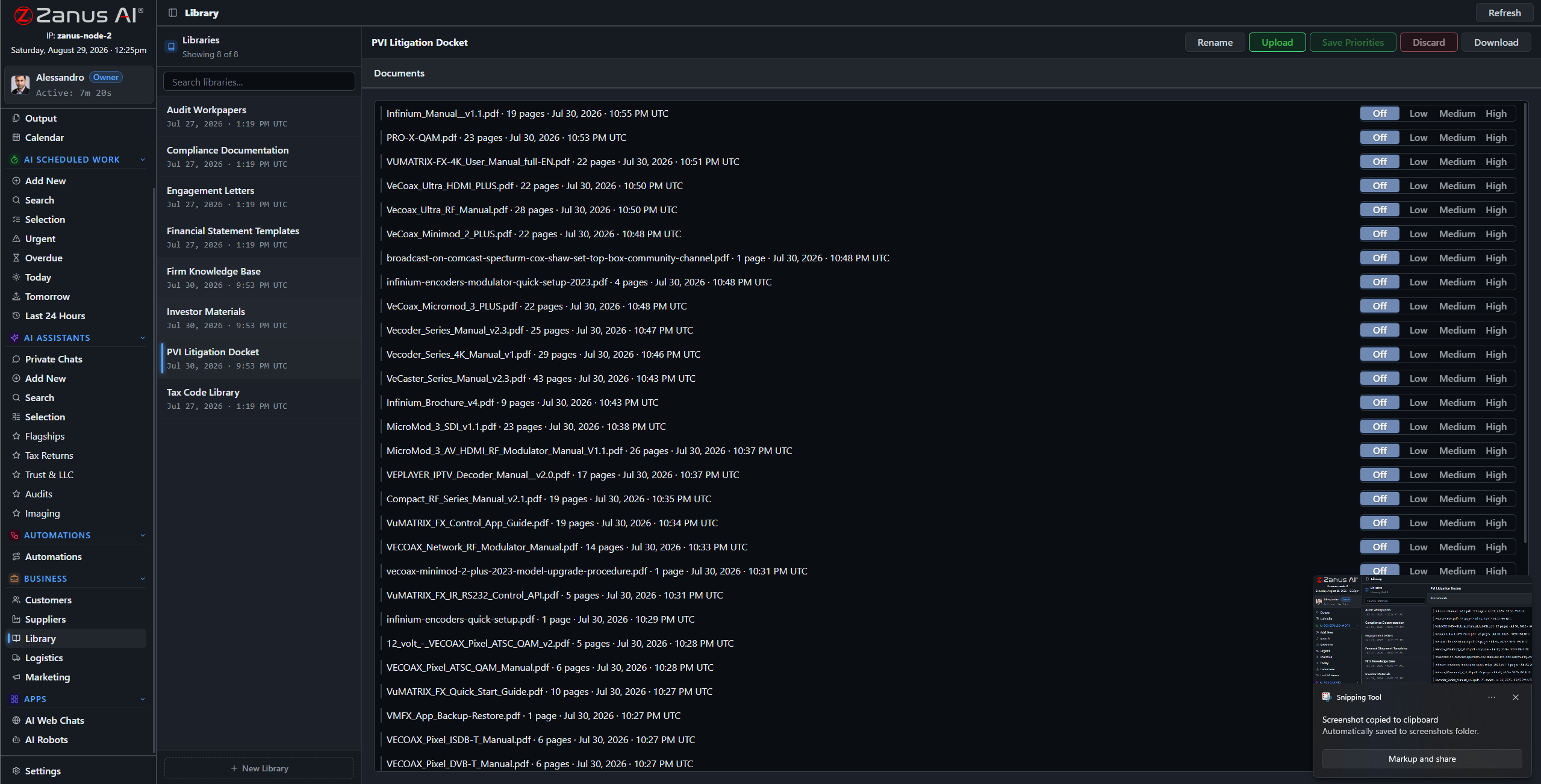
Libraries in priority order: effective SOPs outrank drafts, current protocol versions outrank superseded ones.
What it does
PDFs, Word, spreadsheets, scanned batch records, instrument printouts, images and media — the ingestion pipeline turns what your archive holds into queryable knowledge.
The claim guard is absolute: the AI cites the protocol, the method or the record — or states it cannot answer. In regulated work, a confident guess is worse than silence.
The CRA asks about visit windows; the QA lead asks about the deviation history; the BD associate asks about published data. Each gets answers scoped server-side to their role.
The question that used to take an afternoon
“Which batches used raw material from this supplier?” “What did we tell the agency about this impurity in 2019?” “Which protocol amendment changed the dosing window?” The archive answers in seconds with documents attached — instead of a day of folder spelunking.
- Plain-language questions across decades of records
- Source excerpts attached to every answer
- Priority order: effective versions always win

Questions, answered
Who can see unblinded or restricted documents?
Only roles you authorize. Permissions reach the field level and the server redacts what a user cannot see — a blinded team member cannot surface unblinded data even by clever phrasing.
Do our documents train outside models?
Never. Your tenant is isolated; your protocols, data and correspondence are yours alone — and the air-gapped on-premises option keeps them physically inside the facility.
See it working on YOUR lab — the demo IS the product.
ZANUS AI FOR PHARMA & BIOTECH — AI WORKFORCE
The associate who never misses a Monday.
Assign work to the AI the way you assign it to a scientist: type, sources, deadline, recurrence. Weekly literature surveillance, monthly stability summaries, quarterly deviation trend reviews — executed on schedule, with citations, under review.
Private tenant or your own server · your whole team · GxP-conscious architecture
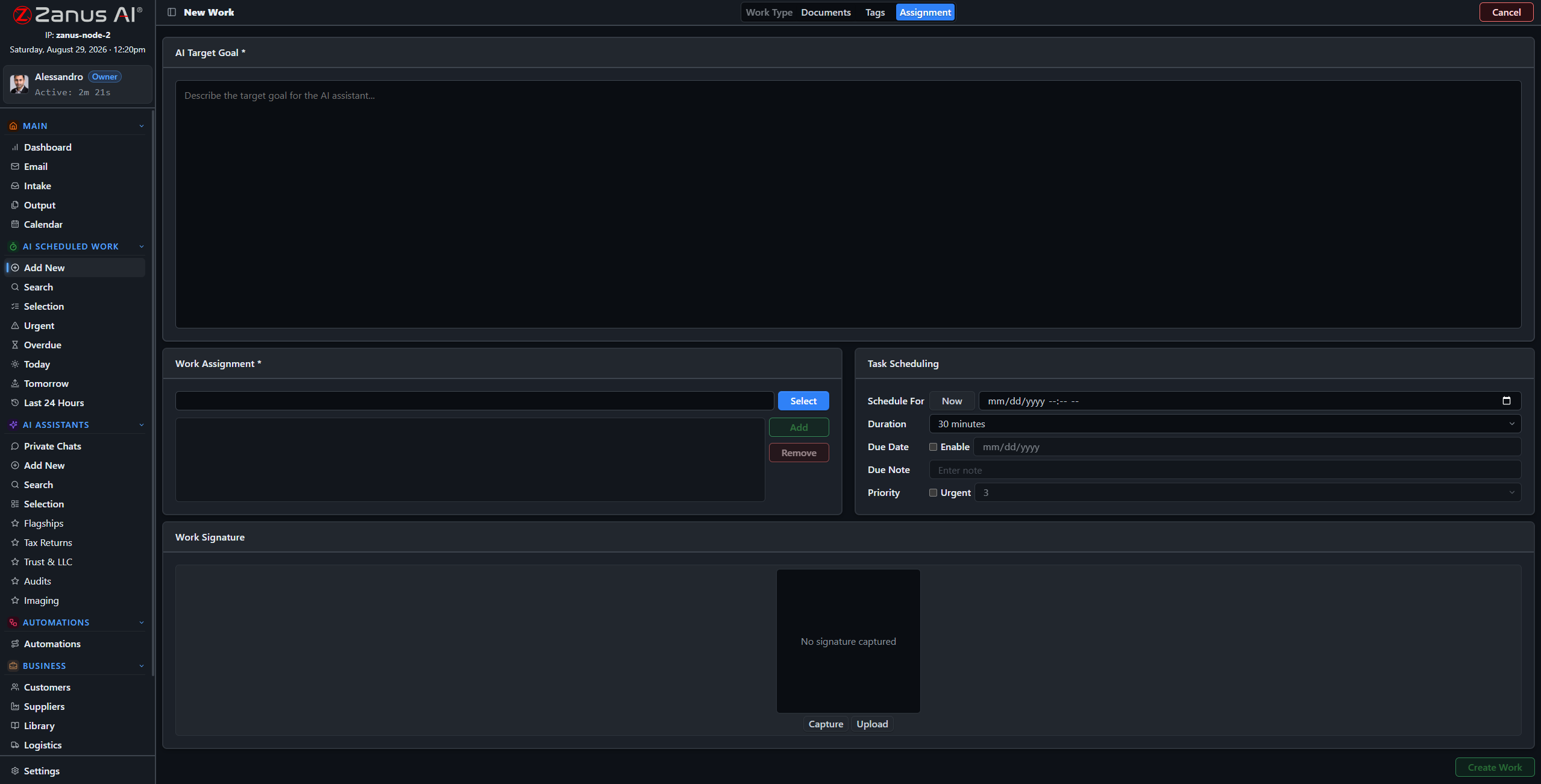
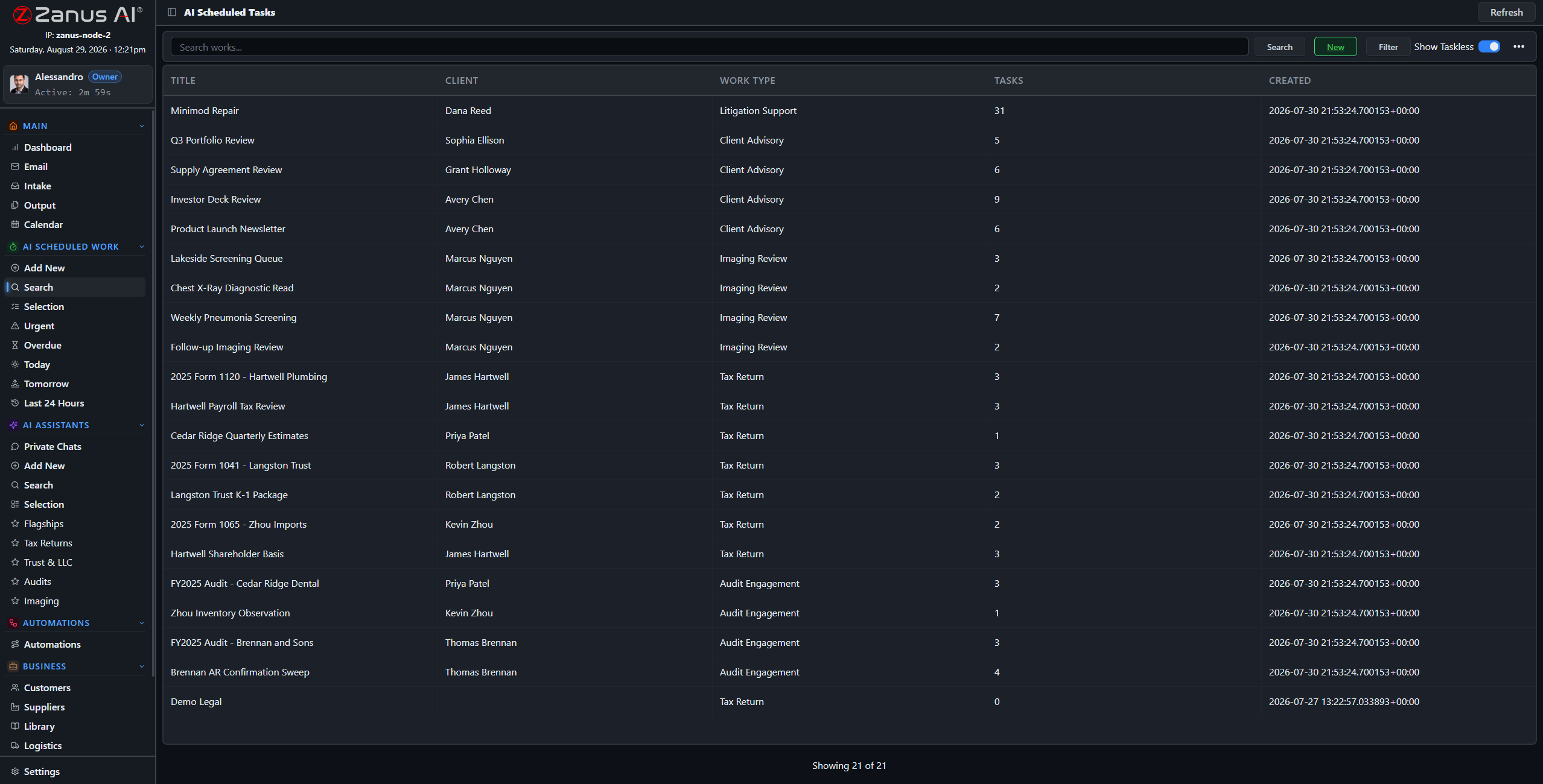
Four steps: work type, source libraries, tags, schedule — the AI takes it from there.
What it does
Literature review, deviation trend report, stability summary, competitor filing watch: work types molded to your programs, each with default sources and examples.
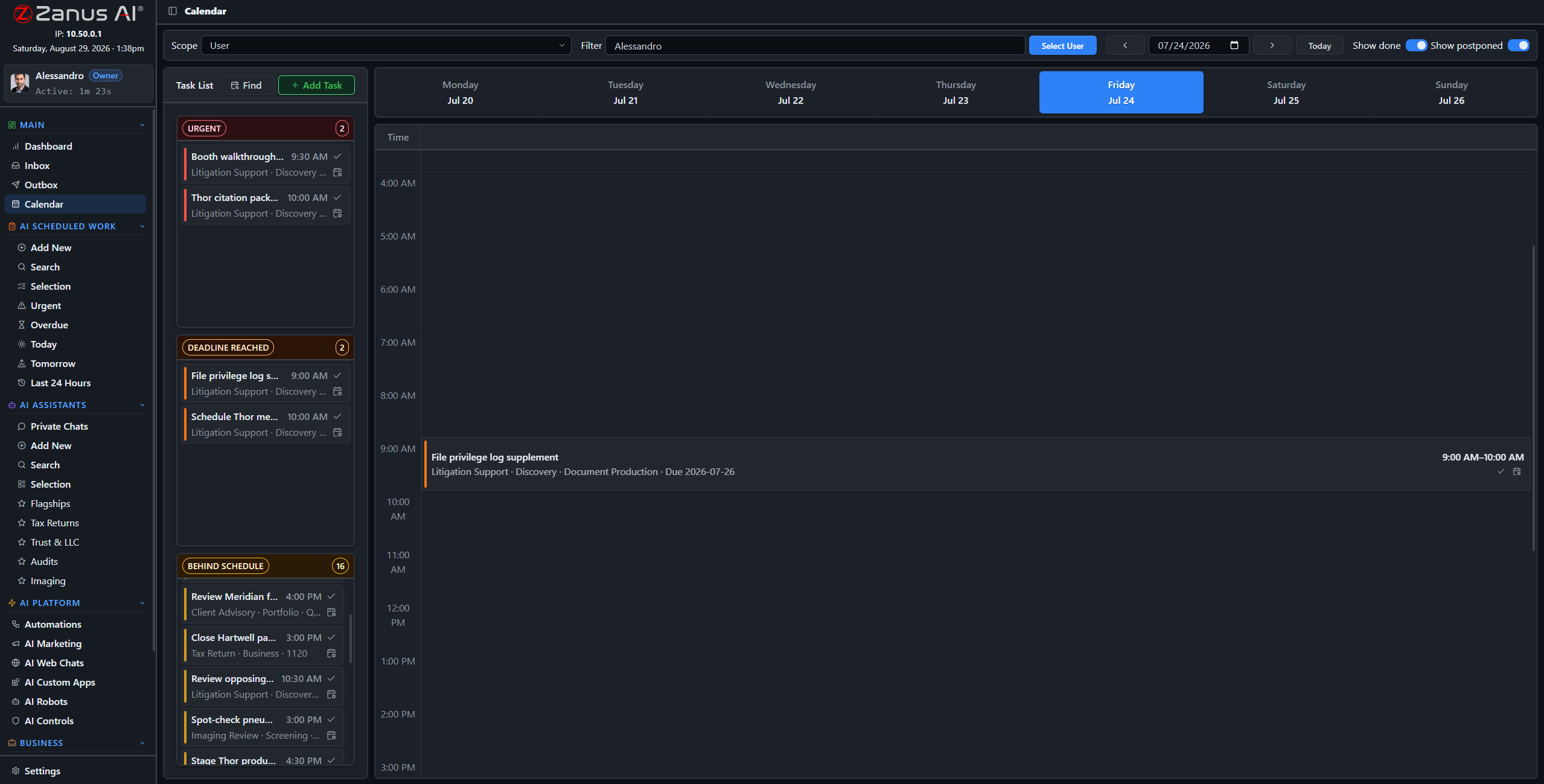
The AI’s workload is managed like the team’s: one-click views show what is urgent, late and due — the submission-support draft does not slip silently while everyone watches the trial.
Reasoning streamed live, sources cited, milestones tracked — supervisable mid-work, auditable after. A diligent junior scientist whose notebook is always complete.
Monday, 7 AM: the literature review is filed
Set “Weekly Safety Literature Surveillance” once: every Monday the AI sweeps the sources your medical team designated, summarizes new findings with citations, flags anything matching your watch terms, and files the report for medical review before standup.
- Recurring schedules for periodic regulated work
- Findings cited to the underlying paper or record
- Report waits in Output for medical sign-off
Questions, answered
Can our QA unit supervise a work in progress?
Yes — open any session, read the streamed reasoning, redirect it or stop it. The AI works like staff: visible, accountable, interruptible.
What volume can it absorb?
The constraint is your review capacity, not the AI’s stamina. Deployments size from a single lab to multi-program organizations — one price per company, your whole team.
See it working on YOUR lab — the demo IS the product.
ZANUS AI FOR PHARMA & BIOTECH — SOPS & GXP
The SOP binder, effective and answerable.
A quality system only works if people follow the effective version — not the draft, not last year’s revision. In Zanus, SOPs and methods are living documents: answerable in chat, attached to AI work by construction, priority-ordered so the effective version always wins.
Private tenant or your own server · your whole team · GxP-conscious architecture
The quality library: effective SOPs on top, superseded revisions outranked but archived for audit.
What it does
Cleaning validation, sample handling, change control, data-integrity procedures: one library, effective versions on top, superseded revisions outranked automatically.
“What is the requalification interval for this instrument?” — answered in seconds with the SOP attached, to any authorized analyst, at 2 PM or 2 AM.
The AI drafting a deviation narrative reads from the deviation SOP; the stability summary work reads from the stability protocol — by construction, not by memory.
Review cycles that never lapse
Biennial SOP reviews, training-record checks, periodic method verifications: assign them once as recurring AI work and the quality calendar runs itself — review drafts prepared, gaps flagged, everything on the audit record.
- Recurring review works with deadlines on the calendar
- Change summaries drafted for training briefings
- Every review cycle logged and searchable
Questions, answered
How does a new SOP revision roll out?
Upload the effective version, set it on top: from that moment every answer and every AI work cites the new revision. Superseded versions stay archived with their history — auditors can trace the succession.
See it working on YOUR lab — the demo IS the product.
ZANUS AI FOR PHARMA & BIOTECH — TEAM TRAINING
New scientists, trained on your quality system.
A new analyst’s first weeks are a tour of SOPs, systems and unwritten rules. In Zanus, new hires learn your procedures from the AI itself — and every scientist, CRA and coordinator has an assistant that answers “how do we…?” with the effective SOP cited.
Private tenant or your own server · your whole team · GxP-conscious architecture

Training lives inside the software: the AI walks each new hire through your own quality procedures.
What it does
New analysts and coordinators learn your sample-handling rules, documentation practices and systems through guided training — productive in days, with progress visible to managers.
“How do I document an out-of-specification result?” — asked to the assistant, answered from the effective SOP with the document attached, without pulling the QA manager off an audit.
Private chats work on any device with a login — the second-shift analyst gets the same sourced answer as the day shift, in their own language.

The trainer that never tires of the question
The tenth “how do I log a temperature excursion?” gets the same patient, cited answer as the first. Training content never goes stale because the assistant reads from the same living SOP libraries as everything else — update the SOP once and every future answer updates with it.
- Answers cite the effective SOP version
- Preset assistants per role: analyst, CRA, QA, regulatory
- Training progress visible to the quality unit
Questions, answered
Can training completion feed our GxP training records?
Training progress is tracked and visible to managers, and the audit trail records activity. How that maps into your formal training-record system is walked through with your quality unit at onboarding.
See it working on YOUR lab — the demo IS the product.
ZANUS AI FOR PHARMA & BIOTECH — AUTOMATIONS
The lab’s repetitive work, set once.
Describe the job in plain words — “when a supplier COA arrives, file it to the material record and flag any out-of-trend value” — and it becomes connected blocks on a canvas, running on its own, with every run visible and retryable.
Private tenant or your own server · your whole team · GxP-conscious architecture
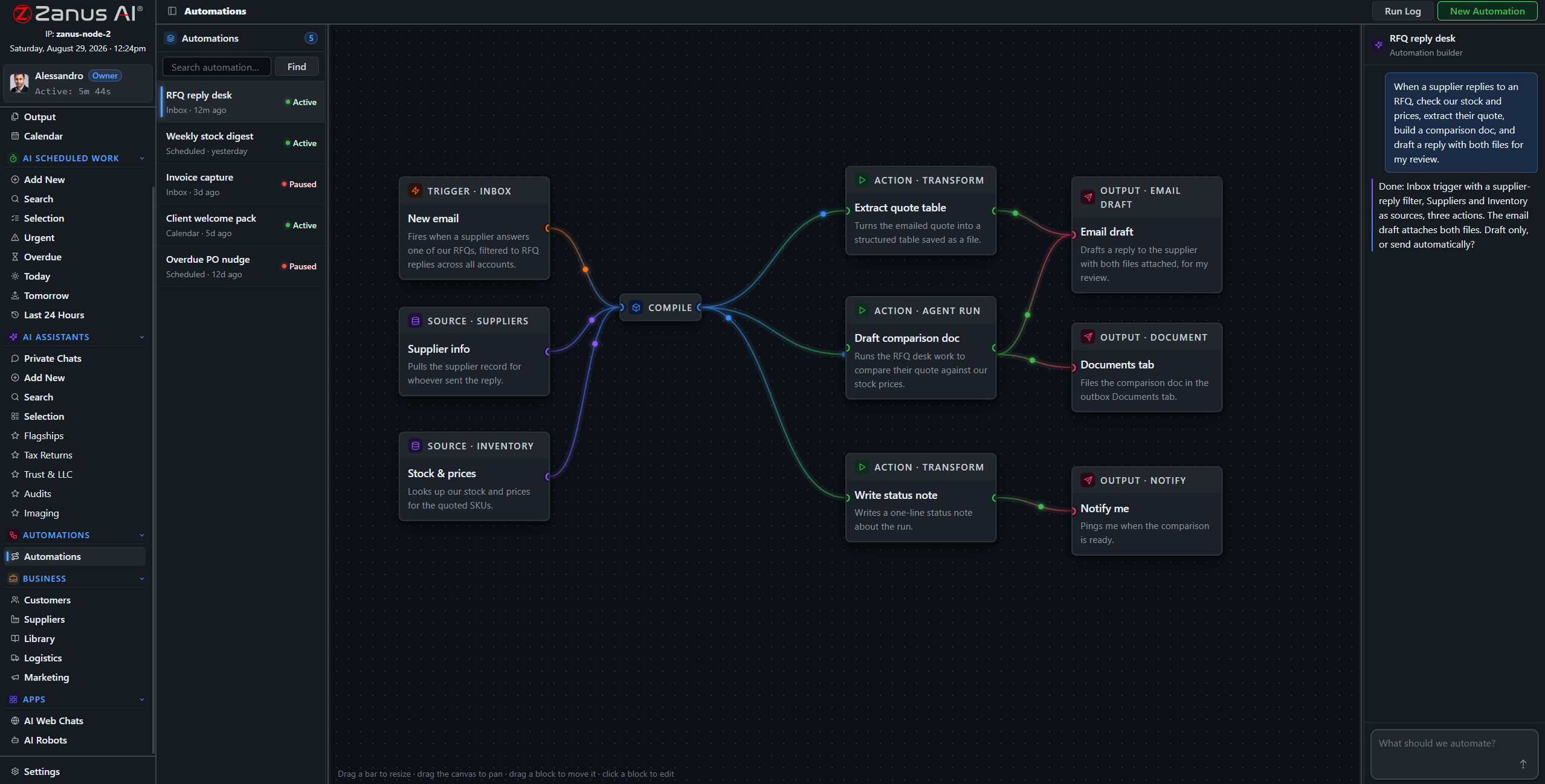
A real flow: inbox trigger, record sources, AI compile, three outputs — drawn from a plain description.
What it does
A deviation is logged; the flow pulls the batch record and SOP, drafts the narrative and a proposed CAPA, and queues both for QA — the clock starts working for you.
Incoming certificates of analysis routed to the right material record, values extracted, out-of-trend results flagged for the quality team — no inbox archaeology.
The monthly stability summary, the quarterly deviation trend report, the annual product review skeleton: compiled on schedule, filed to Output, on time every time.
In a GxP shop, silent failure is not an option
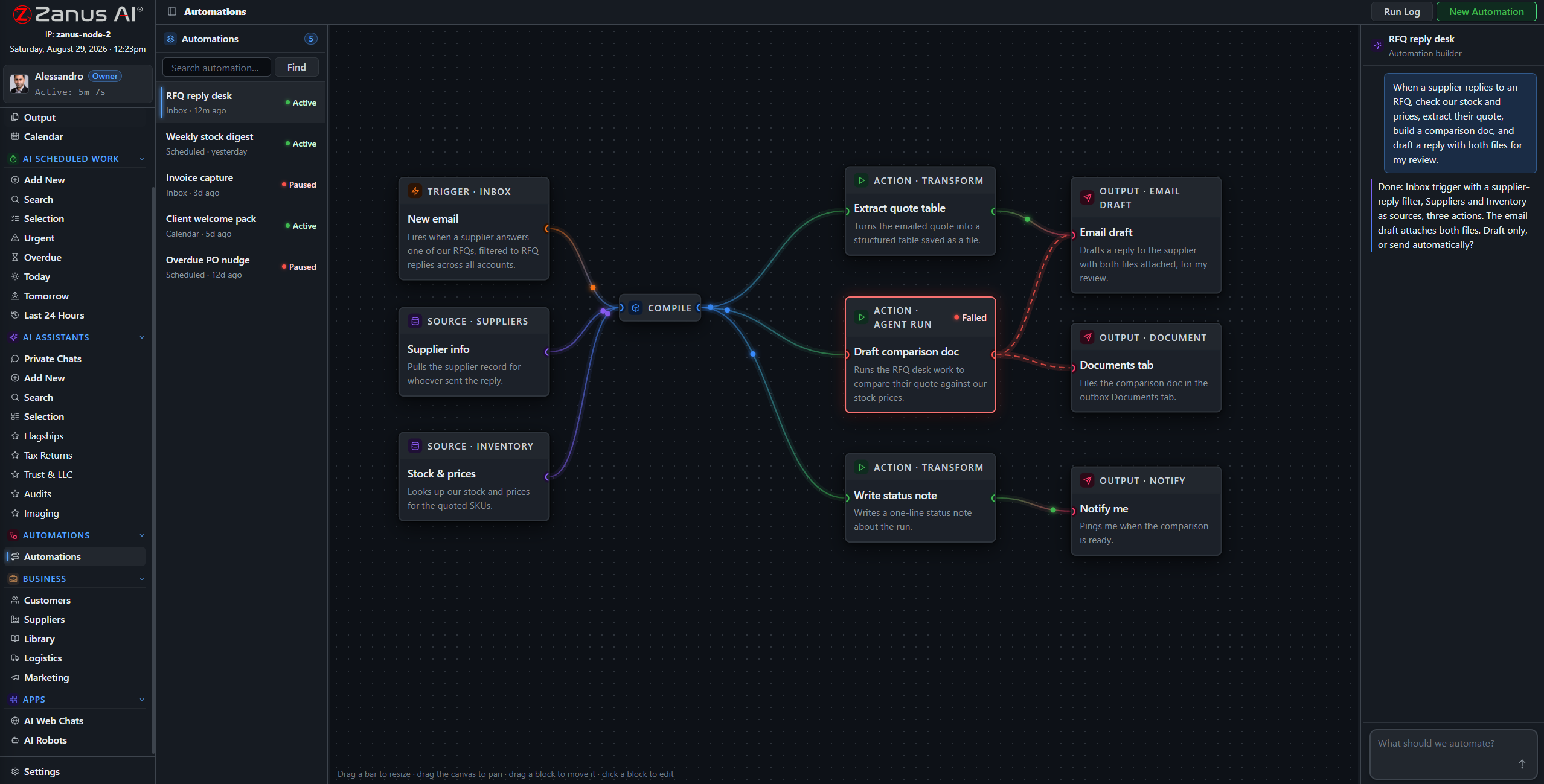
Run states live on the flow: green success, red failure on the exact block that broke. A missed COA or an unfiled deviation narrative is visible the moment it happens — with a one-click retry and a run log the auditor can read.
- Run log per automation, every execution recorded
- One-click retry on the failed block
- Finished documents in Output, statused for review
Questions, answered
Who approves what an automation sends or files?
Your rules: queue everything for human approval, or auto-run only the steps your quality unit designates as safe. Approval gates are blocks on the canvas — visible, not buried.
See it working on YOUR lab — the demo IS the product.
ZANUS AI FOR PHARMA & BIOTECH — SITE OUTREACH
Every site informed. Nothing sent unreviewed.
Site newsletters, enrollment-status updates, document-expiry reminders, investigator-meeting logistics — drafted by the AI from your own study records, in each site’s language, and queued for your approval. Study communications discipline without a communications hire.
Private tenant or your own server · your whole team · GxP-conscious architecture
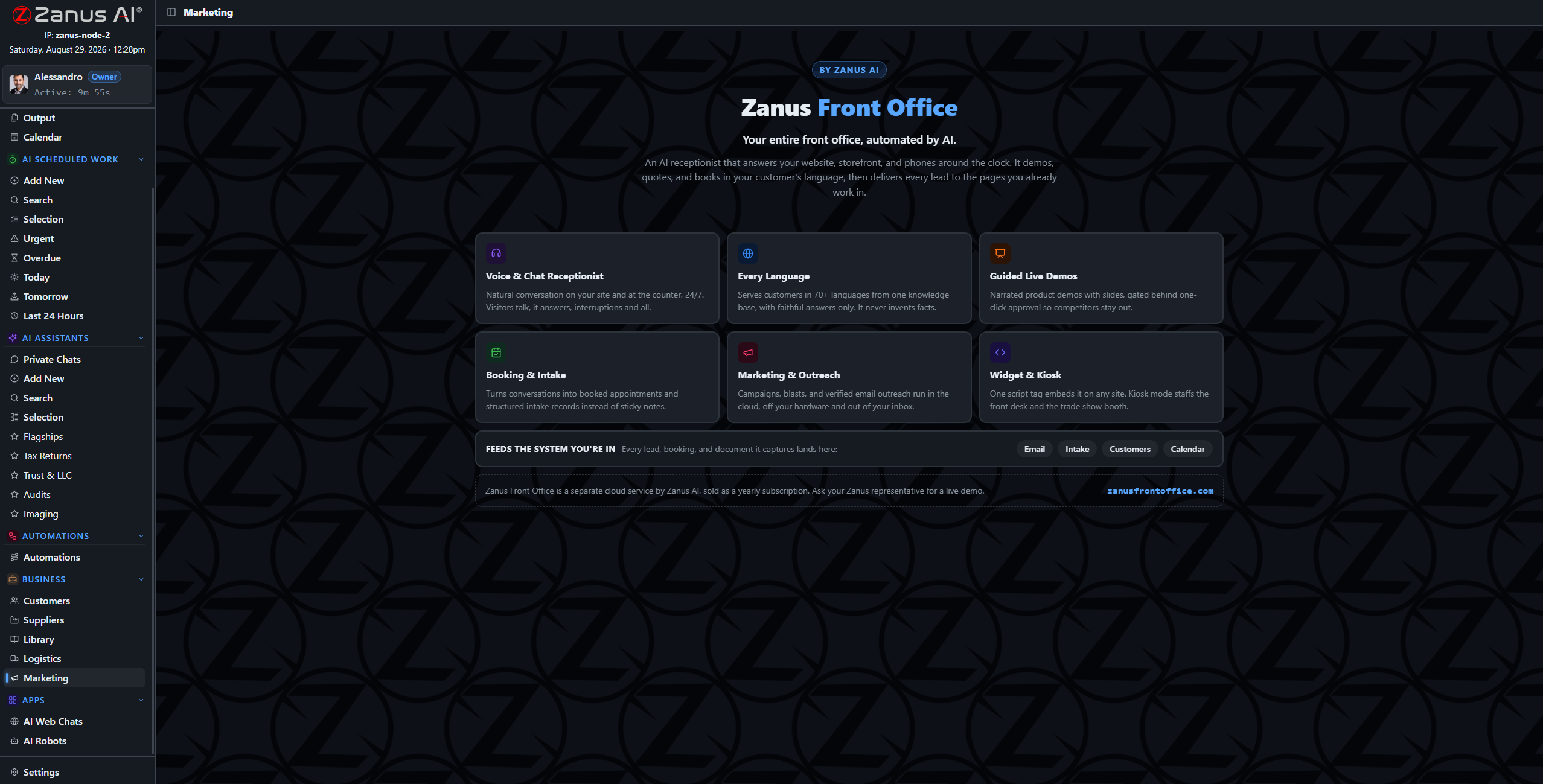
Campaigns and sequences drafted from study records — site updates, reminders, newsletters — awaiting approval.
What it does
Sites behind on enrollment, coordinators with expiring documents, investigators due a quarterly update: audiences built from your study data — no exporting lists to a mailing tool.
A document-expiry reminder, a follow-up a week later, an escalation to the CRA if unanswered: sequences drafted for approval, stopped automatically when the site responds.
A site in Warsaw and a site in Osaka get the same update in their own language, in your program’s voice — with your regulatory-review rules applied first.
From the study record to the outbox, without export
Audience, content and sending live in the same system as the study records — nothing leaves your tenant to reach a mailing platform. “Remind every site with a delegation-log gap” becomes a drafted, scheduled sequence in minutes.
- Audiences from your own study data — private by architecture
- Sequences drafted for review, never auto-sent by default
- Responses tracked back to the site record

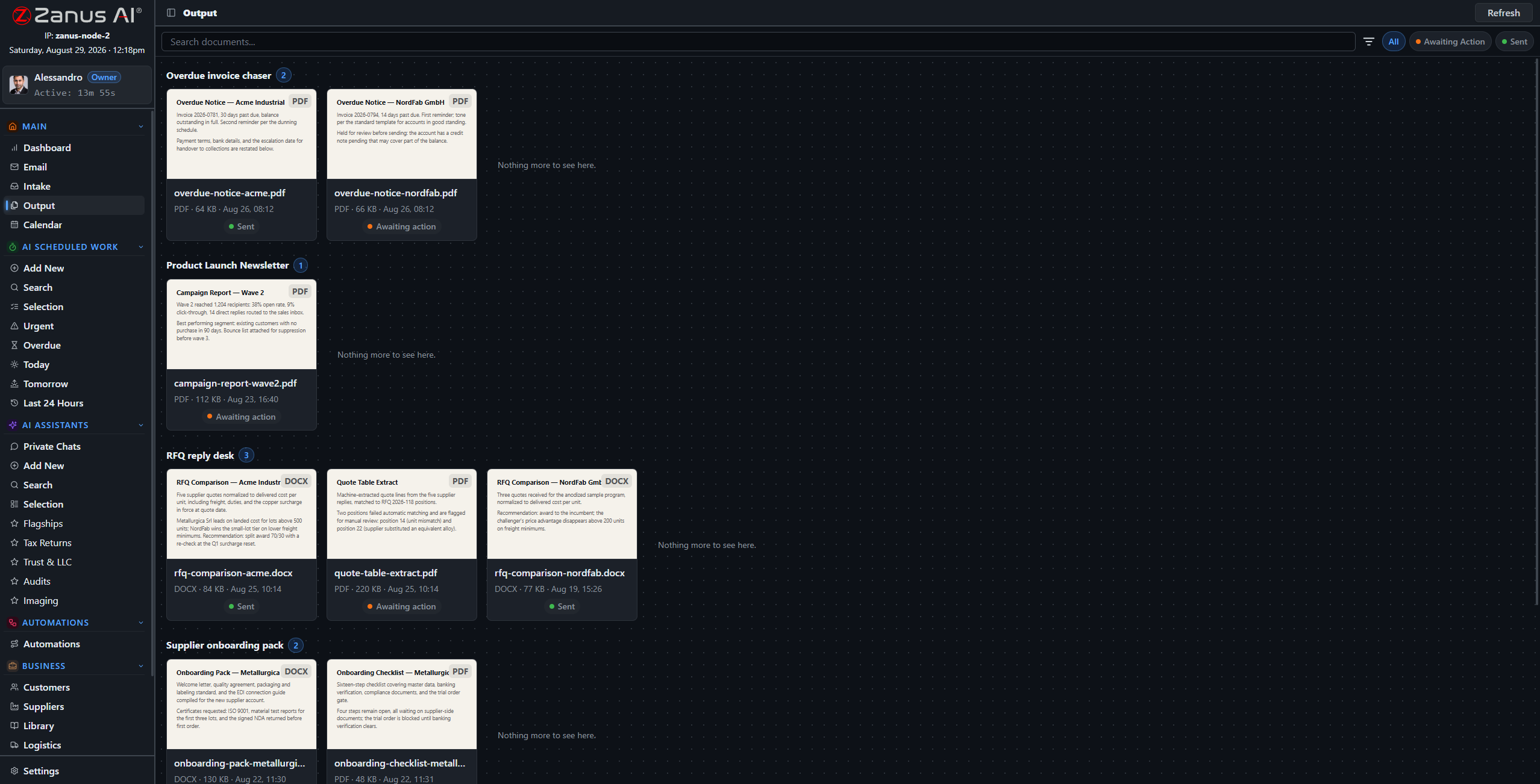
Approval first, always
Every outbound study communication waits in the approval queue unless your team designates the category as auto-send. In a regulated program, that gate is not bureaucracy — it is the point.
- Approval workflow per communication type
- Full history of what was sent to which site
- Opt-outs and contact preferences enforced by the system
Questions, answered
Can promotional-style content go through medical-legal review first?
Yes — the approval queue is the mechanism: route categories to the reviewers you designate, and nothing in that category sends until they approve. The audit record keeps every version.
Does it handle BD and partner outreach too?
Yes — the same module drafts partner sequences and conference follow-ups from your CRM records, with the same approval-first discipline.
See it working on YOUR lab — the demo IS the product.
ZANUS AI FOR PHARMA & BIOTECH — LIMS & INTEGRATIONS
Keep the LIMS. Keep the eTMF. Add the intelligence.
Your LIMS, eTMF, QMS and ELN stay the systems of record. Zanus becomes the system of work: API connectors sync records and documents both ways, the intake pipeline files what arrives, and AI-drafted documents flow back where they belong. No rip and replace.
Private tenant or your own server · your whole team · GxP-conscious architecture

No rip and replace: the lab and quality systems stay — the AI layer connects to all of them.
What it does
Samples, studies, deviations and documents mapped field by field, with a dry-run preview before anything writes — push, pull or two-way, your quality unit’s choice.
COAs, site documents, instrument outputs and correspondence arriving by email or upload are filed to the right record under your handling rules — automatically.
A full API for whatever else the lab runs: instrument software, safety databases, portals — data in, results out, under scoped keys, every event logged.
One question across the LIMS, the eTMF and the archive
The sample data lives in the LIMS, the protocol in the eTMF, the deviation history in the QMS — and the AI reads across all of it. “What is outstanding on this batch?” becomes one question with one grounded, cited answer.
- Field mapping with dry-run preview
- Each system stays master of its own records
- Every sync event on the audit record
- External systems appear as blocks on the automation canvas
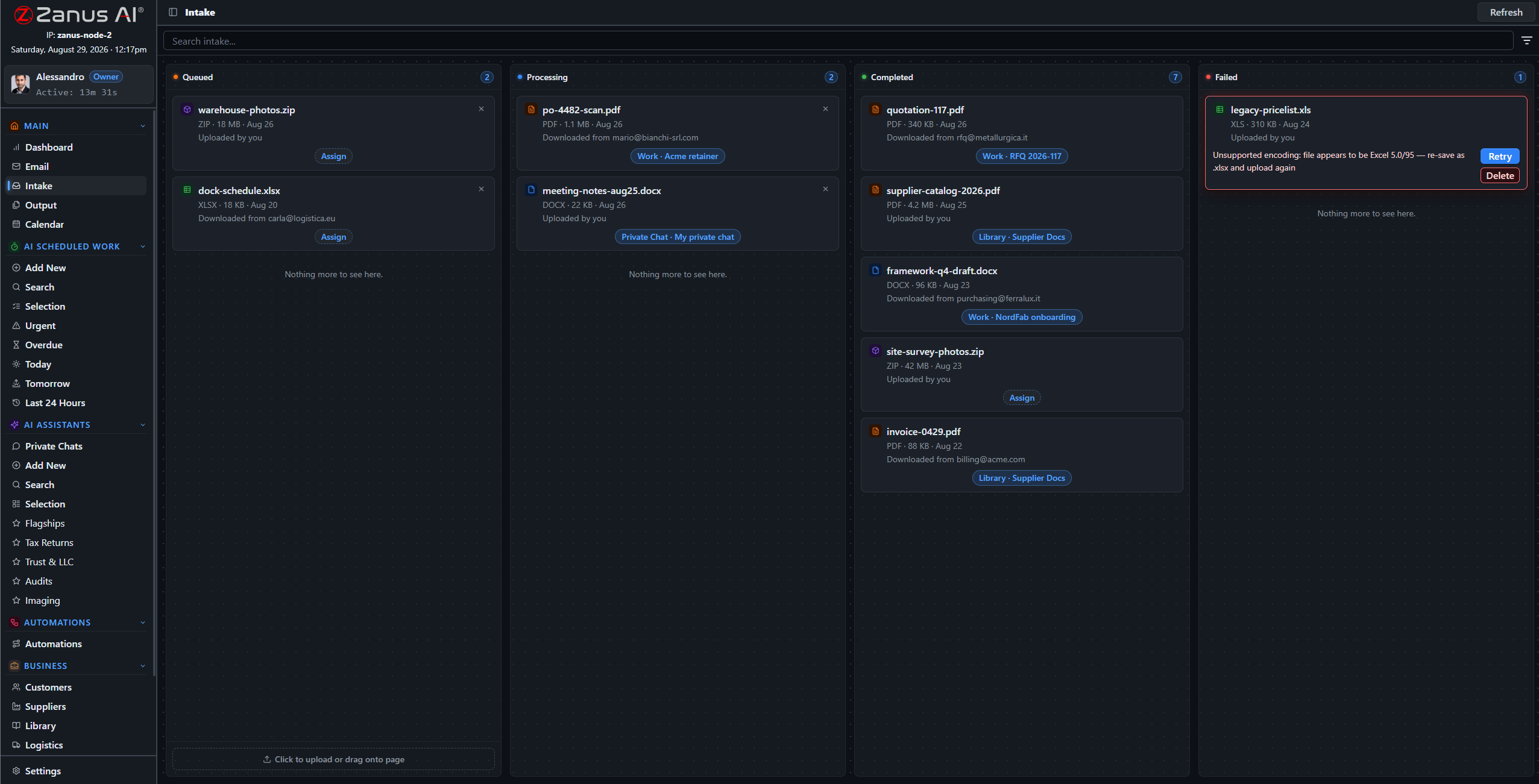
Drafts flow back where they belong
The deviation narrative the AI drafted, the stability summary, the response letter: finished documents return to the QMS or eTMF record through the same connectors — after your reviewers sign off, never before.
- AI output filed back to the system of record
- Approval gate before anything writes back
- Webhooks notify your systems in real time
Questions, answered
Which LIMS and eTMF platforms do you support?
Connectors are mapped per deployment — bring your LIMS, eTMF and QMS to the demo and we walk through the exact integration path for your stack.
Does study data pass through third parties?
No. The connectors run inside your tenant — or inside your facility on the air-gapped option. Data moves directly between your systems.
See it working on YOUR lab — the demo IS the product.
ZANUS AI FOR PHARMA & BIOTECH — COMPLIANCE
Built like the inspection is tomorrow.
GxP documentation discipline is not a feature toggle — it is the architecture. Admin-created accounts, permissions to the field level, server-side redaction, a searchable audit trail, pre-update snapshots with rollback, and an air-gapped option where data never touches the internet.
Private tenant or your own server · your whole team · GxP-conscious architecture
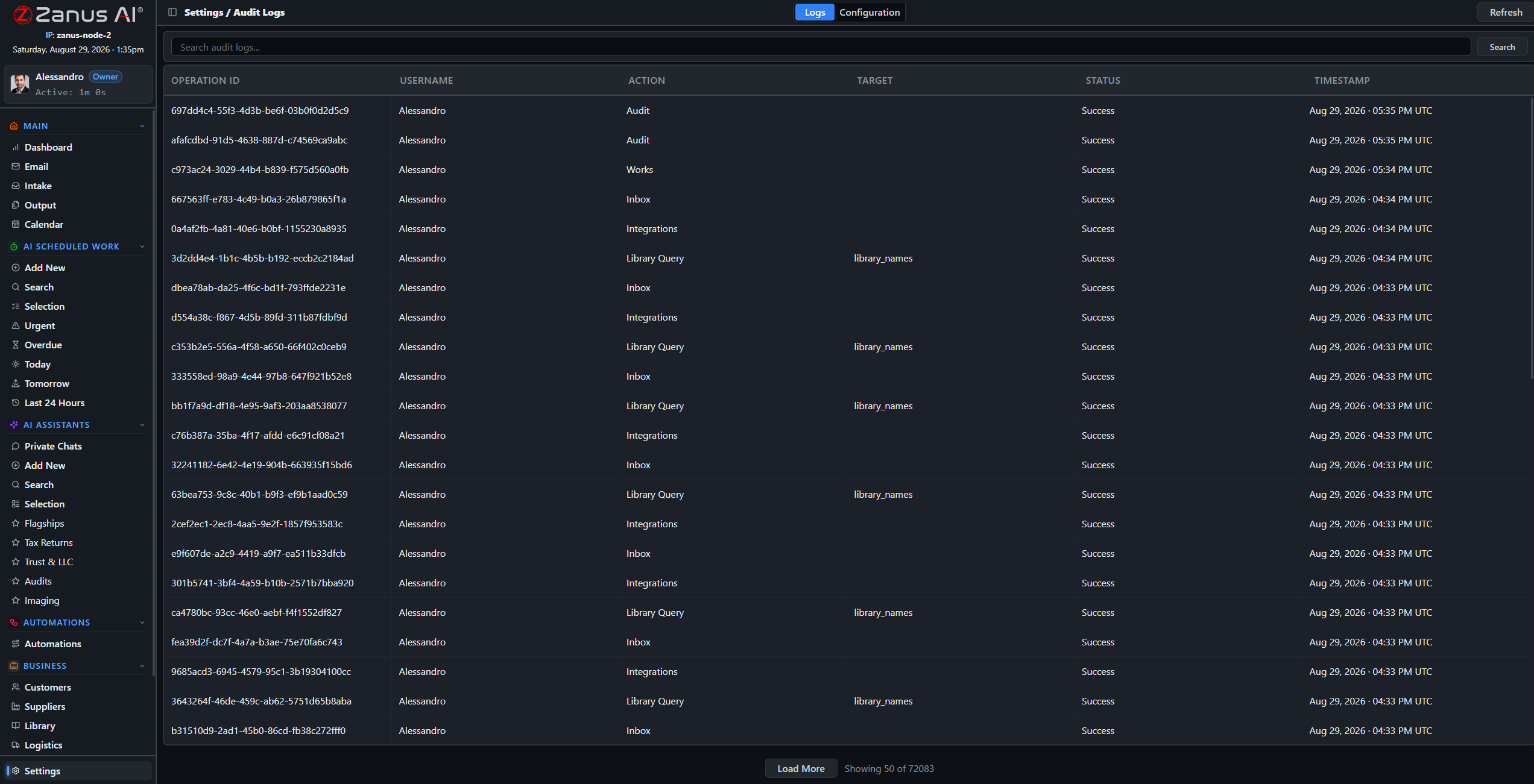
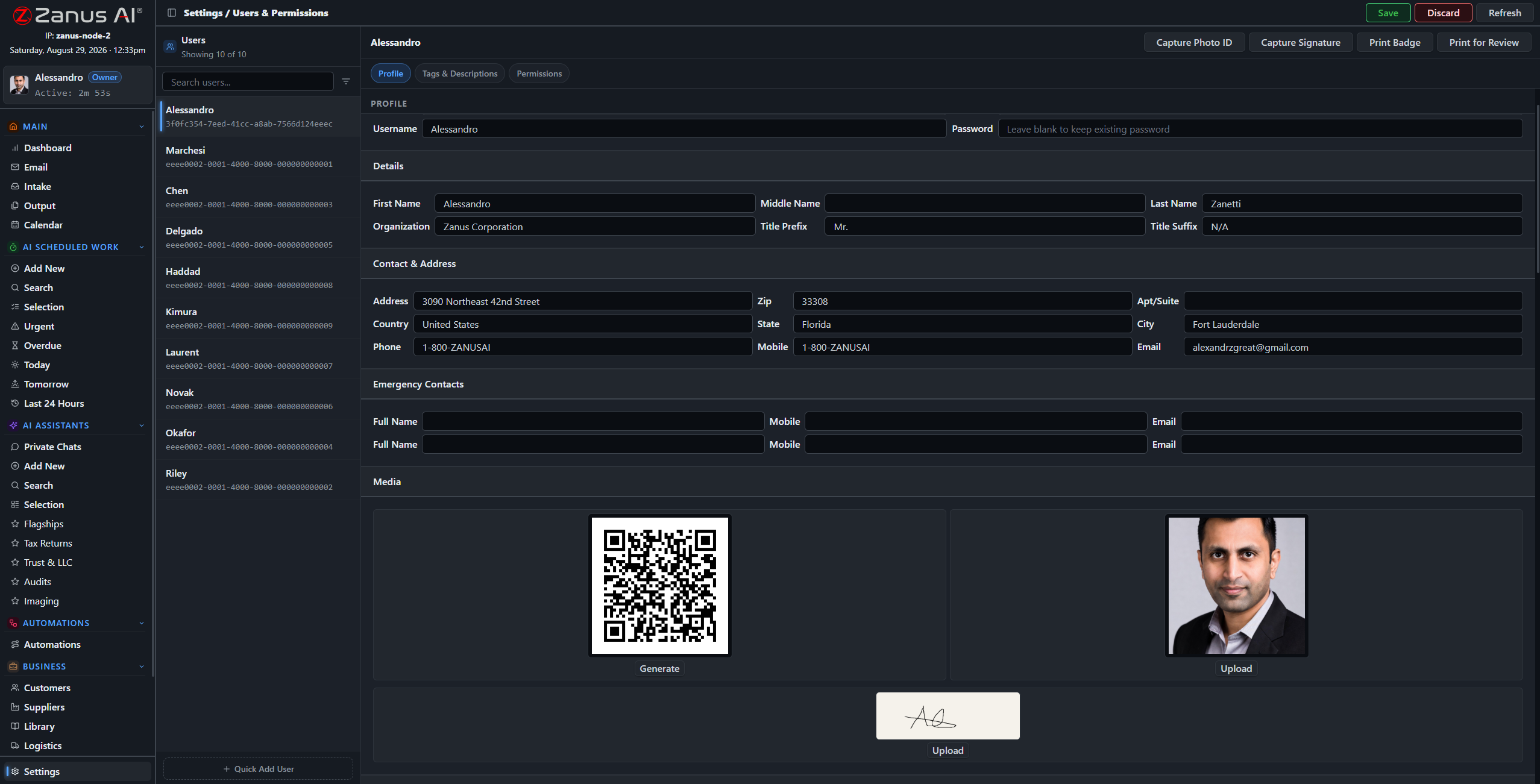
Every audited action searchable: who saw what, who changed what, when — the inspection answer in minutes.
What it does
Admin-created accounts, no self-signup, every action tied to a named user — the A in ALCOA, enforced by the login system itself.
The server redacts what a role cannot see — a blinded team member gets the study calendar without the unblinded fields, structurally, not by promise.
Five-level workgroups separate programs, studies and sites; the on-premises option puts the entire system inside your facility, air-gap capable, USB updates.
The audit answer in minutes, not weeks
When the question comes — from an inspector, a sponsor auditor or your own quality unit — the answer is a search away: access records, document succession, update history, AI work sessions with their reasoning, all in one place.
- Searchable audit trail with configurable categories
- Automatic pre-update snapshots with rollback
- AI work sessions preserved: sources, reasoning, sign-off
Questions, answered
Is this 21 CFR Part 11 compliant out of the box?
We say it carefully: the architecture is GxP-conscious — attributable accounts, audit trail, access control, record protection. Part 11 assessment and validation are performed with your quality unit during onboarding; bring them to the demo.
Where does our data live?
In your isolated private tenant — never training outside models — or fully on-premises on hardware you own, physically incapable of internet exposure.
See it working on YOUR lab — the demo IS the product.
ZANUS AI FOR PHARMA & BIOTECH — LIVE DEMO
Do not watch a video.
Talk to your AI.
Enterprise life-science vendors demo by webinar, six weeks out. Ours is the product itself, configured for pharma: open the chat below-right and try it — ask a site-logistics question, request the deviation-drafting walkthrough, see the literature-review workflow.
The conversation you have with us IS the demo
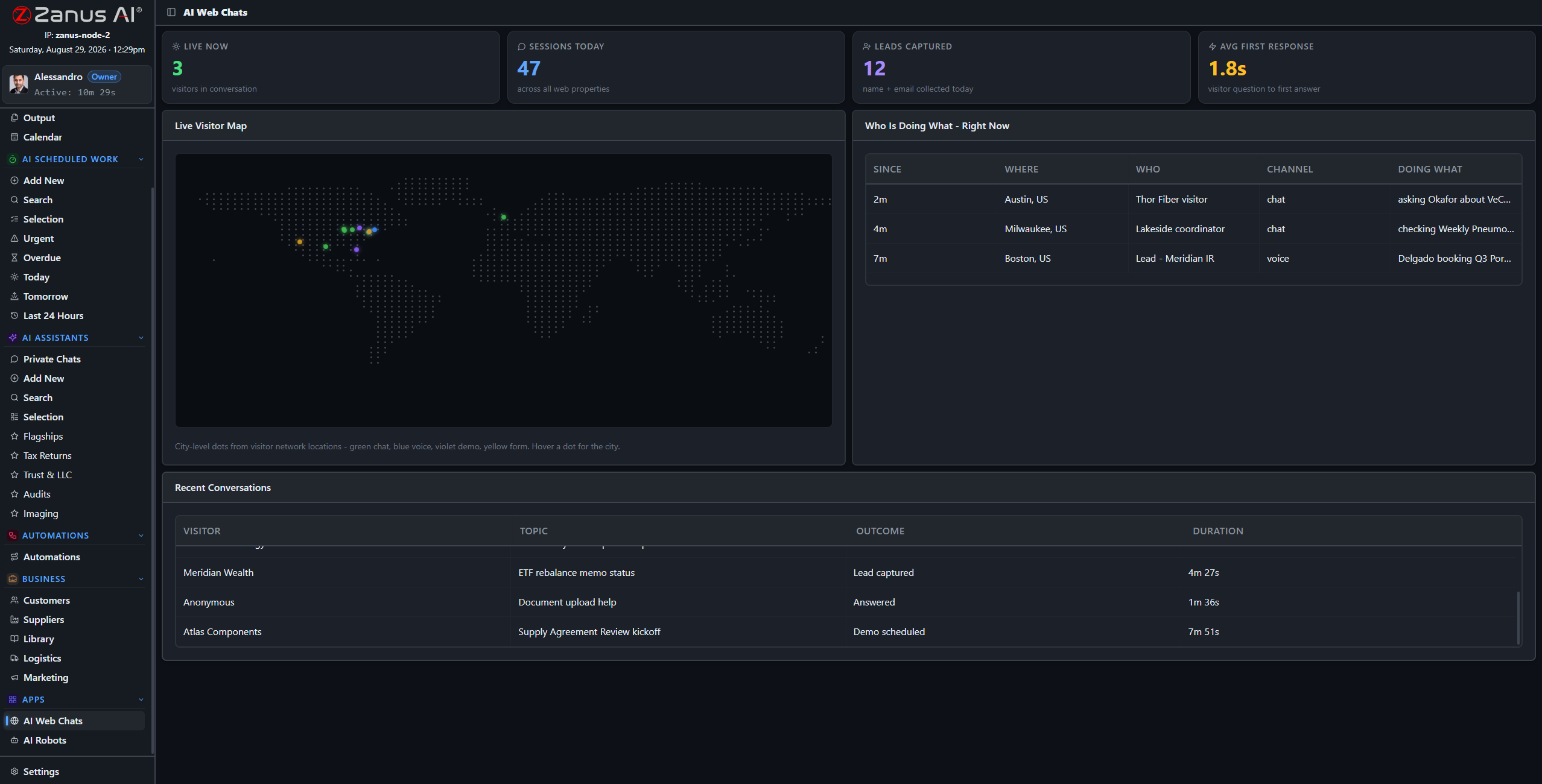
This screen is watching demos like yours happen: live conversations, outcomes, first response in seconds.
What it does
Ask the chat what a site coordinator would ask: “when is the next monitoring visit window?” — watch it answer from approved information and offer to book.
Ask: “how would you draft a deviation narrative?” — it walks the workflow it would run in your tenant: sources, citations, QA sign-off included.
The full demo loads a pharma tenant with sample records: literature surveillance, stability summaries, SOP answers — your world, working.
Or pick your exact business
Every link below is a full live-demo page for that specific business — its vocabulary, its calls, its booking rules.
Two minutes to your inbox
Request the demo and the interactive pharma demo arrives in about two minutes — no sales call, no calendar dance. Watch it, interrupt it with questions, and bring your quality unit to the human conversation when YOU are ready.
- Interactive demo, pharma-configured
- Ask questions mid-demo — it answers and resumes
- In your inbox in ~2 minutes, free

Questions, answered
Is the demo really the product?
Yes — the same AI, configured with a sample pharma tenant. What you see is what your team gets, with your protocols and records instead of the samples.
See it working on YOUR lab — the demo IS the product.
Sharing with a colleague? 📄 Get the PDF · ✉️ Email this page ·