ZANUS AI FOR NONPROFITS & NGOS — OVERVIEW
The grant is due Friday. The mission cannot wait.
Donor and beneficiary calls answered in 40 languages. Grant applications drafted from your own program history and outcomes. Impact reports assembled from real data, thank-you letters that never slip. One AI system for the public-facing side and the mission side — beneficiary data sovereign in YOUR private tenant, or on a server you own.
Private tenant or your own server · your whole team · beneficiary data sovereignty
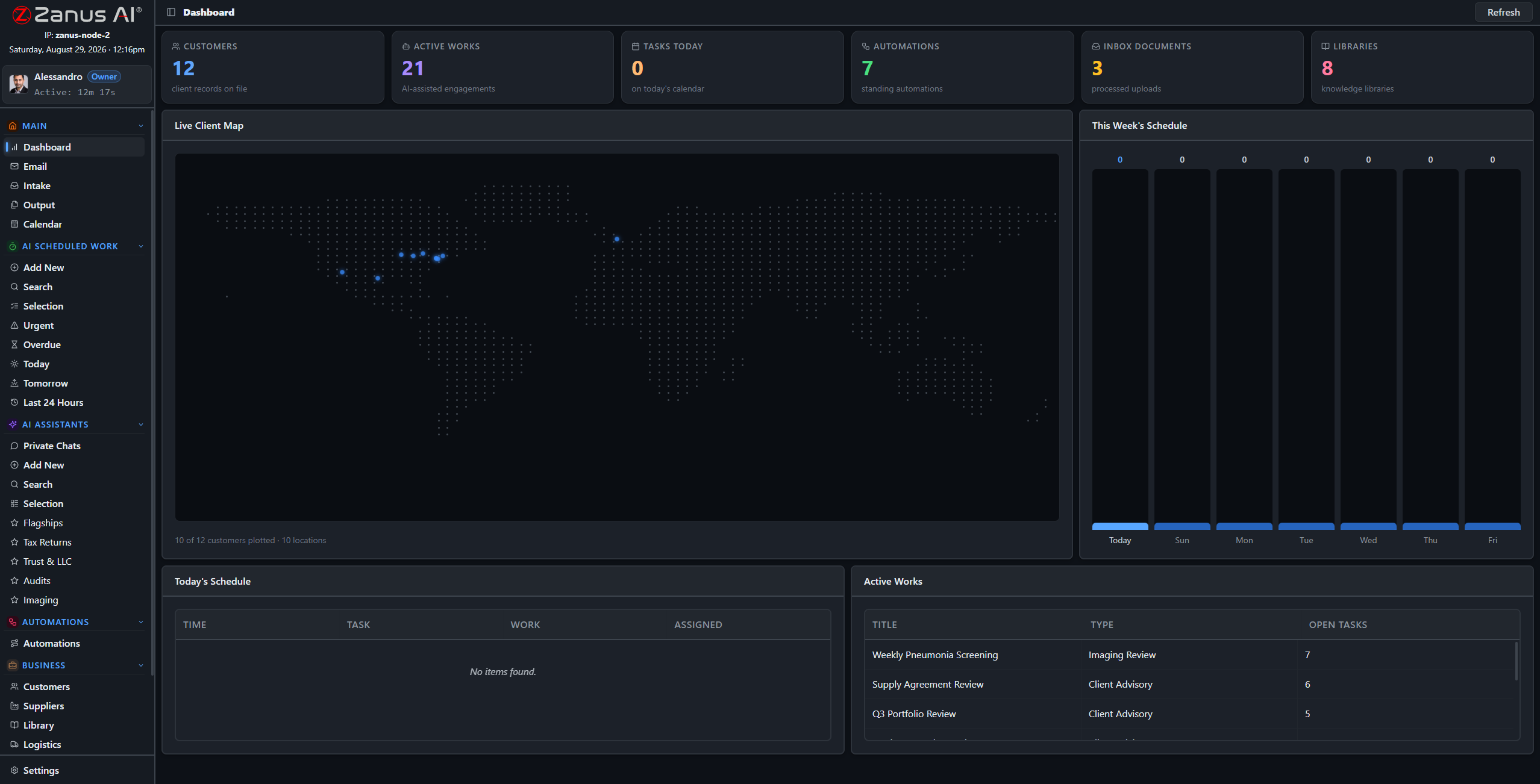
A real deployment view: program records, scheduled AI works, the grant draft and impact report in progress.
What it does
The AI answers your lines 24/7 in your chosen voices — donors asking how to give, beneficiaries asking about services, volunteers asking where to show up — and escalates sensitive matters to staff, by your rules.
Applications, budget narratives and progress reports drafted from YOUR past proposals, outcomes and program data — cited, in the funder’s structure, awaiting the grants officer.
The people you serve trusted you with their information. Your tenant is isolated; nothing trains anyone else’s model — and the same OS runs on hardware you own if the mission demands it.
Front office: the public side, handled
The donor calling at lunch to ask where her gift went, the family asking whether the food pantry is open, the volunteer confirming Saturday: the Zanus front office answers every call on your menu, in the caller’s language, books meetings into real calendars and follows up — 24/7.
- AI phone on your menu and voices, 24/7
- Service and program questions from YOUR approved information
- Up to 40 languages — built for the communities you serve
- See the Front Office for nonprofits →

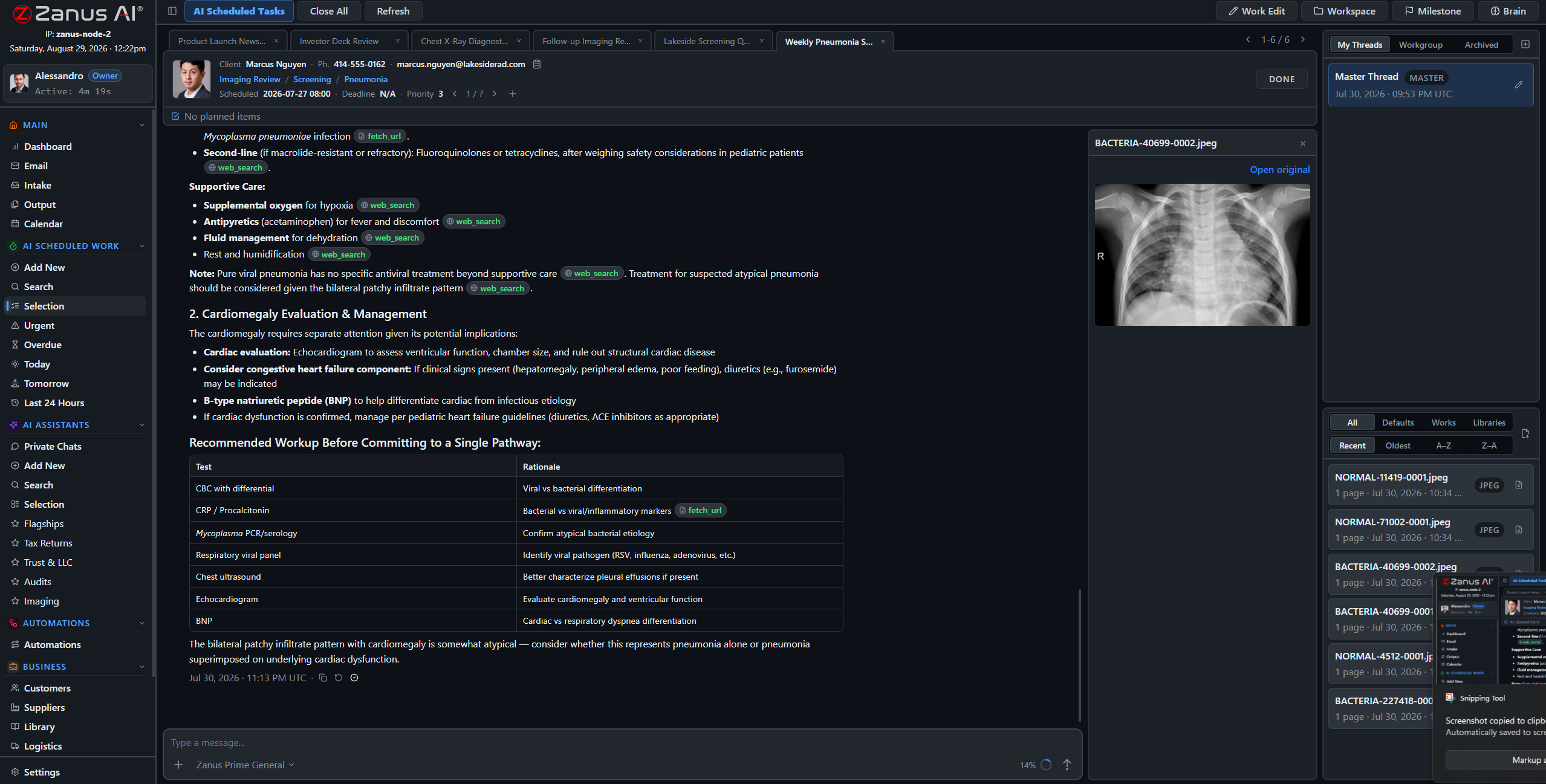
Back office: the mission side, working
The grants officer facing Friday does not start from a blank page: past proposals, program outcomes and budgets live in the libraries, and the AI drafts the new application from them — every figure cited to its source, the whole draft awaiting human judgment.
- Scheduled AI work: grant drafts, impact reports, board packets
- Verified answers from YOUR organizational library
- Finished documents await sign-off
- See the Back Office for nonprofits →
When beneficiary data cannot leave your hands
Organizations serving vulnerable populations run the identical OS on Zanus hardware inside their own office: air-gap capable, USB updates, your whole team — beneficiary records physically incapable of leaving.
- Private On-Premises AI: owned, no recurring fees
- On-Prem Tokens Server for high-volume processing
- Explore the AI Servers →

Questions, answered
Can a nonprofit budget afford this?
The pricing is flat with your whole team — staff, board and volunteers all included, no per-seat or per-contact growth penalty. The demo shows you the exact number for your organization.
Does the AI write our grants?
It drafts — from your own program history, outcomes and prior proposals, with every figure cited. The grants officer and the executive director review, strengthen and decide. Nothing is submitted without human sign-off.
We handle sensitive beneficiary information — where does it live?
In your isolated tenant, which never trains outside models — or fully on-premises on hardware you own. Permissions to the field level and server-side redaction decide who sees what, and every access is on the audit record.
See it working on YOUR mission — the demo IS the product.
ZANUS AI FOR NONPROFITS & NGOS — FRONT OFFICE
Every donor call answered. Every family served.
Three staff, four hats each, one phone line — and the calls are donors, beneficiaries and volunteers all at once. The Zanus front office answers on your menu, in your voices, in up to 40 languages, and routes each caller to what they need — 24/7.
Private tenant or your own server · your whole team · beneficiary data sovereignty

Calls, chats, bookings and follow-ups — one dashboard the operations manager can read.
What it does
She calls to ask how to set up a monthly gift. The AI answers in one ring, explains the options from YOUR information, and books the call with the development director — gift secured, not lost to voicemail.
Pantry hours, intake requirements, what to bring, which languages you serve: answered instantly, kindly and identically every time — in the caller’s own language.
Shift questions answered, orientation sign-ups booked into real calendars, reminders sent — the volunteer coordinator stops being a switchboard.
From inquiry to booked meeting, hands-free
A local business owner calls about sponsoring the gala: the AI answers, takes the details, offers real open slots on the development director’s calendar, books the meeting and sends the sponsorship overview — while your two-person team keeps running the program.
- Real calendar sync — no double-booking
- Lead qualification and follow-up for donor inquiries
- Sensitive beneficiary matters escalated to staff, never improvised
- Every conversation logged, transcript included


The web works too
Website chat that answers like your most seasoned staffer, web forms for volunteer sign-ups and assistance requests worked in minutes, and instant responses to every inquiry — in the visitor’s own language.
- Grounded chat on your site, 40 languages
- Assistance requests routed privately by your rules
- Volunteer sign-ups confirmed and reminded
- See the full Front Office tour →
Questions, answered
How does it handle a caller in crisis?
By YOUR rules, instantly: crisis language triggers immediate transfer to staff or the referral protocol you define. The AI never improvises with a vulnerable caller.
Do we keep our phone numbers?
Yes. Your numbers stay; calls route to the AI first, staff first, or any mix per line and per hour — program hours one way, nights and weekends another.
What languages?
Up to 40 — the AI answers each caller in the caller’s language, with your organization’s approved information. Built for the communities nonprofits actually serve.
See it working on YOUR mission — the demo IS the product.
ZANUS AI FOR NONPROFITS & NGOS — BACK OFFICE
The mission runs on grants.
Now the grants draft themselves.
Grant proposals, funder reports, board packets, donor acknowledgments, program documentation: a nonprofit produces enterprise-grade paperwork on a shoestring team. The Zanus back office turns your archive into a working AI staff — drafting, assembling and answering with sources cited, under your director’s sign-off.
Private tenant or your own server · your whole team · beneficiary data sovereignty
A real session: a grant application drafted from program history — figures cited, humans decide.
What it does
The organizational background, the program outcomes, the budget narrative: drafted from your past proposals and real program data, restructured to each funder’s requirements — cited, awaiting the grants officer.
Meals served, families housed, students tutored: the numbers live in your records, and the AI assembles them into the funder report and the annual report narrative — with every figure traceable.
Every AI-drafted document lands in Output awaiting review. Nothing reaches a funder, a donor or the board without a human decision.
The Friday deadline, without the all-nighter
Monday the grants officer opens the work session: the AI has drafted the needs statement from your service data, the organizational history from prior proposals, and the outcomes section from last year’s program reports — every figure cited. The week goes to sharpening the ask, not reassembling the past.
- Sections drafted from your own program history
- Every figure cited to the source record
- Draft in Output, awaiting the grants officer and ED


Board packets and funder reports — drafted
The documents that eat director evenings: the monthly board packet compiled from program updates and financials, the quarterly funder report in the funder’s own template, the volunteer-hours summary. Drafted in minutes, sources attached.
- Your templates and each funder’s formats
- Program data cited in every draft
- Approval workflow before anything sends
Questions, answered
Does the AI invent impact numbers?
No — the opposite. It only claims what your records support, with the source cited; if the data is not in your library, it says so. That discipline is exactly what funders audit.
Does it connect to our donor CRM?
API connectors integrate with existing systems; documents and data flow through the intake pipeline under your handling rules. Bring your CRM to the demo and we map it.
YOU MIGHT ALSO LIKE
The Back Office executes. Who answers the phone?
Front Office AI picks up every call and chat — books, quotes, follows up, 24/7 in 40 languages. Watch it run a business like yours, live.
See it working on YOUR mission — the demo IS the product.
ZANUS AI FOR NONPROFITS & NGOS — GRANTS & REPORTS
Ask ten years of grant files. They answer.
Grant proposals, funder agreements, donor records, impact reports, board minutes, program manuals — loaded into curated libraries the AI reads from. Ask in plain language; get the answer with the source cited, at the permission level of whoever asks.
Private tenant or your own server · your whole team · beneficiary data sovereignty
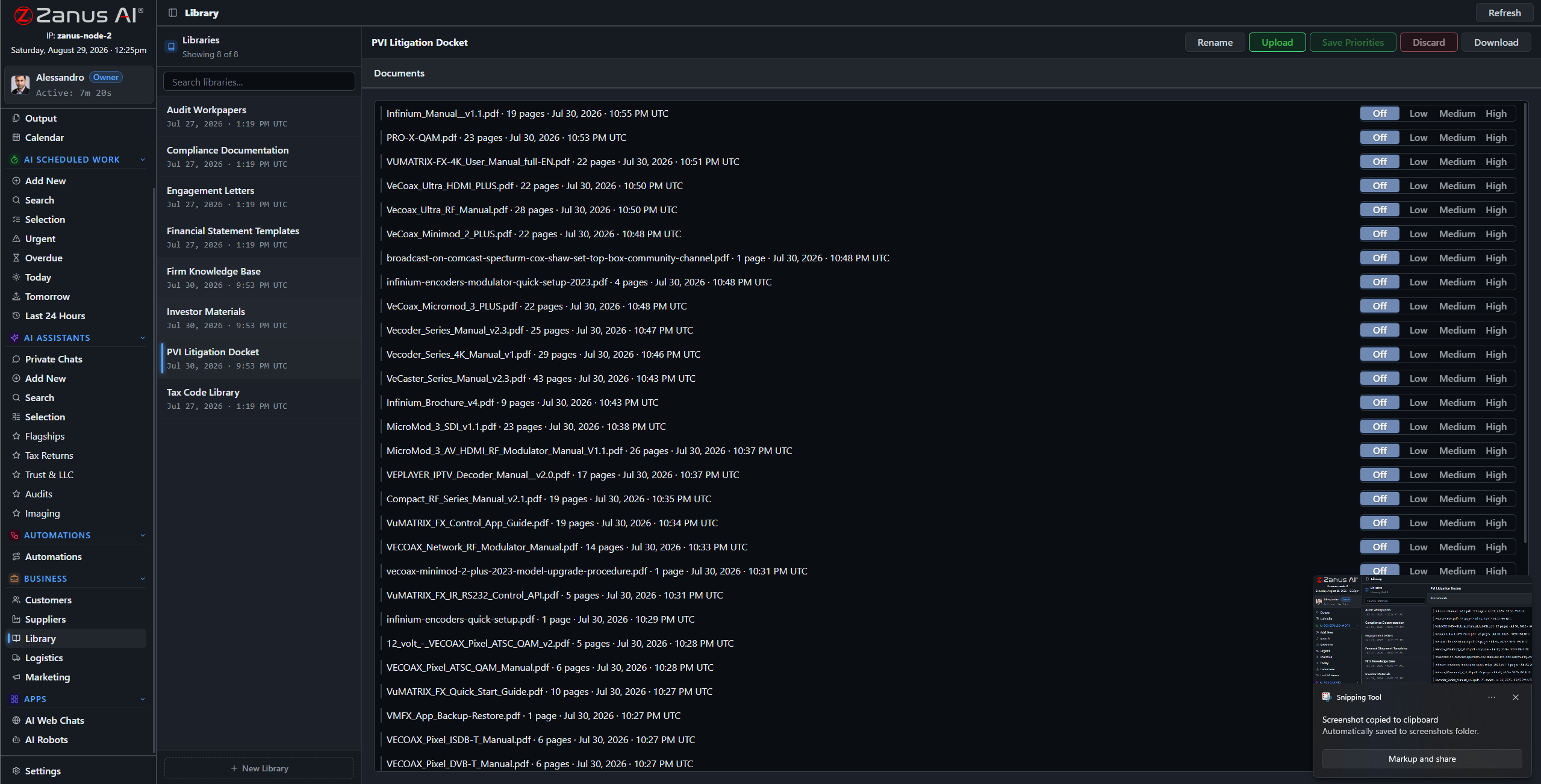
Libraries: current program manuals outrank old ones, final reports outrank drafts — you set the order.
What it does
PDFs, Word, spreadsheets, scanned agreements and event photos — the ingestion pipeline turns what the organization actually holds into queryable knowledge.
No source in your library, no claim: the AI cites the proposal, the report, the minutes — or says it cannot answer. Funders can check every number.
A volunteer asks about event logistics; the development director asks about a donor’s giving history: each gets answers scoped to their role, enforced server-side.
Institutional memory that survives turnover
“What did we promise the foundation in the 2022 grant?” “Which programs did the retiring ED launch?” “What were our outcomes the last time we ran this program?” The archive answers in seconds, with documents attached — even after the person who remembered has moved on.
- Plain-language questions across the archive
- Sources attached to every answer
- Priority order: final versions rule

Questions, answered
Who can see donor and beneficiary records?
Only roles you authorize. Permissions reach the field level and the server redacts what a user cannot see — even inside shared views and calendars.
Do our documents train outside models?
Never. Your tenant is isolated; your organization’s knowledge is yours alone — and the on-premises option keeps it physically inside your office.
See it working on YOUR mission — the demo IS the product.
ZANUS AI FOR NONPROFITS & NGOS — AI WORKFORCE
The staff member you could never budget for.
Assign work to the AI the way you assign it to staff: type, sources, deadline, priority. The monthly impact report, the weekly stewardship list, the quarterly grant-pipeline review — executed on schedule, with citations, under review.
Private tenant or your own server · your whole team · beneficiary data sovereignty
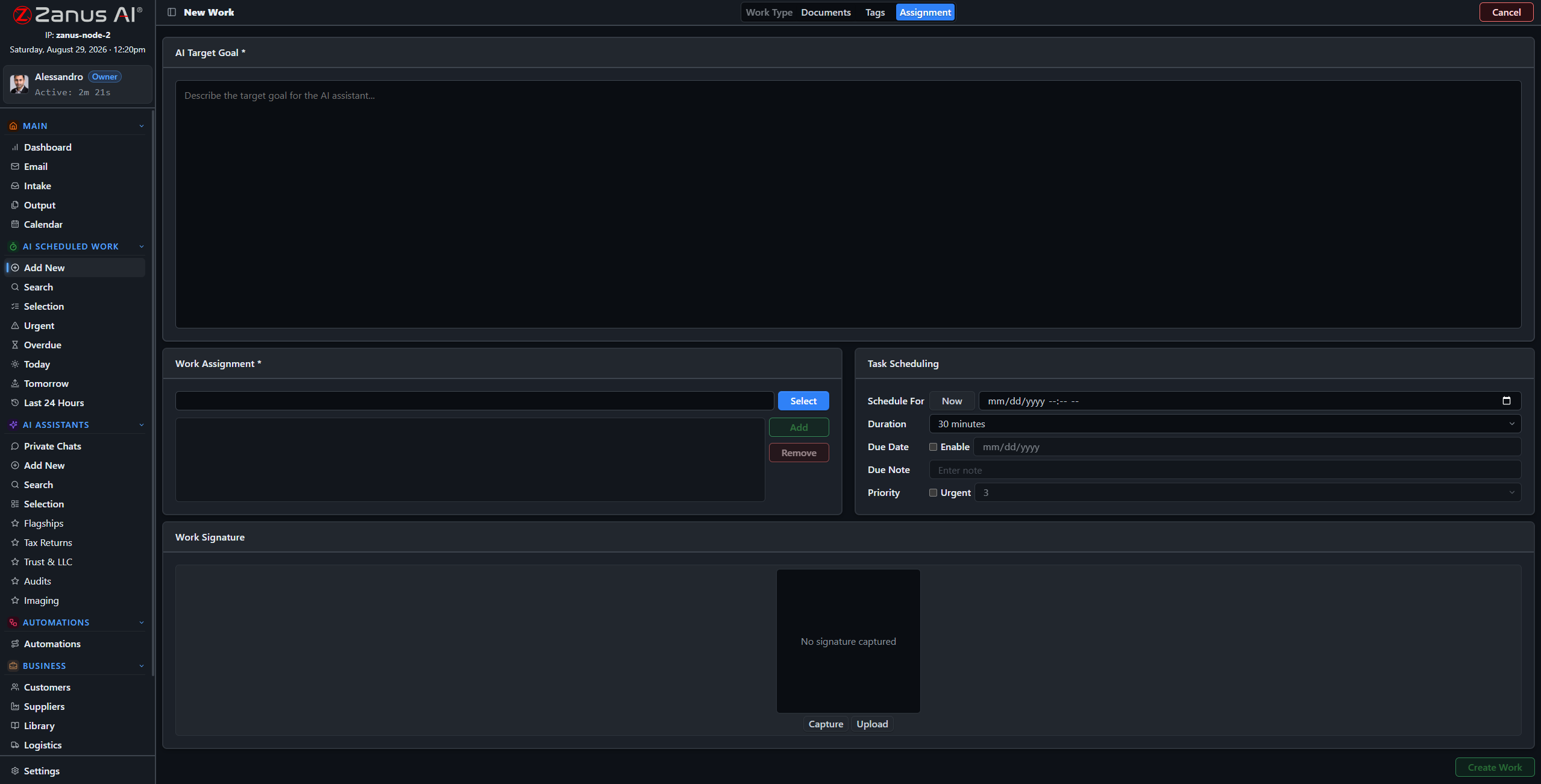
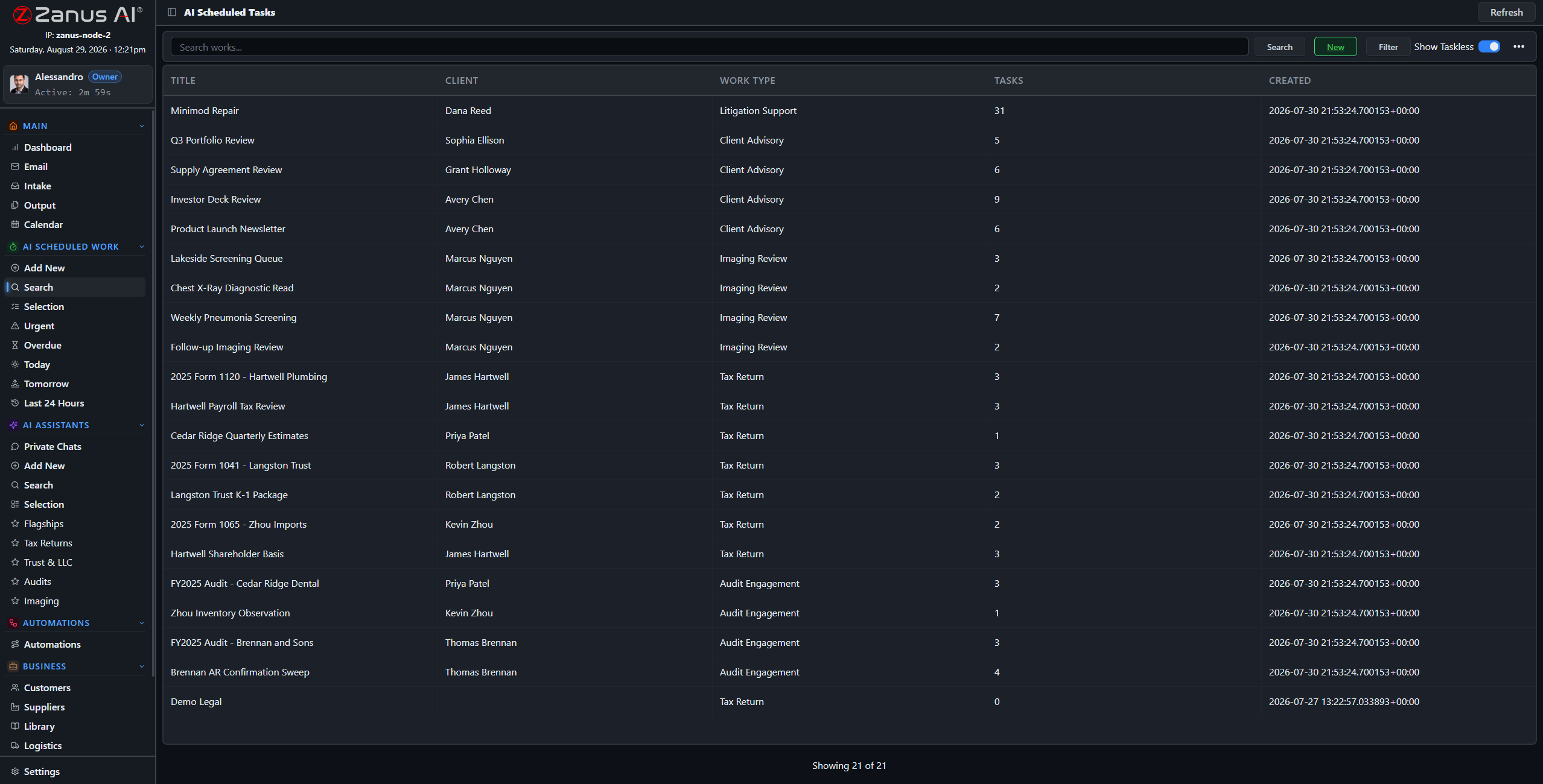
Four steps: work type, records and libraries, tags, schedule — the AI takes it from there.
What it does
Grant section, impact report, stewardship list, board summary: work types molded to your organization, with default libraries and examples per type.
The AI’s workload is managed like the team’s: one-click views show what is urgent, late, today and tomorrow — no deadline slips silently in reporting season.
Every work is a full session: reasoning streamed, sources cited, milestones tracked, linked to the funder record and the calendar.
The first of the month: the impact report is drafted
Set “Monthly Impact Report” once: on the first, the AI compiles the month’s program numbers, milestones and stories from your records, drafts the report in your template, and files it for review — before anyone has to chase the data across three spreadsheets.
- Recurring schedules for periodic mission work
- Every figure cited to program records
- Report in Output, awaiting sign-off
Questions, answered
Can we supervise mid-work?
Yes — open any session, read the reasoning, redirect it, or stop it. The AI works like staff: visible, accountable, interruptible.
What volume can it handle?
It does not get tired: the constraint is your review capacity, not the AI’s. Configurations size from a three-person shop to a multi-country NGO.
See it working on YOUR mission — the demo IS the product.
ZANUS AI FOR NONPROFITS & NGOS — PROGRAMS & POLICIES
The program manual, alive.
Procedures only protect when people can find them — especially the volunteer on their first shift. In Zanus, intake procedures, volunteer policies and program manuals are living documents: answerable in chat, attached to work, priority-ordered so the current version always wins.
Private tenant or your own server · your whole team · beneficiary data sovereignty
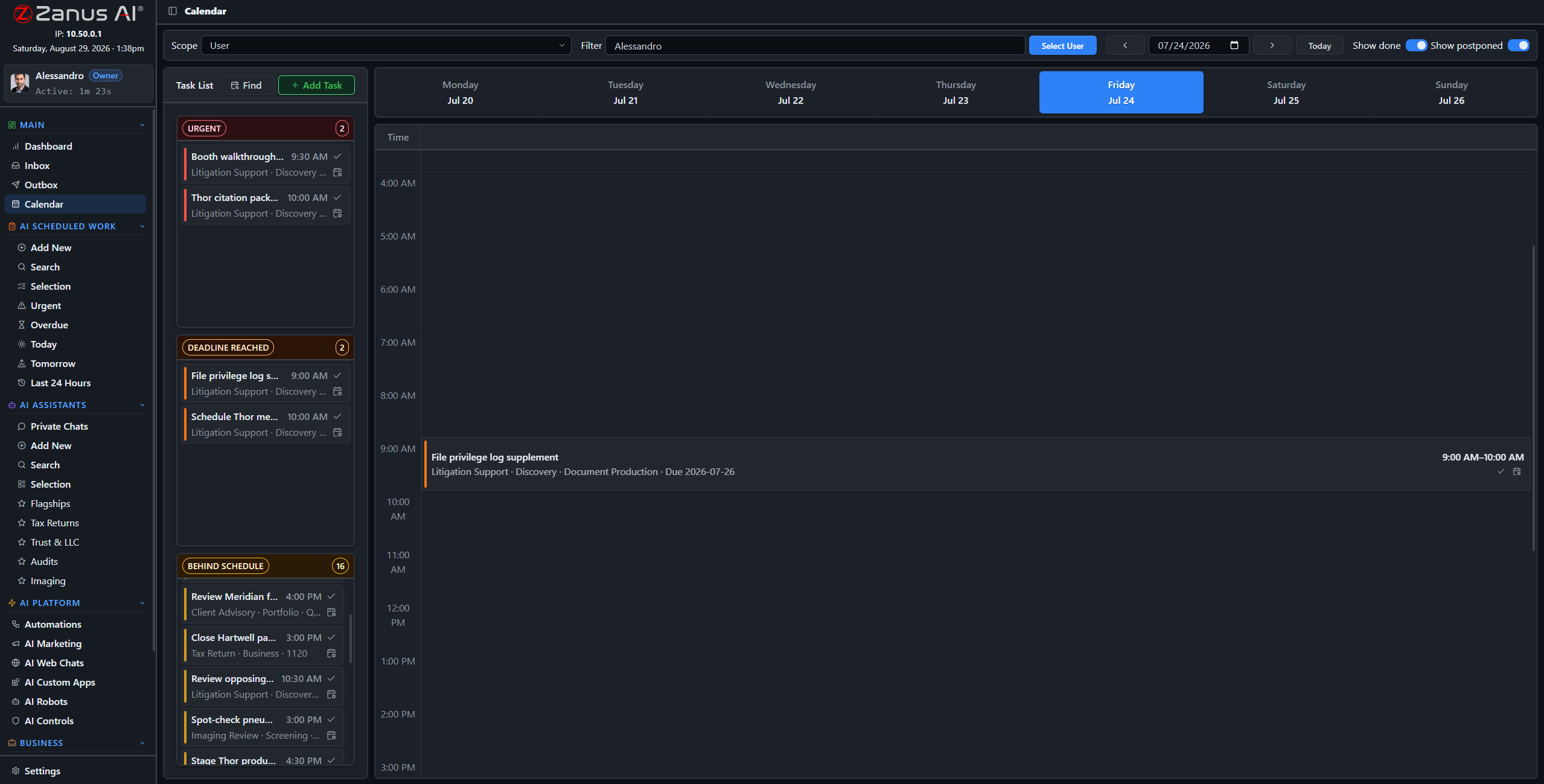
Manual upkeep, scheduled like program work: annual reviews and policy updates on the calendar.
What it does
Beneficiary intake steps, eligibility rules, volunteer conduct policies, safeguarding procedures: one library, current versions on top, superseded drafts outranked.
“What documents does a family need for intake?” — answered in seconds with the manual attached, to the front-desk volunteer on the busiest morning of the month.
Work types carry their default policies: the AI drafting a funder report reads from that funder’s reporting requirements — by construction.
Compliance upkeep, on the calendar
Annual policy reviews, expiration checks on volunteer screenings and insurance certificates, grant-condition summaries for program staff: assign them once as recurring AI work and the manual never goes stale on the shelf.
- Recurring review works with deadlines
- Update summaries drafted for staff briefings
- Every review on the audit record
Questions, answered
How do updates roll out?
Upload the new version, set it on top: from that moment every answer and every AI work cites the new policy. Old versions remain archived for audit.
See it working on YOUR mission — the demo IS the product.
ZANUS AI FOR NONPROFITS & NGOS — TEAM TRAINING
Volunteer turnover without mission turnover.
Volunteers rotate monthly, program staff wear every hat, and the grant that funded the last coordinator ended in June. New people learn your procedures from the AI, and everyone has an assistant that answers “how do we…?” instantly.
Private tenant or your own server · your whole team · beneficiary data sovereignty

Training lives inside the software: the AI walks each new person through the organization’s own procedures.
What it does
New volunteers and staff learn your intake steps, program rules, systems and policies through guided training — useful on their first shift, not their fifth.
“How do I log a food-pantry visit?” — asked to the assistant, answered from the program manual, without pulling the program manager off intake.
Private chats work on any device with a login — the how-to knowledge follows the volunteer to the warehouse, the outreach van or the front desk. Your whole team means everyone gets one.

The trainer that never tires of the question
The tenth “how do I record an in-kind donation?” gets the same patient, sourced answer as the first. Training material stays current automatically, because the assistant reads from the same living libraries as everything else.
- Answers cite the current manual
- Personal preset assistants per role
- Training progress visible to coordinators
Questions, answered
Does training content go stale?
No — the assistant answers from the live libraries. Update the program manual once and every future answer updates with it.
See it working on YOUR mission — the demo IS the product.
ZANUS AI FOR NONPROFITS & NGOS — AUTOMATIONS
The organization’s repetitive work, set once.
Describe the job in plain words — “when a donation arrives, draft the thank-you and update the stewardship record” — and it becomes connected blocks on a canvas, running on its own, with every run visible.
Private tenant or your own server · your whole team · beneficiary data sovereignty
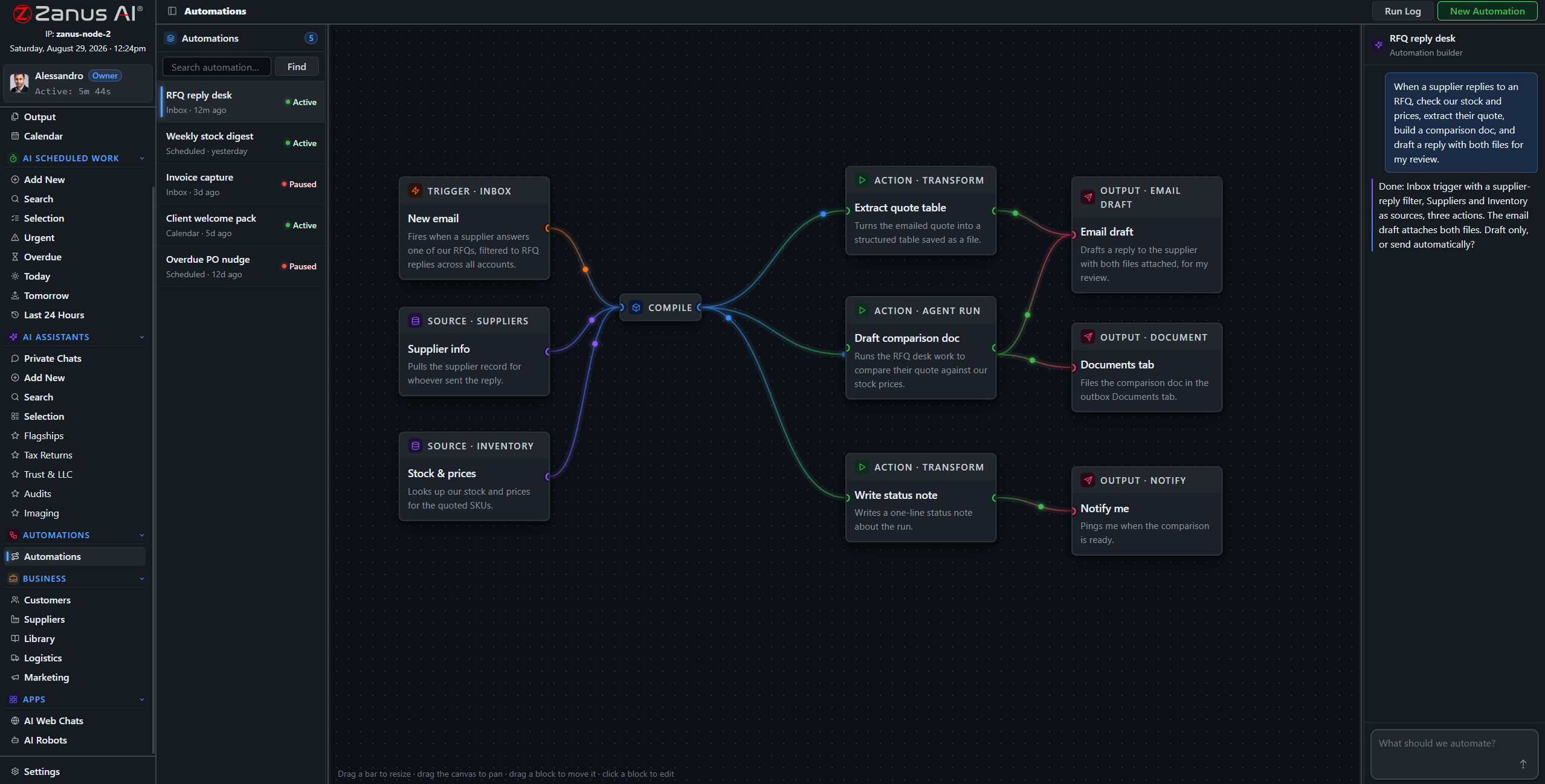
A real flow: donation trigger, record sources, AI compile, outputs — drawn from a description.
What it does
A gift arrives: the acknowledgment letter is drafted within the hour, personal to the donor’s history, queued for the development director’s signature — not for the pile.
Funder deadlines and report dates drawn from your records trigger reminders and draft the required documents ahead of time — queued for review, never remembered too late.
The monthly board summary, the quarterly funder report, the volunteer-hours tally: compiled by the AI, filed to Output, on time every time.
When something fails, you SEE it
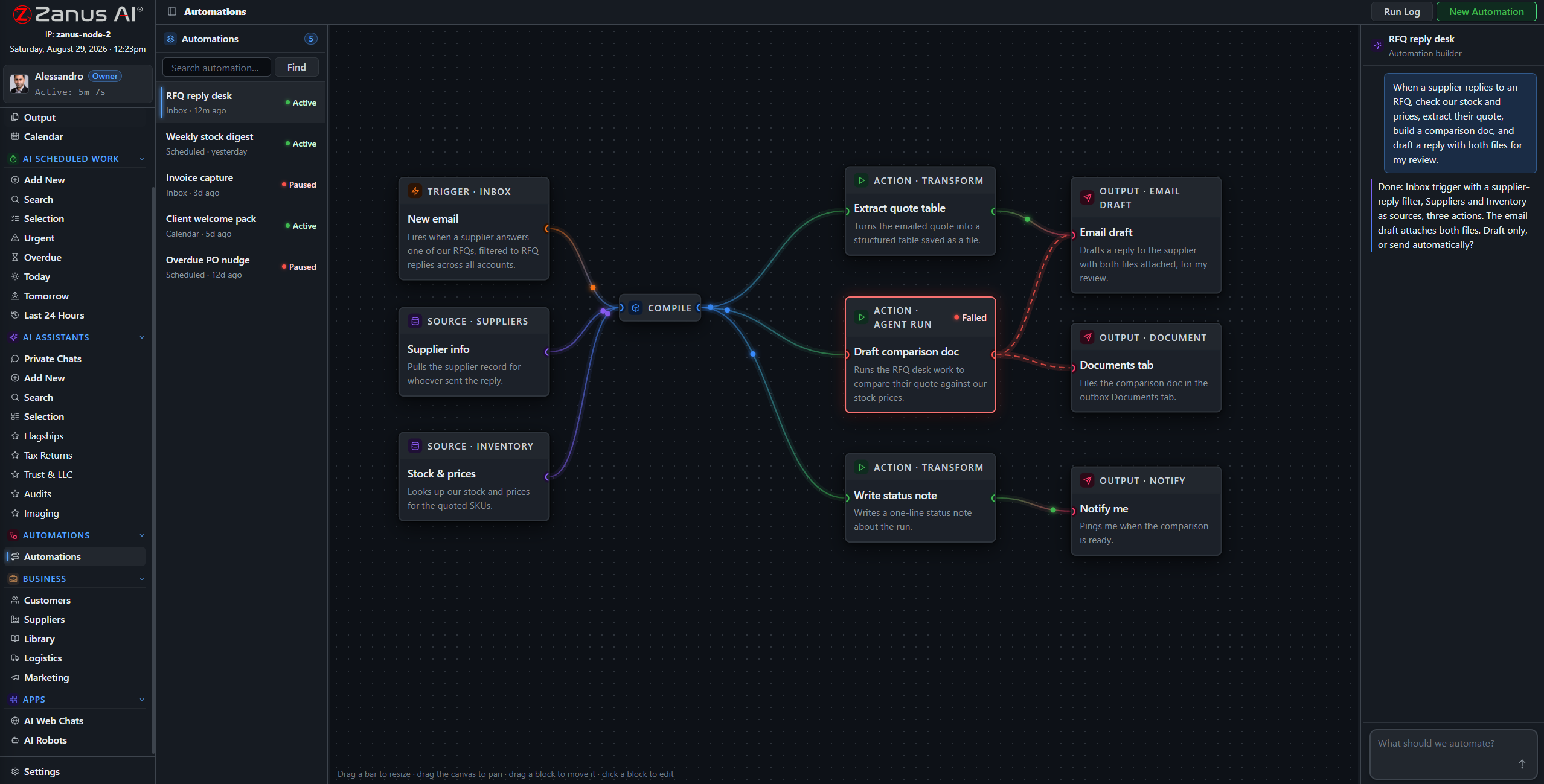
Run states live on the flow: green success, red failure on the exact block. When a funder deadline is in the chain, silent failures are not acceptable — here, nothing fails silently.
- Run log per automation
- One-click retry on failures
- Finished documents in Output, statused
Questions, answered
Who approves donor communications?
Your rules: queue everything for human approval, or auto-send only the categories you designate as safe. Acknowledgment letters typically wait for a real signature.
See it working on YOUR mission — the demo IS the product.
ZANUS AI FOR NONPROFITS & NGOS — DONOR STEWARDSHIP
Stewardship that never lets a donor lapse.
Thank-you letters, impact updates, appeal campaigns, lapsed-donor reactivation — drafted by the AI from your own records, in the donor’s language, queued for your approval. A development department’s output, on a development director’s budget.
Private tenant or your own server · your whole team · beneficiary data sovereignty
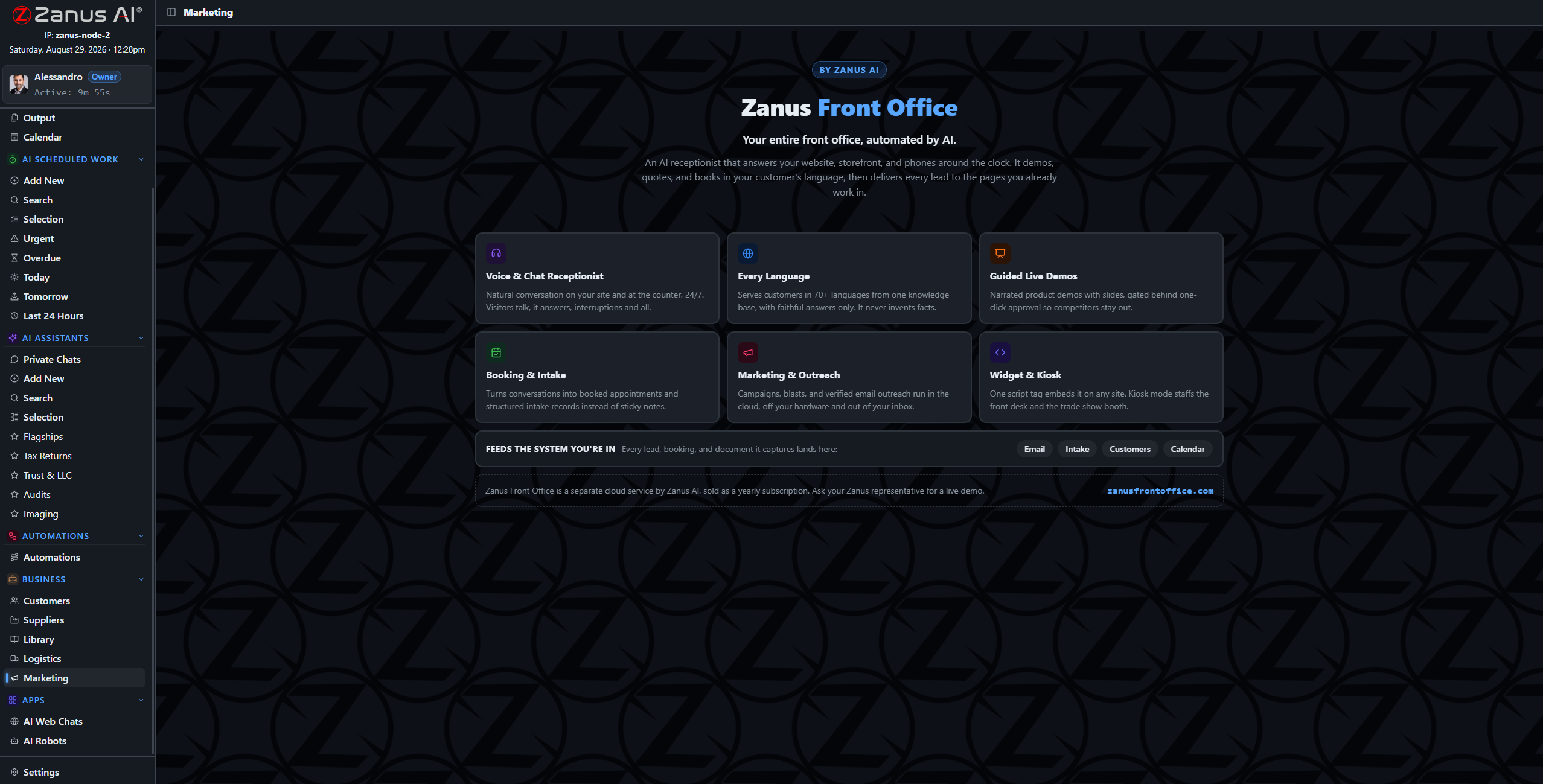
Campaigns and sequences drafted from the records — thank-yous, updates, appeals — awaiting approval.
What it does
Monthly givers, event attendees who never gave, donors lapsed 18 months: audiences built from your own categories and dates — no exporting the donor list to a third-party tool.
Updates written from your real program data — what her gift actually did — warm, specific, in your organization’s voice, in the donor’s language.
Opt-outs and contact preferences are enforced by the system, not by memory. Every send is on the record.
From the records to the campaign, without export
The donor data, the impact numbers and the sending all live in the same system — nothing leaves your tenant to reach a mailing platform. “Send every 2023 donor the housing program update with their giving summary” becomes a drafted, scheduled campaign in minutes.
- Audiences from your own data — private by architecture
- Campaigns and sequences drafted for review
- Reactivation sequences for lapsed donors, approval-first

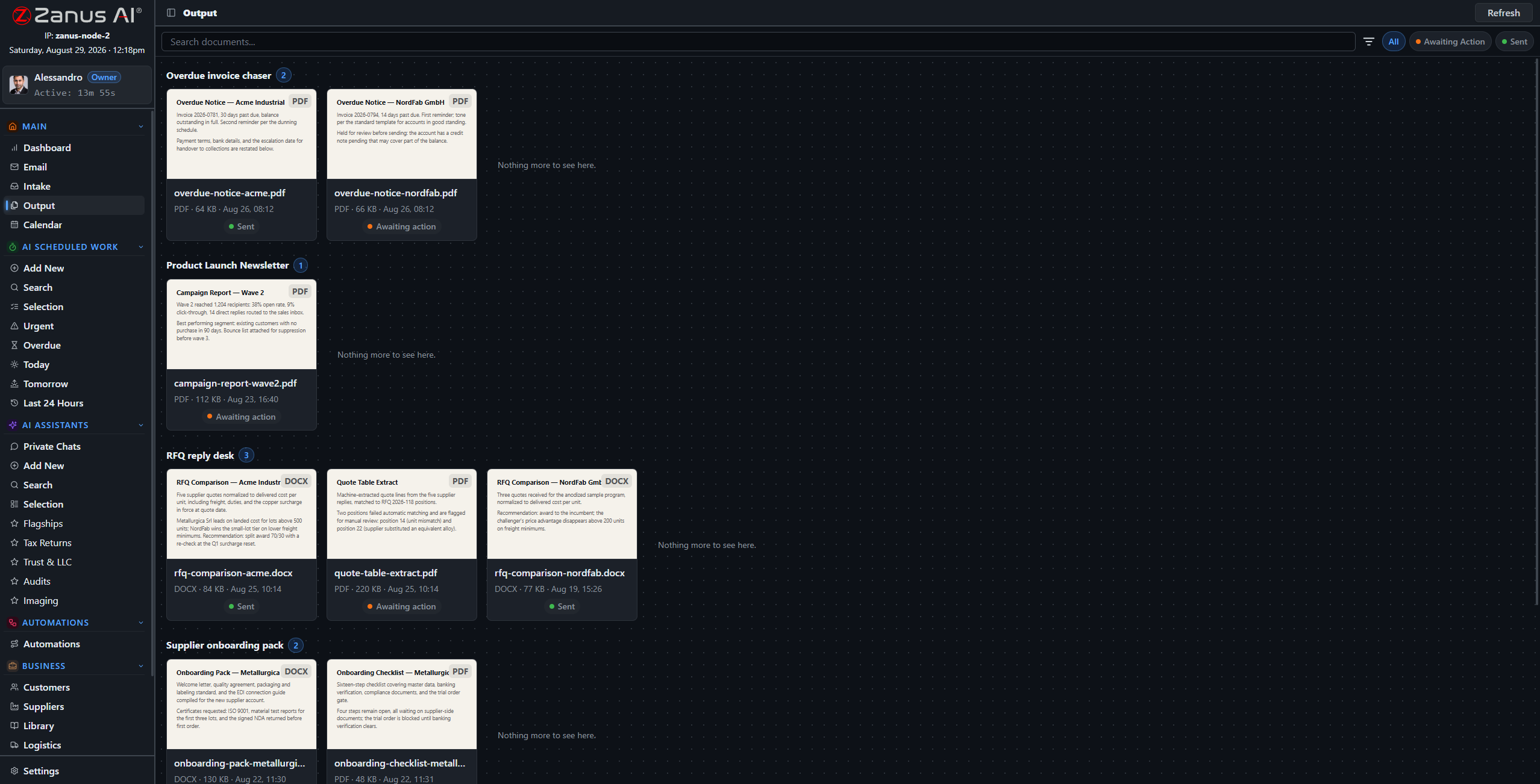
Approval first, always
Every outbound donor communication lands in the approval queue unless you designate the category as auto-send. The development director stays in control of every word that reaches a donor.
- Approval workflow per communication type
- Full history of what was sent to whom
- Results tracked: replies, gifts, reactivations
Questions, answered
Can it personalize at real scale?
Yes — each draft draws on that donor’s own history and the programs they supported, so five hundred letters are five hundred letters, not one letter five hundred times. All queued for approval.
Does donor data leave our system?
No. Audiences, content and sending happen inside your tenant — donor data never travels to an outside marketing platform.
See it working on YOUR mission — the demo IS the product.
ZANUS AI FOR NONPROFITS & NGOS — CRM & INTEGRATIONS
Keep your donor CRM. Add the intelligence.
Your donor CRM stays the system of record. Zanus becomes the system of work: API connectors sync donors, gifts and documents both ways, the intake pipeline files what arrives, and AI-drafted letters and reports flow back where they belong. No rip and replace.
Private tenant or your own server · your whole team · beneficiary data sovereignty

No rip and replace: the CRM, accounting and program tools stay — the AI layer connects to all of them.
What it does
Donors, gifts and campaigns mapped field by field, with a dry-run preview before anything writes — push, pull or two-way, your choice.
Grant budgets, expense reports and program data route through the intake pipeline — so the funder report the AI drafts reconciles with the books.
A full API for whatever else the organization runs: volunteer platforms, event tools, case management — data in, results out, under scoped keys.
One question across all your systems
The donor lives in the CRM, the grant budget in accounting, the outcomes in the program tracker — and the AI reads across all of it. “What have we not yet reported to this funder?” becomes one question with one grounded answer.
- Field mapping with dry-run preview
- Each system stays master of its own records
- Every sync event on the audit record
- External systems appear as blocks on the automation canvas
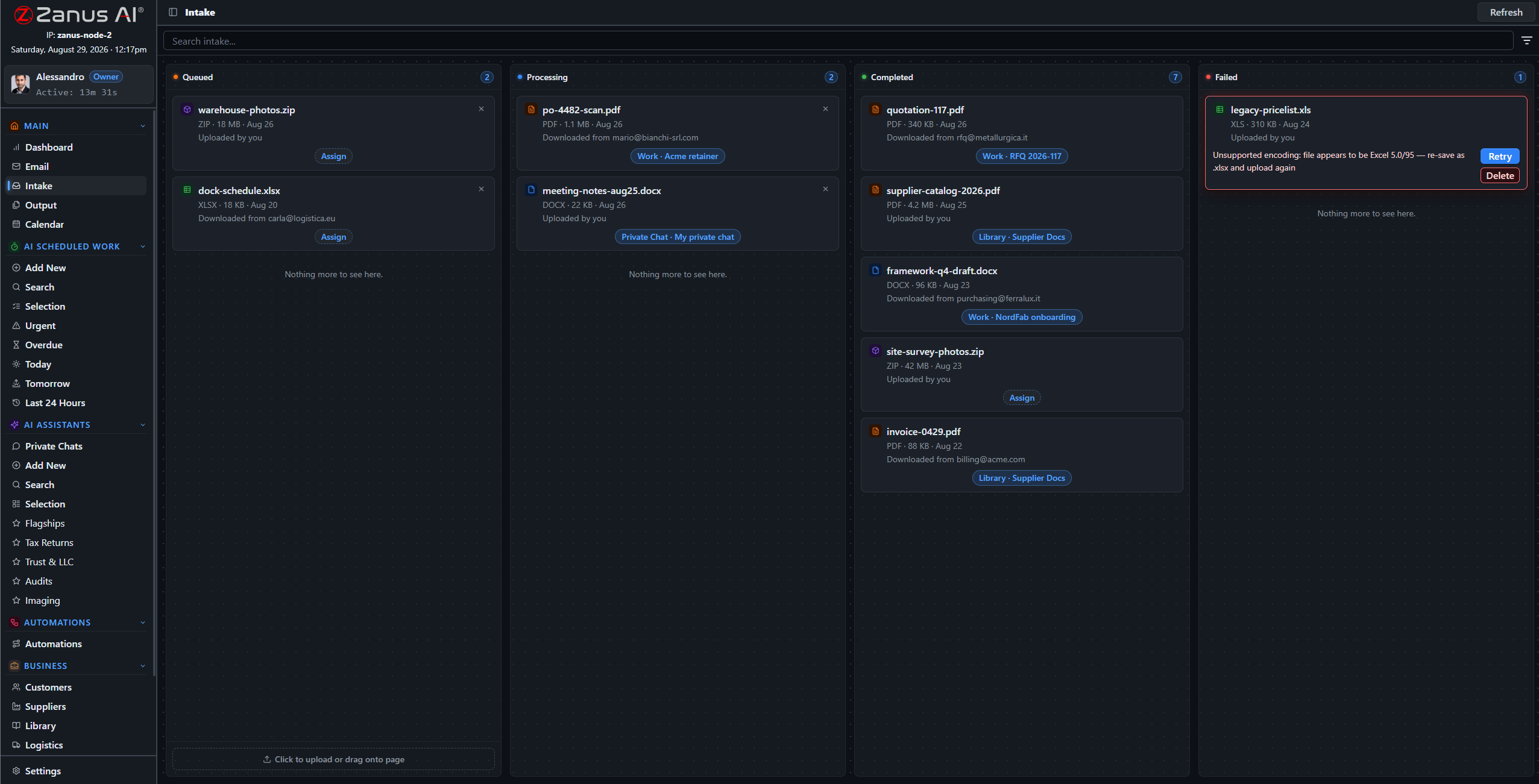
Documents flow back where they belong
The acknowledgment the AI drafted, the funder report, the board packet: finished documents return to the donor or grant record in your CRM through the same connectors — approved by your staff first.
- AI output filed back to the CRM record
- Approval workflow before anything writes back
- Webhooks notify your systems in real time
Questions, answered
Which donor CRMs do you support?
Connectors are mapped per deployment — bring your CRM to the demo and we walk through the exact integration path for your system.
Does donor or beneficiary data pass through third parties?
No. The connectors run inside your tenant — or inside your office on the on-premises option. Data moves directly between your systems.
See it working on YOUR mission — the demo IS the product.
ZANUS AI FOR NONPROFITS & NGOS — DATA SOVEREIGNTY
Built like the people you serve depend on it.
Beneficiary case details, donor giving histories, board deliberations: a nonprofit holds data that vulnerable people and generous people both trusted it with. The answer is architecture: permissions to the field level, server-side redaction, a searchable audit trail, and an on-premises option where nothing touches the internet.
Private tenant or your own server · your whole team · beneficiary data sovereignty
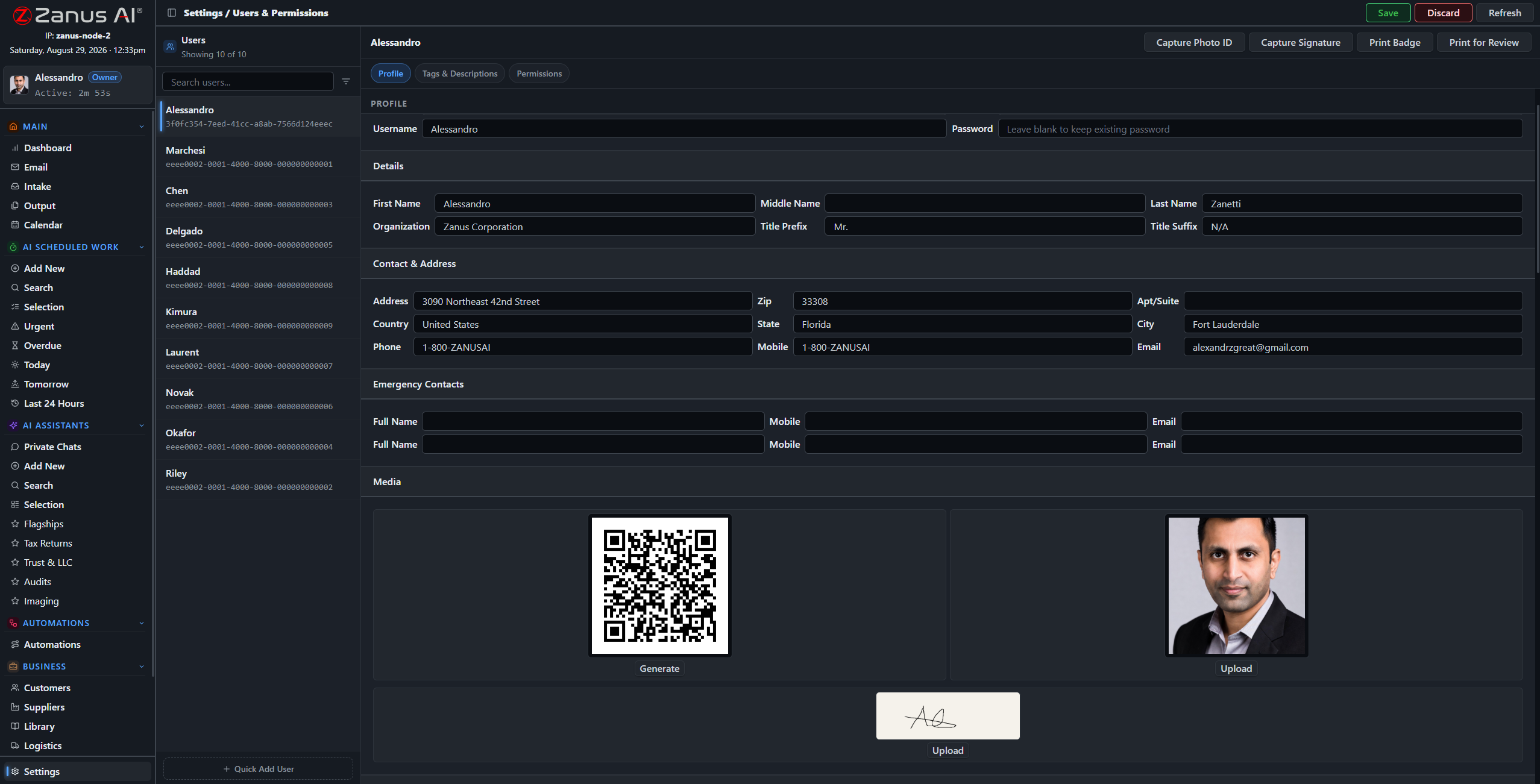
One record per user: role, tags, and granular permissions over every domain of the system.
What it does
The server redacts what a role cannot see — the events volunteer sees the RSVP list, not the giving history; program staff see their program’s beneficiaries, not everyone’s.
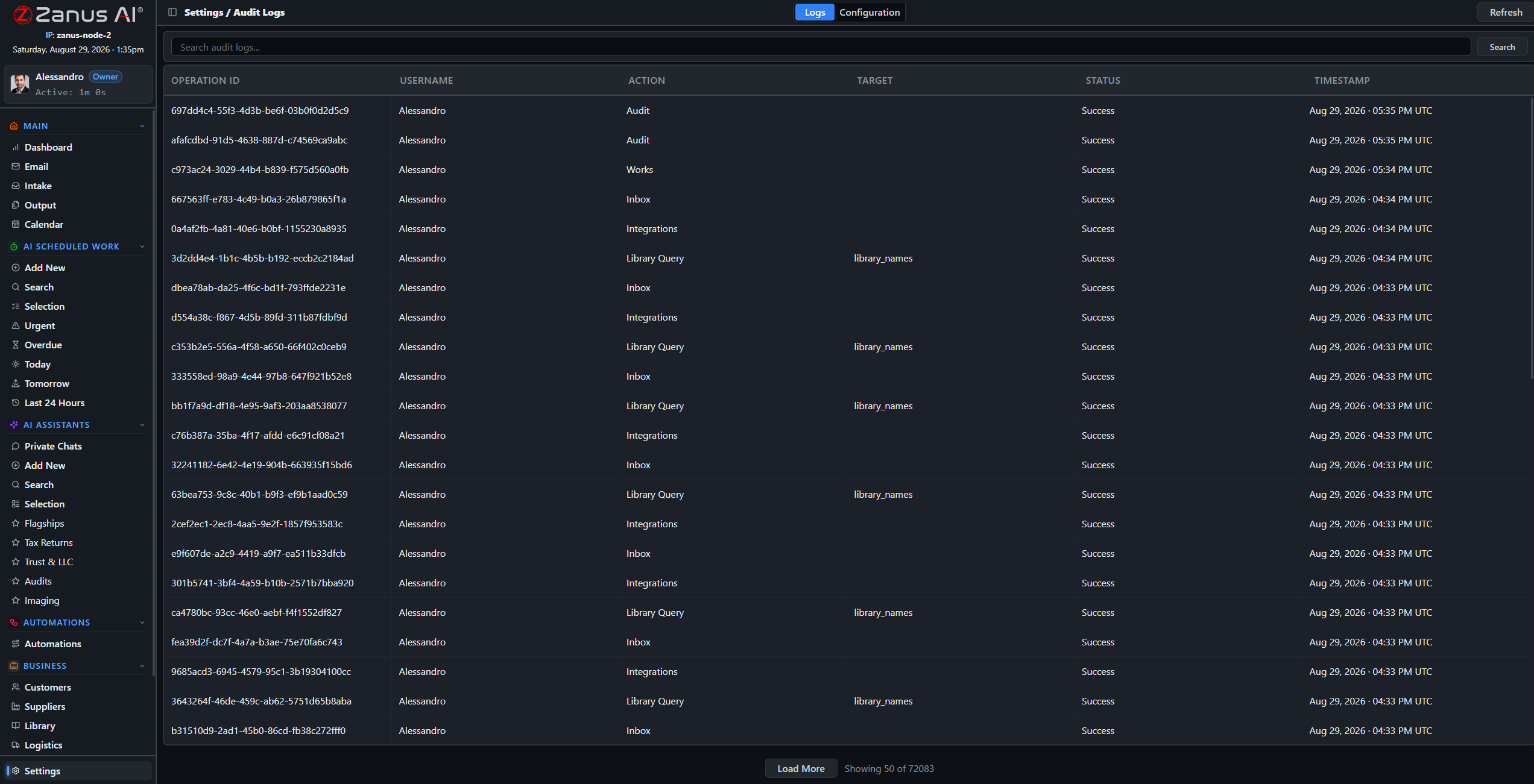
A searchable log of every audited action, with configurable categories: who saw what record, who changed what, when — the accountability funders and boards ask about.
Your tenant is isolated — beneficiary and donor data never train outside models. Five-level workgroups map programs and chapters; the on-premises option is air-gap capable.
The board’s data question, answered in minutes
When the question comes — from the board, a funder’s due diligence or a partner NGO — the answer is a search away: access records, document trails, update history, all in one place. Automatic pre-update snapshots mean even a mistaken change can be rolled back.
- Searchable audit trail
- Automatic pre-update snapshots with rollback
- USB updates for air-gapped deployments
Questions, answered
Where does beneficiary data live?
In your isolated tenant — never training outside models — or fully on-premises on hardware you own, physically incapable of internet exposure. Sovereignty is the design, not a setting.
We work under grant data-handling conditions — can this fit?
The architecture gives you the controls — isolation, field-level permissions, redaction, audit — and the specifics of each funder’s conditions are reviewed with your team during onboarding. Bring the grant agreement to the demo.
See it working on YOUR mission — the demo IS the product.
ZANUS AI FOR NONPROFITS & NGOS — LIVE DEMO
Do not watch a video.
Talk to your AI.
Big vendors show nonprofit demos as videos behind a form. Ours is the product itself, configured for nonprofits: open the chat below-right and try it — ask a program question, walk the grant-drafting workflow, book a meeting.
The conversation you have with us IS the demo
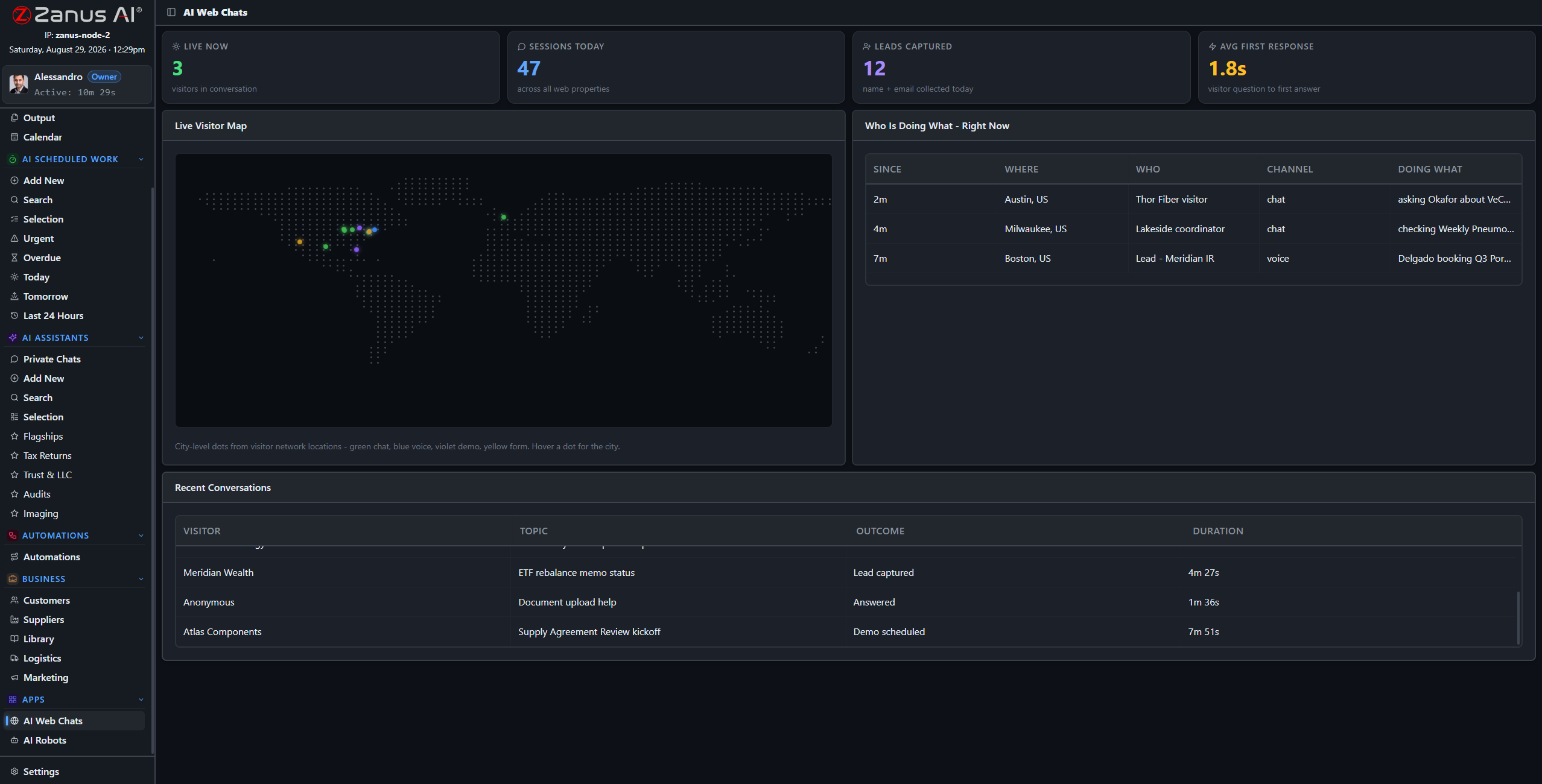
This screen is watching demos like yours happen: live conversations, outcomes, first response in seconds.
What it does
Ask the chat: “how do I set up a monthly donation?” — watch it answer, explain the options and offer the meeting, like your best development officer.
Ask: “how would you draft a grant application from our program history?” — it walks the workflow it would run in your tenant, grounded, cited, sign-off included.
The full demo loads a nonprofit tenant with sample records: grant drafts, stewardship sequences, impact reports — your world, working.
Or pick your exact business
Every link below is a full live-demo page for that specific business — its vocabulary, its calls, its booking rules.
Two minutes to your inbox
Request the demo and the interactive nonprofit demo arrives in about two minutes — no sales call, no calendar dance. Watch it, interrupt it with questions, and book the human conversation when YOU are ready.
- Interactive demo, nonprofit-configured
- Ask questions mid-demo — it answers and resumes
- In your inbox in ~2 minutes, free

Questions, answered
Is the demo really the product?
Yes — the same AI, configured with a sample nonprofit tenant. What you see is what your staff and volunteers get, with your documents instead of the samples.
See it working on YOUR mission — the demo IS the product.
Sharing with a colleague? 📄 Get the PDF · ✉️ Email this page ·