ZANUS AI FOR NONPROFITS & NGOS — DATA SOVEREIGNTY
Built like the people you serve depend on it.
Beneficiary case details, donor giving histories, board deliberations: a nonprofit holds data that vulnerable people and generous people both trusted it with. The answer is architecture: permissions to the field level, server-side redaction, a searchable audit trail, and an on-premises option where nothing touches the internet.
Private tenant or your own server · your whole team · beneficiary data sovereignty
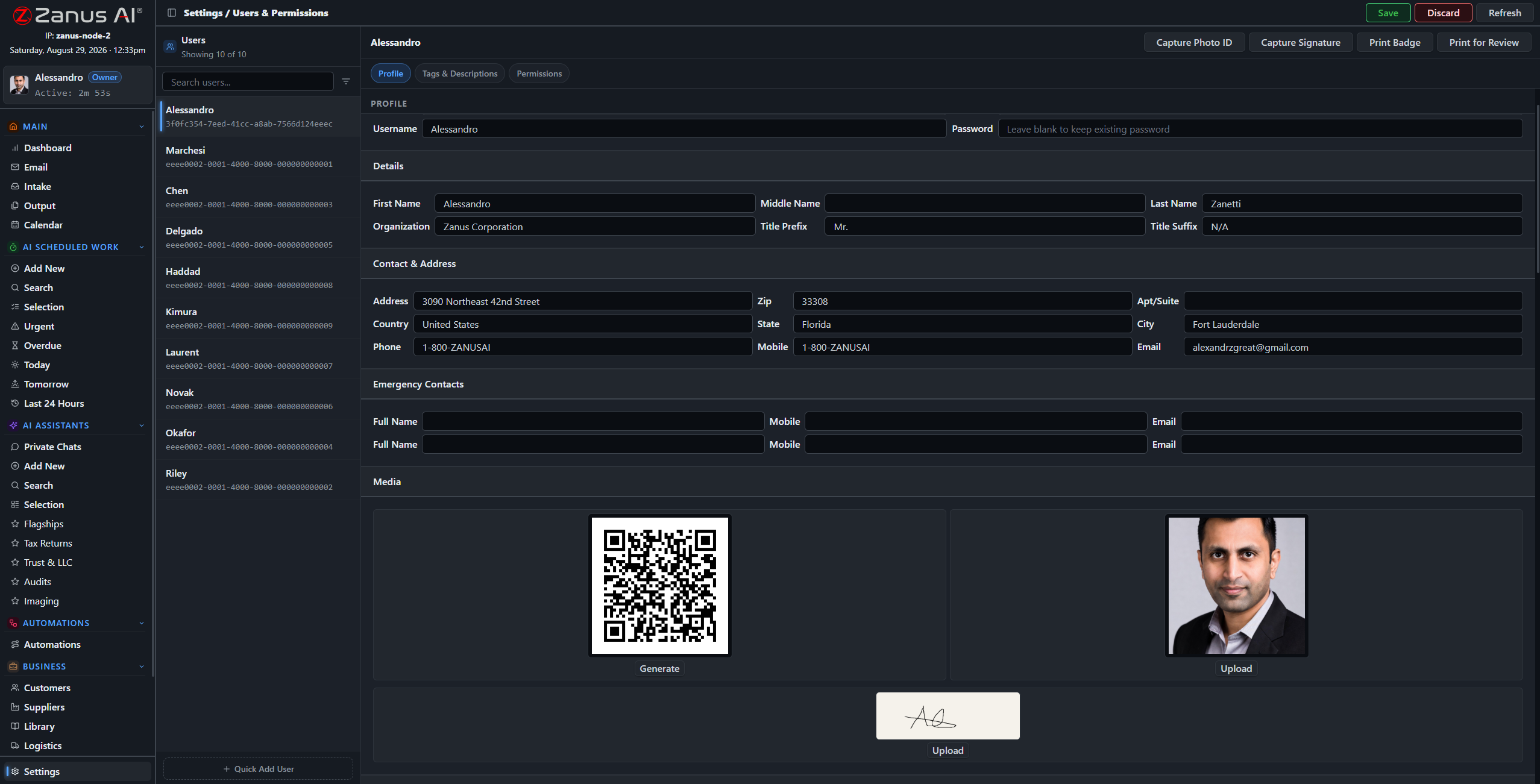
One record per user: role, tags, and granular permissions over every domain of the system.
What it does
The server redacts what a role cannot see — the events volunteer sees the RSVP list, not the giving history; program staff see their program’s beneficiaries, not everyone’s.
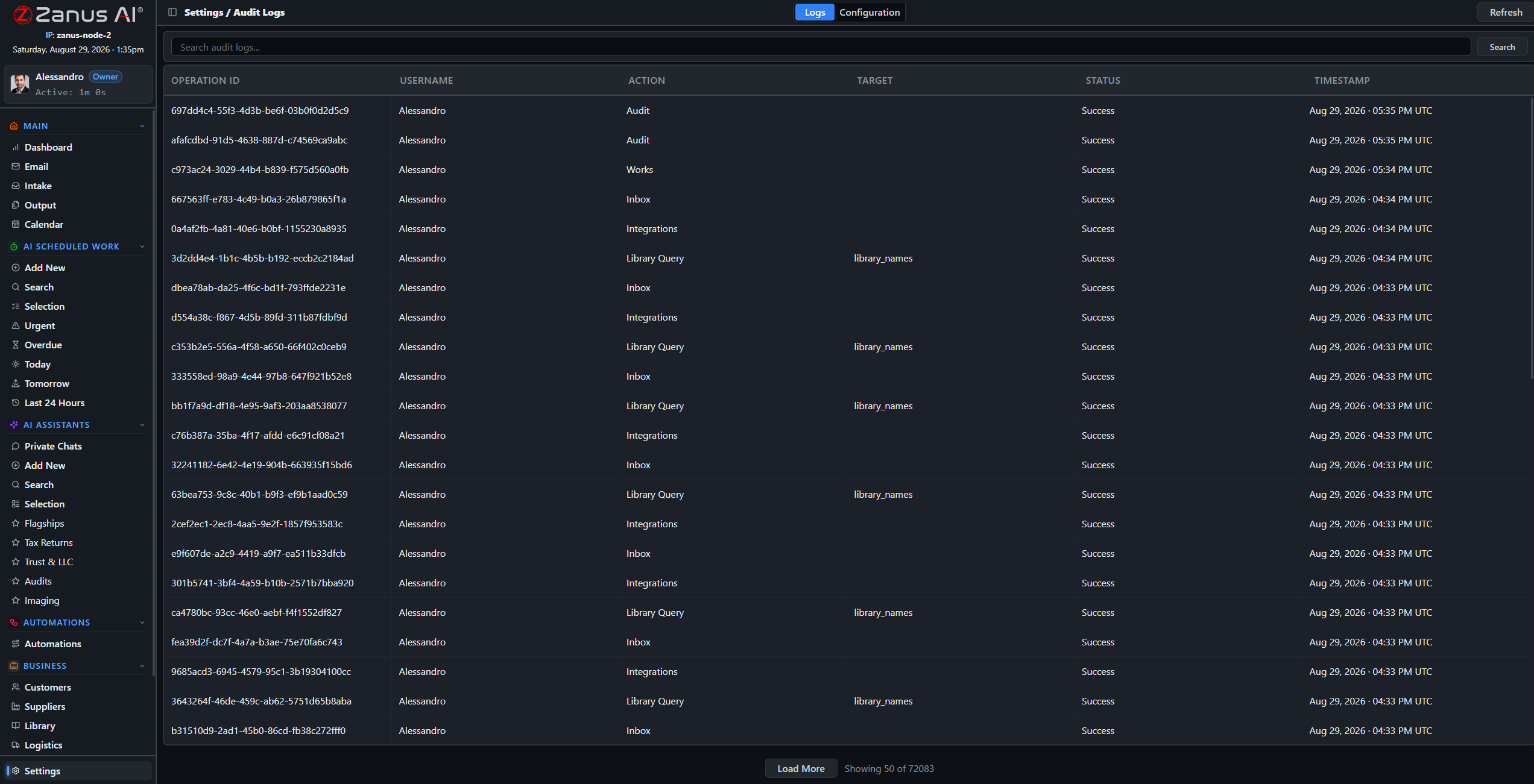
A searchable log of every audited action, with configurable categories: who saw what record, who changed what, when — the accountability funders and boards ask about.
Your tenant is isolated — beneficiary and donor data never train outside models. Five-level workgroups map programs and chapters; the on-premises option is air-gap capable.
The board’s data question, answered in minutes
When the question comes — from the board, a funder’s due diligence or a partner NGO — the answer is a search away: access records, document trails, update history, all in one place. Automatic pre-update snapshots mean even a mistaken change can be rolled back.
- Searchable audit trail
- Automatic pre-update snapshots with rollback
- USB updates for air-gapped deployments
Questions, answered
Where does beneficiary data live?
In your isolated tenant — never training outside models — or fully on-premises on hardware you own, physically incapable of internet exposure. Sovereignty is the design, not a setting.
We work under grant data-handling conditions — can this fit?
The architecture gives you the controls — isolation, field-level permissions, redaction, audit — and the specifics of each funder’s conditions are reviewed with your team during onboarding. Bring the grant agreement to the demo.
See it working on YOUR mission — the demo IS the product.
← Previous: CRM & Integrations · Sharing with a colleague? 📄 Get the PDF · ✉️ Email this page ·