ZANUS AI FOR LAW FIRMS — CASE FILES
Ask the file. It answers, cited.
Pleadings, discovery, deposition transcripts, contracts, the firm’s precedent bank — loaded into curated libraries the AI reads from. Ask in plain language; get the answer with the document and page attached, scoped to who is allowed to ask.
Private tenant or your own server · your whole team · privilege-conscious architecture
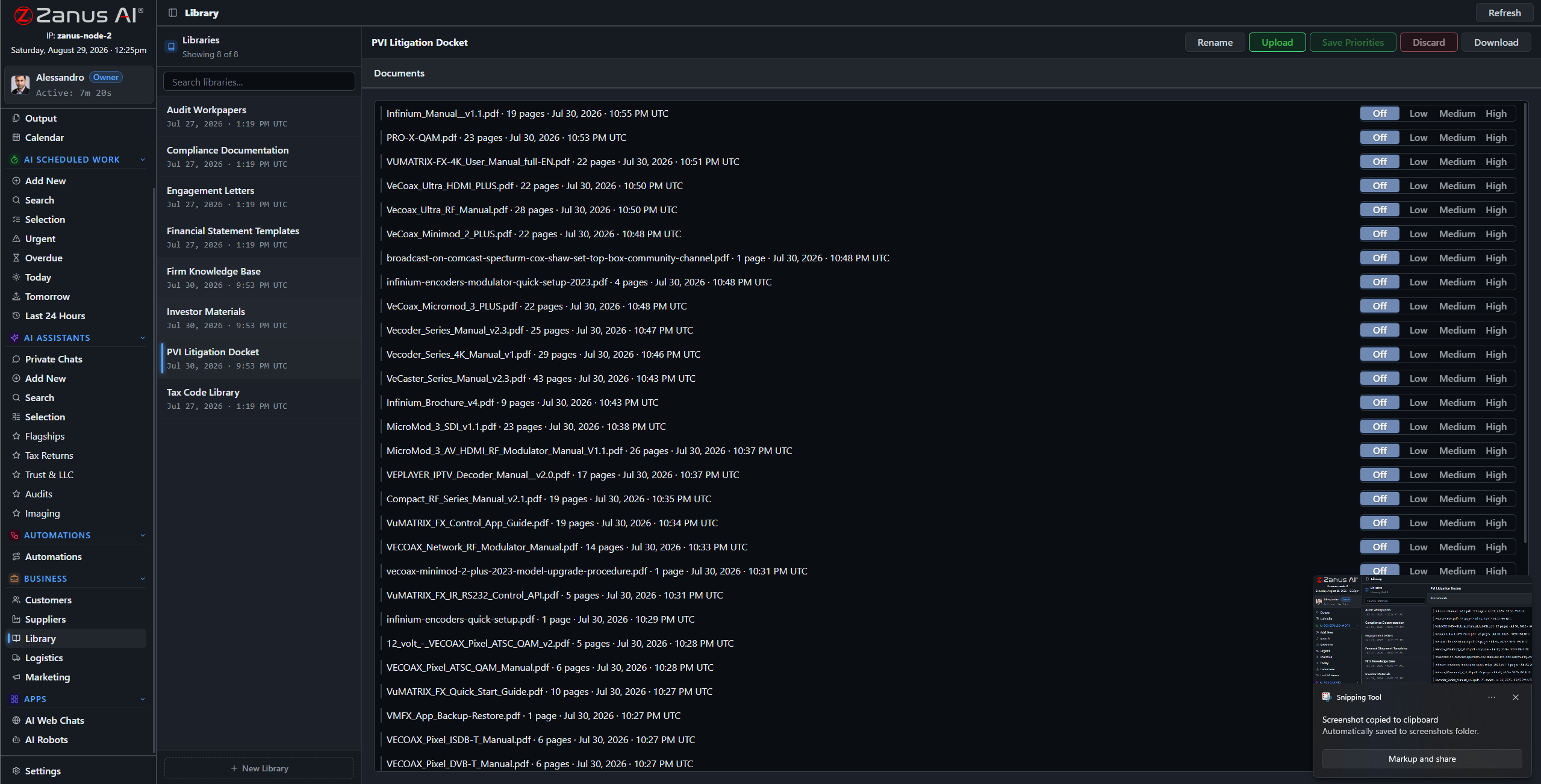
Libraries in priority order: executed agreements outrank drafts, current precedents outrank superseded ones.
What it does
PDFs, Word, scanned exhibits, faxed correspondence from 2009, hearing audio — the ingestion pipeline turns the banker’s boxes into queryable knowledge.
The AI cites the pleading, the transcript page, the contract clause — or says the answer is not in the file. In litigation, an invented citation is malpractice fuel; here it is structurally blocked.
The paralegal on the matter sees the matter; the associate on the other side of an ethical wall sees nothing — enforced server-side, not by folder etiquette.
Institutional memory, one question away
“Have we ever litigated against this expert?” “What did we argue in the 2021 non-compete appeal?” “Which engagement letters contain the arbitration clause?” The firm’s history answers in seconds with documents attached — instead of depending on which partner remembers.
- Plain-language questions across decades of matters
- Source documents attached to every answer
- Priority order: executed and current versions win

Questions, answered
Who can see a matter’s documents?
Only the roles and workgroups you authorize — ethical walls are workgroups, permissions reach the field level, and the server redacts what a user cannot see, even in shared calendars and searches.
Do our files train outside models?
Never. Your tenant is isolated; the firm’s knowledge is the firm’s alone — and the on-premises option keeps it physically inside your office.
See it working on YOUR firm — the demo IS the product.
← Previous: Back Office · Sharing with a colleague? 📄 Get the PDF · ✉️ Email this page ·