ZANUS AI FOR LAW FIRMS — PRIVILEGE
Built like privilege depends on it.
Client confidentiality is not a policy PDF — here it is the architecture. Admin-created accounts, matter walls as workgroups, permissions to the field level, server-side redaction, a searchable audit trail, and an on-premises option where files never touch the internet.
Private tenant or your own server · your whole team · privilege-conscious architecture
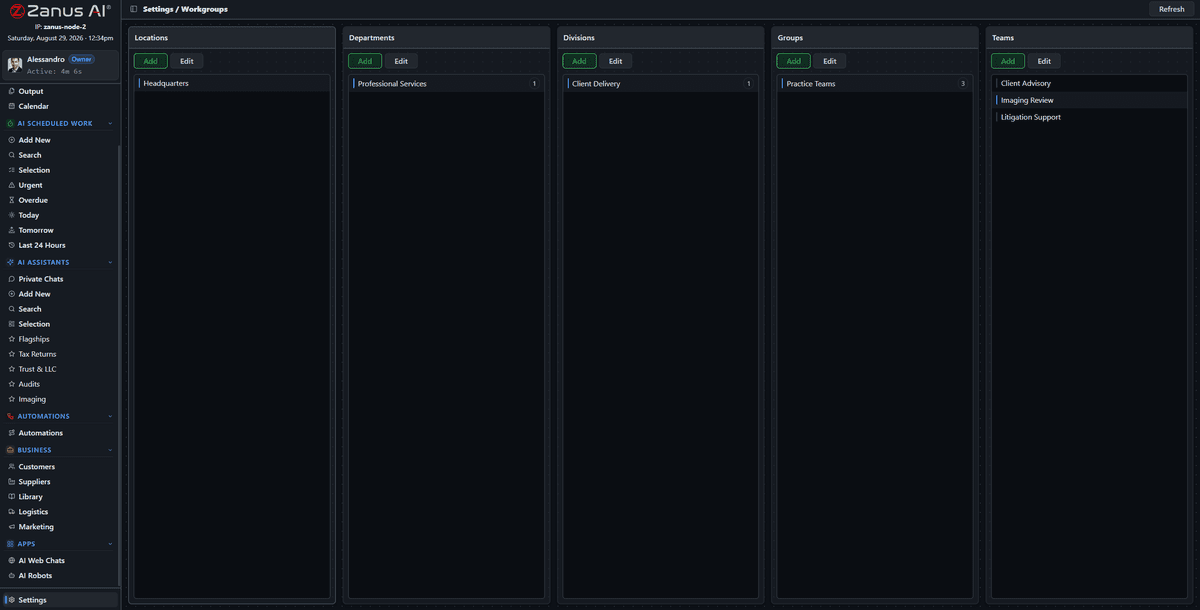
Five-level workgroups: offices, practice groups and walled matters — access shaped exactly to the engagement.
What it does
A screened attorney does not see the walled matter — not in search, not in calendars, not in AI answers. The server redacts it before it leaves the database.
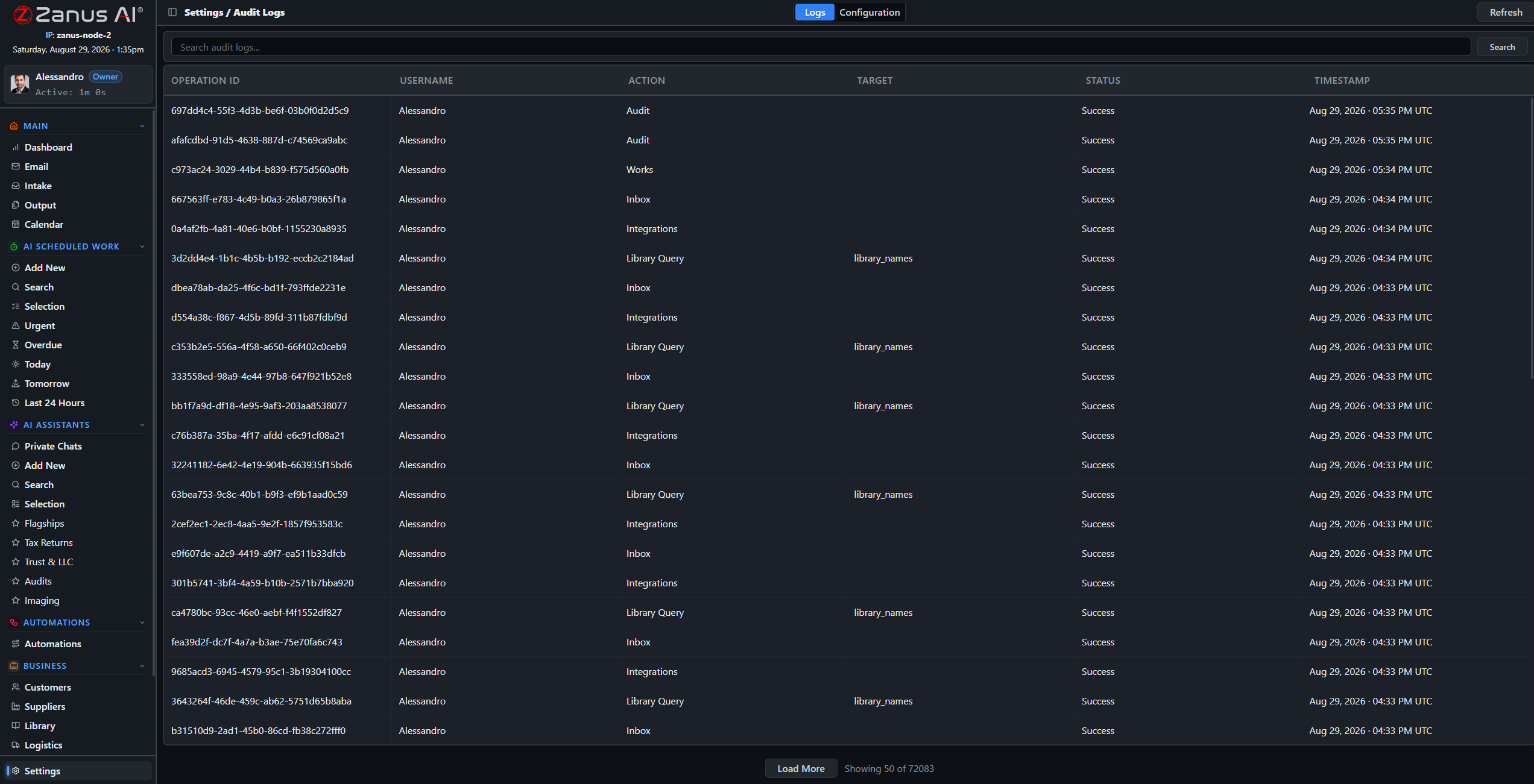
A searchable log of every audited action: who opened the file, who changed the draft, when — the answer to “who saw this?” in minutes, not a forensics engagement.
Your tenant is isolated: client files never train outside models. The on-premises option puts the entire system on hardware the firm owns, air-gap capable.
When the client audits the firm
Corporate clients increasingly ask law firms hard security questions. The answers are built in: isolated tenant or owned hardware, field-level access control, server-side redaction, audit trail, pre-update snapshots with rollback — walk their questionnaire through the architecture.
- Searchable audit trail with configurable categories
- Automatic pre-update snapshots with rollback
- USB updates for air-gapped deployments
Questions, answered
Does using AI waive privilege?
The architecture is built to support confidentiality: isolated tenant, no outside model training, access walls, audit trail — or fully on-premises where files never leave the office. How that maps to privilege doctrine in your jurisdiction is a question for your ethics counsel — bring them to the demo.
Can we run conflicts and walls across offices?
Yes — five-level workgroups model offices, practice groups and individual walled matters, and permissions reach the field level within them.
See it working on YOUR firm — the demo IS the product.
← Previous: DMS & Integrations · Sharing with a colleague? 📄 Get the PDF · ✉️ Email this page ·