ZANUS AI FOR TELECOMMUNICATIONS — NETWORK DOCS
Twenty years of fault tickets. One question.
Runbooks, MOPs, fault histories, tower and site records, splice documentation, vendor manuals — loaded into curated libraries the AI reads from. Ask in plain language; get the answer with the source cited, at the permission level of whoever asks.
Private tenant or your own server · your whole team · subscriber data isolated by architecture
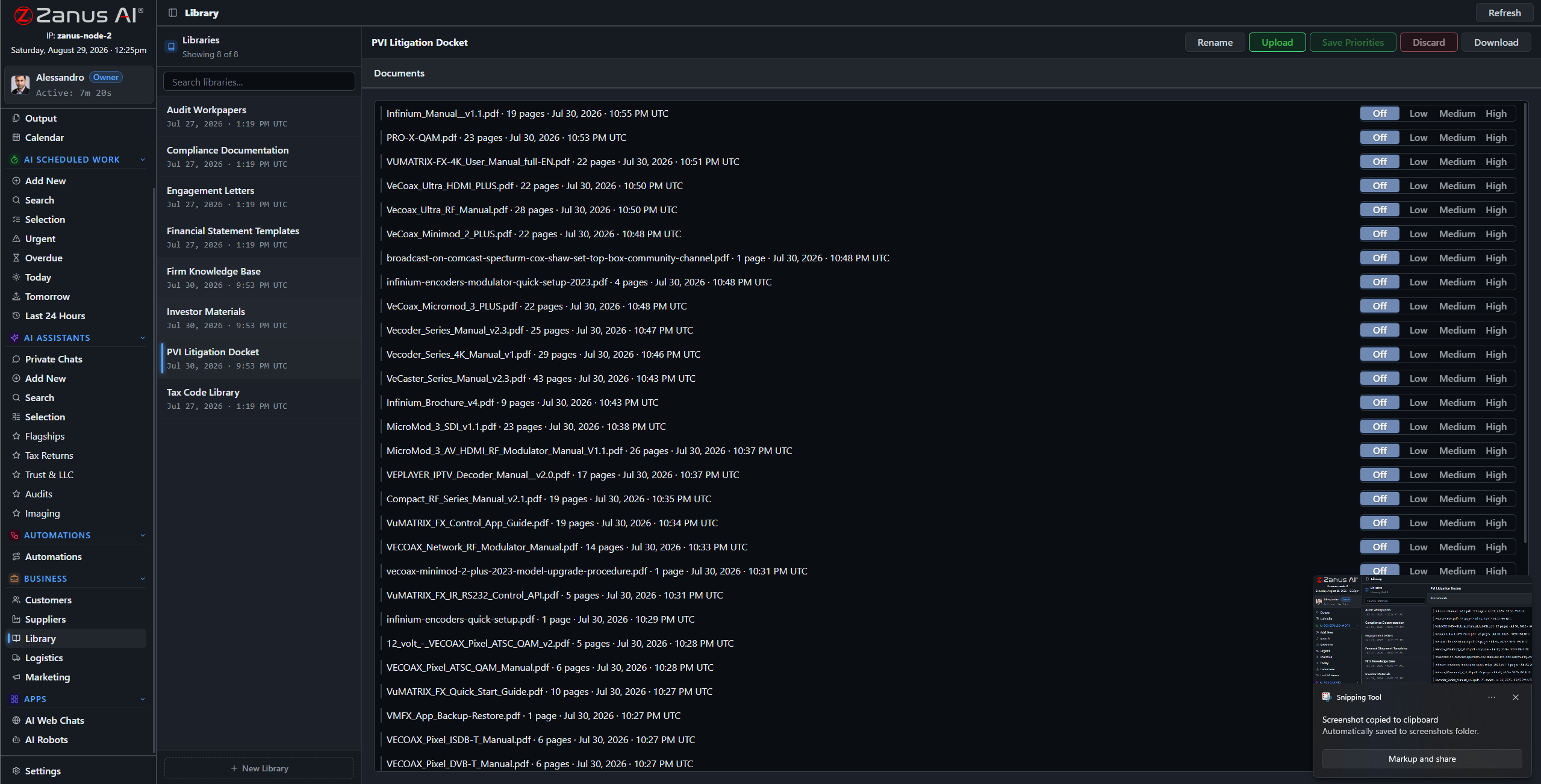
Libraries: current MOPs outrank drafts, as-built records outrank proposals — you set the order.
What it does
PDFs, spreadsheets, scanned site surveys, network diagrams and media — the ingestion pipeline turns what the operation has accumulated into queryable knowledge.
No source in your library, no claim: the AI cites the runbook, the ticket, the site record — or says it cannot answer. Guesswork is not an option on a network.
The contractor asks about one site; the senior engineer asks across the region: each gets answers scoped to their role, enforced server-side.
“Have we seen this fault before?”
The 3 AM question that used to mean an hour of searching old tickets: now the fault history answers in seconds, with the matching incidents and their resolutions attached — and the on-call engineer gets back to fixing instead of digging.
- Plain-language questions across the whole archive
- Matching tickets and resolutions attached to every answer
- Priority order: current runbooks always win

Questions, answered
Who can see subscriber records?
Only roles you authorize. Permissions reach the field level and the server redacts what a user cannot see — a support agent sees the account, not the whole file.
Do our documents train outside models?
Never. Your tenant is isolated; your network knowledge is yours alone — and the on-premises option keeps it physically inside your facility.
See it working on YOUR network — the demo IS the product.
← Previous: Back Office · Sharing with a colleague? 📄 Get the PDF · ✉️ Email this page ·