ZANUS AI FOR FORENSIC AI & RECOGNITION — OVERVIEW
Eight hundred hours of footage. One question.
Face, voice and phrase recognition run across case media; visual evidence matched with documented, reviewable results; examination notes and reports drafted with every finding cited. One AI system for the intake desk and the examination bench — on a controlled tenant for active casework, air-gapped in the lab for permanent installations.
Controlled tenant or air-gapped lab server · unlimited examiners · chain-of-custody-grade custody
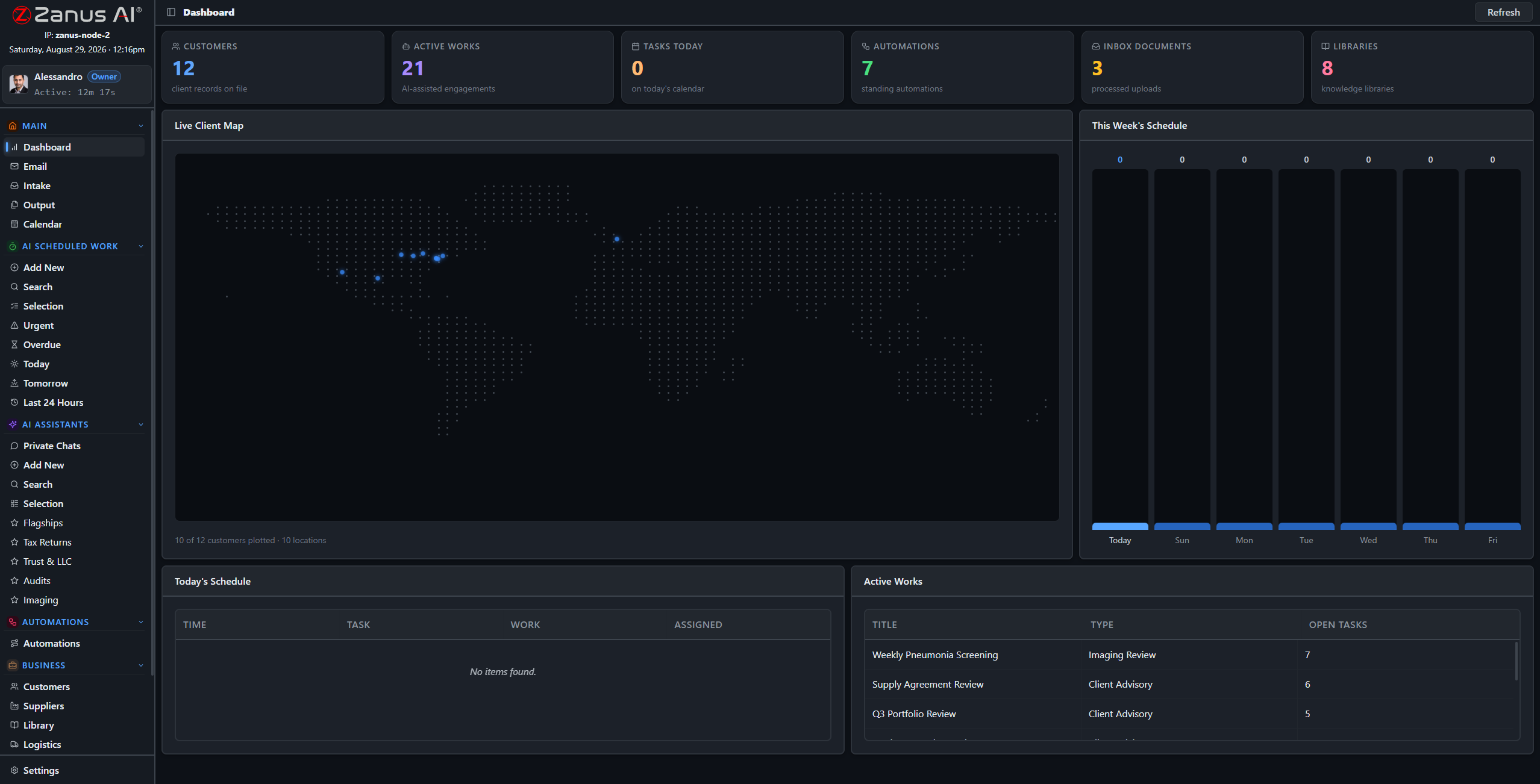
A real deployment view: case libraries, scheduled media reviews, examination works in flight.
What it does
Face, voice and phrase recognition sweep the footage, intercepts and interviews the case holds — candidate matches surfaced with timestamps, every result documented for examiner review.
Every AI result is reviewable and documented: what was searched, what matched, at what point in which file — the examiner confirms, the report cites, the record stands.
Casework stays segregated in an isolated, access-controlled tenant — and the permanent lab runs the identical system air-gapped on owned hardware, chain-of-custody-grade by design.
Front office: the intake desk, handled
Detectives and prosecutors call the lab all day: submission requirements, examination status, turnaround estimates. The Zanus front office answers from your published procedures, logs the request, and books the submission appointment — while your examiners stay at the bench.
- Requesting agencies answered 24/7 from your procedures
- Submission appointments booked into examiner calendars
- Status questions routed by your disclosure rules
- See the Front Office for forensics →

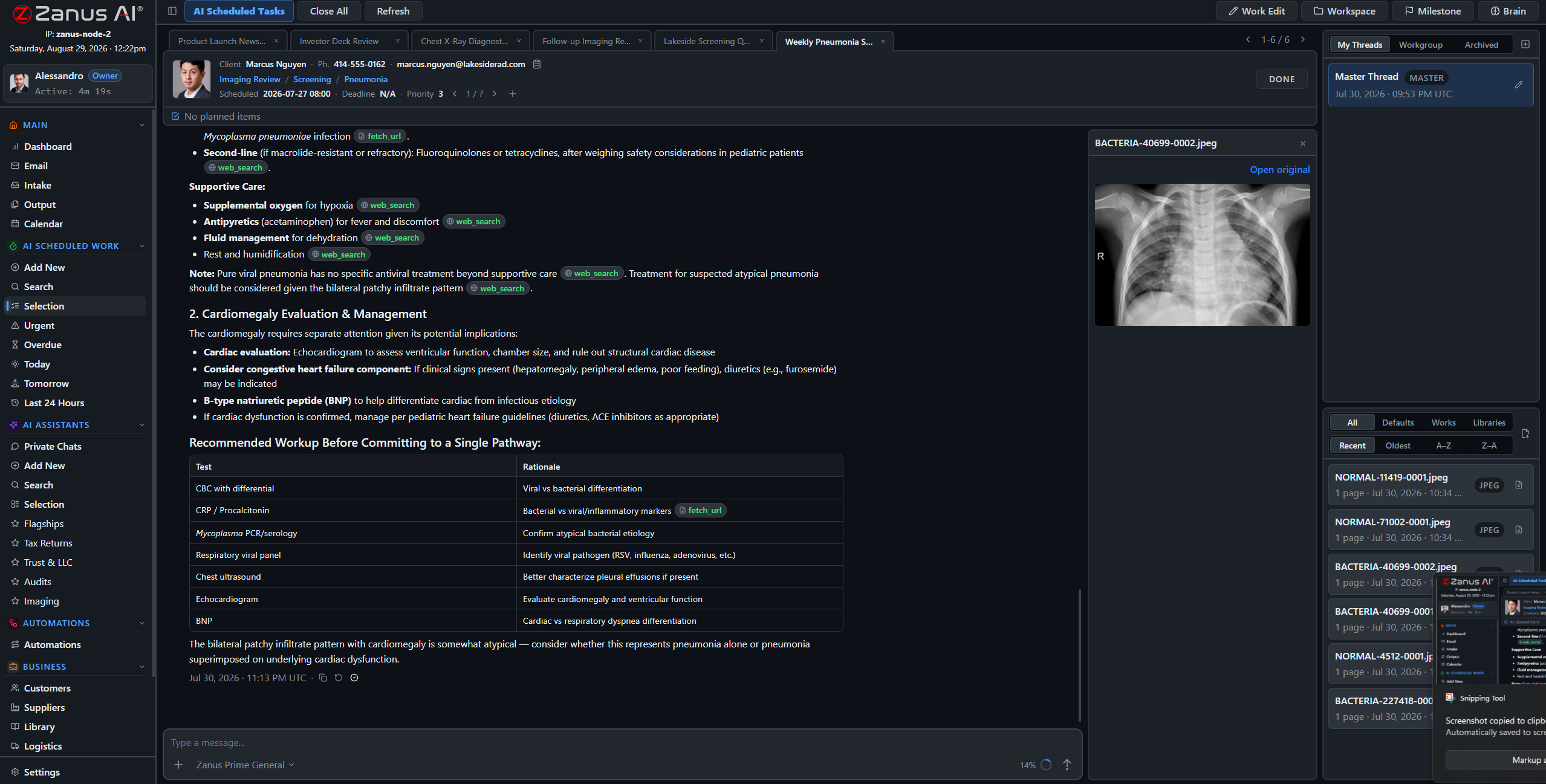
Back office: the examination bench, amplified
A robbery case arrives with 60 hours of CCTV, a wiretap archive and a suspect photo. The AI sweeps the media for the face and the phrase, assembles candidate matches with timestamps, and drafts the examination notes — every finding cited, everything awaiting the examiner’s confirmation.
- Scheduled AI work: media sweeps, match reviews, report drafts
- Candidate matches timestamped and linked to source files
- Examiner sign-off before anything enters the report
- See the Back Office for forensics →
When evidence cannot touch the internet
Permanent labs run the identical OS on Zanus hardware inside the facility: air-gap capable, USB updates, owned outright — case media physically incapable of leaving the building, with the full audit trail custody review demands.
- Private On-Premises AI: owned, no recurring fees
- On-Prem Tokens Server for high-volume media processing
- Same system as the cloud tenant — zero migration pain
- Explore the AI Servers →

Questions, answered
Are the recognition results admissible?
The system produces documented, reviewable results — what was searched, what matched, where — and your examiner confirms every finding before it enters a report. Admissibility strategy remains with your examiners and counsel; the documentation is built to support them.
Is casework really segregated?
Yes. The tenant is isolated and access-controlled; workgroups and field-level permissions segregate cases and units, and nothing trains outside models. The air-gapped option removes the network question entirely.
Can we start on active cases now?
The controlled cloud tenant deploys in days for active casework; permanent installations move to the owned, air-gapped server by RFQ — same system, zero migration.
See it working on YOUR lab — the demo IS the product.
ZANUS AI FOR FORENSIC AI & RECOGNITION — FRONT OFFICE
Examiners at the bench, not on the phone.
Every hour an examiner spends explaining submission packaging to a detective is an hour of casework lost. The Zanus front office answers requesting agencies from your published procedures — submissions, status by your disclosure rules, turnaround — 24/7, on the record.
Controlled tenant or air-gapped lab server · unlimited examiners · chain-of-custody-grade custody

Calls, chats and submission bookings — one dashboard the lab director can actually read.
What it does
A detective calls before a warrant deadline: what formats, how to package, where to deliver. The AI answers from your submission guidelines — correctly, at 4:45 PM or midnight.
“Where is my case?” answered exactly as your policy allows — stage and estimate for the authorized requester, escalation to the examiner for anything more.
Every call and chat produces a transcript tied to the case reference — who asked what, when, and what was disclosed. The intake desk becomes part of the record.
From request to booked submission, hands-free
An agency calls about a new digital-media examination; the AI confirms the evidence types, sends the submission checklist and the intake form, and books the drop-off into the evidence custodian’s real calendar — while the bench keeps working.
- Submission slots synced to custodian calendars
- Checklists and intake forms sent before drop-off
- Priority and rush requests escalated by your rules
- Case-specific findings never discussed on an open line


The web intake never closes
Grounded website chat for submission guidelines and service scope, web forms for examination requests acknowledged in minutes — the agency that starts a request at 9 PM has a reference number at 9:01, not after the weekend.
- Grounded chat on your site — no source, no claim
- Examination-request forms acknowledged instantly
- Every conversation logged with a transcript
- See the full Front Office tour →
Questions, answered
Will it discuss findings on the phone?
No. It answers procedure and status questions by your disclosure rules and routes anything case-substantive to the assigned examiner — it never improvises about evidence.
Do we keep our existing lines?
Yes. Your numbers stay; calls route AI-first, examiner-first, or any mix per line and per hour — many labs start with overflow and after-hours only.
See it working on YOUR lab — the demo IS the product.
ZANUS AI FOR FORENSIC AI & RECOGNITION — BACK OFFICE
The media examines itself.
The examiner decides.
CCTV pulls, body-cam video, intercepted audio, interview recordings, device extractions: modern cases arrive as terabytes. The Zanus back office runs recognition and matching across all of it — candidate findings timestamped and cited, examination notes drafted, every conclusion left to the examiner.
Controlled tenant or air-gapped lab server · unlimited examiners · chain-of-custody-grade custody
A real session: media swept, candidate matches timestamped, notes drafted — the examiner confirms.
What it does
A suspect photo, a voice exemplar, a phrase of interest: the AI sweeps every file in the case for candidates and returns matches with timestamps and confidence context, documented for review.
The jacket from the CCTV still against the seized clothing photos; the tattoo across booking images; the vehicle across intersection cameras — matched with reviewable, documented results.
What was received, what was searched, what matched and where: the AI drafts the examination notes and report skeleton from the session itself — the examiner edits and signs.
Sixty hours of CCTV, reviewed by Tuesday
The AI works the footage the way a junior examiner would — without fatigue: sweeps for the target face and phrase, marks candidate segments with timestamps, links each to its source file, and files the findings for confirmation. The examiner reviews forty minutes of candidates instead of sixty hours of raw footage.
- Candidate segments timestamped, linked to source media
- Reasoning streamed and preserved for the record
- Findings await examiner confirmation — nothing auto-concludes


From findings to court-ready draft
Confirmed findings flow into the examination report in your lab’s format: methodology, media inventory, results with citations to file and timestamp, limitations noted. Drafted in minutes, reviewed by the examiner, signed by a human.
- Your lab’s report templates and headings
- Every result cited to file and timestamp
- Approval workflow before any report releases
Questions, answered
Does the AI reach conclusions?
No. It surfaces candidates and documents exactly how it found them; identification and every conclusion belong to your examiner, whose sign-off is required before anything enters a report.
What media formats can it ingest?
The ingestion pipeline handles video, audio, images and documents — including scans and mixed device extractions. Bring a sanitized sample case to the demo.
YOU MIGHT ALSO LIKE
The Back Office executes. Who answers the phone?
Front Office AI picks up every call and chat — books, quotes, follows up, 24/7 in 40 languages. Watch it run a business like yours, live.
See it working on YOUR lab — the demo IS the product.
ZANUS AI FOR FORENSIC AI & RECOGNITION — CASE FILES
Ask the case file. It answers.
Case media, examination notes, chain-of-custody forms, lab reports, prior examinations — loaded into case-segregated libraries the AI reads from. Ask in plain language; get the answer with the source cited, scoped to who is authorized on that case.
Controlled tenant or air-gapped lab server · unlimited examiners · chain-of-custody-grade custody
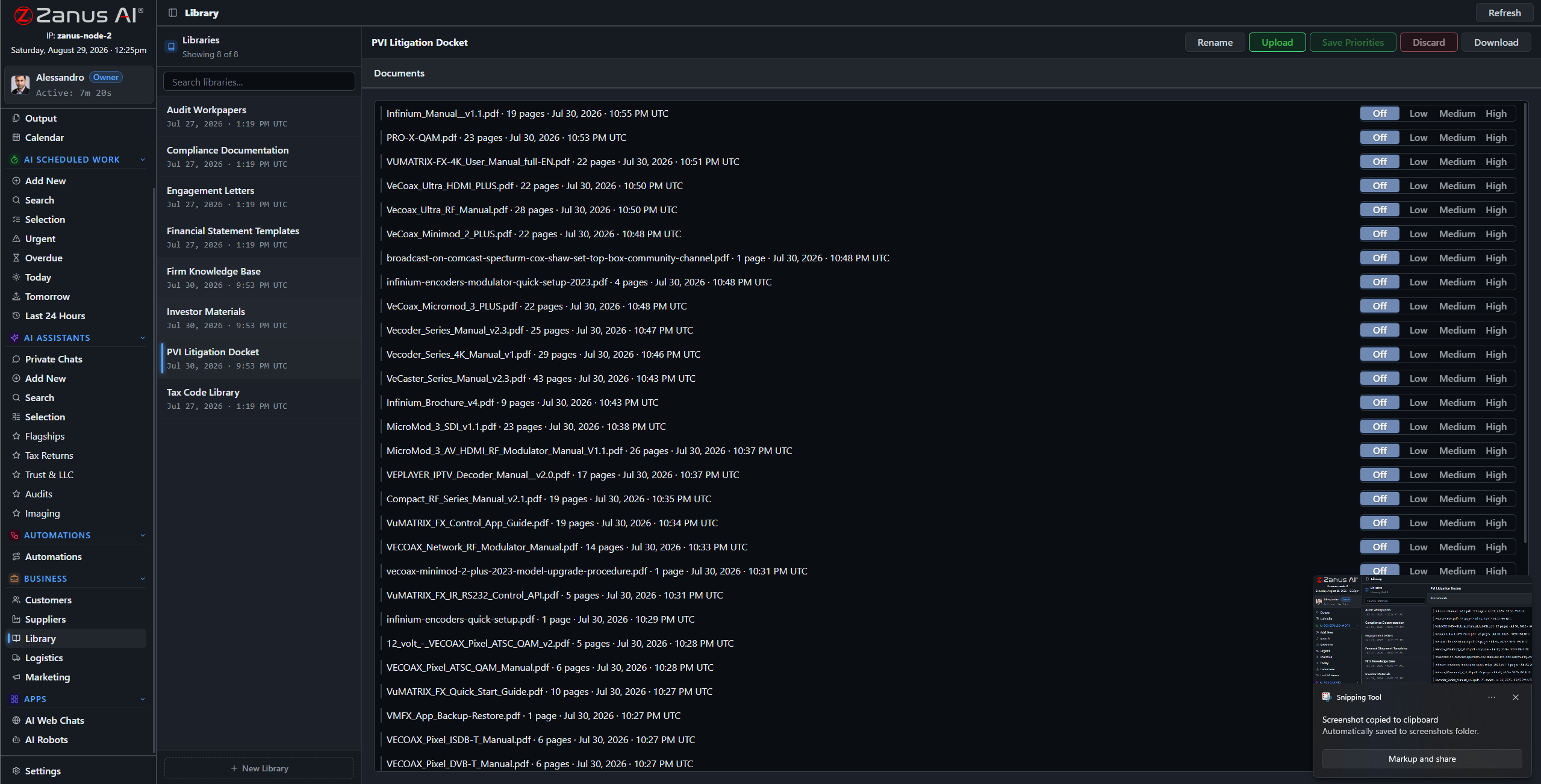
Libraries per case and unit: confirmed reports outrank working notes — you set the order.
What it does
CCTV exports, body-cam files, intercept audio, phone extractions, scanned custody forms — the ingestion pipeline turns the evidence room’s reality into queryable knowledge.
No source in the case libraries, no claim: the AI cites the file, the timestamp, the custody entry — or says it cannot answer. Nothing is invented into a case.
Examiners see their assigned cases; the lab director sees the unit; the intern sees nothing sensitive — enforced server-side, down to the field.
Ten years of examinations, one question away
“Have we examined media from this address before?” “Which cases used this camera model’s footage?” “What did the 2021 report conclude about this voice exemplar?” The archive answers in seconds with the documents attached — institutional memory that used to live in one veteran’s head.
- Plain-language questions across authorized cases
- Sources attached to every answer
- Priority order: signed reports outrank drafts

Questions, answered
Can opposing counsel access this?
Access is whatever your policy grants: permissions are role-based to the field level and every access is logged — discovery and disclosure decisions stay with your counsel, supported by the audit record.
Does case media train outside models?
Never. The tenant is isolated and casework segregated; on the air-gapped lab server, the media physically cannot leave the building.
See it working on YOUR lab — the demo IS the product.
ZANUS AI FOR FORENSIC AI & RECOGNITION — AI WORKFORCE
A second bench that never fatigues.
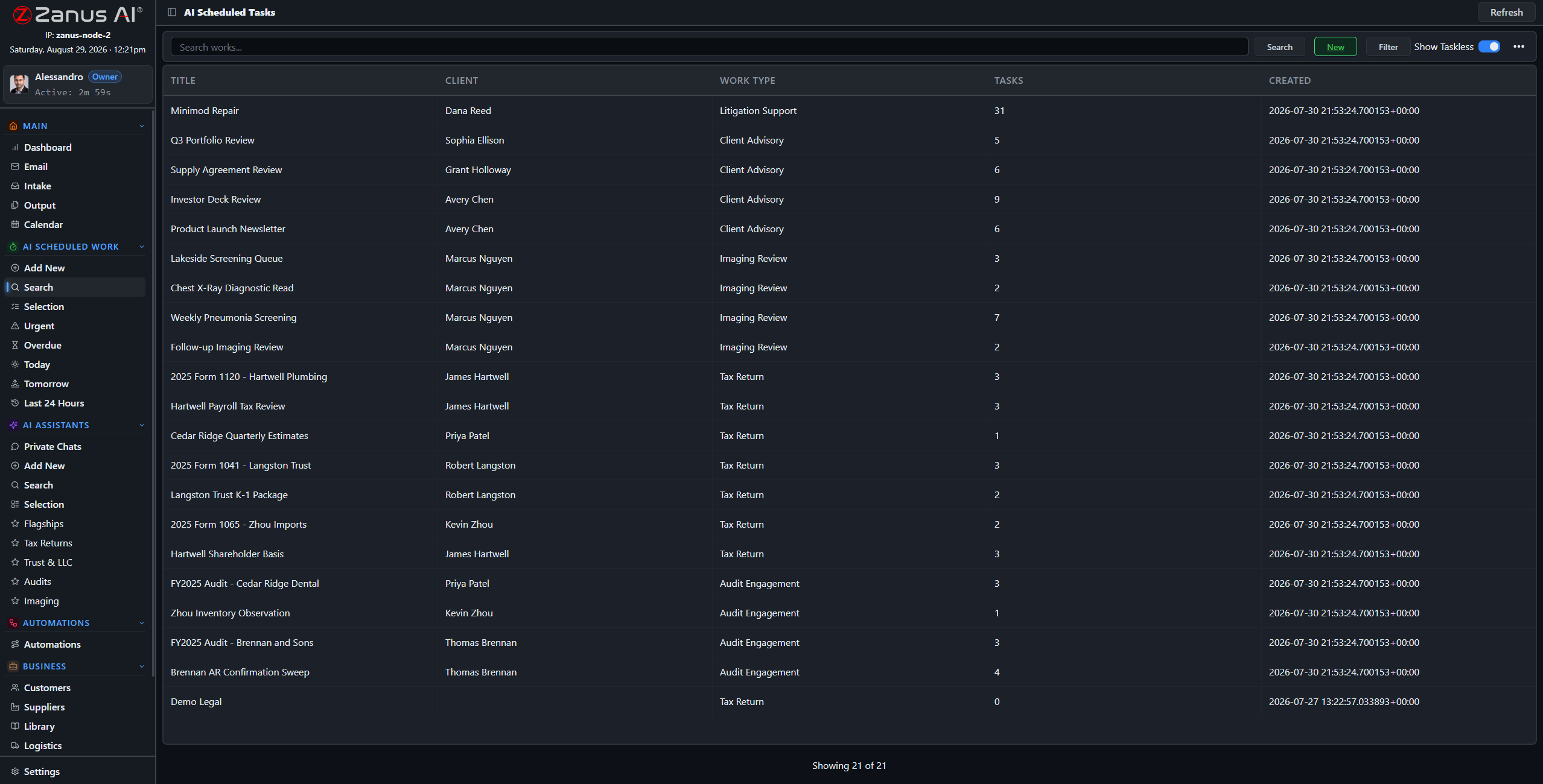
Assign work to the AI the way a lab director assigns a case: type, media, deadline, priority. Overnight media sweeps, weekly backlog triage, report drafts — executed on schedule, with citations, under examiner review.
Controlled tenant or air-gapped lab server · unlimited examiners · chain-of-custody-grade custody
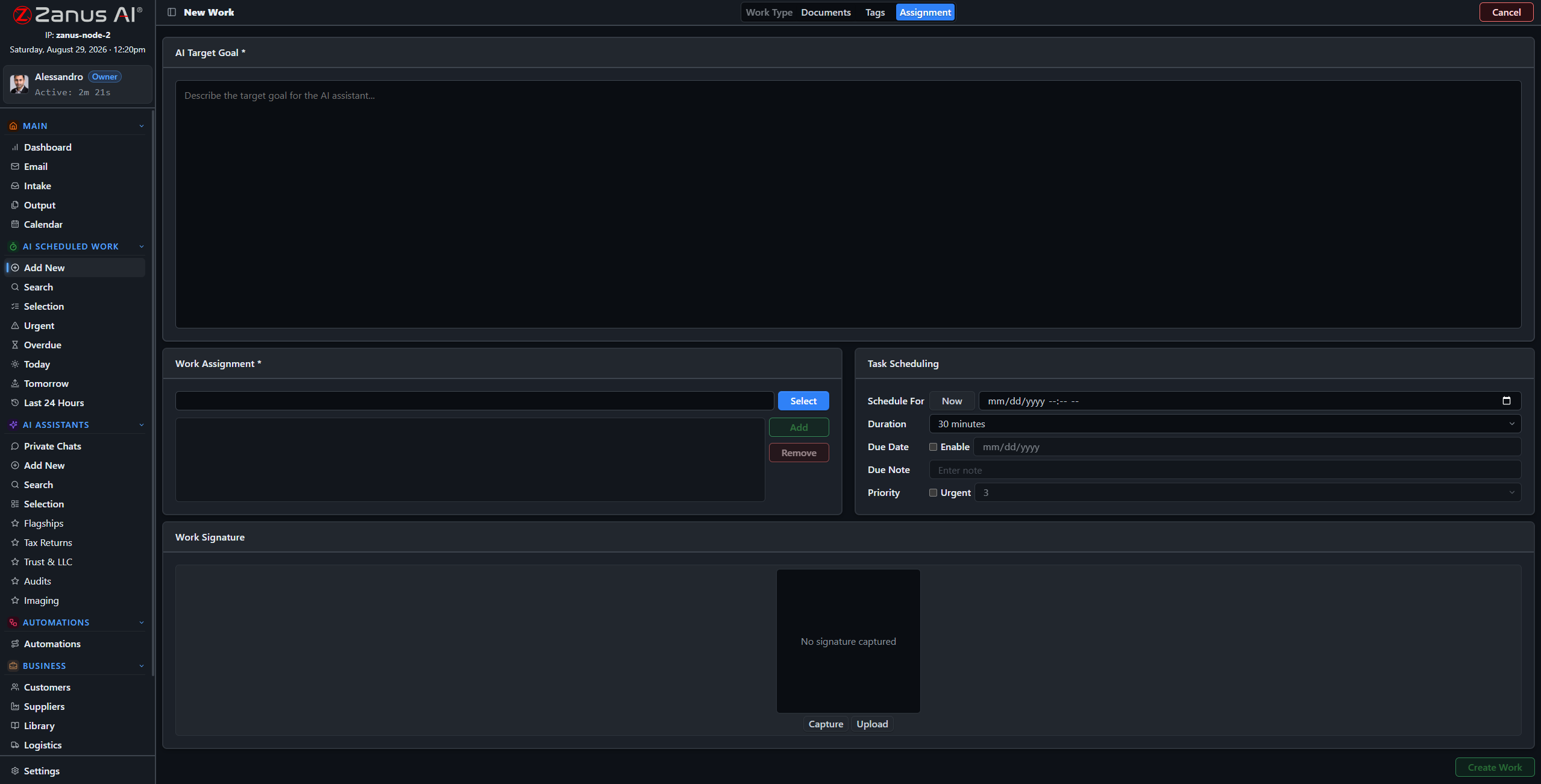
Four steps: work type, case media and libraries, tags, schedule — the AI takes it from there.
What it does
Media sweep, face-candidate review, voice comparison prep, transcript-and-phrase search, report draft: work types molded to your bench, with default protocols per type.
Rush warrants and court dates drive the queue: one-click views show what is urgent, late, today and tomorrow — a trial date never sneaks up on an unworked case.
Every work is a full session: reasoning streamed, findings timestamped and cited, milestones tracked, linked to the case and the calendar.
Overnight: the sweep runs while the lab sleeps
Set “Overnight Media Sweep” on intake: new case media is processed the night it arrives — faces, voices and phrases of interest searched, candidate segments marked — and the examiner opens a triaged case at 8 AM instead of a raw terabyte.
- Recurring and on-intake schedules
- Candidates timestamped to file and frame
- Findings in Output, awaiting examiner confirmation
Questions, answered
Can the examiner supervise mid-work?
Yes — open any session, read the reasoning, redirect the search, or stop it. The AI works like bench staff: visible, accountable, interruptible.
What happens to the backlog?
The AI does not tire and does not bill overtime: the constraint becomes your examiners’ confirmation capacity, not raw review hours — which is exactly where labs want the constraint to be.
See it working on YOUR lab — the demo IS the product.
ZANUS AI FOR FORENSIC AI & RECOGNITION — PROTOCOLS & QA
The QA manual, alive.
A protocol only protects the case when the examiner can find it — the controlled version, at that. In Zanus, examination protocols, QA manuals and evidence-handling SOPs are living documents: answerable in chat, attached to work, priority-ordered so the controlled version always wins.
Controlled tenant or air-gapped lab server · unlimited examiners · chain-of-custody-grade custody
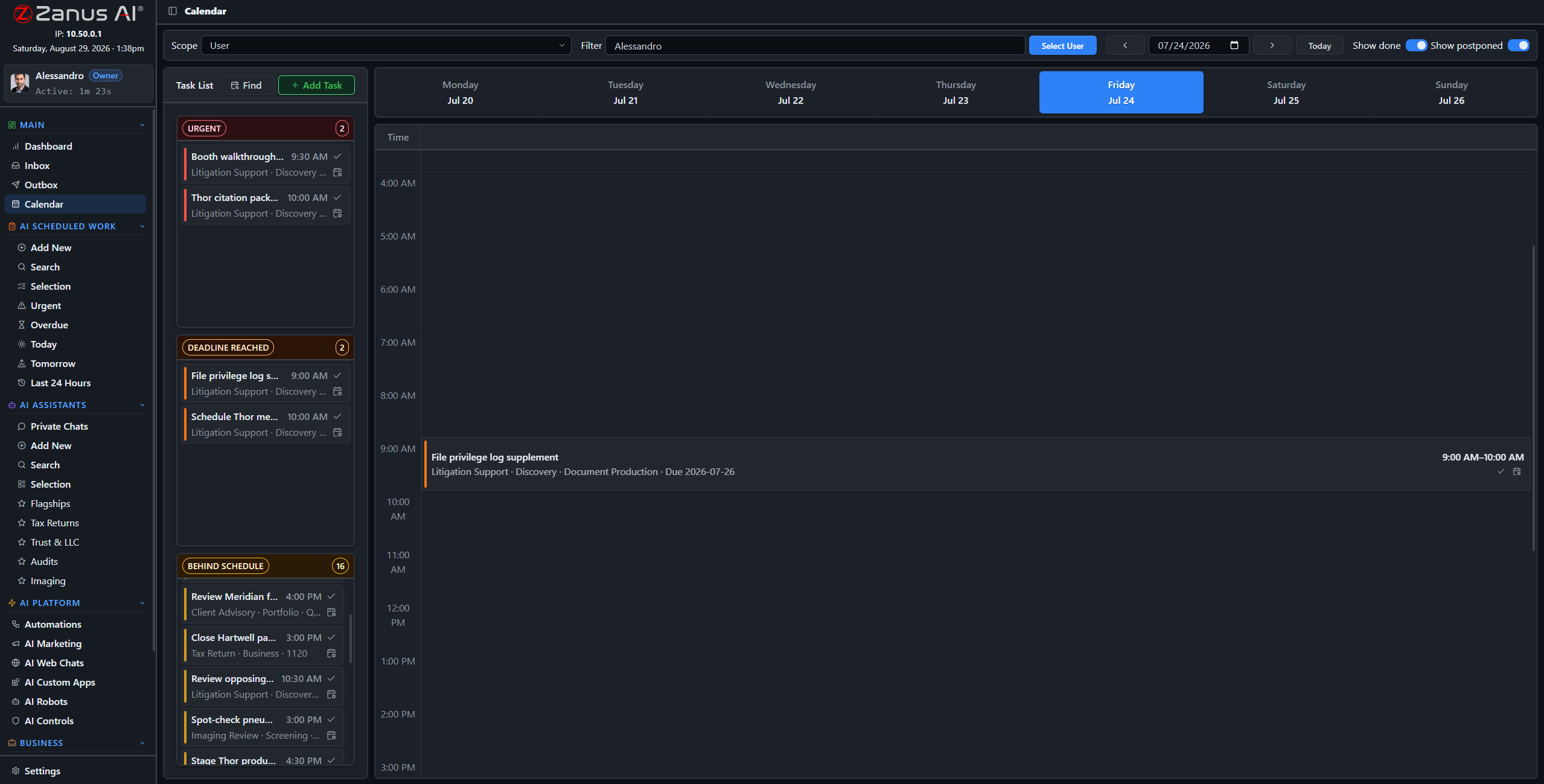
QA upkeep, scheduled like casework: annual protocol reviews and proficiency checks on the calendar.
What it does
Media-handling SOPs, examination protocols, QA manuals, instrument logs: one library, controlled versions on top, superseded revisions outranked but archived for audit.
“What is the protocol for handling an encrypted device?” — answered in seconds with the SOP attached, to any authorized examiner, mid-examination or mid-testimony prep.
Work types carry their governing protocols: the AI running a media sweep reads from the media-examination SOP — by construction, not by memory.
QA work, scheduled like casework
Annual protocol reviews, technical-review checklists, summaries of method changes for the unit meeting: assign them once as recurring AI work and the QA binder never goes stale — every review lands on the audit record, which is exactly what an accreditation-conscious lab needs on file.
- Recurring review works with deadlines
- Method-change summaries drafted for unit briefings
- Every review event on the audit trail
Questions, answered
How do protocol revisions roll out?
Upload the new revision, set it on top: from that moment every answer and every AI work cites the new version. Superseded revisions stay archived — you can show exactly which protocol governed which examination.
See it working on YOUR lab — the demo IS the product.
ZANUS AI FOR FORENSIC AI & RECOGNITION — TEAM TRAINING
Twenty years at the bench, transferable.
Forensic expertise concentrates in a few veterans — and hiring replacements takes years. In Zanus, the lab’s methods live in the system: new examiners learn your protocols from the AI, and every analyst has an assistant that answers “how do we…?” from the controlled documents.
Controlled tenant or air-gapped lab server · unlimited examiners · chain-of-custody-grade custody

Training lives inside the software: the AI walks each new examiner through the lab’s own protocols.
What it does
New analysts learn your intake rules, media-handling SOPs and documentation standards through guided training — contributing in weeks, supervised properly throughout.
“How do I document a partial match?” — asked to the assistant, answered from the QA manual with the source attached, without pulling the senior examiner out of testimony prep.
Private chats work on any device with a login — the how-to knowledge follows the analyst from the bench to the evidence room to the courthouse hallway.

The trainer that never gets tired of the question
The tenth “how do I log transferred media?” gets the same patient, sourced answer as the first. Training content never goes stale, because the assistant reads from the same controlled protocol libraries as everything else — revise the SOP once and every future answer updates with it.
- Answers cite the controlled SOP version
- Preset assistants per role: analyst, examiner, custodian
- Training progress visible to the lab director
Questions, answered
Does this replace examiner training and proficiency?
No — it accelerates system and procedure onboarding. Discipline competency, proficiency testing and authorization to examine remain your lab’s human program.
See it working on YOUR lab — the demo IS the product.
ZANUS AI FOR FORENSIC AI & RECOGNITION — AUTOMATIONS
The lab’s repetitive work, set once.
Describe the job in plain words — “when new case media is logged, sweep it for the case’s targets and file the triage summary” — and it becomes connected blocks on a canvas, running on its own, with every run visible and on the record.
Controlled tenant or air-gapped lab server · unlimited examiners · chain-of-custody-grade custody
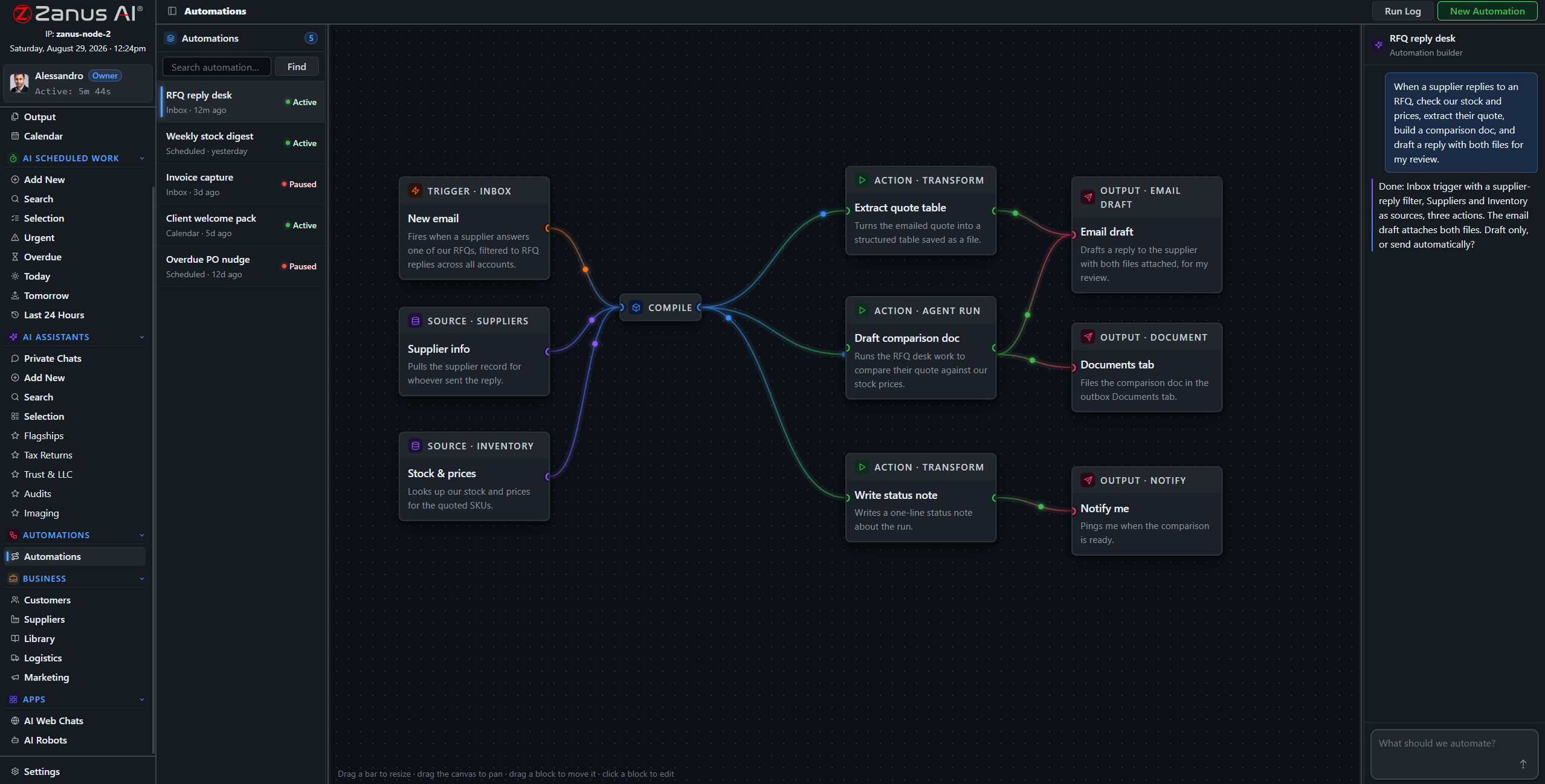
A real flow: intake trigger, case sources, AI sweep, three outputs — drawn from a description.
What it does
A submission arrives: case record opened, media inventoried, custody entry drafted, acknowledgment sent to the requesting agency with a reference number — before the custodian finishes the physical check-in.
New media triggers the sweep: targets searched, candidate segments marked, the triage summary filed — the examiner starts the morning with a map, not a haystack.
Court dates and rush requests drive reminders and status drafts automatically — the prosecutor’s “where are we?” email is answered before it is sent.
When something fails, you SEE it
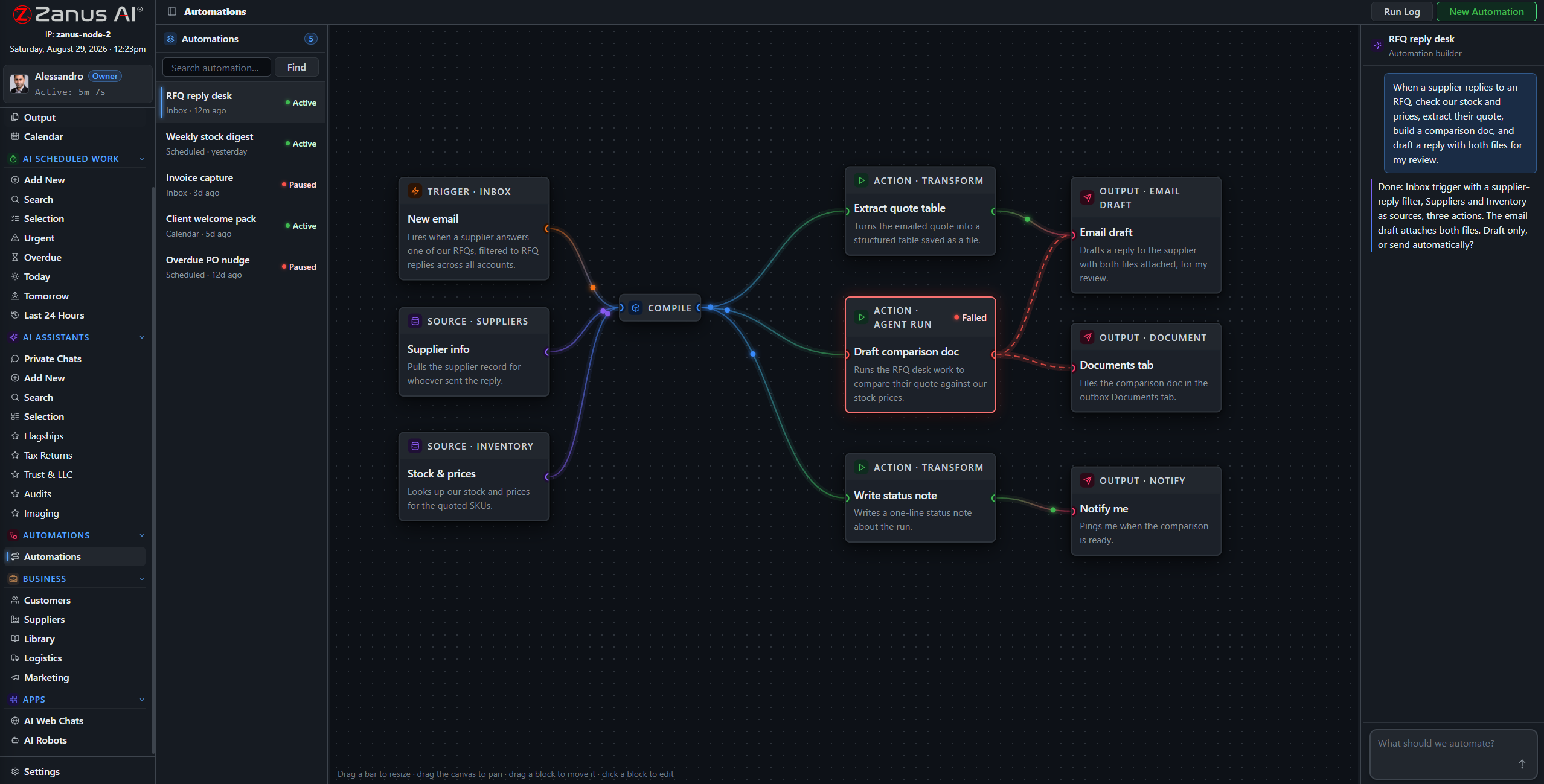
Run states live on the flow: green success, red failure on the exact block. In a lab where a missed sweep can mean a missed suspect, silent failures are unacceptable — here, nothing fails silently and every run is on the audit record.
- Run log per automation
- One-click retry on failures
- Finished outputs statused and awaiting review
Questions, answered
Can an automation release findings?
No — findings and reports always route through examiner confirmation and your approval workflow. Automations move work and drafts; humans release conclusions.
See it working on YOUR lab — the demo IS the product.
ZANUS AI FOR FORENSIC AI & RECOGNITION — CASE REPORTING
Case reporting, drafted and on the record.
Examination reports to requesting agencies, status updates on open submissions, court-ready summaries for prosecutors — drafted by the AI from confirmed findings in the case record, queued for examiner approval. Nothing leaves the lab without a signature, and every delivery is logged.
Controlled tenant or air-gapped lab server · unlimited examiners · chain-of-custody-grade custody
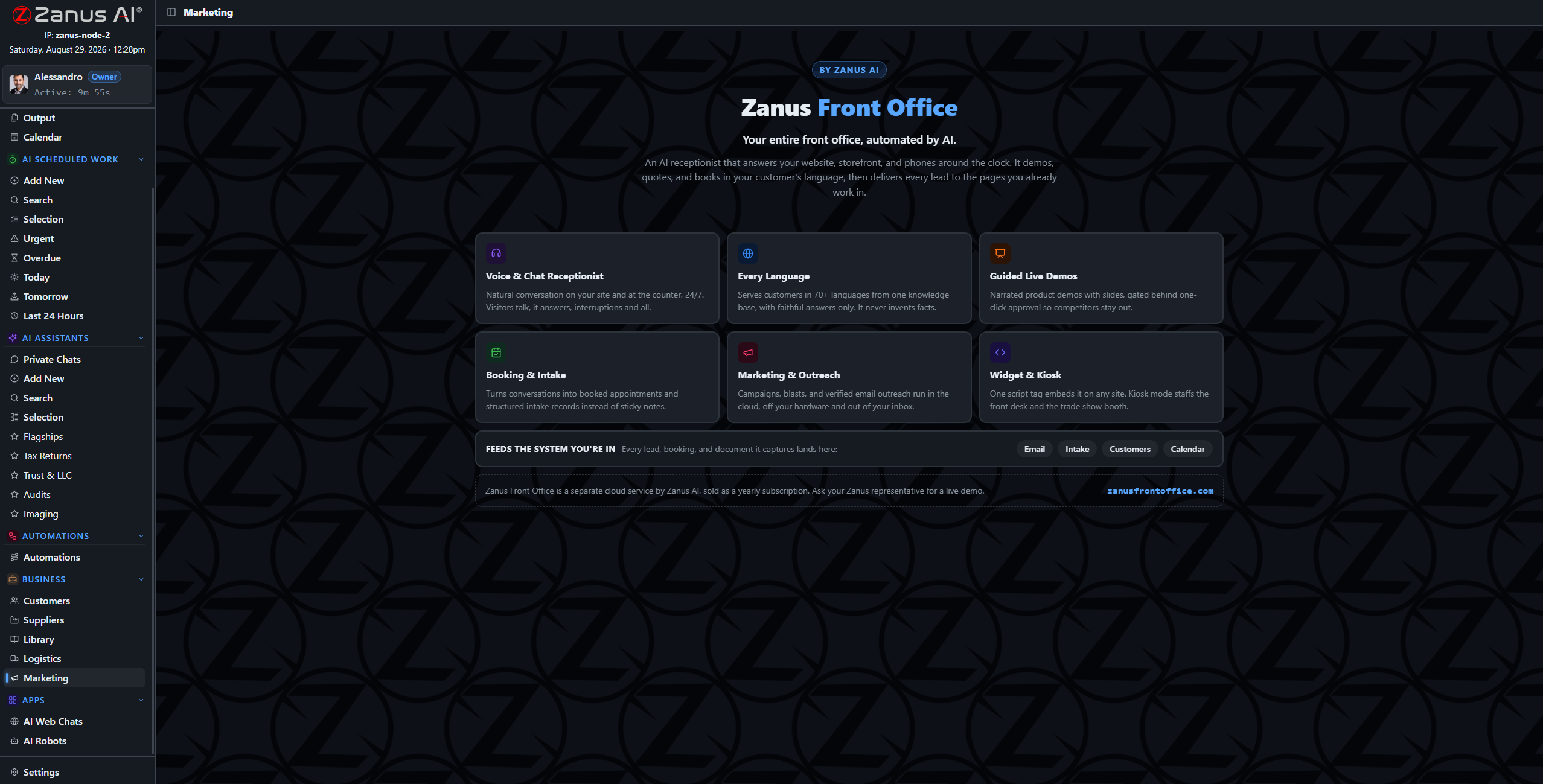
Reports and status updates drafted from the case record — every one awaiting examiner approval.
What it does
The report draft pulls exclusively from examiner-confirmed results: methodology, media inventory, findings with file-and-timestamp citations, limitations noted.
Weekly status digests to each requesting agency, drafted from the case queue by your disclosure rules — the detective stops calling, the examiner stops repeating.
Every outbound report and update lands in the approval queue. The examiner signs; the system records who approved what, when, and to whom it was delivered.
From confirmation to court-ready, the same day
The examiner confirms the final matches Thursday morning. By noon the AI has drafted the examination report in the lab format, the plain-language summary for the prosecutor, and the delivery letter — consistent because they share one case record — all waiting for the examiner’s signature.
- Drafts built from the confirmed case record only
- Consistent language across report, summary and letter
- Every delivery on the audit record

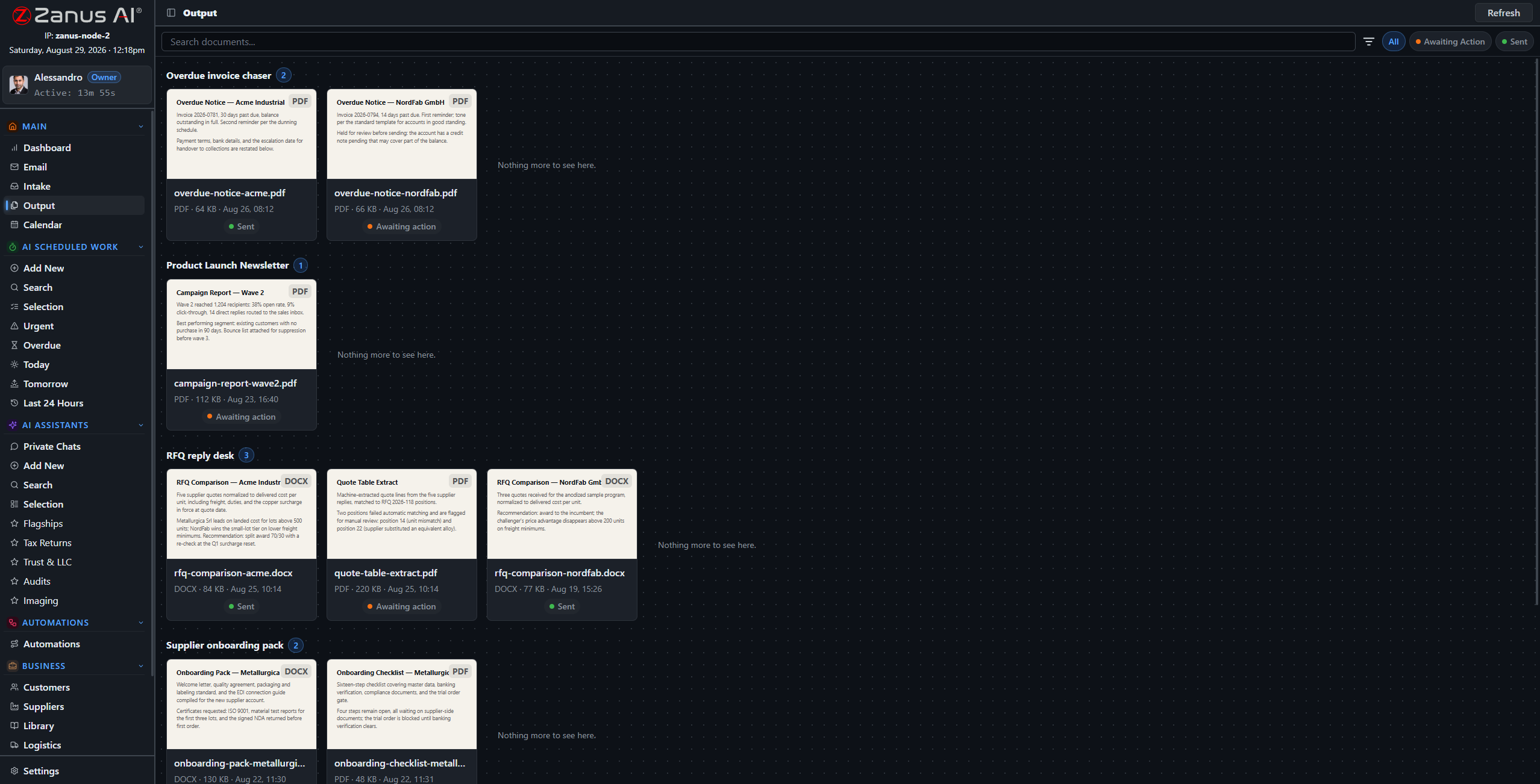
The prosecutor’s questions, answered in kind
Follow-up questions about methodology or a specific finding are drafted into responses citing the examination record — for the examiner’s review — so trial preparation draws on the file, not on memory.
- Responses cite the examination record
- Approval workflow per correspondence category
- Full history of what was sent to whom
Questions, answered
Is this marketing software?
It is the same outbound module commercial firms use — configured here for formal case reporting: drafted from the record, signed by examiners, logged. A forensic lab has no use for campaigns; it has every use for consistent, auditable reporting.
Can it prepare testimony support?
It can assemble the examination timeline, the methodology summary and the exhibit list from the case record for the examiner’s trial prep — what is said on the stand remains entirely the examiner’s.
See it working on YOUR lab — the demo IS the product.
ZANUS AI FOR FORENSIC AI & RECOGNITION — CASE SYSTEMS & INTEGRATIONS
Keep the case system. Add the recognition layer.
Your case management system, evidence-management system and LIMS stay exactly where they are. Zanus becomes the system of work: API connectors sync cases, submissions and documents both ways, the intake pipeline files what arrives, and confirmed reports flow back to the case file. No rip and replace.
Controlled tenant or air-gapped lab server · unlimited examiners · chain-of-custody-grade custody

No rip and replace: case management, evidence tracking and LIMS stay — the AI layer connects to all of them.
What it does
Cases, submissions and dispositions mapped field by field, with a dry-run preview before anything writes — push, pull or two-way, your choice per system.
Custody entries, storage locations and transfer records referenced by the AI when it drafts — the evidence system stays master of the chain.
A full API for whatever else the lab runs: digital-forensics tools, agency portals, court e-filing — data in, results out, under scoped keys.
One question across every system
The case lives in case management, the custody chain in the evidence system, the findings in the examination record — and the AI reads across all of it. “What is outstanding on case 24-1187?” becomes one question with one grounded, cited answer.
- Field mapping with dry-run preview
- Each system stays master of its own records
- Every sync event on the audit record
- External systems appear as blocks on the automation canvas
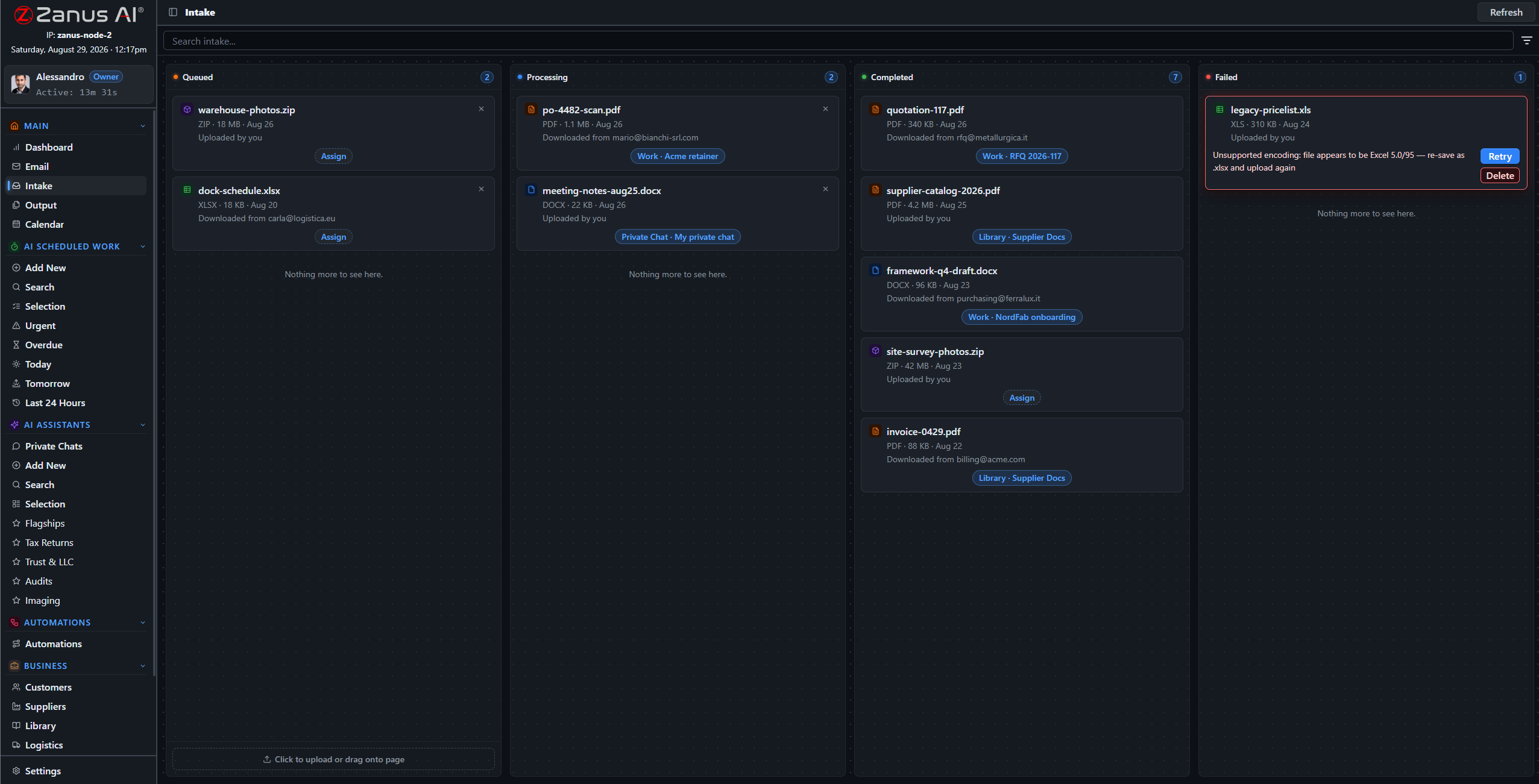
Reports flow back to the case file
The signed examination report, the delivery letter, the status digest: finished documents return to the case record in your system through the same connectors — after examiner sign-off, never before.
- Signed output filed back to the system of record
- Approval workflow before anything writes back
- Webhooks notify your systems in real time
Questions, answered
Which case systems do you support?
Connectors are mapped per deployment — bring your case management and evidence systems to the demo and we walk through the exact integration path for your stack.
Does case data pass through third parties?
No. Connectors run inside your tenant — or entirely inside the lab on the air-gapped option, where the integration surface is exactly as narrow as you configure it.
See it working on YOUR lab — the demo IS the product.
ZANUS AI FOR FORENSIC AI & RECOGNITION — CHAIN OF CUSTODY
Built like the conviction depends on it.
In forensics, custody is the case. Admin-created accounts, case segregation through workgroups, permissions to the field level, server-side redaction, a searchable audit trail of every access — and an air-gapped option where case media never touches a network.
Controlled tenant or air-gapped lab server · unlimited examiners · chain-of-custody-grade custody
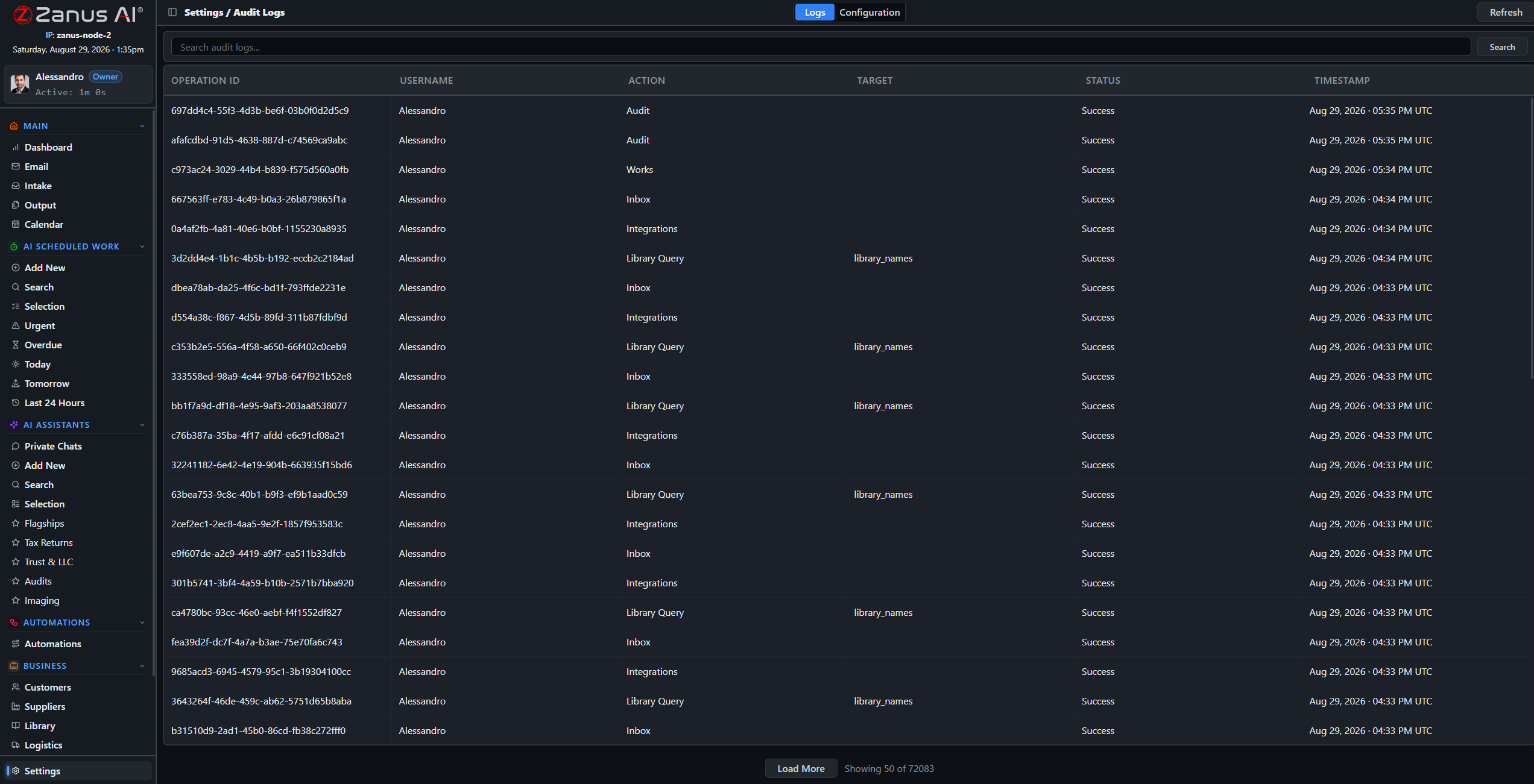
Every audited action, searchable: who accessed which case media, who changed what, when.
What it does
Every access to case media and every AI operation on it is logged and searchable — the custody question about the digital copy has a documented answer.
Workgroups and field-level permissions segregate cases and units; the server redacts what a role cannot see — an examiner off the case sees nothing of it.
The owned lab server runs air-gapped with USB updates: chain-of-custody-grade custody where the media physically cannot leave — and no recurring fees on the hardware.
The custody review that takes minutes
When the defense, an accreditation assessor or your own QA manager asks how the digital evidence was handled, the answer is a search away: access records, operation logs, version history with pre-update snapshots — one place, on the record, chain-of-custody-grade.
- Searchable audit trail across cases and media
- Automatic pre-update snapshots with rollback
- USB updates keep the air-gapped server current
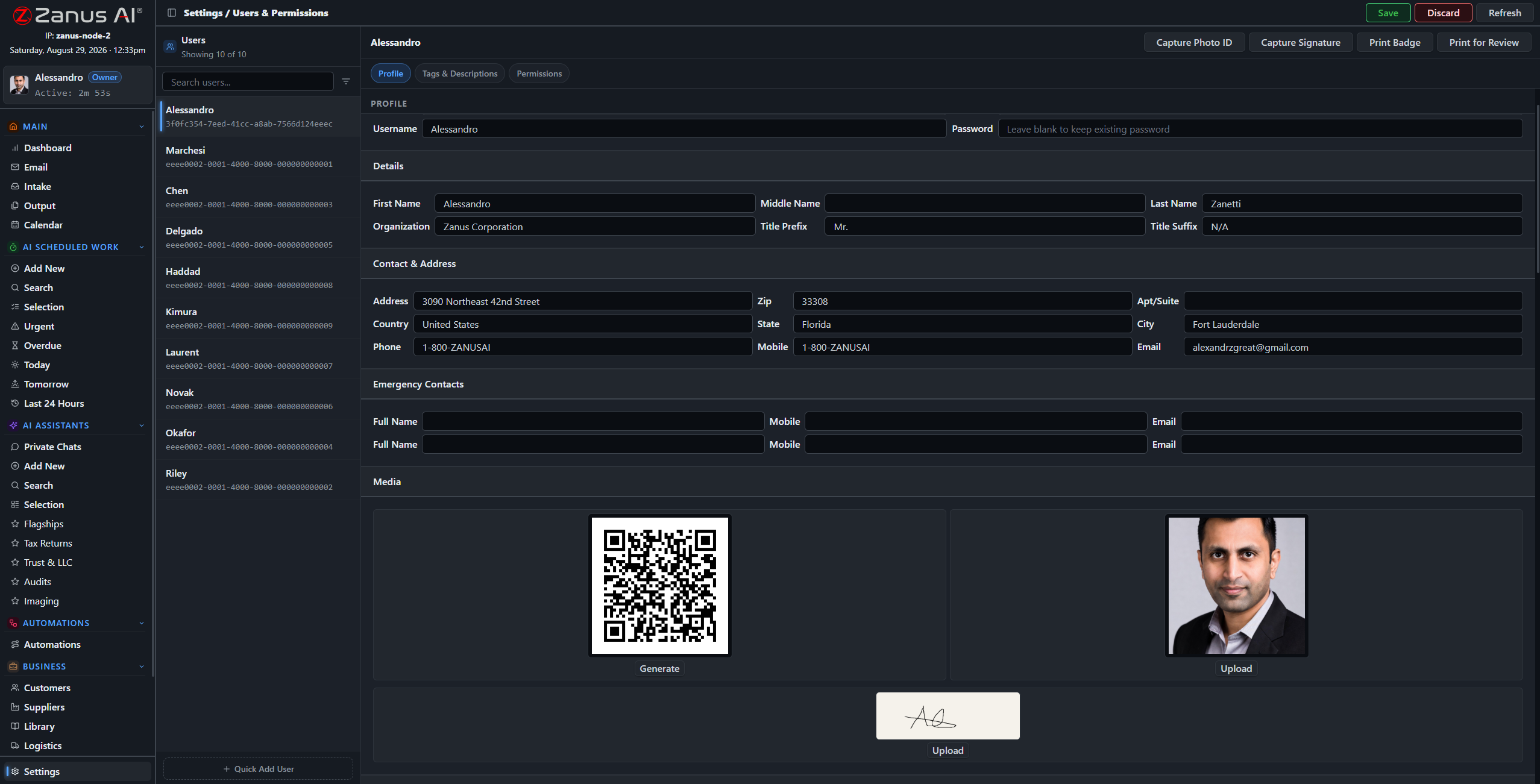
The custody path, concretely
Active casework starts on the controlled, isolated tenant — access-controlled, segregated, nothing training outside models. The permanent installation moves the identical OS onto Zanus hardware inside the lab: air-gapped, owned outright, zero migration pain. Full chain-of-custody data sovereignty, on your floor.
- Controlled tenant → air-gapped lab server, same system
- Case media physically incapable of leaving the building
- Owned outright — no recurring fees
- Explore the AI Servers →
Questions, answered
Is this accredited for forensic work?
We describe the architecture precisely: case segregation, field-level permissions, full audit trail, documented and reviewable results, air-gap option — an accreditation-conscious design. Your QA manager reviews the specifics against your accreditation scope during onboarding.
Who can administer the system?
Your administrators. Accounts are admin-created — no self-signup — and administrative actions are themselves on the audit trail.
See it working on YOUR lab — the demo IS the product.
ZANUS AI FOR FORENSIC AI & RECOGNITION — LIVE DEMO
Do not watch a video.
Talk to your AI.
Forensic-software vendors demo with videos and conference booths. Ours is the product itself, configured for forensic work: open the chat below-right and try it — walk a media-sweep workflow, ask an intake question, see the custody architecture explained.
The conversation you have with us IS the demo
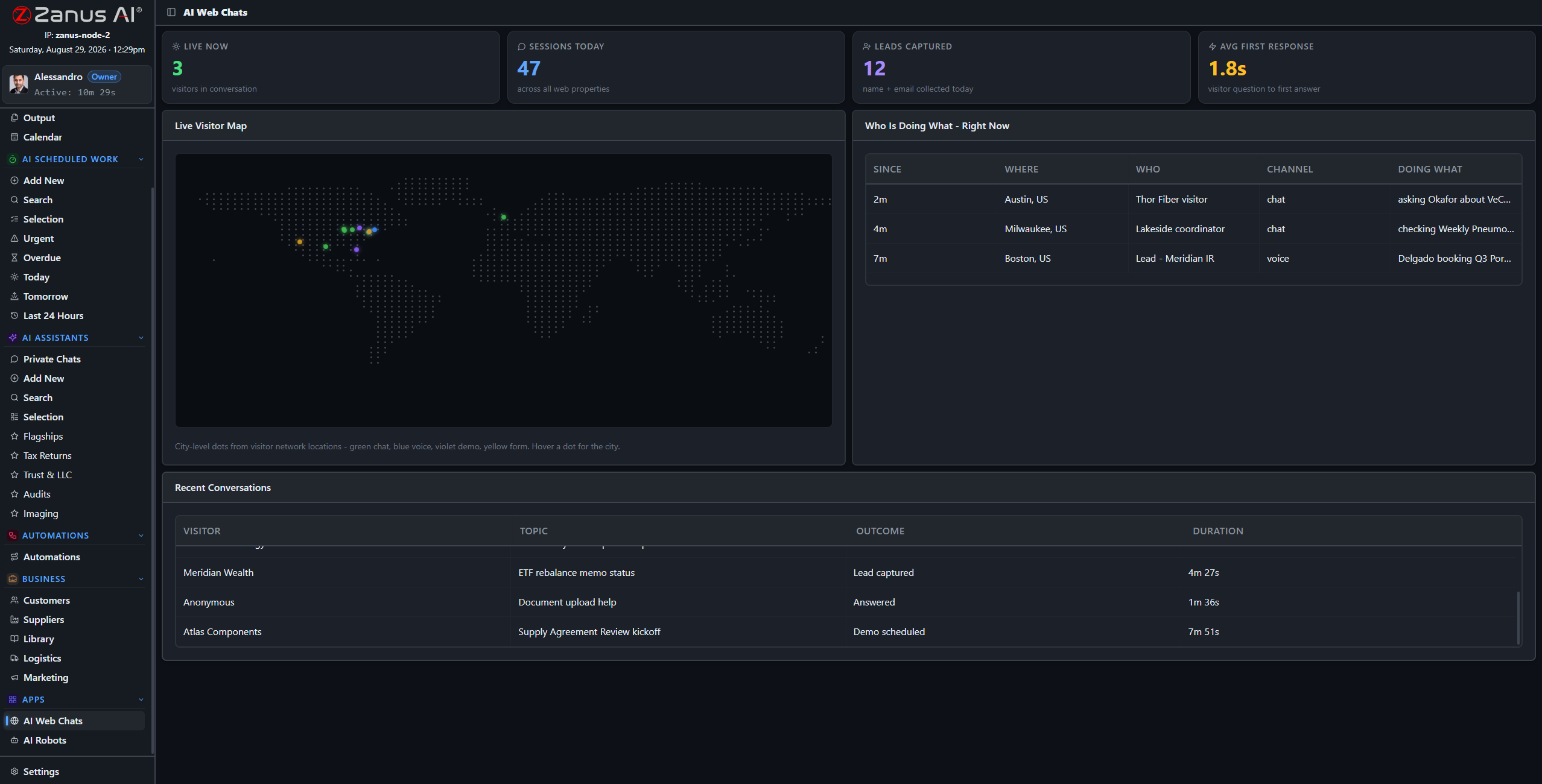
This screen is watching demos like yours happen: live conversations, outcomes, first response in seconds.
What it does
Ask the chat: “what are the submission requirements for CCTV media?” — watch it answer from sample procedures and offer the intake form.
Ask: “how would you sweep sixty hours of footage for one face?” — it walks the workflow it would run in your tenant: sweep, timestamp, cite, examiner sign-off included.
The full demo loads a forensic tenant with sanitized sample media: recognition sweeps, match review, report drafting — your bench, working.
Or pick your exact business
Every link below is a full live-demo page for that specific business — its vocabulary, its calls, its booking rules.
Two minutes to your inbox
Request the demo and the interactive forensics demo arrives in about two minutes — no sales call, no calendar dance. Watch it, interrupt it with questions, and bring your lab director and QA manager when YOU are ready.
- Interactive demo, forensics-configured
- Ask questions mid-demo — it answers and resumes
- In your inbox in ~2 minutes, free

Questions, answered
Is the demo really the product?
Yes — the same AI, configured with a sanitized sample forensic tenant. What you see is what your examiners get, with your case media instead of the samples — controlled tenant for casework, air-gapped lab server for the permanent installation.
See it working on YOUR lab — the demo IS the product.
Sharing with a colleague? 📄 Get the PDF · ✉️ Email this page ·