ZANUS AI FOR FORENSIC AI & RECOGNITION — CASE FILES
Ask the case file. It answers.
Case media, examination notes, chain-of-custody forms, lab reports, prior examinations — loaded into case-segregated libraries the AI reads from. Ask in plain language; get the answer with the source cited, scoped to who is authorized on that case.
Controlled tenant or air-gapped lab server · unlimited examiners · chain-of-custody-grade custody
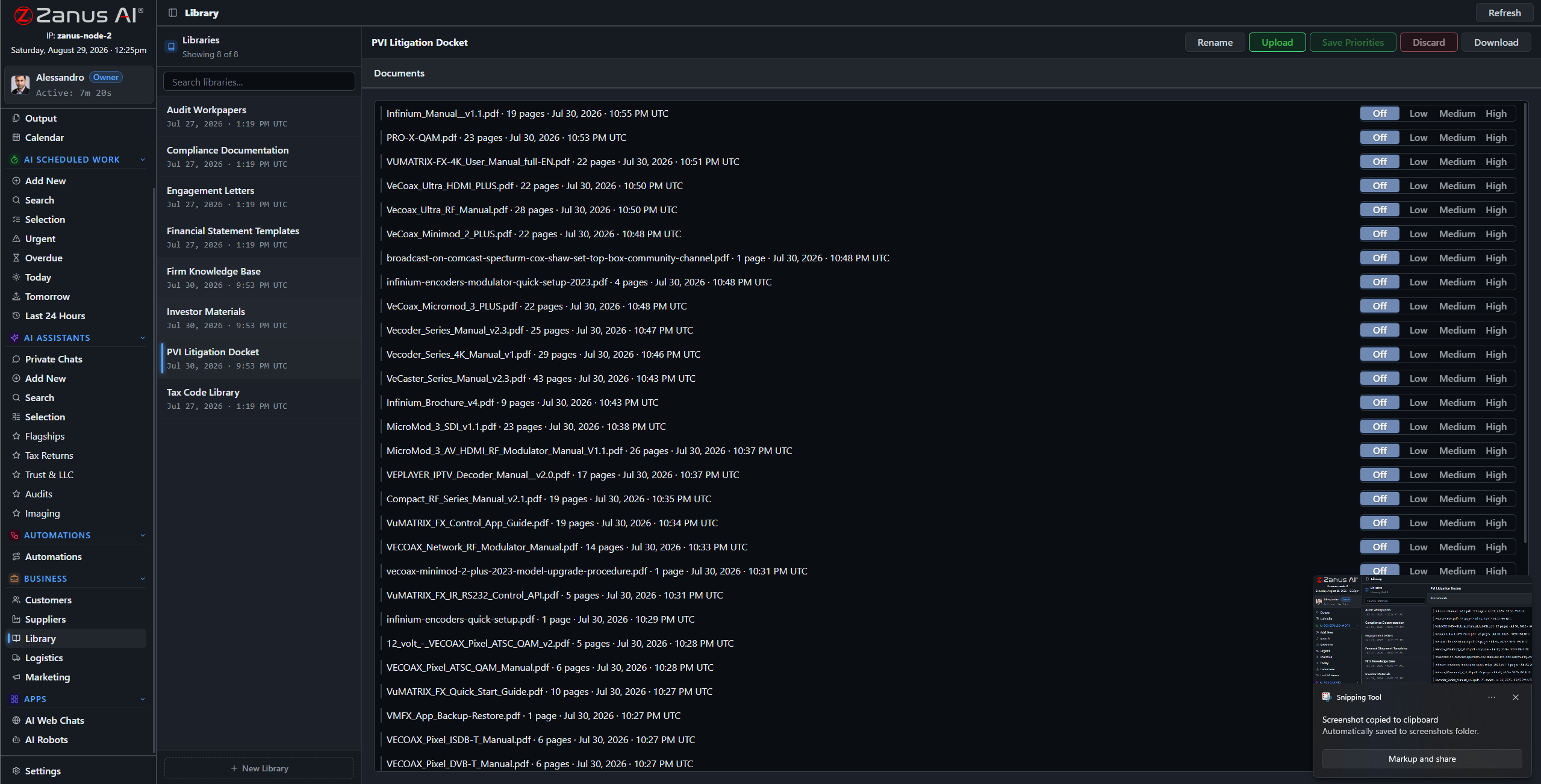
Libraries per case and unit: confirmed reports outrank working notes — you set the order.
What it does
CCTV exports, body-cam files, intercept audio, phone extractions, scanned custody forms — the ingestion pipeline turns the evidence room’s reality into queryable knowledge.
No source in the case libraries, no claim: the AI cites the file, the timestamp, the custody entry — or says it cannot answer. Nothing is invented into a case.
Examiners see their assigned cases; the lab director sees the unit; the intern sees nothing sensitive — enforced server-side, down to the field.
Ten years of examinations, one question away
“Have we examined media from this address before?” “Which cases used this camera model’s footage?” “What did the 2021 report conclude about this voice exemplar?” The archive answers in seconds with the documents attached — institutional memory that used to live in one veteran’s head.
- Plain-language questions across authorized cases
- Sources attached to every answer
- Priority order: signed reports outrank drafts

Questions, answered
Can opposing counsel access this?
Access is whatever your policy grants: permissions are role-based to the field level and every access is logged — discovery and disclosure decisions stay with your counsel, supported by the audit record.
Does case media train outside models?
Never. The tenant is isolated and casework segregated; on the air-gapped lab server, the media physically cannot leave the building.
See it working on YOUR lab — the demo IS the product.
← Previous: Back Office · Sharing with a colleague? 📄 Get the PDF · ✉️ Email this page ·