ZANUS AI FOR PROFESSIONAL SERVICES — COMPLIANCE
Walls between clients, by architecture.
A firm’s license to operate is confidentiality: what one client shares, no other client’s team may see. Here that is not a policy memo — it is five-level workgroups, field-level permissions and server-side redaction, with a searchable audit trail and an on-premises option behind it.
Private tenant or your own server · your whole team · engagement-confidentiality-conscious architecture
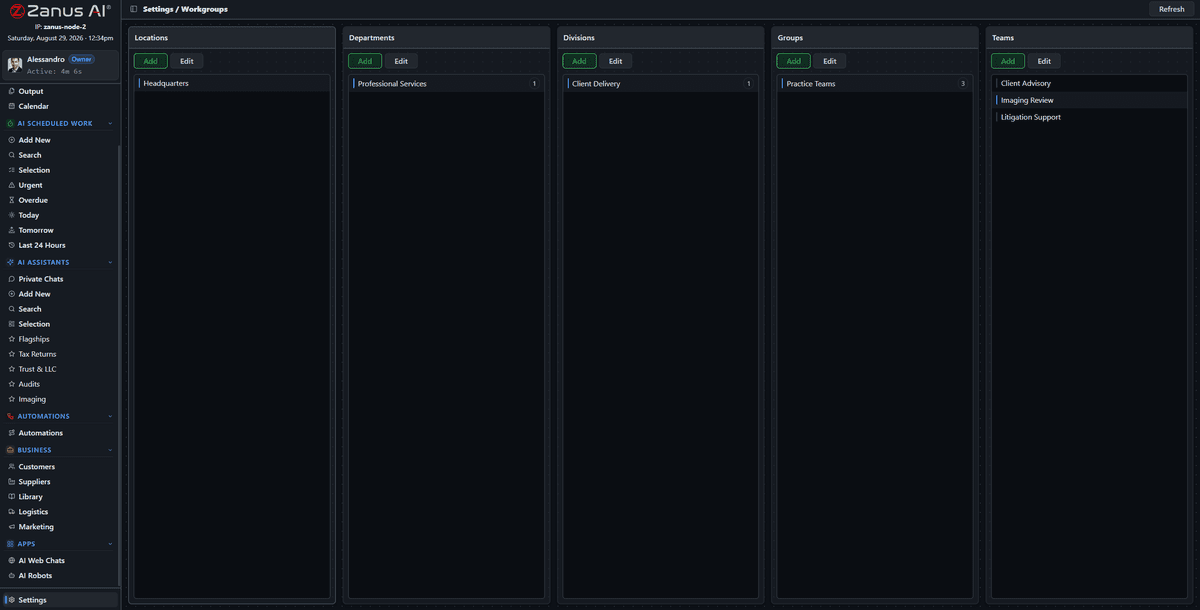
Workgroups map the firm: practice groups, offices, engagements — each wall enforced server-side.
What it does
The team on the retail client cannot open, search or even surface the manufacturing client’s files — the wall is the permission model, not a reminder in the handbook.
A staffing coordinator sees that a consultant is booked without seeing for whom; a shared calendar shows the hold, not the client name — redacted server-side.
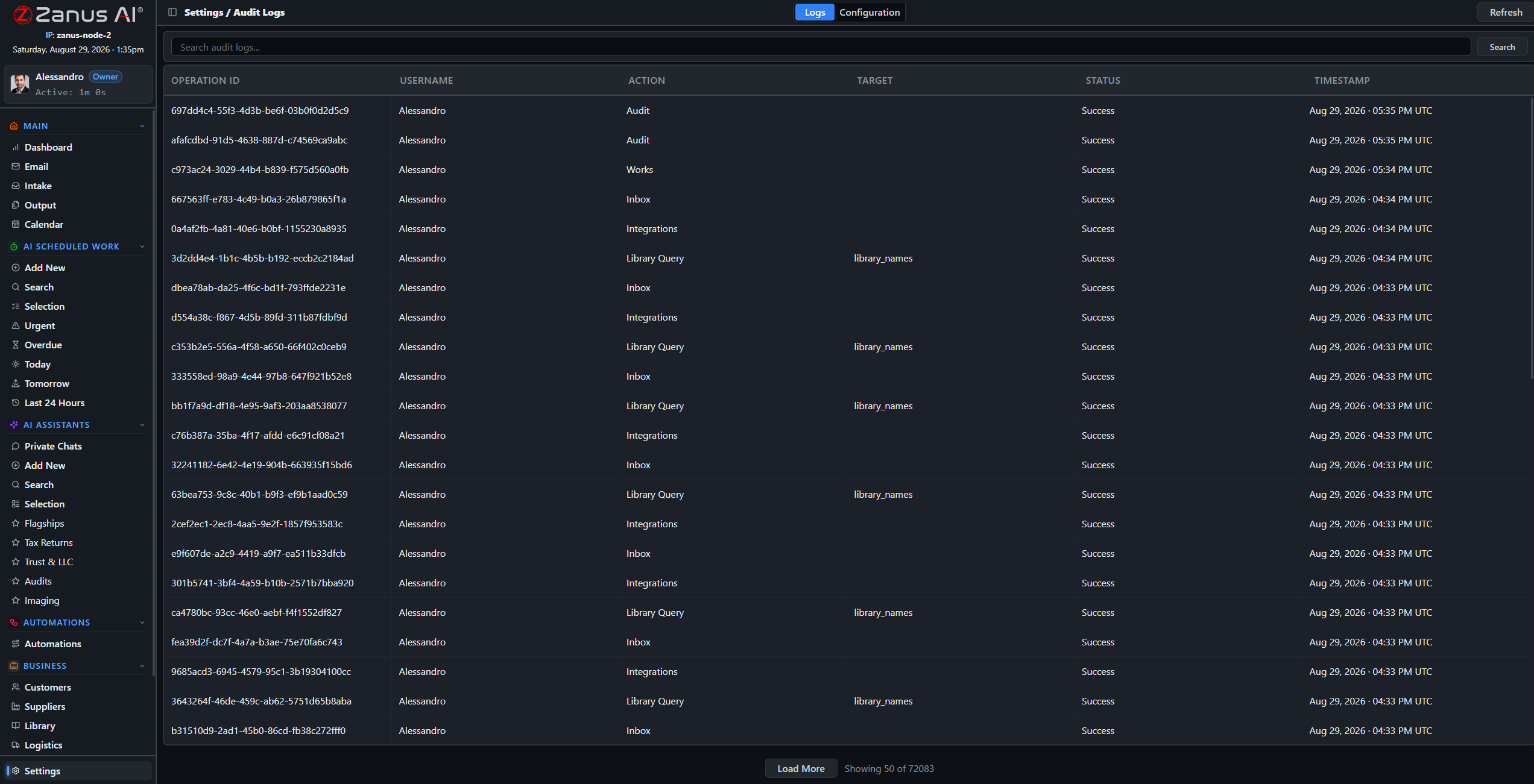
Before intake, one permissioned question — “have we worked with or against this company?” — searches the records you authorize, with every lookup on the audit trail.
The client security questionnaire, answered from architecture
When a client’s procurement team asks how their material is protected, the answers are structural: isolated tenant, nothing training outside models, permissions to the field level, searchable audit trail — and for the strictest engagements, an air-gapped server inside your own building.
- Searchable audit trail of access and changes
- Automatic pre-update snapshots with rollback
- USB updates for air-gapped deployments
Questions, answered
Can we map ethical walls per engagement?
Yes — workgroups reach five levels and combine with field-level permissions, so a wall can be a practice group, an office or a single engagement team, enforced server-side.
Our clients audit their vendors — can we answer?
The architecture is engagement-confidentiality-conscious by design, and the audit trail documents it. Deployment specifics are reviewed with our team during onboarding — bring your client’s questionnaire to the demo.
See it working on YOUR firm — the demo IS the product.
← Previous: PSA & Integrations · Sharing with a colleague? 📄 Get the PDF · ✉️ Email this page ·